
When shopping for a kids’ bed frame in Singapore, ensuring structural and chemical safety is paramount. The bed frame should comply with the Consumer Protection (Consumer Goods Safety Requirements) Regulations (CGSR) enforced by Enterprise Singapore, which aligns with recognized international safety standards such as European (EN) or American (ASTM) standards. Specifically, look for compliance with standards like EN 747 for bunk beds and loft beds, or ASTM F1427. Additionally, the bed frame must feature non-toxic, low-emission finishes to prevent exposure to harmful volatile organic compounds (VOCs).
Navigating Safety Regulations and Certification Labels in Singapore
In Singapore, consumer product safety is overseen by Enterprise Singapore under the Consumer Protection (Consumer Goods Safety Requirements) Regulations (CGSR). While general furniture does not require a mandatory safety mark before retail sale, the CGSR stipulates that all consumer goods sold locally must conform to safety standards set by key regional or international standardization bodies. This means that any reputable kids’ bed frame sold in the market should meet recognized safety baselines to protect children from injury.
Understanding the difference between mandatory local regulations and voluntary international standards is crucial for making an informed purchase. While Singapore does not have a unique, standalone mandatory standard specifically for children’s bed frames, international standards like the European EN 747 (for bunk beds and loft beds) or the American ASTM F1427 serve as the benchmark for structural integrity. Manufacturers who design their products to meet these rigorous voluntary standards demonstrate a commitment to safety that goes beyond basic retail requirements.
Products mentioned in this guide
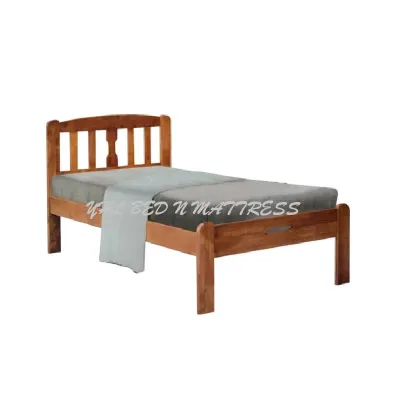
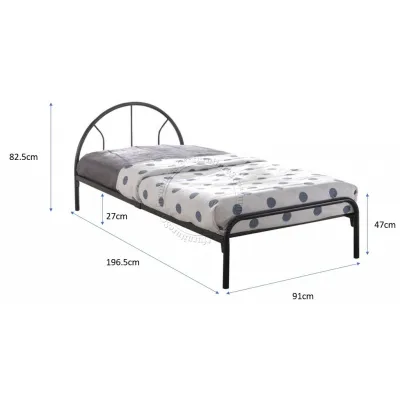
Prices are valid at publication and may change. Please refer to the product page for the latest price.
To identify genuine safety compliance, you must look closely at the product labels and accompanying documentation. Legitimate safety labels do not rely on vague marketing terms; instead, they clearly state the specific standard number they comply with, such as “Conforms to EN 747-1” or “ASTM F1427 compliant.” These labels are usually found on the inner frame, the underside of the headboard, or within the official user manual.
Be highly skeptical of promotional terminology like “100% child-safe,” “certified eco-friendly,” or “toxin-free” when they lack verifiable, specific test reports or clear issuing bodies. Online marketplaces and showrooms often use these phrases as buzzwords to attract parents. A truly certified product will always be backed by a specific test report number from an accredited third-party testing laboratory, which you can request directly from the seller.
Essential Physical Safety Features to Inspect Before Buying
Guardrails, Gaps, and Entrapment Hazards
Guardrails are the primary line of defense against accidental falls, especially for younger children or elevated beds. When inspecting a bed frame, measure the distance between individual guardrail slats. To prevent a child’s head or torso from slipping through, the gap between slats must be strictly controlled. Safety guidelines recommend that these gaps remain between 60 mm and 75 mm; any gap wider than 75 mm poses a severe entrapment risk.

Another critical area to evaluate is the space between the mattress edges and the bed frame. When the mattress is pushed completely to one side, the remaining gap on the opposite side should not exceed 30 mm. If the gap is wider, a child’s arm, leg, or foot can easily slip down and become trapped, leading to joint strains or more severe injuries.
Furthermore, always check the manufacturer’s specifications for the maximum allowable mattress thickness. For elevated beds, loft beds, and bunk beds, safety standards dictate that the top of the guardrail must extend at least 160 mm above the top surface of the mattress. If you install a mattress that is too thick, you reduce the effective height of the guardrail, rendering the protective barrier virtually useless.
Structural Stability and Tipping Risks
Active children do not just sleep on their beds; they climb, play, and jump. This makes structural stability a critical factor when choosing a bed frame. Begin by verifying the manufacturer’s stated weight capacity, ensuring it can comfortably support both the weight of your child and an adult who might sit on the edge during bedtime reading. A robust single kids’ bed frame should have a rated load capacity of at least 90 kg to 100 kg.
Do not rely solely on material names like “solid wood” or “heavy-duty steel” to guarantee durability. High-quality materials can still fail if the joint construction is weak. Inspect the corner brackets, leg connections, and hardware. Look for sturdy metal-on-metal barrel nut and bolt connections rather than simple wood screws, which can easily strip and loosen over time under continuous movement.
For loft beds, bunk beds, or any frame taller than 1 meter, anti-tip anchoring is essential. These elevated structures must be secured directly to the wall to prevent tipping if a child climbs up the outer frame. In Singapore, where most residential walls are made of concrete or brick, you must use appropriate masonry wall plugs and heavy-duty screws to anchor the anti-tip brackets securely. Never rely on adhesive strips or loose-standing configurations.
How to Verify Safety Claims and Request Test Documentation
When evaluating kids’ bed frames, you should take an active role in verifying safety claims rather than accepting them at face value. Request a Certificate of Compliance (CoC) or an official laboratory test report from the retailer. Reputable brands and distributors should readily provide these documents upon request, either in-store or via email.
When reviewing a test report, cross-reference the specific details to ensure its validity. Check that the document is issued by an accredited independent testing laboratory, such as TÜV SÜD, SGS, Intertek, or UL. Ensure the report explicitly references relevant standards like EN 747 or ASTM F1427, matches the exact model name or number of the bed frame you are purchasing, and is relatively recent—ideally within the last five years.
In addition to structural integrity, ask for chemical safety reports. Singapore’s warm and humid climate can accelerate the off-gassing of volatile organic compounds (VOCs) and formaldehyde from cheap adhesives, paints, and engineered wood. Request documentation proving that the lacquers, paints, and materials meet low-emission standards, such as GREENGUARD Gold, CARB Phase 2, or European EN 71-3 (safety of toys, which covers chemical migration).
If a seller refuses to provide physical documentation, offers vague verbal assurances, or provides documents with blurred, altered, or blacked-out sections, treat this as a major red flag. Avoid purchasing from sellers who cannot or will not back up their safety claims with verifiable paperwork, as this often indicates that the product has not undergone independent safety testing.
Safe Assembly, Installation, and Routine Maintenance Checks
Even the most rigorously certified bed frame can become hazardous if assembled incorrectly. When the bed frame is delivered, carefully review the manufacturer’s assembly instructions before starting. Ensure you have all the specified hardware. Never substitute missing screws or bolts with random hardware from a local DIY shop, as incorrect thread pitches or weaker metal grades can compromise the frame’s structural integrity.
Singapore’s high relative humidity can cause wooden components to expand and contract slightly over time. This natural movement can gradually loosen joints and fasteners. Establish a routine maintenance schedule: inspect the bed frame every three to six months. Use a screwdriver or hex key to gently tighten all bolts and screws. While doing so, run your hands along the wooden slats and frame edges to check for splinters, cracks, or structural warping. If you discover a cracked support slat, replace it immediately with an authorized part from the manufacturer.
Avoid making any unauthorized modifications to the bed frame. For example, do not add aftermarket casters or wheels to the legs to make the bed easier to move, as this alters the center of gravity and increases tipping risks. Do not remove guardrails prematurely, even if your child claims they are “too old” for them, unless the manufacturer’s guidelines explicitly state that the bed can be safely converted into a standard open bed.
Finally, pay close attention to the placement of the bed within the room. Keep the area surrounding the bed clear of climbable furniture, such as study chairs, chests of drawers, or toy boxes. A child climbing onto adjacent furniture near an elevated bed or bunk bed faces a much higher risk of falling or getting trapped between the bed and the furniture.
Warning Signs: When to Stop Using or Replace the Bed Frame
Over years of use, even the sturdiest bed frames will experience wear and tear. Parents must remain vigilant for warning signs that indicate a bed frame is no longer safe. Persistent squeaking or creaking when the child moves is often the first sign of structural distress. While this can sometimes be resolved by tightening the hardware, if the noise persists, it may indicate that the internal joints have warped or the wood fibers around the screw holes have stripped, reducing the frame’s overall stability.
Inspect the frame for visible structural damage. Loose joints that wobble even after tightening, deep cracks in the load-bearing legs, or sagging support slats are immediate safety hazards. If the guardrails feel loose or flex significantly when pushed, they can no longer be trusted to prevent a fall.
Additionally, monitor your child’s growth. Children often outgrow their beds faster than expected. Regularly check your child’s weight and height against the manufacturer’s specified limits. If your child exceeds the weight limit, the risk of sudden slat failure or frame collapse increases dramatically.
If you detect any of these structural issues, stop using the bed immediately. Do not attempt makeshift repairs with duct tape, glue, or non-standard brackets. Consult the manufacturer or a qualified furniture repair professional to see if replacement parts are available. If the damage is extensive or the frame is warped beyond repair, the entire bed frame must be replaced to ensure your child’s safety.
Frequently Asked Questions (FAQ)
Are bunk beds subject to stricter safety rules than standard single kids' beds?
Yes, bunk beds and loft beds are subject to much stricter safety guidelines due to the inherent risks associated with elevated sleeping surfaces. Because falls from heights can cause severe injuries, international standards like EN 747 and ASTM F1427 focus heavily on elevated safety. These rules mandate continuous guardrails on all four sides of the top bunk, specific ladder step dimensions and slip-resistance, and strict limitations on entrapment gaps. Furthermore, manufacturers strongly advise that top bunks should never be used by children under the age of six, and strict weight limits must be observed for the upper berth.
Can I use a standard adult mattress on a kids' bed frame if it fits the dimensions?
You should only use an adult mattress if it strictly matches the manufacturer’s specified dimensions, particularly regarding thickness and weight. Many adult mattresses are significantly thicker and heavier than mattresses designed specifically for children. Exceeding the recommended mattress thickness compromises guardrail safety by reducing the effective height of the protective barrier. Additionally, a heavy adult mattress, combined with the weight of a growing child, can exceed the frame’s designed load capacity, risking structural failure of the support slats. Always consult the bed frame’s manual for the exact mattress dimensions and weight limits before purchasing.
Community discussion
Share your experience or ask a question. Comments are reviewed before publication.