
When shopping for a pull out bed trundle for your child, safety certifications are your primary defense against structural failures, chemical exposure, and mechanical injuries. Because trundle beds feature moving parts and a multi-tiered design, you should look for structural standards such as ASTM F1427 or EN 747, alongside chemical safety certifications like GREENGUARD Gold, CertiPUR-US, or compliance with Singapore’s Consumer Protection Safety Authority (CPSA) requirements. Verifying these standards ensures the frame can handle daily use and the materials will not compromise your child’s indoor air quality.
Identifying Key Safety Standards and Certifications
While trundle beds are low to the ground, the main bed is elevated, and the entire unit functions as a multi-tier sleeping system. Therefore, standards governing bunk beds and high sleepers often apply to the upper frame. Look for references to EN 747 (the European standard for bunk beds and high sleepers) or ASTM F1427 (the American standard for consumer safety specifications for bunk beds). In Singapore, the Consumer Product Safety Office (CPSO) monitors consumer goods, so checking for compliance with local safety regulations or recognized international equivalents is essential.
These structural standards test the bed’s resistance to impact, the strength of the fastening systems, and the durability of the frame under repeated loads. For example, EN 747-1 specifies requirements for safety, strength, and durability, while EN 747-2 describes the test methods. When a manufacturer complies with these standards, it means the bed has undergone rigorous testing to ensure it will not collapse or warp under normal use.
Products mentioned in this guide
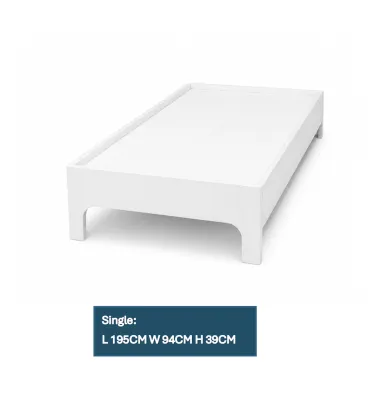
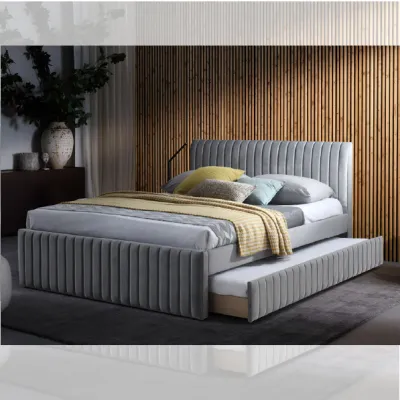
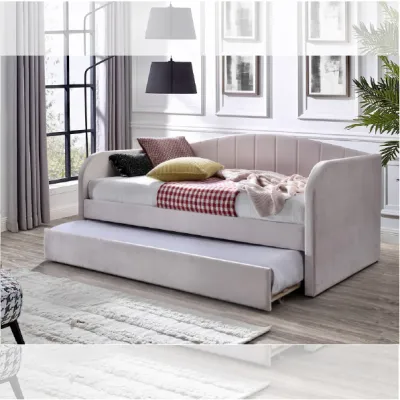
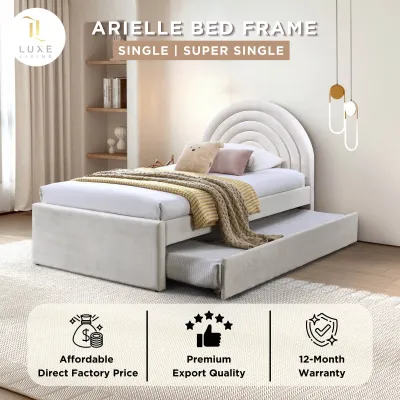
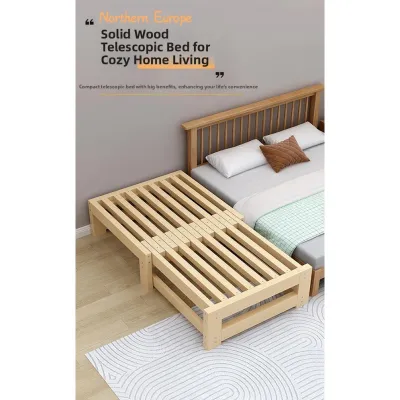
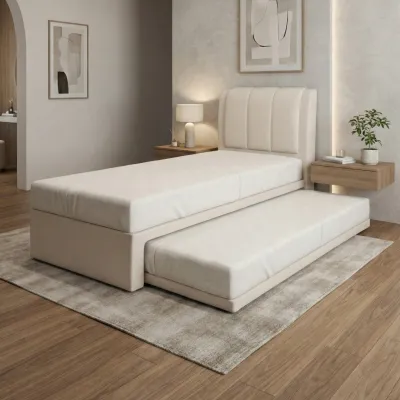
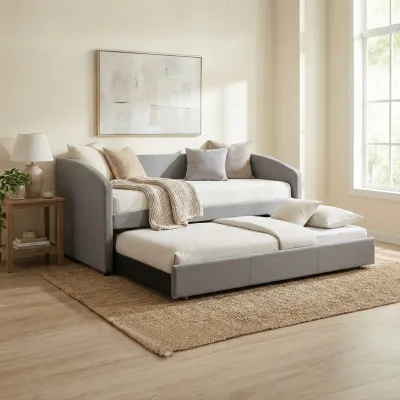
![[Bulky]Twenty one 3 IN 1 BED FRAME (pullout/trundle AVAILABLE)](https://img.lazcdn.com/g/p/b899e38faf8622cbb378f5af8ef8b814.jpg_400x400q80.jpg_.webp)
Prices are valid at publication and may change. Please refer to the product page for the latest price.
To verify these safety claims, do not rely solely on marketing copy on an online marketplace. Request the official certificate of compliance or test reports from the retailer. Legitimate manufacturers will readily provide documentation showing that their products have been tested by accredited third-party laboratories. You can cross-reference the certificate numbers on the official databases of the certifying bodies to ensure they are valid and active.
If a pull out bed trundle lacks visible certification labels or clear safety documentation, proceed with extreme caution. You can perform alternative physical checks, such as inspecting the thickness of the timber, the robustness of the metal brackets, and the stability of the joints. However, the absence of documentation is a significant red flag. In such cases, it is best to contact the manufacturer directly to ask for their quality control protocols or choose a different model that provides transparent safety credentials.
Physical Safety Checks Specific to Pull-Out Trundle Beds
Trundle beds present unique mechanical risks due to their sliding nature. The gap between the trundle frame and the main bed frame must be carefully evaluated. Check that the clearance spaces do not create pinch points or entrapment hazards for small fingers and limbs. Ideally, gaps should either be small enough to prevent a child’s finger from entering (less than 5mm) or large enough to prevent trapping (greater than 25mm), in line with general children’s furniture safety principles.

The main bed, which sits higher to accommodate the trundle underneath, requires robust guardrails if used by younger children. Verify that the guardrails are securely attached, with no gaps between the rail and the mattress that could allow a child to slip through. The spacing between individual slats on the guardrail should not exceed 75mm to prevent head entrapment. Ensure the guardrail stands at least 160mm above the top of the mattress to provide an effective barrier against falls.
The trundle frame itself must be inspected for stability and ease of movement. Look for models equipped with smooth-rolling wheels or castors that glide easily without damaging your flooring. Crucially, the trundle should feature wheel locks or a secure braking system to prevent the bed from rolling unexpectedly when your child is stepping in or out. Anti-derailment features or physical stoppers on the main frame are also valuable, as they prevent the trundle from being pulled out too far or misaligning during operation.
Before purchasing, measure the room to ensure there is sufficient clearance for the trundle to extend fully without blocking doorways, built-in wardrobes, or emergency exit paths. A bed that is too large for the room can block doorways or create tight squeeze points, which are safety hazards in themselves. Additionally, ensure the flat-pack boxes can fit into your lift and through your front door, especially if you live in a high-rise apartment.
Material Safety and Chemical Emission Verifications
Children are particularly vulnerable to airborne toxins, making material safety a critical consideration for bedroom furniture. Look for bed frames constructed from solid wood or low-emission engineered wood. Check the manufacturer’s specifications for certifications indicating low formaldehyde emissions, such as CARB Phase 2 or EPA TSCA Title VI compliance. These standards ensure that the composite wood products used in the bed do not off-gas harmful levels of formaldehyde into your child’s sleeping environment.
Singapore’s tropical climate features high relative humidity, which can accelerate the degradation of low-quality adhesives and finishes. This humidity can also increase the rate of formaldehyde off-gassing from cheap particleboard or MDF. Therefore, choosing low-VOC (Volatile Organic Compound) materials certified by GREENGUARD Gold or meeting the CARB Phase 2 standard is crucial for maintaining healthy indoor air quality.
The finishes, paints, and varnishes applied to the bed frame must be non-toxic and lead-free. Look for compliance with EN 71-3 (the European standard for the safety of toys, which restricts the migration of certain chemical elements) or equivalent local standards. This is especially important for younger children who might chew on the bed frame or guardrails.
The mattress used on both the main bed and the trundle requires its own set of safety verifications. Check the product labels for certifications like CertiPUR-US for polyurethane foam, which guarantees the foam is made without ozone depleters, heavy metals, or harmful phthalates. Additionally, look for OEKO-TEX Standard 100 certification for the mattress cover, ensuring the textiles are free from harmful levels of toxic substances. If independent certifications are unavailable, carefully review the manufacturer’s material composition list, prioritize natural fibers, and ensure the mattress is thoroughly ventilated in a well-ventilated space before its first use.
Installation and Usage Boundaries for Ongoing Safety
Safe usage begins with proper assembly. Always follow the manufacturer’s step-by-step instructions precisely, using only the hardware provided in the packaging. Do not substitute screws or brackets with generic alternatives, as this can compromise the structural integrity of the bed. Pay close attention to the manufacturer’s stated weight limits for both the main bed and the pull-out trundle. Exceeding these limits can cause the slats to bow, the joints to split, or the wheels to fail.
Never assume the main bed and the trundle have the same weight limit. Typically, the main bed might support up to 100kg, while the pull-out trundle might only support 70kg to 80kg. Exceeding these limits can lead to sudden structural failure. Additionally, slats should be spaced no more than 7.5cm apart to provide adequate support for the mattress and prevent it from sagging, which can create unsafe sleeping postures or entrapment zones.
Ongoing maintenance is essential to keep the bed safe over years of use. Establish a routine check every few months to inspect the hardware. Tighten any loose screws or bolts, check the wheels for wear and tear, and listen for squeaking joints which can indicate structural stress. In Singapore’s humid climate, inspect the wooden components regularly for any signs of warping or moisture damage, which can weaken the frame over time.
Knowing when to stop using the bed is just as important as proper maintenance. If you notice cracked slats, bent metal brackets, or a failing pull-out mechanism that sticks or derails, cease using that portion of the bed immediately. Do not attempt temporary DIY fixes for structural failures. Instead, contact the manufacturer for official replacement parts or consult a qualified furniture repair professional to restore the bed to a safe condition.
Frequently Asked Questions (FAQ)
Is a pull-out trundle bed safe for a toddler?
Generally, a pull-out trundle bed is not recommended for toddlers under the age of three without strict supervision and appropriate safety modifications. The lower trundle bed sits close to the floor, which reduces fall height, but the lack of built-in guardrails on most trundles poses a roll-out risk. If you plan to use the trundle for a toddler, ensure you install a compatible, secure bed guard and consult local consumer safety guidelines regarding age-appropriate sleeping arrangements. The elevated main bed should be reserved for older children who can safely navigate the height.
Does the trundle mattress need a specific thickness for safety?
Yes, mattress thickness is a critical safety factor for both the trundle and the main bed. For the trundle, the mattress must be thin enough to slide smoothly under the main bed frame without catching, pinching, or damaging the structure; manufacturers typically specify a maximum height, often between 15cm and 20cm. For the main bed, the mattress thickness must not exceed the manufacturer’s recommended limit. If the mattress is too thick, it will reduce the effective height of the guardrails, increasing the risk of your child falling over the side. Always measure the distance from the top of the mattress to the top of the guardrail to ensure it meets the minimum safety clearance.

Community discussion
Share your experience or ask a question. Comments are reviewed before publication.