
To ensure a child’s safety, the maximum gap between slats on a slatted bed base must be small enough to prevent their head, limbs, or torso from slipping through and becoming trapped. While standard adult bed bases often feature wider gaps, children’s bed bases are subject to much stricter safety limits.
In many international safety guidelines, the maximum allowable gap between slats is specified as 60 millimetres (approximately 2.36 inches). However, because safety requirements can vary based on the specific type of bed—such as a cot, toddler bed, or single bed—and the standards applied by the manufacturer, you must always verify the exact certified limits on the product’s safety label or user manual.
Ensuring your child’s bed base complies with these dimensions is a vital step in setting up a secure sleeping environment, especially during the transition from a crib to a toddler bed.
Products mentioned in this guide
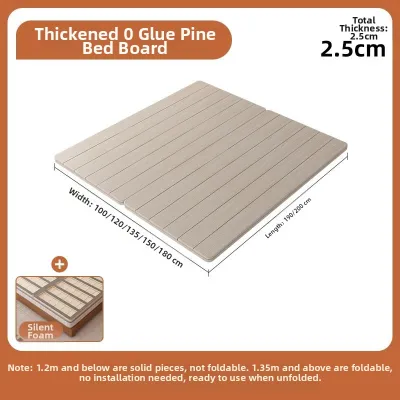
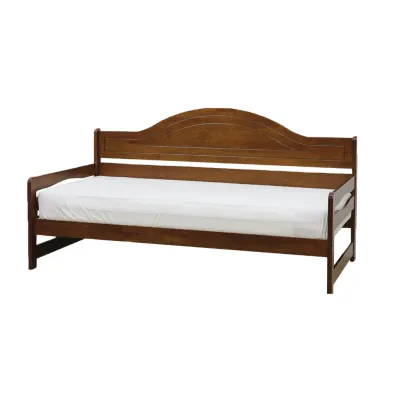

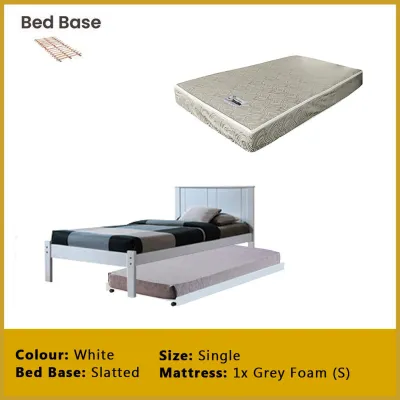
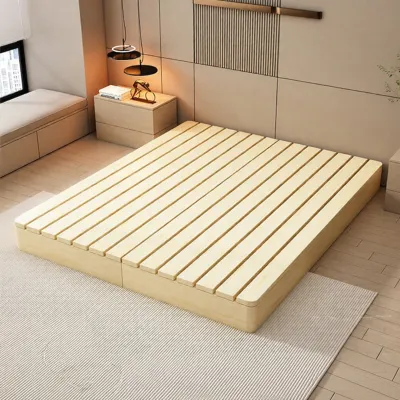
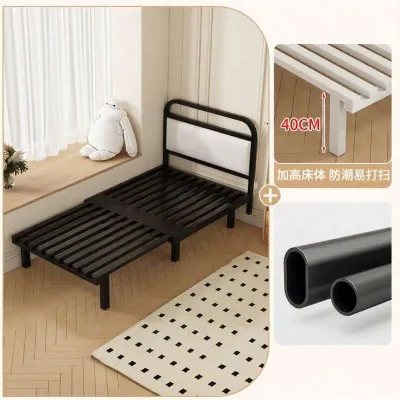
Prices are valid at publication and may change. Please refer to the product page for the latest price.
The Mechanics of Entrapment: Why Gap Size Matters
Children do not merely have smaller bodies than adults; their physical proportions are fundamentally different. A young child’s head is relatively large and heavy compared to their torso and neck, which alters how they interact with physical barriers like bed slats.
If a slatted bed base has gaps that are too wide, a child’s body can slip through feet-first. Because their head is disproportionately larger than their chest and limbs, the torso may pass entirely through the gap while the head remains caught.
This scenario creates an immediate risk of suspension and strangulation, as the child’s weight is supported by their neck or jaw. Even if the entire body does not slip through, a limb or neck can easily become wedged, leading to serious joint injuries, circulation blockages, or panic.
While an older child or adult can easily extricate themselves from a wide gap, toddlers and infants lack the motor skills, coordination, and strength to free a trapped limb or head. This makes a gap size that is perfectly safe for an adult bed highly hazardous for a younger child.
Decoding Slat Spacing Standards and Specifications
To guarantee a safe sleeping environment, look for bed bases designed specifically for children that comply with recognized safety standards. Rather than guessing or relying on visual estimates, you should verify the product’s compliance with established regional or international regulations.

In Singapore, consumer goods must meet safety requirements often aligned with international benchmarks. For children’s beds and toddler beds, look for compliance with standards such as British/European standards (like BS EN 716 for cots or BS EN 8509 for children’s beds) or American standards (such as ASTM F1821 for toddler beds).
These standards strictly define the maximum permissible gap between slats to eliminate entrapment hazards. Before purchasing or assembling a bed, locate the manufacturer’s official user manual, compliance labels on the bed frame, or specifications listed on the official brand website to confirm the exact gap dimension.
When selecting a child’s bed, prioritize the finished dimensions of the bed frame relative to your available nursery space. Ensure there is adequate clearance for doorway and lift access during delivery, and verify the assembly conditions and anchoring methods to guarantee the bed remains stable and does not tip over during use.
Avoid using a standard adult slatted bed base for a young child’s bed. Adult bases are engineered for larger body proportions and typically have slat spacings ranging from 70 millimetres to over 100 millimetres, which far exceeds safe limits for children.
If a manufacturer does not explicitly state the slat spacing, the compliance standard, or the intended age group for the bed base, do not use the product. Contact the seller or manufacturer directly to request these specifications before allowing your child to sleep on it.
How to Measure and Monitor Slat Gaps Over Time
Measuring the gaps on your child’s slatted bed base requires precision. Use a reliable measuring tape or a digital caliper to measure the clear distance between the inner edges of two adjacent slats.
Always take measurements at the widest point of the gap. If the slats have beveled, rounded, or contoured edges, measure from the absolute outermost points of the wood where the gap is at its maximum, rather than the flat top surface.
Even if a bed base meets safety standards when first assembled, environmental factors can alter these dimensions over time. In Singapore’s highly humid tropical climate, solid wood slats can absorb moisture, leading to warping, twisting, or bowing that can artificially widen the gaps between them.
Do not assume that solid wood or metal slats are inherently durable or moisture-resistant simply because of their material name. Instead, perform physical checks on the finish, inspect the joints for stability, review the manufacturer’s care instructions, and assess how the material performs in your specific home environment.
Regularly inspect the bed base for loose fasteners, structural shifts, or sagging. The weight of the mattress, combined with a child’s movement or jumping, can cause slats to bend downward or slide laterally, expanding the space between them.
Establish a strict safety check routine: if you measure any gap that exceeds the manufacturer’s specified limit or the standard 60-millimetre safety threshold at any point, stop using the bed base immediately. Keep the child off the bed until the base is professionally repaired, the fasteners are tightened, or the unit is replaced.
Complementary Specs: Load Limits and Slat Fasteners
A safe gap size is only effective if the bed base remains structurally stable under load. Always check the manufacturer’s stated weight capacity (load limit) for both the bed frame and the slatted base to ensure it can support your child and the mattress without bowing.
When a slatted bed base is overloaded, the slats can bend downward, which naturally pulls their ends inward and can widen the gaps between them. Ensure the mattress used is of the recommended thickness and weight, as an overly heavy mattress can cause premature structural fatigue.
Examine how the slats are secured to the bed frame. Systems that use individual screws or heavy-duty plastic or rubber holders are generally more secure than loose slats held together only by a fabric ribbon, which can easily shift or bunch up.
During your regular maintenance checks, run your hand along the surface and edges of each slat to inspect the finish. Ensure there are no splinters, cracks, or peeling varnishes that could injure your child or damage the mattress cover.
Frequently Asked Questions (FAQ)
Is it safe to use a regular adult slatted bed base for a toddler?
Safety Verdict: No, using a standard adult slatted bed base for a toddler is not safe. Adult bed bases are designed for mature body proportions and typically feature slat gaps that are much wider than the safe limits established for children. These wide gaps present a severe risk of head, torso, or limb entrapment. Always choose a bed base that is explicitly certified for children or toddlers and conforms to international safety standards.
Do flexible or curved slats pose a higher entrapment risk than flat wooden slats?
Design Risk: Flexible or curved sprung slats can pose a higher risk of entrapment if they are not specifically engineered for children’s beds. Because curved slats are designed to flex and absorb movement, they can spread apart or flatten under localized weight, such as when a child stands or jumps on the bed. This dynamic movement can temporarily widen the gaps beyond safe limits. If you choose a curved slat design, verify that the manufacturer has strictly tested and certified the maximum gap spacing under load.
Community discussion
Share your experience or ask a question. Comments are reviewed before publication.