
Choosing the right kitchen rack is a decision that directly impacts your daily cooking flow, storage capacity, and kitchen aesthetics. In modern homes, the kitchen rack has evolved from a simple utilitarian shelf into a prominent design element that must withstand demanding environmental conditions. The ideal material must balance visual appeal with the physical realities of your cooking space, particularly when evaluating premium rock slab, warm wood, and industrial stainless steel.
Rock slab, often referred to as sintered stone, has surged in popularity due to its high-end, stone-like appearance and remarkable resistance to heat and scratches. However, its heavy weight demands exceptional structural support and careful handling during installation. Wood racks introduce unmatched organic warmth and design flexibility, but they require rigorous moisture management to prevent warping in humid environments. Stainless steel remains the gold standard for commercial-grade durability and hygiene, though its industrial aesthetic may not suit every home interior.
Ultimately, the best material for your kitchen rack depends on your wall structure, local humidity levels, and specific design goals. By understanding the distinct trade-offs of each material, you can select a rack that not only complements your kitchen cabinets but also stands up to years of daily use.
Products mentioned in this guide
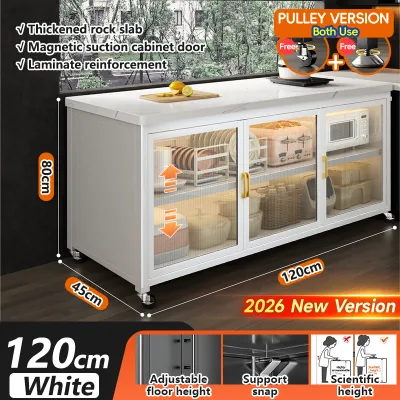


Prices are valid at publication and may change. Please refer to the product page for the latest price.
Durability and Load Capacity: What Each Material Can Actually Hold
When evaluating kitchen racks, structural integrity is paramount. The rack must support heavy cookware, small appliances, and ceramic tableware without sagging, bending, or risk of sudden failure. Each material behaves differently under physical stress, meaning you must look closely at the underlying construction rather than relying solely on the material’s name.
Rock slab racks are celebrated for their surface durability. Sintered stone is created under immense pressure and heat, resulting in a surface that easily resists scratches from knives, heavy pots, and high-temperature cookware. You can place a hot pan directly onto a rock slab shelf without worrying about scorch marks or discoloration. However, rock slab is inherently brittle under point impacts. A heavy cast-iron skillet dropped directly onto an unprotected edge can cause chipping or cracking. Furthermore, rock slab shelves are rarely solid stone; they typically consist of a thin slab bonded to an aluminum or steel frame. Before purchasing, verify the manufacturer’s specified load capacity and check that the edges are properly sealed and protected by a robust metal bezel.
Wood racks offer varying degrees of durability depending on whether they are crafted from solid hardwood or engineered wood. Solid hardwoods like teak, oak, and walnut possess natural structural resilience and can support substantial weight when paired with sturdy brackets. Over time, however, wood is subject to structural fatigue. Sustained heavy loads can cause wood shelves to sag permanently—a phenomenon known as creep. Engineered woods, such as medium-density fiberboard (MDF) or plywood with wood veneers, are more susceptible to this sagging and can experience joint degradation as the adhesives holding the fibers together weaken under tension. When selecting a wood rack, inspect the joinery; traditional mortise-and-tenon or dowel joints offer far greater long-term stability than simple pocket screws.
Stainless steel racks deliver unmatched structural reliability and resistance to bending. Unlike rock slab, stainless steel will not crack or shatter under sudden impacts, and unlike wood, it will never sag permanently under standard kitchen loads. It provides a high strength-to-weight ratio, allowing for slim, minimalist shelf profiles that can still hold heavy kitchen equipment. However, not all stainless steel is created equal. You must verify the steel grade by checking the product specifications or labels. Grade 304 stainless steel contains chromium and nickel, providing excellent resistance to rust and chemical corrosion under heavy loads. Grade 201 is more budget-friendly but contains less nickel, making it vulnerable to pitting and surface rust when exposed to salty kitchen oils or moisture.
To ensure your chosen rack can safely support your kitchen items, use this structural verification checklist before purchasing or installing:
- Verify the Wall Type: Solid concrete or brick walls can support heavy rock slab and solid wood racks, whereas drywall partitions require specialized hollow-wall anchors and have much lower weight limits.
- Check Bracket Thickness: Heavy-duty steel brackets should be at least 2mm to 3mm thick to prevent bending under load.
- Inspect the Anchoring Method: Ensure the rack includes high-quality sleeve anchors for masonry or toggle bolts for drywall, rather than simple plastic wall plugs.
- Measure Available Space: Confirm the finished dimensions of the rack allow for complete clearance of nearby cabinet doors and ceiling fixtures.
- Assess Assembly Conditions: Pre-assembled welded racks offer superior stability compared to flat-pack models that rely on user-tightened screws.
Design and Aesthetics: Integrating Racks with Your Kitchen Style
A kitchen rack should complement your existing cabinetry, countertops, and overall interior theme. The material you choose sets the visual tone of the room, affecting how spacious, bright, or cozy the cooking area feels.

Rock slab racks deliver a sleek, modern, and luxurious aesthetic. Because sintered stone can be manufactured to mimic the intricate veining of natural marble, the industrial look of concrete, or the dark elegance of volcanic rock, it acts as a striking focal point. It is particularly effective in open-concept kitchens where the rack matches or contrasts beautifully with a matching rock slab countertop or backsplash. The visual weight of rock slab is substantial, making it highly suited for minimalist or contemporary kitchen designs that favor clean lines and hidden storage. However, because of its solid, opaque nature, a large rock slab rack can dominate a small kitchen, requiring careful placement and integrated under-shelf LED lighting to maintain a bright, airy feel.
Wood racks introduce organic texture, warmth, and character that synthetic or metal materials cannot replicate. The natural grain patterns of wood create a welcoming, lived-in atmosphere, making these racks a staple in Japandi, Scandinavian, rustic, and traditional kitchen designs. Wood also offers excellent design flexibility, as it can be stained, painted, or oiled to match your exact color scheme. The primary design challenge with wood is visual cohesion. If your kitchen features multiple wood tones—such as oak flooring, walnut cabinets, and a rubberwood rack—the contrasting grains and undertones can create visual clutter. To avoid this, aim to either match the wood species exactly or choose a contrasting painted finish that complements your cabinetry.
Stainless steel racks project a professional, commercial-kitchen aesthetic. This utilitarian look is highly valued in industrial-themed homes and by passionate home cooks who appreciate the clean, efficient vibe of a restaurant kitchen. The reflective surface of stainless steel bounces light around the room, which can make small or dimly lit kitchens appear larger and brighter. However, stainless steel can easily feel cold, clinical, or sterile if not balanced with warmer materials. Pairing stainless steel racks with warm wooden countertops, colorful tiled backsplashes, or soft ambient lighting helps soften its industrial edge and integrates it seamlessly into a residential setting.
To help you visualize how these materials align with popular interior styles, consider the following design pairing matrix:
| Kitchen Design Theme | Recommended Rack Material | Ideal Cabinet Finish | Visual Impact |
|---|---|---|---|
| Modern Minimalist | Rock Slab (Sintered Stone) | Matte black or flat-panel white | Seamless, high-end, monolithic |
| Japandi / Scandinavian | Solid Wood (Oak or Teak) | Matte beige, light gray, or pastel | Warm, organic, calming |
| Industrial / Professional | Grade 304 Stainless Steel | Concrete screed or dark wood veneer | Bright, functional, high-contrast |
| Classic / Country | Painted Wood | Shaker-style white or navy blue | Cozy, textured, traditional |
Daily Maintenance and Humidity Resistance in Tropical Climates
In tropical environments like Singapore, kitchens face high relative humidity levels that often exceed 80%, alongside grease, steam, and airborne oils from cooking. These conditions put kitchen materials to the ultimate test, making daily maintenance and moisture resistance critical factors in your decision.
Rock slab is exceptionally well-suited for high-humidity and high-grease environments. Because sintered stone is completely non-porous, it does not absorb moisture, cooking oils, or food dyes. This makes it highly hygienic and resistant to mold and mildew growth. Spills can be easily wiped away with a damp cloth. However, you must pay attention to the joints, mounting brackets, and unsealed edges where the slab meets its frame. These crevices can act as grease traps, accumulating dust and cooking residue over time. When cleaning, avoid using harsh abrasive pads or highly acidic chemical cleaners, which can dull the polished or matte finish of the stone over time. A simple wipe-down with pH-neutral soapy water is usually sufficient.
Wood is the most vulnerable material when exposed to tropical humidity and kitchen moisture. Unsealed or poorly finished wood acts like a sponge, absorbing airborne moisture and grease. This leads to wood swelling, joint warping, water staining, and eventually, the growth of black mold. To prevent these issues, wood racks require strict, ongoing maintenance. You must ensure the wood is treated with a high-quality water-resistant sealant, such as polyurethane or food-safe mineral oil, and this protective layer must be reapplied every 12 to 18 months. Any water splashes from washing dishes must be dried immediately. Wood also absorbs cooking odors and grease splatters, meaning it requires regular, gentle scrubbing with a mild wood-safe soap to keep it clean and odor-free.
Stainless steel is entirely impervious to moisture, steam, and mold, making it incredibly low-maintenance from a structural standpoint. It will not warp, swell, or harbor bacteria, which is why it is preferred in professional kitchens. However, stainless steel is highly prone to showing cosmetic imperfections. Water spots, greasy fingerprints, and oil splatters are immediately visible on its reflective surface. To keep a stainless steel rack looking pristine, you must wipe it down regularly using a microfiber cloth. When cleaning, always wipe in the direction of the brushed metal grain; wiping across the grain can create micro-scratches that dull the finish and create tiny ridges where grease and bacteria can accumulate.
To help you plan your kitchen upkeep, here is a routine care comparison for each material:
- Rock Slab Racks:
- Daily: Wipe with a damp microfiber cloth and mild dish soap.
- Weekly: Clean the metal support joints and brackets to remove accumulated grease.
- Monthly: Inspect the sealant around the edges and check for any minor chips.
- Wood Racks:
- Daily: Wipe away any water droplets immediately; clean grease splatters with a dry or lightly damp cloth.
- Weekly: Sanitize with a highly diluted, wood-safe soap solution and dry thoroughly.
- Yearly: Sand down any rough patches and reapply a protective water-resistant sealant or oil.
- Stainless Steel Racks:
- Daily: Wipe down with warm water and dry with a microfiber cloth to prevent water spots.
- Weekly: Use a dedicated stainless steel cleaner or a mixture of water and white vinegar to remove fingerprints and grease.
- Monthly: Polish the surface along the grain to maintain its reflective shine.
Cost, Installation Constraints, and Long-Term Value
Your choice of kitchen rack involves weighing the upfront purchase price against the complexity of installation and the expected lifespan of the product. Understanding these practical constraints ensures you do not purchase a rack that is incompatible with your home’s structure or budget.
In terms of relative cost, rock slab racks consistently command a premium. The raw material, combined with the specialized machinery required to cut, edge-profile, and bond sintered stone to structural frames, results in high fabrication costs. Wood racks span a very wide price spectrum. Budget-friendly options made of engineered wood or rubberwood are widely available on online marketplaces, whereas custom-made racks crafted from premium solid hardwoods like teak or walnut sit in the mid-to-high price tier. Stainless steel also varies based on quality. Lightweight, utility-grade racks made of thin-gauge steel are highly affordable, while heavy-duty, commercial-grade racks made of thick, welded grade 304 stainless steel represent a significant investment.
Installation constraints differ dramatically between these materials due to weight and structural demands:
- Rock Slab: These racks are exceptionally heavy. A single rock slab shelf can easily weigh three to four times more than a comparable wood or steel shelf. Because of this extreme weight, rock slab racks cannot be safely installed on standard drywall partitions without professional reinforcement, such as mounting directly into wall studs or installing backing boards. They are best suited for solid concrete or masonry walls, which are standard in Singapore HDB flats. Professional installation is highly recommended to ensure the heavy-duty masonry anchors are drilled accurately and level.
- Wood and Stainless Steel: These materials are significantly lighter and more forgiving during installation. While they still require proper anchoring to support heavy kitchenware, they can often be installed using standard wall plugs on concrete walls, or heavy-duty toggle bolts on drywall partitions if the load is kept light. This makes them much more suitable for DIY installation, provided you verify the wall material and use the correct drill bits and anchors.
When considering long-term value, stainless steel offers the highest return on investment due to its near-indestructible nature. A high-quality grade 304 stainless steel rack will last decades without needing replacement, showing only minor cosmetic scratches. Rock slab also offers excellent longevity, remaining visually pristine and structurally sound for years, provided it is protected from severe edge impacts. Wood racks, while beautiful, have the shortest lifespan in humid kitchens. If the protective sealant fails or maintenance is neglected, moisture damage can force you to replace a wood rack within a few years, making it a higher-cost option over time.
Final Decision Framework: Which Kitchen Rack Should You Buy?
To make your final decision, evaluate your kitchen’s physical conditions, your design preferences, and your willingness to perform regular maintenance.
Choose a rock slab kitchen rack if:
- You want a premium, modern aesthetic that matches or complements stone countertops.
- You have solid concrete or masonry walls capable of supporting extreme weight.
- You want a highly heat-resistant, scratch-resistant surface that requires minimal daily deep-cleaning.
- You are willing to pay a premium for materials and professional installation.
Choose a wood kitchen rack if:
- You want to add organic warmth, texture, and character to a Japandi, Scandinavian, or traditional kitchen.
- You are committed to regular maintenance, including drying spills immediately and reapplying sealants.
- Your kitchen is well-ventilated or air-conditioned, helping to keep humidity levels under control.
- You want a lightweight material that offers flexible design and DIY-friendly installation.
Choose a stainless steel kitchen rack if:
- You prioritize maximum hygiene, commercial-grade durability, and absolute resistance to moisture and mold.
- You need to store heavy pots, pans, and appliances without any risk of the shelves sagging or cracking.
- You prefer a clean, industrial, or utilitarian kitchen aesthetic.
- You want a long-lasting, cost-effective storage solution that requires zero structural maintenance.
Verify first before purchasing if:
- You are renting your home: Check your tenancy agreement for drilling restrictions, as heavy rock slab and stainless steel racks require permanent wall anchoring.
- You have drywall partitions: Standard drywall cannot support heavy rock slab shelves; you must locate the wall studs or consult a professional contractor to verify load limits.
- You have limited lift or doorway access: Large, pre-assembled, or welded kitchen racks must be measured against your building's lift dimensions and doorway clearances to ensure they can be safely delivered to your kitchen.
Frequently Asked Questions (FAQ)
Can I install a rock slab kitchen rack on drywall?
No, it is generally unsafe to install a rock slab kitchen rack directly onto standard drywall without specialized structural reinforcement. Rock slab is exceptionally heavy, and the weight of the stone combined with kitchenware can easily cause drywall anchors to pull out, leading to structural failure. If you must install on drywall, you must secure the mounting brackets directly into the wooden or metal wall studs behind the drywall, or have a professional contractor install a heavy-duty backing board to distribute the load safely.
Does stainless steel rust in a humid kitchen?
While high-grade stainless steel is highly resistant to corrosion, it is not completely rust-proof. In a humid kitchen, lower-grade stainless steel (such as grade 201) can develop surface rust over time when exposed to moisture, airborne salt, and acidic cooking residues. Even high-quality grade 304 stainless steel can rust if its protective chromium oxide layer is damaged by harsh chemical cleaners, bleach, or abrasive scrubbing pads. To prevent rust, always choose grade 304 stainless steel, clean it with mild soap, and dry the surface thoroughly.
Community discussion
Share your experience or ask a question. Comments are reviewed before publication.