
A reliable hat stand is more than just a convenient spot to hang your panama hats, caps, and daily commuter bags. In Singapore, where space is at a premium and relative humidity frequently hovers above 80%, choosing the right entryway organizer requires balancing aesthetics with structural integrity. A poorly constructed stand can easily tip over under the weight of a single heavy backpack, or warp and rust within a few months of exposure to the tropical air. Finding a dependable brand means understanding what physical characteristics to look for and knowing where to source high-quality furniture that fits the local climate and housing layouts.
To make a smart purchase, you must evaluate how a stand handles weight, how much floor space it occupies, and how well its materials withstand environmental wear. By focusing on these core criteria, you can select a piece that serves your household reliably for years to come.
Key Criteria for Evaluating Hat Stand Reliability
Base Stability and Tipping Risk
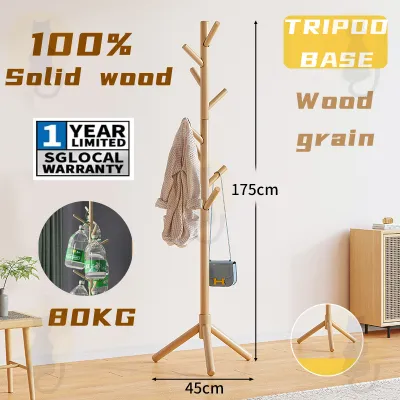
A hat stand’s ability to remain upright is governed by simple physics. The base-to-height ratio is the most critical metric. As a general rule of thumb, the diameter of a circular base or the spread of a tripod base should be at least 20% to 25% of the stand’s total height. For a standard 180cm stand, this translates to a base width of at least 36cm to 45cm.
Products mentioned in this guide
Prices are valid at publication and may change. Please refer to the product page for the latest price.
Additionally, the weight distribution must favor the bottom. Heavy materials such as solid marble, cast iron, or thick steel plates provide a low center of gravity, preventing the stand from toppling when you hang a heavy laptop bag on one of the top hooks. In households with young children or active pets, a lightweight wooden tripod stand is highly susceptible to being knocked over, posing a safety hazard. Always test a physical floor model by gently pushing the top; a stable stand should sway slightly and return to its upright position rather than tipping past its point of no return.
Weight Capacity and Hook Distribution
When shopping, check the manufacturer’s specified maximum load capacity, which is often listed in the product manual or on the brand’s website. A reliable hat stand should support at least 10kg to 15kg of evenly distributed weight. Look closely at the design of the hooks. Hooks that are completely horizontal or have downward slopes will allow straps and hats to slip off easily. Opt for hooks with an upward angle of 15 to 30 degrees, or those fitted with rounded end-caps or wooden pegs that grip fabrics securely.
Furthermore, the hooks should be staggered at varying heights. This not only allows you to hang items of different lengths—such as long umbrellas, medium-sized shoulder bags, and short hats—but also helps distribute the physical load evenly around the central pole, reducing localized stress on the joints.
Footprint vs. Storage Capacity
Singaporean homes, particularly modern HDB flats and condominiums, often feature compact entryways or narrow foyers. A massive, wide-spreading coat tree will quickly become an obstacle, blocking walkways and making the space feel cluttered. Conversely, an ultra-slim stand with only two or three hooks might not meet your household’s daily storage needs.
To balance footprint and capacity, look for smart geometric designs. Semi-circular or flat-backed hat stands can flush directly against a wall, saving valuable floor space while still providing multiple hanging points. Corner-fitting models are another excellent option, utilizing otherwise dead space behind entry doors or in tight corners.
Recommended Brand Categories Available in Singapore
Global Home Furnishing Chains
International home furnishing chains with established showrooms in Singapore offer highly accessible, budget-friendly to mid-range options. Brands like IKEA and MUJI are prominent examples, showcasing minimalist Scandinavian and Japanese designs that blend seamlessly into modern interiors. One of the greatest advantages of purchasing from these global giants is the ability to visit physical showrooms in locations like Tampines, Alexandra, or Orchard Road to inspect the build quality firsthand.

You can physically test the weight of the base, examine the joint connections, and feel the texture of the materials before making a decision. Furthermore, these large corporations offer standardized replacement parts, transparent return policies, and clear in-store warranties, providing peace of mind if a component is missing or damaged during assembly. Prices in this category are highly accessible, typically ranging from S$30 to S$120.
Local and Regional Online Furniture Retailers
For designs that are tailored specifically for local housing layouts and tropical conditions, homegrown and regional e-commerce furniture brands are excellent resources. Retailers such as Castlery, HipVan, and FortyTwo frequently design furniture with compact Singaporean entryways in mind, offering space-saving profiles that fit neatly into HDB household shelter recesses or narrow condo foyers.
When shopping via online platforms, it is crucial to perform due diligence. Thoroughly check verified buyer reviews, paying close attention to comments regarding long-term stability, ease of assembly, and whether the product matches the online images. Always review the detailed dimension charts provided on their official websites to ensure the stand fits your designated space. Additionally, look for brands that explicitly state the use of humidity-resistant finishes, moisture-treated timbers, or powder-coated metals in their product descriptions, as these details indicate the item is built to withstand Singapore’s damp climate.
Premium and Specialty Design Brands
If you view a hat stand as a statement piece of art rather than just a utilitarian organizer, premium design brands and specialty boutiques offer exquisite options. Renowned European design houses, such as Hay, Muuto, and Fritz Hansen, produce iconic coat racks and hat stands characterized by exceptional craftsmanship, high-end materials, and unique architectural silhouettes.
These premium items can be sourced directly from authorized local distributors and design showrooms located in areas like River Valley or the Civic District. When investing in a high-end stand, always verify the authenticity of the materials. Check whether the product uses genuine solid hardwoods (such as oak, walnut, or ash) rather than cheap veneers, and ensure metal elements are made of solid brass, stainless steel, or high-grade anodized aluminum.
Be sure to review the specific care instructions provided by the manufacturer to maintain the premium finish. Keep in mind that imported specialty items may involve longer lead times—sometimes taking several weeks or months to arrive—and delivery fees may vary depending on the distributor’s logistics policies.
Material and Build Quality: Adapting to Singapore's Climate
Solid Wood vs. Engineered Wood
Singapore’s tropical climate, characterized by high humidity and warm temperatures year-round, can be incredibly harsh on wooden furniture. If you prefer the warm, natural aesthetic of wood, you must choose carefully between solid timber and engineered wood.
Engineered woods, such as MDF (medium-density fibreboard) or particle board, are highly susceptible to moisture absorption. If the edges are not perfectly sealed, humidity can penetrate the core, causing the material to swell, warp, and eventually delaminate. If you select an engineered wood stand, check the manufacturer’s specifications to ensure it features high-quality edge banding and a water-resistant polyurethane or lacquer finish.
On the other hand, solid hardwoods like teak, oak, or rubberwood are naturally more durable, but they still require proper seasoning and protective coatings. Teak is particularly renowned for its natural oils that resist moisture and pests, making it an excellent, albeit pricier, choice for humid environments. Always inspect the product labels to verify that the wood has been treated with a protective sealant to prevent cracking or warping over time.
Metal Finishes
Metal hat stands offer a sleek, modern look and excellent structural strength, but they are highly vulnerable to rust if left untreated in Singapore’s humid air. When evaluating metal stands, avoid cheap, untreated iron or thin chrome plating, which can quickly develop unsightly pitting and rust spots.
Instead, look for materials specified as powder-coated steel, stainless steel, or anodized aluminum. Powder coating is an advanced dry finishing process where electrostatically charged particles are sprayed onto the metal and cured under heat to form a thick, protective skin. This finish is highly resistant to chipping, scratching, and moisture penetration.
Stainless steel (particularly grade 304 or higher) and aluminum naturally resist corrosion, making them highly reliable choices for long-term home use. Always read the product specifications to confirm the presence of these rust-resistant treatments rather than assuming all metallic surfaces are inherently rust-proof.
Joint and Connection Inspection
A hat stand is only as strong as its weakest joint. Over time, the constant physical stress of hanging and removing heavy items can cause connections to loosen, leading to an annoying wobble or complete structural failure. When inspecting a stand, pay close attention to how the segments connect.
Avoid designs that rely on simple wood screws driven directly into raw timber, as these can easily strip the wood fibers over time, especially if you ever need to disassemble and reassemble the stand during a house move. Instead, look for furniture that utilizes threaded metal inserts embedded within the wooden components, allowing metal-to-metal bolt connections.
For metal stands, inspect the weld points. High-quality welds should be smooth, continuous, and free of tiny pinholes or gaps, which can allow moisture to enter and rust the frame from the inside out. If the stand features interlocking parts, ensure they fit snugly without any play or movement before the screws are fully tightened.
Space Planning and Placement in Compact Homes
Measuring the Entryway or Foyer Footprint
Proper space planning is essential to ensure your new hat stand enhances your home’s organization rather than creating a daily physical obstacle. Before browsing online or visiting a showroom, take precise measurements of your intended placement area.
Use a measuring tape to determine the available floor width and depth, and ensure there is at least 10cm of clearance around the base of the stand to prevent it from rubbing against walls or adjacent furniture. Crucially, account for the swing radius of your front door, digital lock clearance, and the doors of any nearby shoe cabinets. You do not want a situation where opening the front door fully knocks into the hat stand, potentially causing it to tip over and damage your flooring or walls.
Avoiding High-Traffic Bottlenecks
Entryways are high-traffic zones where family members constantly pass through, often carrying groceries, bags, or strollers. Placing a fully loaded hat stand directly in the middle of this walking path is a recipe for accidental collisions.
To avoid creating a bottleneck, position the stand in a recessed nook, in an underutilized corner, or behind the main entrance door if there is sufficient clearance. If your entryway is exceptionally narrow, consider placing the hat stand slightly further inside the home, such as in the living room corner adjacent to the foyer, or even inside bedrooms where daily wear items can be organized neatly out of sight of guests.
Multi-Functional Alternatives
For ultra-compact apartments where every square centimeter counts, a single-purpose freestanding hat stand might not be the most efficient use of space. In these scenarios, look for multi-functional hybrid furniture.
Many modern brands offer innovative designs that combine a hat stand with a built-in shoe rack at the base, a small bench for sitting while putting on footwear, or an integrated mirror for quick outfit checks before leaving the house. Another highly practical feature to look for is an integrated umbrella stand.
During Singapore’s intense monsoon seasons, coming home with a wet umbrella can ruin wooden flooring. A hat stand with a dedicated umbrella holder and a removable plastic or stainless steel drip tray allows you to store wet umbrellas safely, keeping your floors dry and preventing slip hazards.
Frequently Asked Questions (FAQ)
How do I prevent a freestanding hat stand from tipping over?
Preventing a freestanding hat stand from tipping over requires a combination of smart loading habits and structural precautions. Always load heavier items, such as thick jackets, laptop bags, or filled backpacks, on the lowest hooks or in the lower storage compartments of the stand. This simple practice lowers the overall center of gravity, making the entire unit significantly more stable.
Conversely, reserve the upper hooks strictly for lightweight items like wide-brimmed hats, caps, and light scarves. Always check the manufacturer’s specified weight limits and distribute the weight as evenly as possible around the central pole rather than hanging all your items on a single side. If you live in a household with young children or active pets who might pull on the stand, consider using anti-tip wall anchors or discreet furniture straps to secure the top of the stand to the wall. Ensure that the wall structure supports these anchors and follow the manufacturer’s installation guidelines carefully to prevent damage to your walls.
Is it safe to place a hat stand in an HDB corridor or common area?
While it may be tempting to place a hat stand outside your front door to catch wet umbrellas and hats before entering your home, doing so can violate local housing and safety regulations. The Singapore Civil Defence Force (SCDF) and the Housing & Development Board (HDB) maintain strict rules regarding the use of common corridors and escape routes.
Under these regulations, a minimum clear escape passage of 1.2 meters must be maintained along all common corridors to ensure residents can evacuate safely during an emergency. Placing personal furniture, including hat stands, shoe racks, or clothes racks, in shared corridors can obstruct this vital pathway and is considered a serious fire hazard. Additionally, items left in open common areas are exposed to high humidity, dust, wind-blown rain, and potential theft. Therefore, it is strongly recommended to keep your hat stand strictly inside your private foyer, entryway, or bedroom. This ensures full compliance with local safety regulations, maintains clear emergency access for your neighbors, and protects your personal belongings from the elements.
Community discussion
Share your experience or ask a question. Comments are reviewed before publication.