
Choosing between pull-out and fixed cabinet racks is a pivotal decision when planning or upgrading a kitchen. While both configurations serve the fundamental purpose of keeping your cookware, dinnerware, and pantry items organized, they support entirely different kitchen workflows. Pull-out racks excel in accessibility, bringing deep-seated items directly into view with a simple glide, whereas fixed racks offer greater structural simplicity, maximum raw storage volume, and lower upfront costs.
To determine which configuration works most effectively for your kitchen, you must evaluate your daily cooking habits, physical comfort, and the structural limits of your existing cabinetry. A poorly matched rack system can lead to daily frustration, whether through physical strain from bending down to reach deep into dark shelves, or through lost storage capacity due to bulky sliding hardware. By analyzing how these systems compare across accessibility, space requirements, storage capacity, and long-term maintenance, you can design a functional kitchen that minimizes friction during meal preparation.
Core Differences in Accessibility and Daily Workflow
The physical interaction required to retrieve items from your cabinets directly shapes your daily cooking experience. With fixed cabinet racks, retrieving an item stored at the back of a deep base cabinet requires a multi-step physical process. You must bend down, peer into a dark space, and often remove several items at the front just to reach a single pot or pan hidden in the rear. This repetitive bending, reaching, and lifting can introduce physical strain, particularly during fast-paced cooking sessions or for individuals with limited mobility.
Products mentioned in this guide
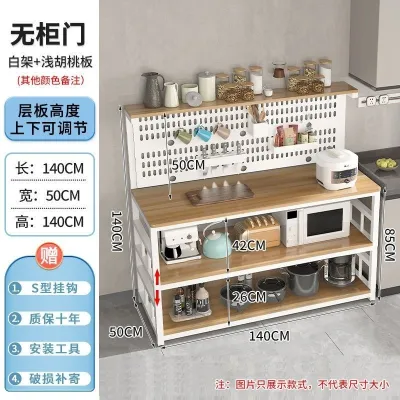
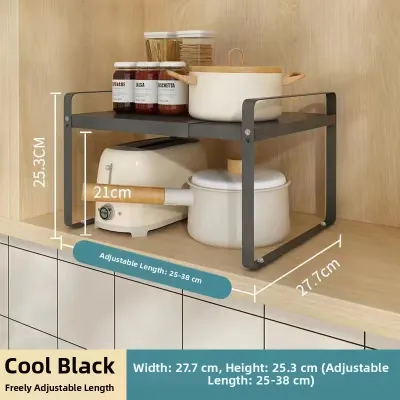
Prices are valid at publication and may change. Please refer to the product page for the latest price.
In contrast, pull-out cabinet racks transform this interaction into a single, fluid motion. By mounting the rack on sliding tracks, the entire contents of the cabinet glide outward into the bright light of the kitchen. This configuration eliminates the need to kneel or reach into dark corners, as every item is displayed clearly from an overhead perspective. The ergonomic benefits are particularly pronounced in lower base cabinets and deep corner spaces, where visibility is naturally restricted by the surrounding structure.
However, the workflow benefits of pull-out racks depend heavily on how you organize your kitchen zones. For high-frequency items like daily cooking oils, spices, or frequently used pans, a pull-out system adjacent to the stove can streamline meal preparation by keeping essentials within arm’s reach. On the other hand, if your cooking style involves using large, heavy appliances that are rarely moved, a fixed rack might be more practical. Understanding these physical dynamics helps prevent workflow bottlenecks, ensuring that your most-used tools are always the easiest to access.
Space, Clearance, and Installation Requirements
Before committing to either configuration, you must carefully evaluate the physical and structural constraints of your kitchen cabinets. Pull-out track systems require precise interior dimensions to function correctly. You must measure the cabinet’s internal width, depth, and height, taking into account any obstructions such as plumbing pipes, electrical outlets, or structural supports. Even a minor measurement error can prevent the sliding tracks from aligning properly, leading to rough operation or binding.

Door clearance and hinge interference are critical factors that often complicate pull-out installations. Standard cabinet doors with traditional hinges often protrude into the cabinet opening when fully opened. If the pull-out rack does not have sufficient clearance to bypass these hinges, the metal frame will scrape against the door or fail to extend entirely. To resolve this, you may need to install zero-protrusion hinges or add spacer blocks to shift the slide tracks away from the cabinet walls, which slightly reduces the usable width of the rack.
Floor space and cabinet footprint also differ significantly between the two configurations. Fixed shelves require zero external clearance, making them suitable for tight, narrow galley kitchens where floor space is at a premium. Pull-out racks, conversely, require ample open floor space directly in front of the cabinet to allow for full extension. You must ensure that extending the rack does not block primary walkways or collide with opposite counters, kitchen islands, or open appliance doors. Additionally, before retrofitting a pull-out system, you must inspect the cabinet box’s structural integrity to ensure the side walls and base can support the dynamic, cantilevered weight of a fully extended drawer.
Storage Capacity and Organization Trade-offs
While pull-out racks offer greater accessibility, they come with a notable trade-off in usable storage volume. The mechanical components of a pull-out system—including the metal slides, mounting brackets, outer frames, and side clearances—occupy valuable physical space inside the cabinet box. This hardware overhead means that a pull-out rack will always have a smaller storage footprint than a fixed shelf installed in the exact same cabinet. If you have a compact kitchen where every square centimeter counts, this loss of volume can be a significant drawback.
Fixed racks, by contrast, maximize the raw storage capacity of your cabinetry. Because they mount directly to the cabinet walls without bulky moving parts, they utilize the full width and depth of the interior space. This makes fixed shelves highly efficient for storing oversized, bulky, or irregularly shaped items, such as large stockpots, stand mixers, or serving platters that might not fit within the rigid wire frames or baskets of a pull-out system.
To bridge the gap in organization, both systems rely on different strategies. Fixed shelves offer excellent vertical flexibility, especially if they are mounted on adjustable shelf pins, allowing you to reconfigure the height of each tier as your storage needs change. Pull-out racks, while less vertically adjustable once installed, often feature built-in dividers, tiered baskets, or specialized pegs that keep smaller items like spice jars, lids, and food containers upright and organized. When choosing, you must weigh whether you prioritize the raw, flexible volume of fixed shelving or the structured, compartmentalized organization of pull-out systems.
Cost, Maintenance, and Long-Term Durability
The financial investment and long-term upkeep of your kitchen cabinetry are heavily influenced by the hardware configuration you select. Fixed shelves are highly cost-effective, requiring minimal hardware beyond basic wood or metal supports and standard mounting screws. Their installation is straightforward, making them a standard inclusion in most basic kitchen designs. Because they have no moving parts, fixed shelves are virtually maintenance-free and can last for decades without requiring adjustment or replacement, provided they are not subjected to excessive moisture or weight beyond their structural limits.
Pull-out systems represent a higher initial investment, reflecting the cost of precision-engineered sliding tracks, soft-close mechanisms, and heavy-duty metal baskets. Professional installation is often recommended to ensure proper track alignment, which adds to the overall project cost. Over time, the moving parts of a pull-out rack require routine inspection and maintenance to preserve their smooth operation. Dust, food crumbs, and spilled liquids can accumulate in the ball-bearing slides, causing friction, noise, or premature wear.
To maintain a pull-out system, you must periodically clean the tracks, check for loose mounting screws, and verify that the soft-close mechanisms are functioning correctly. Observable signs of wear, such as a sagging rack, resistance when pulling, or scraping noises, indicate that the hardware has drifted out of alignment or that the weight limit has been exceeded. If left unaddressed, misaligned tracks can place uneven stress on the cabinet box, potentially damaging the wooden side panels or causing the slide mechanism to fail entirely.
Decision Framework: Which Cabinet Rack Fits Your Kitchen?
To finalize your kitchen configuration, you can use a structured decision framework based on your specific layout, budget, and physical needs. This step-by-step approach ensures that your chosen rack system aligns with both your daily habits and the structural realities of your home.
First, inspect the physical condition of your existing cabinetry. If your cabinet boxes are constructed from lightweight, thin particleboard or show signs of moisture damage, they may not possess the structural integrity required to anchor heavy-duty sliding tracks. In such cases, fixed shelves are the safer and more reliable choice unless you plan to reinforce or replace the cabinet carcasses entirely.
Second, evaluate your storage priorities and physical comfort:
- Opt for pull-out racks if: You struggle with bending or reaching into deep base cabinets, want to eliminate dark, forgotten corners, and prioritize quick, ergonomic access to heavy cookware, pots, pans, or daily pantry staples.
- Opt for fixed racks if: You are working within a strict budget, need to maximize every cubic centimeter of storage space for bulky or oversized appliances, or are dealing with exceptionally narrow or non-standard cabinet widths where standard pull-out hardware cannot fit.
Finally, consider a hybrid approach. Many functional kitchens utilize fixed shelves in upper wall cabinets—where visibility is already at eye level—and reserve pull-out racks for deep lower base cabinets where physical strain is most common. This balanced configuration optimizes both your budget and your daily kitchen workflow.
Frequently Asked Questions (FAQ)
Can I convert my existing fixed cabinets to pull-out racks?
Yes, converting existing fixed cabinets to pull-out racks is a feasible retrofit project, provided you perform several critical structural checks beforehand. First, you must measure the exact interior width, depth, and height of the cabinet opening, paying close attention to any obstructions like door hinges, face frames, or plumbing pipes. Next, inspect the cabinet box material; solid wood or high-density plywood carcasses are suitable for anchoring sliding hardware, whereas thin particleboard may require reinforcement brackets to distribute the weight safely. Finally, ensure that the cabinet base is securely anchored to the wall or floor to prevent the entire unit from tipping forward when the heavy pull-out racks are fully extended.
Do pull-out cabinet racks hold less weight than fixed shelves?
Not necessarily, as the weight capacity of a pull-out rack is determined by the load rating of its sliding hardware rather than the shelf material itself. While a thick, well-supported fixed shelf can hold substantial static weight, high-quality pull-out slides are engineered to support significant dynamic loads, often ranging from 30 kg to over 50 kg depending on the specification. To ensure safety and prevent hardware failure, you must always check the manufacturer’s specified dynamic load capacity before storing heavy items like cast-iron cookware or small kitchen appliances. Avoid overloading the racks, and distribute weight evenly across the basket to prevent the sliding tracks from twisting or binding over time.
Community discussion
Share your experience or ask a question. Comments are reviewed before publication.