
Evaluating whether a pull out bed is safe for your child is a crucial step before updating their bedroom furniture. Often referred to as trundle beds, these dual-level sleeping arrangements are highly popular for saving valuable floor space, especially in compact urban living environments like Singapore’s HDB flats and condominiums. However, while they offer an elegant solution for siblings sharing a room or hosting overnight guests, their mechanical parts and unique configuration require parents to carefully assess specific safety factors before making a purchase.
For school-aged children, typically six years and older, a pull out bed is generally safe when constructed to rigorous manufacturing standards. For toddlers and infants, however, the lower sliding section presents distinct physical hazards due to its proximity to the floor and the lack of standard protective barriers. Transitioning a child from a baby cot to a larger bed is a major developmental milestone, and safety during this transition depends heavily on the child’s physical coordination, nighttime mobility, and the mechanical design of the bed frame.
Key Safety Risks of Pull-Out Beds for Children
While a pull out bed offers excellent space-saving utility, its moving components and dual-level structure introduce specific physical hazards. Understanding these mechanical risks allows you to make an informed decision and identify potential danger zones during your shopping process.
Products mentioned in this guide


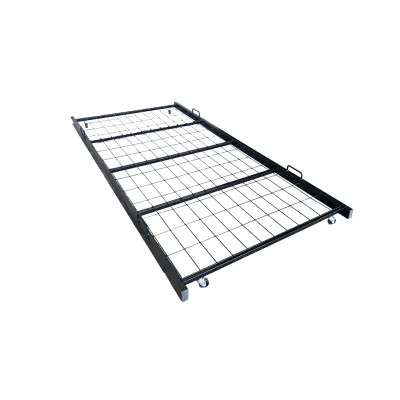
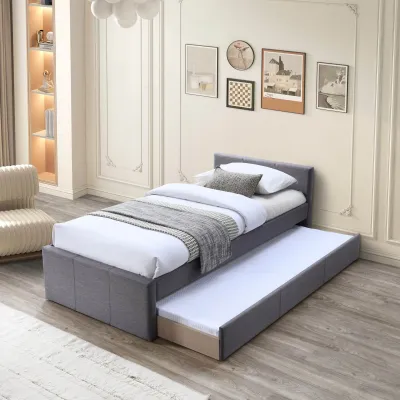
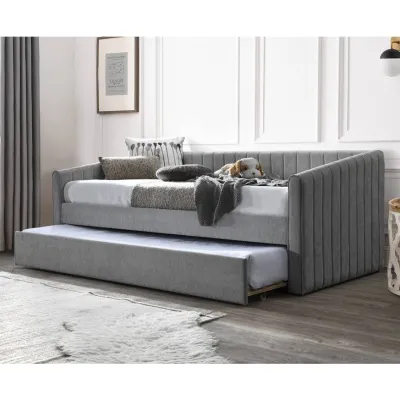
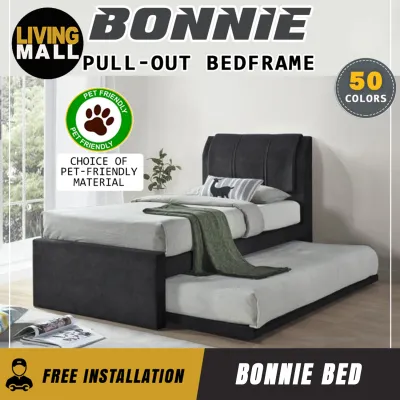
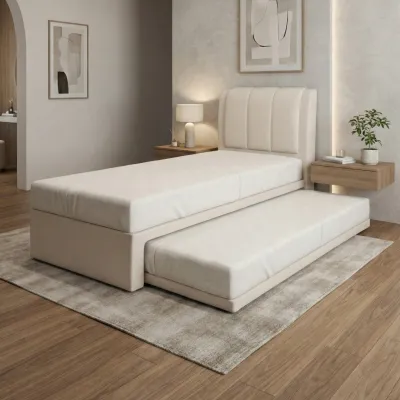
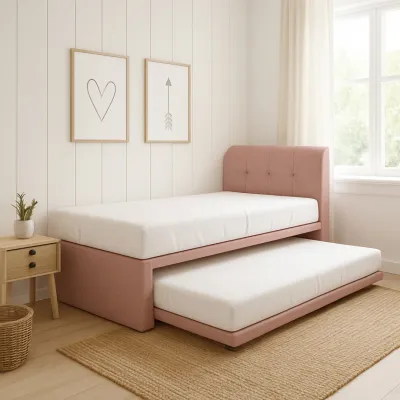
Prices are valid at publication and may change. Please refer to the product page for the latest price.
Entrapment and Pinch Points in the Mechanism
The moving parts required to slide the lower trundle frame in and out can act as severe pinch points for small fingers and limbs. Children are naturally curious and may attempt to operate the sliding mechanism themselves, risking injury if their hands become caught in the tracks, folding hinges, or metal runners.
Furthermore, a significant entrapment hazard exists in the physical gap between the main bed frame and the lower trundle when the bed is partially extended or pushed back. If the wheels do not track perfectly straight, the frame can twist, narrowing this gap suddenly and trapping a child’s foot or hand. Opting for designs with covered tracks, enclosed runners, and smooth-gliding hardware greatly minimizes these physical risks.
Fall Hazards and Mattress Gaps
Unlike standard single beds or bunk beds, the lower pull-out section of a trundle bed rarely features built-in guardrails. While the fall distance to the floor is minimal, a sleeping child who rolls off can still strike adjacent furniture, toys, or the hard edges of the extended bed frame itself. Additionally, an extended trundle bed left open in the middle of a dark room creates a serious tripping hazard for children waking up in the night to use the bathroom.
Another critical hazard is the potential gap between the mattress and the inner sides of the trundle frame. If the mattress is too small or shifts during sleep, it can create a dangerous pocket where a young child’s head, neck, or limbs can become wedged. This entrapment can lead to restricted breathing or physical injury, making precise mattress sizing a fundamental safety requirement.
Structural Stability and Weight Limits
Children frequently use beds for active play, including jumping and roughhousing. If a child jumps onto an extended pull-out bed, the sudden shifting of weight can cause the frame to tip, slide, or collapse entirely. The lower trundle section is rarely designed to handle the same dynamic impact as a standard stationary bed.
Most manufacturers assign a significantly lower weight capacity to the pull-out section than to the main upper bed. Exceeding this weight limit—such as when multiple children sit on the trundle or an adult attempts to sleep on it—can cause the wooden support slats to crack or the metal brackets to bend. Over time, this structural fatigue compromises the overall stability of the entire bed frame.
Safety Standards and Certifications to Verify Before Buying
To ensure a pull out bed is structurally sound and chemically safe for your child, look for concrete safety certifications rather than relying on vague retail marketing. Reliable manufacturers test their products against established international safety standards to verify structural integrity and child safety.

When reviewing product specifications, check for compliance with recognized children’s furniture standards, such as the European standard EN 747 (which governs bunk beds and high beds, focusing on gap dimensions and entrapment prevention) or the American ASTM F1427 standard. These certifications ensure that the bed’s design has been tested to eliminate dangerous gaps—specifically ensuring that any openings are either small enough to prevent a limb from entering or large enough to prevent a child’s head from getting trapped.
Material safety is another critical dimension, particularly for younger children who may touch or chew on the bed frame. Verify that the wood, metal, or composite materials are finished with non-toxic, lead-free paints and low-VOC (volatile organic compound) coatings. In warm, humid tropical climates, poor-quality finishes can off-gas chemical fumes more rapidly in a closed, air-conditioned bedroom, potentially irritating a child’s respiratory system.
Finally, always locate and adhere to the manufacturer’s explicitly declared age recommendations and maximum weight limits for both the main bed and the pull-out section. If these specifications are not clearly listed on the product packaging or the manufacturer’s website, treat the product with caution. Never assume a bed frame is suitable for your child’s weight without written verification from the manufacturer.
In-Store and Online Safety Checklist for a Pull Out Bed
Whether you are testing bed frames in a physical showroom or comparing dimensions and specifications online, utilizing a systematic checklist ensures you do not overlook critical safety features. Prioritize structural stability and user-friendly safety mechanisms over aesthetic appeal.
Inspecting the Pull-Out Mechanism and Hardware
When evaluating a physical model, test the sliding action multiple times to ensure it operates smoothly. The trundle should glide effortlessly along its tracks without requiring excessive force, which could cause the frame to derail or jerk violently.
- Wheel Brakes: Look for trundle wheels equipped with reliable locking mechanisms or brakes. Once the bed is extended, these locks must be engaged to prevent the bed from rolling or shifting when your child climbs in.
- Recessed Wheels: Ensure the caster wheels are recessed deeply beneath the frame or covered by protective guards. This design prevents toes from being pinched under the rolling wheels and protects your flooring from deep scratches.
- Track Alignment: Verify that the tracks or runners guide the trundle in a straight line, preventing the frame from twisting or jamming during operation.
Evaluating Guardrails and Frame Edges
Inspect the physical frame of both the upper and lower beds to identify potential impact hazards and structural weaknesses.
- Upper Bed Guardrails: Ensure the main upper bed has secure, sturdy guardrails if it sits higher than a standard single bed. These rails must be tightly bolted to the main frame with no wobbling.
- Trundle Guardrails: If you plan to use the lower pull-out section for a younger child, check if the manufacturer offers compatible, removable guardrails that can be clamped securely to the trundle frame without damaging the finish.
- Rounded Edges: Run your hands along all exposed corners, edges, and wooden joints. All edges should be rounded and smooth to prevent impact injuries if a child trips or falls nearby.
- Slat Spacing: Measure the distance between the supporting slats on both beds. The spacing must be narrow enough to support the mattress evenly without sagging, and small enough to prevent a child's arm or leg from slipping through.
Verifying Mattress Fit and Thickness Limits
An improperly sized mattress is one of the most common causes of entrapment and structural failure in pull-out beds. Always measure the inner dimensions of both frames before purchasing mattresses.
- The Two-Finger Rule: When the mattress is placed inside the trundle frame, there should be no gap wider than two fingers (approximately 3 cm) between the mattress edge and the frame on any side. If the gap is wider, choose a larger mattress size to eliminate the risk of limb entrapment.
- Maximum Thickness Limits: Strictly check the manufacturer's maximum mattress thickness limit for the lower pull-out section. A mattress that is too thick will sit too high, preventing the trundle from sliding closed and potentially bypassing safety rails. Conversely, a mattress that is too thin will leave dangerous vertical gaps along the sides of the frame.
- Room Access and Dimensions: Ensure you have verified the finished dimensions of the bed when fully extended. Measure your child's bedroom to ensure there is adequate clearance for walkways and that the extended bed does not block wardrobe doors, main doorways, or emergency exit paths. Additionally, verify lift and doorway access in your building to ensure the delivery team can safely transport the frame to your home.
Daily Usage Rules and Maintenance to Prevent Accidents
Even the most robust pull out bed requires ongoing parental maintenance and clear behavioral boundaries to remain safe over years of daily use. Establishing safe habits early prevents avoidable injuries and preserves the structural integrity of the furniture.
First, set firm household rules regarding the use of the bed. Emphasize that both the upper bed and the lower pull-out section are strictly for sleeping and quiet resting, never for jumping, bouncing, or rough play. Instruct your children to keep their hands, feet, and toys clear of the tracks and wheels whenever the trundle is being opened or closed.
Because a pull-out bed relies on moving mechanical hardware, the physical vibrations from daily sliding and normal movement will cause screws, bolts, and joints to loosen over time. Establish a monthly maintenance routine to inspect the entire bed frame. Check all connection points, tighten loose hardware, and inspect the wooden slats for any signs of cracking or splitting.
Keep the trundle tracks and the floor beneath the bed clean and free of debris. Dust, pet hair, and small toys can easily accumulate in the path of the wheels, causing the sliding mechanism to jam, slide unevenly, or derail. Vacuum under the bed frame regularly and wipe the tracks with a dry cloth to maintain a smooth glide.
Finally, establish clear stop-use conditions for the safety of your family. If you notice that the bed frame wobbles significantly when shaken, the sliding mechanism jams repeatedly, or a supporting slat cracks, stop using the bed immediately. Do not attempt temporary, unverified DIY repairs that compromise the frame’s structural engineering. Always check the applied product’s label and the treated item’s manufacturer instructions first; if instructions conflict or the frame is damaged, consult the manufacturer or a qualified furniture repair professional before allowing your child to sleep on the bed again.
Frequently Asked Questions (FAQ)
What is the recommended age for a child to sleep on a pull-out bed?
While the main, upper bed of a pull-out set can be suitable for toddlers transitioning from a crib (typically around two to three years old, provided secure guardrails are installed), the lower pull-out trundle section is generally recommended for older children, school-aged kids (six years and older), or occasional guests. The lower bed sits very close to the floor and lacks standard fall protection, making it less suitable for toddlers who may roll out or trip over the low frame in the dark.
Can I use a standard mattress on the pull-out trundle section?
In most cases, you cannot use a standard-depth mattress on the pull-out trundle section. Standard mattresses are usually too thick (often 20 cm or more), which will prevent the trundle from sliding closed under the main bed. Forcing a thick mattress inside can damage the frame, break the sliding tracks, or create an unsafe sleeping height that bypasses safety boundaries. Parents must purchase a low-profile or trundle-specific mattress that strictly adheres to the manufacturer’s specified maximum thickness guidelines (typically between 10 cm and 15 cm).
Community discussion
Share your experience or ask a question. Comments are reviewed before publication.