
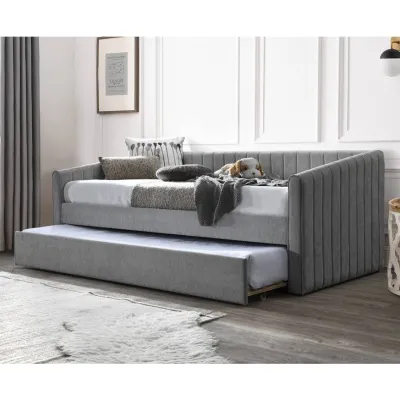
Pull-out bed frames, often referred to as trundle beds, offer an excellent space-saving solution for children’s bedrooms, especially in compact living environments like Singapore’s HDB apartments where floor space is at a premium. However, determining whether a pull-out bed frame is safe for your child requires looking beyond its space-saving convenience. While these beds are highly practical for shared rooms and sleepovers, their safety ultimately depends on specific physical design features, precise assembly, and strict adherence to the manufacturer’s age and weight recommendations.
Before making a purchase, parents must evaluate potential physical risks, inspect safety mechanisms, and understand how to maintain the bed over time. By focusing on structural integrity and proper usage, you can provide a secure sleeping environment that minimizes the risk of accidents. This guide outlines the essential safety hazards to watch out for, the key features to inspect in a showroom or online, and the daily practices required to keep your children safe.
Understand the Safety Risks of Pull-Out Beds for Children
Moving parts are a primary concern when evaluating pull-out bed frames. The sliding mechanism that allows the lower bed to glide out can create pinch points. Gaps between the main bed frame and the pull-out section, as well as exposed sliding tracks, pose entrapment hazards for small fingers and toes if the bed is operated while children are nearby.
Products mentioned in this guide


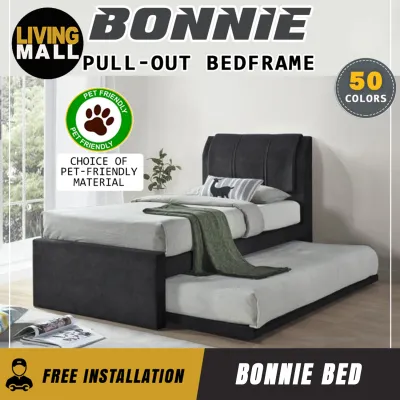
![[FREE INSTALLATION] KENZZO: Wooden single bed frame with headboard/ super single bed frame/Pull out bed/storage bed](https://img.lazcdn.com/g/p/6b17ef488a1c7170cd309d76ce51fe13.jpg_400x400q80.jpg_.webp)
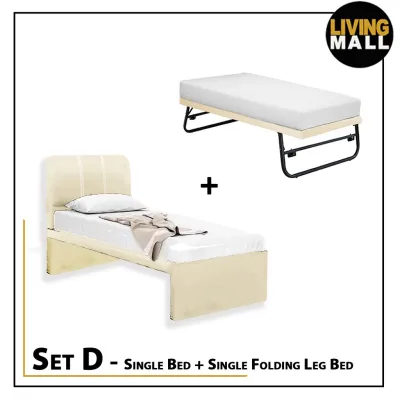
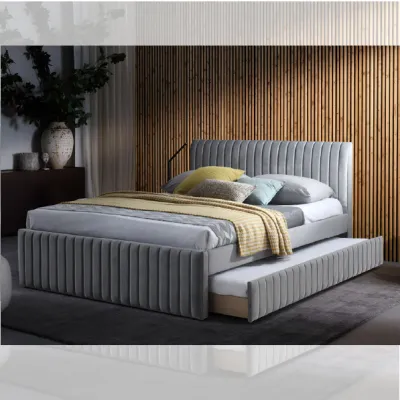
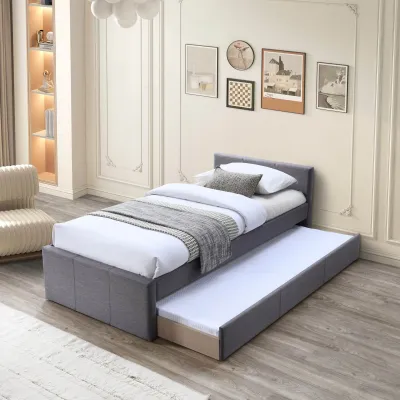
Prices are valid at publication and may change. Please refer to the product page for the latest price.
Fall risks are another critical factor to consider. Some pull-out beds feature a pop-up mechanism that elevates the lower mattress to the same height as the main bed. If these elevated sections lack adequate guardrails or secure locking systems, they present a significant fall risk, particularly for younger children who move frequently during sleep.
Structural instability can lead to tipping or collapse during active use. If the frame is assembled incorrectly, if locking pins are omitted, or if children exceed the manufacturer’s specified weight limits, the frame can wobble or slide unexpectedly. This risk increases when children treat the bed as a play structure or jump on the extended section.
Suffocation risks can arise from an improper mattress fit. If the mattress used on the pull-out section is too small or too thin compared to the manufacturer’s specifications, dangerous gaps can form between the mattress and the bed frame. A young child can slip into these gaps, leading to entrapment or breathing difficulties.
Key Safety Features to Inspect Before Buying
When shopping for a pull-out bed frame, the first feature to inspect is the locking mechanism. High-quality models include secure locks or latches that hold the pull-out section firmly in place, whether it is fully extended or tucked away. This prevents the bed from shifting or collapsing when a child climbs in or out.

Examine the sliding track system closely. Look for designs where the tracks, rollers, and casters are fully enclosed or shielded. Enclosed tracks prevent children from placing their fingers in the path of the rollers, significantly reducing the risk of painful pinch injuries during daily operation.
If the pull-out section is elevated or if the main bed is positioned high, check the guardrail design. Verify that the guardrails are sturdy and that the distance between the slats complies with safety standards to prevent a child’s head from getting stuck. Additionally, check the manufacturer’s safety labels to determine the maximum mattress thickness allowed; a mattress that is too thick will reduce the effective height of the guardrail, rendering it useless.
Assess the construction materials and joints. Look for robust frames made of solid wood or heavy-duty metal with reinforced joints rather than thin, flimsy materials. Always locate and read the manufacturer’s weight capacity labels. These labels should clearly state the maximum weight limit for both the main bed and the pull-out section, allowing you to verify that the frame can safely support your child and the mattress.
Safe Setup and Daily Usage Practices
Ensuring long-term safety begins with proper installation. Always follow the manufacturer’s assembly instructions step-by-step, using all the provided hardware, screws, and brackets. Skipping a single washer or failing to tighten a joint securely can compromise the structural integrity of the entire bed frame.
To prevent dangerous gaps, check the product label for the exact mattress dimensions required for both the upper and lower frames. Measure the mattress before purchasing to ensure a snug fit with no more than a minor gap between the mattress edge and the frame. Pay close attention to the maximum mattress thickness limit specified for the pull-out section, as an oversized mattress may prevent the bed from sliding closed or compromise guardrail safety.
Strictly observe the manufacturer’s minimum age and weight recommendations. Young toddlers who lack the coordination to navigate moving parts or elevated surfaces should not sleep on pull-out beds. Keep the pull-out section closed during the day if young children are playing in the room to prevent unsupervised climbing or pinching.
Depending on the height, design, and stability of the specific model, wall anchoring may be necessary. If the manufacturer’s instructions indicate a tipping risk, or if your own stability check reveals any wobbling when the bed is fully extended, use the provided anti-tip kits to anchor the main bed frame securely to the wall.
Routine Maintenance and When to Stop Use
Regular maintenance is essential to keep a pull-out bed frame safe over years of use. Establish a routine inspection schedule—such as every three to six months—to check for loose screws, worn casters, and compromised locking mechanisms. Tighten any hardware that has loosened due to the daily movement of pulling the bed in and out.
Parents must be prepared to stop using the bed immediately if certain warning signs appear. If the locking mechanism fails to secure the bed, if you notice structural cracking in the wood or metal, or if the sliding track becomes warped and no longer glides smoothly, discontinue use. Operating a damaged pull-out mechanism increases the risk of sudden collapse or severe pinching.
For structural repairs or issues with the sliding and locking mechanisms, avoid temporary DIY fixes. Instead, consult the manufacturer for replacement parts or hire a qualified furniture repair professional to restore the bed to its original safety specifications.
Frequently Asked Questions (FAQ)
What is the recommended minimum age for using a pull-out bed frame?
The recommended minimum age for using a pull-out bed frame depends heavily on the specific design of the bed and the manufacturer’s explicit safety labels. Generally, standard floor-level pull-out beds (where the lower mattress sits directly on or just above the floor) are suitable for children who have transitioned out of a crib, typically around two to three years of age, provided they can get in and out safely. However, if the pull-out section features a pop-up mechanism that elevates the mattress to a standard bed height, or if the main bed is elevated, these surfaces are generally not recommended for children under six years old. Always consult the product manual and safety labels for model-specific age restrictions.
Do pull-out bed frames need to be anchored to the wall?
Whether a pull-out bed frame needs to be anchored to the wall depends entirely on the specific model’s design, height, and the manufacturer’s assembly instructions. Low-profile, standard single-height beds with a floor-level pull-out drawer typically do not require wall anchoring because they have a low center of gravity. However, taller models, such as those integrated into bunk beds, loft beds, or high daybeds, carry a higher risk of tipping when the lower bed is pulled out or when children climb on the frame. Always check the included hardware and instruction manual for anti-tip kits, and follow the provided installation steps to secure the bed to the wall if recommended by the manufacturer.

Community discussion
Share your experience or ask a question. Comments are reviewed before publication.