
The most practical foldable movable coffee table styles for compact Singapore apartments are those that adapt dynamically to shifting daily needs—such as drop-leaf designs, lift-top tables, and nested sets on lockable casters. In tight living spaces like HDB flats or studio apartments, a coffee table cannot simply be a static centerpiece. It must transition seamlessly from a low-profile living room anchor to a dining table, a work-from-home desk, or a tucked-away side unit. Choosing the right style requires balancing structural stability, clearance dimensions, and smooth mechanical hardware.
Core Space Requirements for Compact and Multi-Functional Living Rooms
Before browsing styles, you must map the physical boundaries of your living room. Grab a measuring tape and map out the exact floor area where the table will sit. It is crucial to measure not just the static footprint of the table when folded, but also the fully expanded dimensions. Ensure there is at least 60 centimeters of clearance around the table when it is fully deployed so that family members can walk past without squeezing or bumping their shins.
Next, identify the primary activities that will take place in this zone. If your living room doubles as a dining area or a home office, you will need a table that can rise to standard dining height—typically 75 centimeters—or a comfortable working height. If the room is primarily for relaxation, a lower profile might suffice. Understanding these daily habits helps you determine the necessary height adjustments and surface area.
Products mentioned in this guide
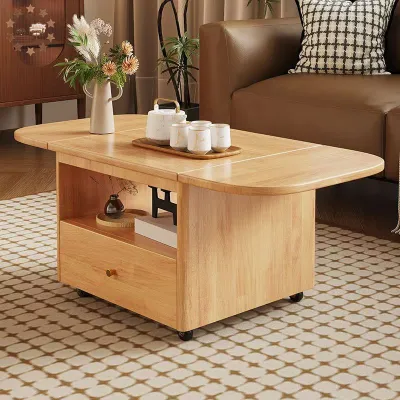

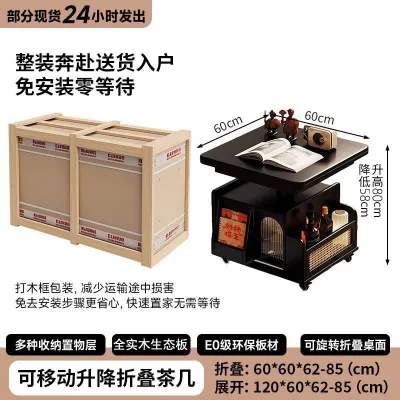
![[CozyNest ]Wooden windblown edge table mobile folding coffee table living room household tea table](https://img.lazcdn.com/g/p/33052fbdaddcc97f0dd90db9da9d4056.jpg_webp_400x400q80.jpg_.webp)
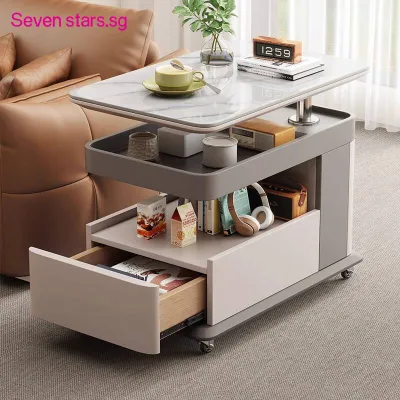
![NKAHS [PRE-ORDER] Sintered Stone Multi-functional Lift Coffee Table 2-in-1 Dining Table Foldable Movable Tea Table for Small Living Room](https://img.lazcdn.com/g/p/1f0c38eae3eb211bc3eb7e17ea24536d.jpg_400x400q80.jpg_.webp)
Prices are valid at publication and may change. Please refer to the product page for the latest price.
Storage needs also dictate the most suitable style. Assess whether your living room suffers from visible clutter like remote controls, chargers, and magazines. If you prefer a minimalist aesthetic, look for styles with concealed storage compartments. If you already have ample storage elsewhere, a lightweight, open-shelved, or nested design will offer greater physical and visual lightness in a small room.
Practical Foldable and Movable Coffee Table Styles by Scenario
Different household dynamics and daily routines require distinct structural designs. Matching the right folding or moving mechanism to your specific lifestyle ensures the table remains a helpful tool rather than an awkward obstacle.

Drop-Leaf and Expandable Tables for Dining and Working
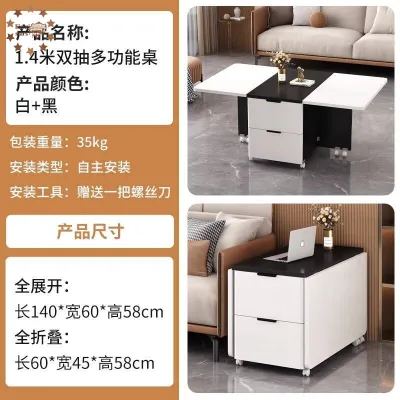
Drop-leaf and expandable coffee tables are excellent solutions for homes that lack a dedicated dining room. These designs feature hinged panels that fold down when not in use and swing up to lock into place when you need extra surface area. When evaluating these tables, pay close attention to the support brackets or gateleg mechanisms beneath the leaves. The extended panels must remain level and rigid when you apply downward pressure, such as when leaning during work or cutting food during dinner.
You should also verify the smoothness of the folding mechanism. High-quality hinges should operate without sticking, squeaking, or requiring excessive physical force. Check the height of the table in both its lowered and raised states to ensure it aligns comfortably with your sofa cushions or folding chairs. If the table is too low when expanded, it will cause you to hunch over, leading to discomfort during long working sessions.
Weight is another critical factor to balance. An expandable table needs enough base weight to prevent it from tipping over when only one leaf is extended. However, if you plan to move the table frequently to clear space for workouts or cleaning, look for models equipped with heavy-duty casters. This combination of structural weight and mobility allows you to enjoy a stable dining surface that still glides out of the way effortlessly.
Lift-Top and Nested Tables for Storage and Flexibility
Lift-top coffee tables feature a mechanical top that lifts upward and forward, bringing the surface closer to you while you sit on the sofa. This design is incredibly practical for casual laptop use or dining while watching television. When shopping, inspect the lift-top hardware closely. Look for gas-spring or heavy-duty spring-loaded brackets that offer a smooth, controlled rise and descent. Avoid flimsy mechanisms that snap shut quickly, as they pose a risk to fingers and can spill drinks left on the surface.
Nested tables offer a different kind of flexibility by stacking neatly beneath one another when space is tight. When you have guests or need extra surface area, you can pull the smaller tables out and place them around the room. This independent mobility makes them highly versatile. Ensure the frames slide apart smoothly without catching, and check that the undersides of the outer tables are finished well to prevent them from scratching the tops of the inner tables during nesting.
The internal storage compartment of a lift-top table is a major bonus for small apartments. Measure the depth of this compartment to ensure it can actually accommodate your specific items, such as a laptop, gaming controllers, or books. Some compartments are shallow, while others offer deep storage. Make sure the storage remains easily accessible even when the top is partially lifted, allowing you to grab items without fully disrupting your setup.
C-Table and Trolley Styles for Tight Corners and Mobility
For extremely tight living rooms or studio apartments, C-shaped tables and wheeled trolleys offer unmatched space efficiency. A C-table features an open, cantilevered frame that allows the base to slide directly under your sofa or armchair. This slides the tabletop over your lap, eliminating the need for a large central coffee table. Measure the clearance height under your sofa frame before purchasing to ensure the table’s base can slide underneath without scraping the fabric or wood.
Trolley-style coffee tables, equipped with multi-directional wheels, are designed for high-frequency movement. They can serve as a central coffee table during the day, a side table by night, or even a serving cart when hosting guests. To prevent the trolley from rolling unexpectedly on smooth tiles or laminate floors, verify that at least two of the casters feature reliable, easy-to-operate locking brakes.
The center of gravity is a vital safety consideration for both C-tables and trolleys. Because C-tables lack support on one side, they can tip if heavy items are placed on the outer edge. Look for models with a weighted base or a sturdy steel frame that distributes weight evenly. For trolleys, ensure the shelves are designed with raised edges or lips to prevent items from sliding off when the cart is in motion.
Key Material and Structural Checks for Daily Durability
A multi-functional coffee table undergoes far more wear and tear than a traditional static table. To ensure your investment lasts, you must carefully evaluate the materials and construction quality. Review the product labels for surface finishes. For tables used for dining or working, look for scratch-resistant, heat-tolerant, and moisture-resistant surfaces, such as high-pressure laminates, treated engineered wood, or tempered glass. Untreated wood or porous stone can easily stain from coffee spills or water rings.
Examine the hardware joints, hinges, and brackets. Metal-to-metal connections are generally much more durable than screws driven directly into particleboard, which can strip over time with repeated folding. Gently shake the table in its fully assembled state to check for wobble. If the joints feel loose or flex under light pressure, the table may not withstand the daily physical demands of folding and unfolding.
Do not overlook the wheels. The caster material plays a significant role in both the noise level and the preservation of your flooring. Look for soft polyurethane or rubber wheels, which glide quietly and protect delicate surfaces. Hard plastic wheels can easily scratch laminate, vinyl, or polished wood floors over time. Additionally, larger wheel diameters generally roll more smoothly over rug edges and transitions between different flooring types.
Space Planning and Safety Tips for Small Apartments
Integrating a movable coffee table into a compact apartment requires careful layout planning to maintain a safe and comfortable home environment. Always maintain clear walkways. When the table is fully expanded, ensure it does not block the path to the kitchen, bathroom, or main entrance. In tight HDB layouts, a blocked pathway can quickly become a daily frustration and a safety hazard during an emergency.
If you share your home with young children or pets, safety mechanisms are paramount. Look for folding and lift-top tables that feature anti-pinch designs, soft-close dampers, or safety locks. These features prevent the heavy tabletop from slamming down on small fingers or curious paws. Teach family members how to operate the locking mechanisms properly to avoid accidental collapses.
Finally, consider the table’s position relative to high-traffic zones. Avoid placing a fully deployed, wide-leaf table directly in front of narrow corridors or balcony doors. If you need to access these areas frequently, choose a highly mobile style like a trolley or nested set that can be rolled into a corner in seconds. By planning your layout around the table’s maximum dimensions, you can enjoy a highly flexible living room without sacrificing safety or ease of movement.
Frequently Asked Questions (FAQ)
Can a foldable coffee table support heavy items like laptops and meals?
Yes, but the weight capacity varies significantly depending on the table’s design, hinge quality, and frame material. Most standard foldable coffee tables can easily support laptops, books, and daily meals, but they are not designed to hold heavy storage boxes or support a person’s body weight. Always check the manufacturer’s specified weight limits for both the main surface and the extended leaves. To ensure safety, test the table’s stability by applying gentle downward pressure on the edges before placing hot liquids, heavy equipment, or fragile items on the expanded sections.
Are movable coffee tables safe to use on vinyl or laminate flooring?
Movable coffee tables are safe for vinyl and laminate flooring as long as they are equipped with the correct type of wheels. Look for casters made of soft materials like polyurethane or rubber, which distribute weight evenly and glide without scratching. Avoid hard nylon or plastic wheels, as they can trap grit and scuff or gouge synthetic floor finishes over time. If your table has hard wheels, consider replacing them with aftermarket rubber casters, placing a low-pile area rug underneath the table’s main resting spot, or checking your flooring manufacturer’s guidelines regarding rolling furniture.
Community discussion
Share your experience or ask a question. Comments are reviewed before publication.