
Quick Answer: Assessing Your Need for a Neck Massager Device
Finding relief from persistent neck tension often comes down to choosing the right tool for your lifestyle, space, and budget. If you regularly experience neck stiffness after long hours at a desk, a dedicated massager device for neck relief can offer convenient comfort. However, before investing in any consumer device, it is important to evaluate your symptoms. While mild muscle fatigue and tension respond well to massage, chronic, sharp, or shooting neck pain requires professional medical consultation rather than a retail product.
The core decision between a portable neck massager and a full massage chair lies in the scope of relief you need. Portable devices are designed for highly targeted, localized, and on-the-go therapy. In contrast, a massage chair offers a comprehensive, full-body relaxation experience where neck relief is integrated into a larger, automated sequence. Understanding how these options fit into your home, budget, and daily routine will ensure you make the right choice.
Space and Layout: Will a Massage Chair Fit Your Home?
In Singapore, where residential properties like Housing & Development Board (HDB) flats and private condominiums often feature compact layouts, spatial efficiency is a primary consideration. A massage chair is a substantial piece of furniture that demands a permanent footprint. When evaluating a massage chair, you must measure both its upright dimensions and its fully reclined clearance. While many modern chairs feature zero-wall-clearance technology—meaning they slide forward as they recline—the total length when fully extended can still exceed 1.8 meters, which can easily overwhelm a small living room or study.
Products mentioned in this guide
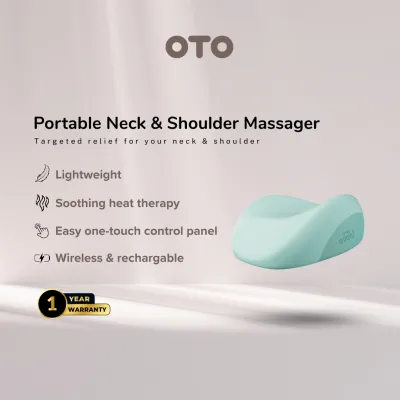
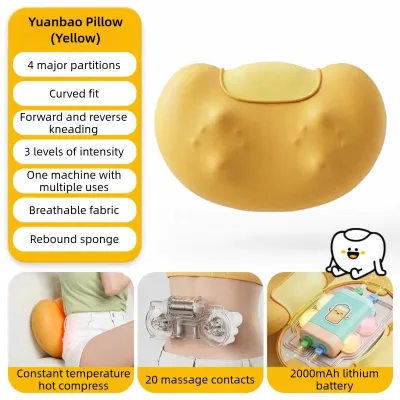
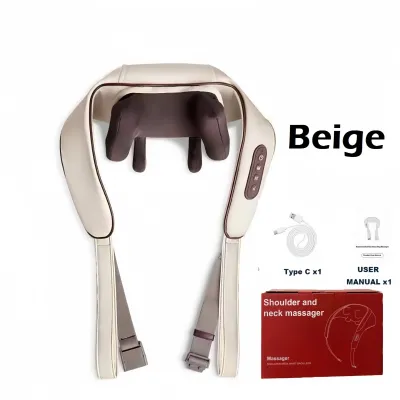
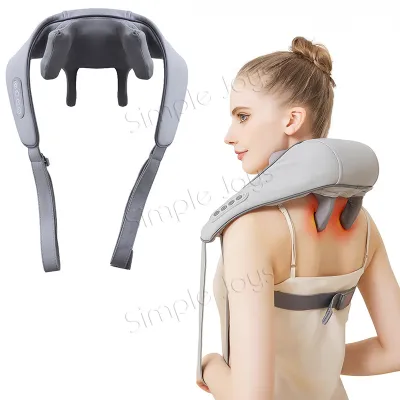

Prices are valid at publication and may change. Please refer to the product page for the latest price.

Beyond the final placement, delivery logistics present a major hurdle. Standard HDB bedroom doors and older apartment lifts often have narrow clearances, sometimes measuring less than 80 centimeters in width. If a massage chair cannot be disassembled or tilted sufficiently, delivery teams may struggle to transport it into your home. You must carefully verify the minimum doorway clearance specified by the manufacturer before finalizing a purchase.
In contrast, a portable massager device for neck relief offers unparalleled spatial flexibility. These compact units typically measure under 30 centimeters in length and weigh less than two kilograms. They can be stored effortlessly in a wardrobe drawer, placed on a bedside table, or tucked away in a cabinet when not in use. This makes them an ideal choice for households where floor space is already fully utilized.
Finally, consider the proximity to power sources and household traffic. A massage chair requires a dedicated electrical outlet and should not be positioned where its power cord creates a tripping hazard. It must also be placed away from high-traffic pathways to ensure it does not obstruct daily movement through the home.
Budget and Value: Evaluating Your Spending Limit in SGD
A clear financial contrast exists between these two product categories, requiring a careful assessment of your budget in Singapore Dollars (SGD). Portable neck massagers are highly accessible, with basic models starting around S$30 on online marketplaces and premium, brand-name units ranging from S$150 to S$350. This low entry barrier makes them an easy, low-risk purchase for those seeking immediate relief without a major financial commitment. If a portable device breaks down after several years, replacing it is simple and relatively inexpensive.
A full-sized massage chair, however, represents a significant long-term capital investment. Entry-level models typically start around S$1,500, mid-range options with advanced tracking and features cost between S$3,000 and S$6,000, while premium flagship models can easily exceed S$10,000. To justify this cost, you should calculate the projected cost per use. If multiple family members in your household plan to use the chair daily, the cost is distributed across several users, making the upfront investment highly valuable over a five-to-ten-year lifespan.
You must also account for hidden and long-term costs associated with massage chairs. While delivery and installation are sometimes bundled into the purchase price, extended warranties, professional maintenance, and potential repairs outside the warranty period can be costly. Furthermore, Singapore’s humid tropical climate can accelerate the wear and peeling of synthetic polyurethane (PU) leather upholstery. Replacing or reupholstering a massage chair can cost several hundred dollars, a factor that does not apply to portable devices, which often feature removable, washable fabric covers.
Massage Depth: Targeted Neck Relief vs. Full-Body Integration
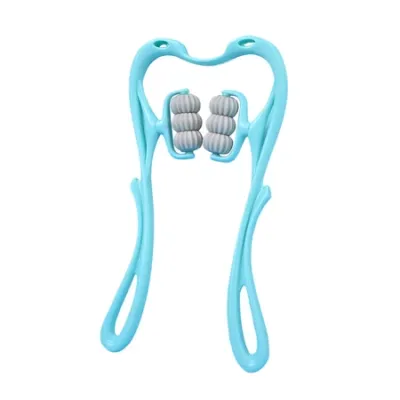
The mechanical approach to relieving muscle tension differs significantly between dedicated neck devices and full-body chairs. Portable neck massagers are engineered specifically for the complex anatomy of the cervical spine. They generally employ physical kneading nodes, Electrical Muscle Stimulation (EMS), or Transcutaneous Electrical Nerve Stimulation (TENS). Physical kneading models use rotating silicone or plastic nodes that mimic human hands, targeting the suboccipital and upper trapezius muscles directly. EMS models use low-frequency electrical currents to stimulate muscle contractions, promoting blood circulation, while TENS technology focuses on blocking pain signals to the brain. Because these devices are placed directly on the neck, you can manually adjust their position, angle, and pressure to target exact trigger points.
Massage chairs address neck tension through a more holistic, integrated system. They utilize mechanical rollers mounted on internal tracks, classified as S-tracks or L-tracks. An S-track follows the natural curve of your spine from the neck to the lower back, while an L-track extends further down past the lower back to massage the glutes and upper thighs. These rollers are complemented by inflatable airbags that compress the shoulders, helping to pin your upper body in place so the rollers can apply deeper pressure to the neck.
When deciding between these mechanisms, diagnose the nature of your physical discomfort. If your pain is strictly localized to the neck and upper shoulders due to poor computer posture, a dedicated massager device for neck use provides intense, customizable, and concentrated relief. However, if your neck stiffness is a symptom of broader spinal misalignment, lower back strain, or overall physical fatigue, a massage chair is far more effective. It treats the body as an interconnected system, relieving tension in the lower back and glutes, which naturally reduces the compensatory strain on your neck.
One critical limitation of massage chairs is height compatibility. Although most modern chairs feature automatic body-scanning technology to locate your shoulders and neck, users who are exceptionally tall or short may find that the rollers do not align perfectly with their cervical spine. If the rollers sit too high or too low, the massage can be uncomfortable or ineffective. Portable devices bypass this issue entirely because you physically position them exactly where you need them.
Lifestyle Fit: Matching the Device to Your Daily Routine
Your daily routine, work environment, and personal habits should heavily influence your choice. For busy professionals in Singapore who spend long hours commuting or working at a desk, a portable neck massager offers unmatched convenience. Many of these devices are cordless, rechargeable, and lightweight, allowing you to wear them while typing at your office desk, watching television on the sofa, or even resting during a flight. They integrate seamlessly into an active, multi-tasking lifestyle without requiring you to set aside dedicated block times for relaxation.
Conversely, a massage chair is designed for dedicated, immersive relaxation. Using a massage chair requires you to step away from your daily tasks, put down your phone, and commit fifteen to thirty minutes to a structured wellness routine. The experience is hands-free and sensory, often incorporating zero-gravity positioning, heated rollers, and integrated Bluetooth speakers to create a spa-like sanctuary within your home. This is the ideal choice if you want to establish a clear boundary between your working hours and your personal downtime.
Consider also the concept of usage friction. Portable massagers require a small amount of active effort: you must remember to charge the battery, locate the device, and physically hold or strap it in place during use. If this process feels tedious, the device may end up forgotten in a drawer. A massage chair is always plugged in, positioned, and ready for use at the touch of a button. However, the friction here is spatial; you must physically go to the specific room where the chair is located, which may be less convenient if you prefer to relax in different areas of your home.
Final Verdict: Choosing the Right Neck Massager Device for You
Choosing the right massager device for neck and body care ultimately comes down to aligning your physical needs with your home environment and financial comfort.
When to Choose a Portable Neck Massager
- Space constraints: Your home has limited floor space, or you live in a compact HDB flat where a large appliance would cause clutter.
- Budget limits: You prefer to keep your spending under S$350 and want a low-maintenance device.
- On-the-go lifestyle: You want a flexible device that you can use at the office, during travel, or while moving around the house.
- Targeted relief: Your muscle tension is strictly concentrated in the cervical region and requires precise, manual positioning.
When to Choose a Massage Chair
- Ample home space: You have a dedicated corner in your living room or study that can accommodate a large, fully reclined chair.
- Flexible budget: You view wellness as a long-term investment and are comfortable spending upwards of S$1,500.
- Full-body tension: You suffer from generalized back, shoulder, and leg fatigue, and want a holistic, hands-free relaxation experience.
- Shared household use: Multiple family members will use the chair regularly, maximizing the return on your investment.
Before purchasing a high-ticket item like a massage chair, it is highly recommended to visit physical showrooms in Singapore. Testing different models in person allows you to verify if the roller tracks align comfortably with your height and if the intensity levels suit your pain tolerance. For portable neck massagers, pay close attention to online retailer return policies and customer reviews to ensure the physical design fits comfortably around your neck shape.
Frequently Asked Questions (FAQ)
Are portable EMS neck massagers safe for daily use?
Yes, portable EMS neck massagers are generally safe for daily use, provided you strictly follow the manufacturer’s guidelines. Most brands recommend limiting sessions to 15 or 20 minutes once or twice a day to prevent muscle fatigue or skin irritation from the electrical pads. You should never use EMS devices on broken, irritated, or numb skin, and you must avoid placing them near the front of your neck or over major arteries.
Important Safety Warning: If you have a pacemaker, metallic implants, cardiovascular conditions, or underlying cervical spine disorders, you must consult a medical professional before using any EMS or TENS device. Always read the product’s safety manual before your first session.
Can a massage chair worsen existing neck pain?
Yes, a massage chair can potentially worsen existing neck pain if used incorrectly. If the chair’s rollers are set to an excessive intensity, or if they are misaligned with your neck’s natural curvature, the mechanical pressure can strain muscles, irritate nerves, or aggravate underlying joint issues. This is particularly true for individuals with pre-existing conditions like herniated discs or cervical spondylosis.
To minimize risk, always start your first few sessions on the lowest intensity setting and limit the duration to 10 or 15 minutes. Ensure your body is properly aligned within the chair’s seat so the rollers target the correct muscle groups. If you experience any sharp, shooting, or radiating pain during or after a session, stop using the chair immediately and consult a qualified healthcare professional.
Community discussion
Share your experience or ask a question. Comments are reviewed before publication.