
Choosing your first or next sim racing cockpit is a major milestone in building a home virtual racing setup. The decision often comes down to two of the most popular mid-range options on the market: the Playseat Challenge and the Playseat Evolution. Both rigs cater to drivers looking to step up from clamping a steering wheel to a standard desk, but they approach the racing experience from entirely different design philosophies.
To make the right choice, you must balance your available physical space against the performance of your racing hardware. The Playseat Challenge is the ideal choice if you live in a space-constrained environment, such as a typical HDB flat or condominium in Singapore, where you need to fold and store your rig out of sight after every gaming session. It pairs beautifully with entry-level to mid-range force feedback wheels and offers a surprisingly comfortable, hammock-style seating position.
Conversely, the Playseat Evolution is designed for drivers who have a dedicated gaming corner, study, or spare room where the rig can remain permanently assembled. Its rigid, tubular steel frame provides a much more stable foundation, making it the superior option if you plan to upgrade to high-torque Direct Drive (DD) wheel bases or heavy load-cell pedals. Deciding between them requires a close look at how their structural designs handle physical forces, storage constraints, and long-term comfort.
Products mentioned in this guide
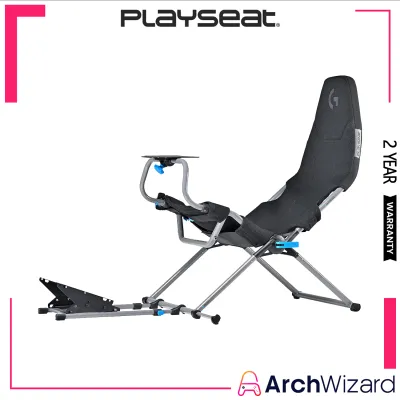
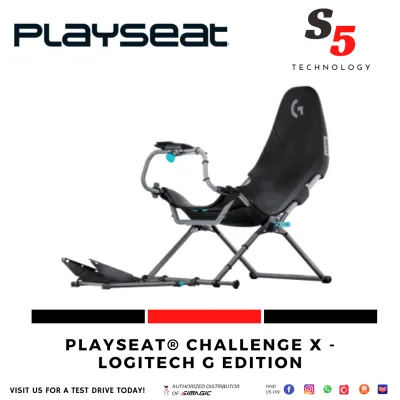
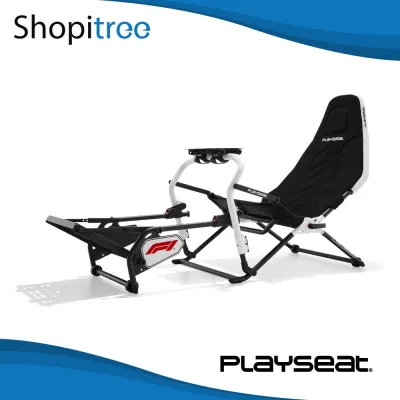
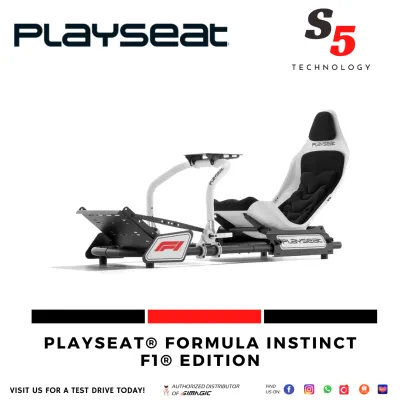
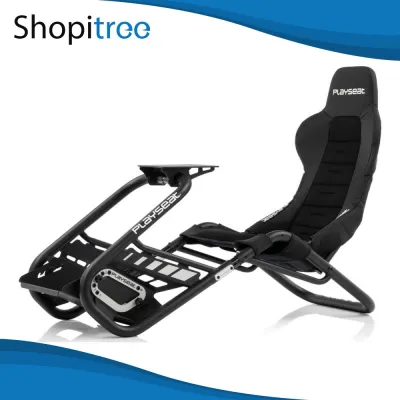
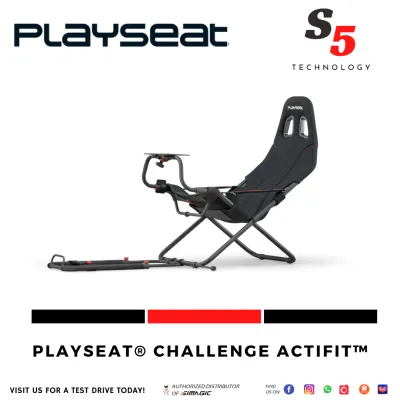
Prices are valid at publication and may change. Please refer to the product page for the latest price.
Space and Storage: Foldable Convenience vs. Dedicated Footprint
Living in an urban environment like Singapore means floor space is highly optimized, and multi-purpose rooms are the norm. The Playseat Challenge is famous for its patented folding design, which functions similarly to a high-end lawn chair or deck chair. When your racing session ends, you do not need to disassemble your steering wheel or pedals; the entire rig folds down with your hardware still securely mounted. This collapsed footprint is slim enough to slide into a wardrobe, stand behind a bedroom door, or tuck away under a bed frame.
Setting up the Challenge takes only a couple of minutes once you get used to the strap and latch system. This convenience makes it highly appealing for casual racers who share their living spaces with family members or housemates who prefer not to have a permanent metal chassis sitting in the middle of the living room. However, you must consider the combined weight of the rig and your hardware when lifting and moving the folded assembly into storage.
In contrast, the Playseat Evolution is a semi-permanent fixture. It features a robust, heavy-duty tubular steel frame that does not fold down for quick storage. While you can loosen tension dials to slide the pedal plate inward and fold the seat backrest forward to reduce its height, the main chassis retains its length and width. It is built to stay exactly where you put it, requiring a dedicated floor area of roughly 130 centimeters in length and 50 centimeters in width.
Because the Evolution is difficult to move around frequently, it is best suited for dedicated gaming rooms, home offices, or spacious bedrooms. The trade-off here is immediate readiness; you can sit down and start racing instantly without any setup or unfolding process. Before purchasing, carefully measure your intended floor space and ensure you have clear pathways, especially if you ever need to carry the fully assembled frame through narrow doorways or corridors.
Hardware Compatibility: Wheel Bases, Pedals, and Direct Drive Limits
Your choice of cockpit must align with the mechanical forces generated by your steering wheel and pedals. If your rig flexes or wobbles under heavy use, it absorbs the force feedback detail, making your driving inputs less precise and reducing the realism of your simulation.

Wheel Base and Direct Drive (DD) Support
The Playseat Challenge utilizes a unique swinging wheel plate that latches shut once you are seated. While this design is incredibly clever for entry and exit, the single-point locking mechanism and lightweight frame are susceptible to side-to-side wobble and vertical flex when subjected to high torque. If you use a standard gear-driven or belt-driven wheel base, the Challenge handles the forces perfectly fine, providing a fun and engaging experience.
However, if you plan to use a high-torque Direct Drive (DD) wheel base, the structural limitations of the Challenge become apparent. The rapid, violent forces of a DD motor can cause the entire steering deck to shake, which dampens the subtle road details sent to your hands. For drivers using DD hardware, the Playseat Evolution offers a much stiffer mounting platform. Its central steel support column and reinforced steering plate are designed to handle stronger rotational forces without flexing.
Keep in mind that the Evolution is still a mid-tier rig, and very high-torque professional wheel bases may still introduce minor vibrations. Always check your specific wheel base manufacturer’s mounting templates and torque specifications. If you plan to run a high-torque motor at its maximum output, verify the official compatibility guidelines of both the wheel manufacturer and Playseat to ensure safe operation and prevent structural fatigue over time.
Pedal Rigidity and Shifter Add-ons
Braking performance is just as critical as steering precision, particularly if you upgrade to load-cell pedals that measure pressure rather than travel distance. The Playseat Challenge secures its pedal deck using an adjustable metal frame and a fabric tension strap. Under heavy braking, this system can experience vertical flex, and the front of the pedal deck may lift slightly if the strap is not pulled completely taut. This can make consistent trail-braking difficult to master.
The Playseat Evolution addresses this with a solid, heavy-gauge steel pedal plate that bolts directly to the main frame rails. This plate can be adjusted for angle and distance, providing a rock-solid platform that easily handles the high forces required to depress stiff brake pedals. If you enjoy driving manual cars, you will also want to consider shifter placement. Both models support optional shifter mounts, but the Evolution’s rigid frame provides a much sturdier base for aggressive gear shifts, whereas the Challenge’s tube-mounted shifter brackets can flex slightly during rapid gear changes.
Comfort and Ergonomics: Adjustability and Driving Posture
Long-distance endurance races require a seating position that prevents muscle fatigue and lower back strain. The Playseat Challenge features a unique, non-padded fabric seat that suspends the driver like a hammock. Despite the lack of traditional thick foam padding, this design conforms naturally to your body shape and distributes your weight evenly. The seating angle is adjusted by changing the tension of the heavy-duty hook-and-loop straps on the sides, allowing you to transition between a relatively upright GT posture and a slightly more reclined formula-style position.
Because the Challenge seat is integrated directly into the folding frame, it lacks traditional seat sliders. Taller or shorter drivers must adjust their distance to the wheel and pedals by physically sliding the pedal frame in or out and adjusting the strap lengths. This can make sharing the rig with multiple household members of varying heights a bit tedious, as you will need to readjust several points of the frame each time you swap drivers.
On the other hand, the Playseat Evolution features a fully padded, synthetic leather or fabric racing bucket seat that closely mimics the feel of a real sports car. It provides excellent lateral support to keep you firmly in place during intense cornering. The Evolution’s frame is highly adjustable, allowing you to slide the seat forward or backward along the center rail and tilt the pedal plate to find your perfect ergonomic sweet spot.
One critical ergonomic detail to note is the Evolution’s central steering column design. The steel post supporting the wheel base rises directly between your legs. For drivers who prefer to use a two-pedal setup and brake with their left foot, this post is rarely an issue. However, if you use a three-pedal set and practice heel-and-toe downshifting, the central column can obstruct your knees and make footwork cramped. The Playseat Challenge, with its open footwell design, completely avoids this issue, leaving your legs free to move without obstruction.
Additionally, consider the climate of your gaming room. Singapore’s warm and humid weather can make synthetic leather seats feel hot during long sessions. If you do not run air conditioning constantly, look for versions of these rigs that feature breathable mesh fabrics, such as Playseat’s ActiFit material, which promotes airflow and keeps you significantly cooler.
Price and Value: Budgeting for Your Sim Racing Cockpit
When planning your sim racing budget, it is helpful to view the cockpit as a long-term foundation. Your wheel, pedals, and monitors may change over the years, but a high-quality frame can last through multiple hardware generations. The Playseat Challenge sits firmly as an entry-level to mid-tier gateway, offering incredible value for casual gamers, beginners, or anyone who simply cannot accommodate a permanent metal rig in their home.
The Playseat Evolution represents a step up in both structural materials and price. It is a mid-tier investment aimed at enthusiasts who want a more authentic, car-like driving position and plan to build a dedicated racing station. When comparing the costs, remember to factor in the total cost of ownership in SGD, which often includes essential accessories that may not be bundled with the base model.
For instance, if you want to use a manual gear shifter, you will need to purchase a separate shifter mount accessory for either rig. If you plan to place the rig on polished parquet or tiled floors in a Singapore apartment, a high-grip floor mat is highly recommended to prevent the frame from sliding during heavy braking and to protect your flooring from scratches. Furthermore, because these rigs are heavy and shipped in large boxes, check local shipping fees or assembly charges if you prefer not to build the frame yourself.
To get the most accurate and up-to-date SGD pricing, check authorized local consumer electronics retailers, specialized sim racing hobby shops, or official brand distributors in Singapore. Keep an eye out for bundle deals that package the cockpit together with popular wheel and pedal sets, as these can offer substantial savings compared to buying each component individually.
Side-by-Side Specification Comparison
To help you visualize the key differences between these two popular cockpits, the table below outlines their core design characteristics, hardware compatibility, and ideal use cases.
| Feature | Playseat Challenge | Playseat Evolution |
|---|---|---|
| Frame Design | Foldable high-tensile steel tubing | Fixed heavy-duty tubular steel chassis |
| Storage Capability | Folds completely flat with hardware attached | Non-folding; seat backrest folds forward |
| Ideal Space Requirement | Multi-purpose rooms, small apartments, HDBs | Dedicated gaming room, study, or permanent corner |
| Direct Drive Compatibility | Best for low-torque or entry-level wheel bases | Supports mid-range Direct Drive bases |
| Pedal Plate Stability | Moderate; strap-secured frame | High; bolted steel plate with angle adjustment |
| Seat Adjustability | Strap-based tension and recline adjustments | Slider rail distance adjustment and folding backrest |
| Footwell Clearance | Open design; no central column obstruction | Central steering column sits between driver's legs |
| Target User Profile | Casual racers, space-conscious beginners | Dedicated enthusiasts, intermediate drivers |
Final Verdict: How to Make Your Decision
Your final decision should be guided by a realistic assessment of your living space and your long-term hardware upgrade path. If you do not have a dedicated room for gaming and need to keep your living area tidy, the Playseat Challenge is the clear winner. Its brilliant folding mechanism allows you to enjoy high-quality sim racing without sacrificing your home’s aesthetic or floor space, and its hammock-style seat offers remarkable comfort for long sessions.
If you are fortunate enough to have a dedicated space and plan to invest in high-performance hardware, the Playseat Evolution is the more robust choice. Its rigid steel frame, car-like bucket seat, and stable pedal deck provide the solid foundation needed to handle stronger force feedback and heavy braking inputs. Just be mindful of the central steering column if you plan to use a clutch pedal frequently.
Before making your final purchase, measure your room’s dimensions and compare them against the footprint of your chosen model. Take the time to verify the mounting patterns and torque outputs of your existing or planned wheel and pedal sets against the manufacturer’s official compatibility lists. Once you have confirmed the technical details, check stock availability and delivery options with local Singaporean retailers to get your new rig delivered and set up for your next virtual track day.
Frequently Asked Questions (FAQ)
These quick answers address common compatibility and accessory questions to help you finalize your home sim racing setup.
Can I reuse my existing wheel and pedals if I switch rigs?
Yes, both the Playseat Challenge and Playseat Evolution feature universal pre-drilled mounting plates designed to support major wheel and pedal brands, including Logitech, Thrustmaster, and Fanatec. Standard clamp-on or bolt-on hardware can easily be transferred between the two models. However, if you are upgrading to a high-end or specialized Direct Drive wheel base, you should check the manufacturer’s mounting dimensions, as some heavy-duty bases may require a specific adapter plate or bracket to mount securely to the Evolution’s steering deck.
Do I need to buy a separate monitor stand for either model?
Neither the Playseat Challenge nor the Playseat Evolution includes an integrated monitor mount in their standard configurations. To display your game, you will need to position the rig in front of an existing TV console, slide the front of the frame under a desk holding your computer monitor, or purchase a separate, freestanding single- or triple-monitor stand. Playseat does offer official monitor stand add-ons for certain models, so check local availability if you want a unified, bolt-on display solution.
Community discussion
Share your experience or ask a question. Comments are reviewed before publication.