
Selecting the right material for your furniture risers is a critical decision that directly impacts the stability of your heavy items and the preservation of your flooring. There is no single universal material that suits every household setup. Instead, the right choice depends entirely on matching the structural properties of plastic, rubber, or metal to the weight of your furniture and the specific characteristics of your floor surface. By evaluating these factors carefully, you can prevent costly floor repairs and avoid dangerous tipping hazards.
Assess Your Floor Surface and Furniture Weight
Before purchasing any furniture riser, you must evaluate the physical environment of your room and the structural demands of the furniture itself. Different flooring materials react uniquely to concentrated pressure. Hard surfaces, such as polished marble, vinyl, parquet, and ceramic tiles—which are common in many modern apartments—are highly vulnerable to scratching, scuffing, and cracking under concentrated loads. Soft surfaces, like thick carpets or rugs, present a different challenge, as heavy furniture can cause deep, permanent indentations and make the entire setup unstable if the weight is not distributed evenly.
To determine the load requirements for your risers, you need to estimate the total weight of the furniture piece when fully loaded. For a bed, this includes the frame, mattress, bedding, and the maximum weight of the occupants. For a cabinet or shelving unit, you must account for the weight of the stored items. Once you have a realistic estimate of the total weight, divide this figure by the number of contact points or legs. This calculation gives you the minimum weight capacity that each individual riser must safely support.
Products mentioned in this guide
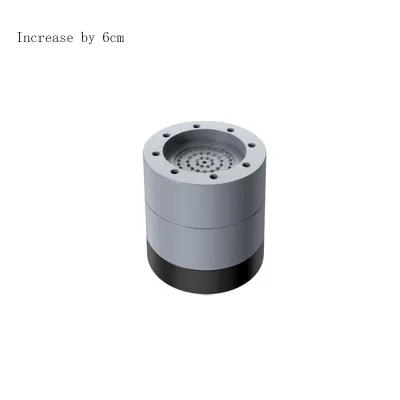
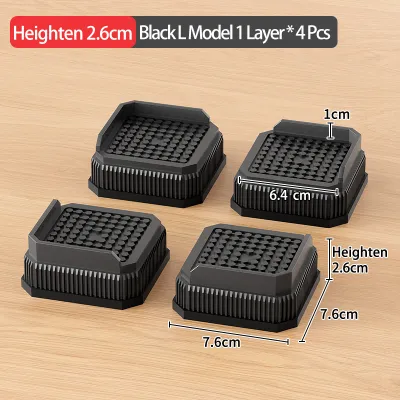
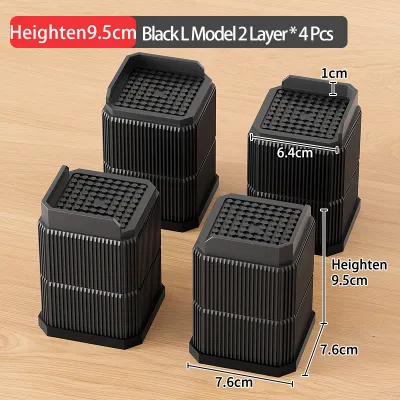
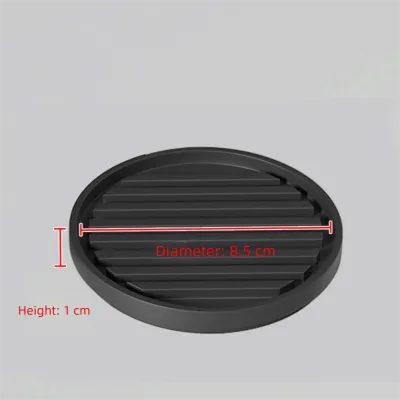
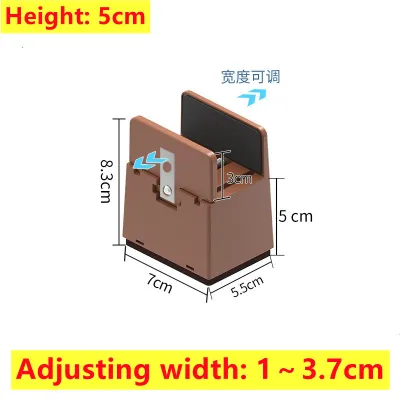
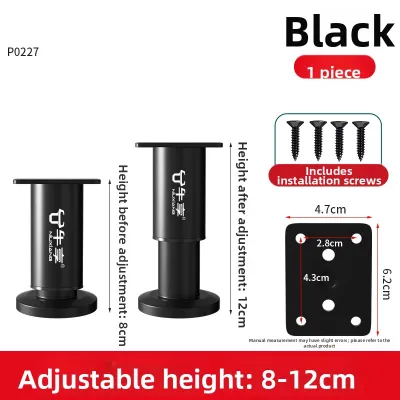
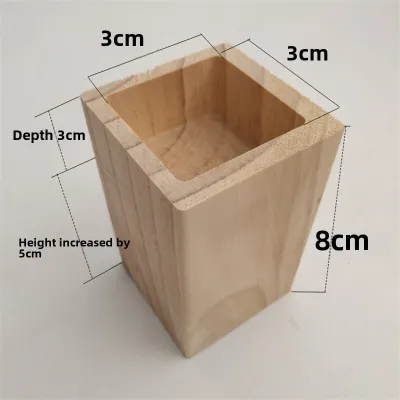
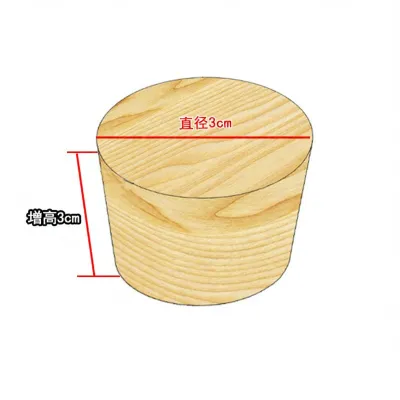
Prices are valid at publication and may change. Please refer to the product page for the latest price.
Additionally, the physical shape and dimensions of the furniture legs or casters dictate the type of riser design you require. Standard square or round legs may fit neatly into cup-style risers, which feature a recessed well to hold the leg in place. Wide wooden blocks or irregular legs might require a flat-platform riser with a high-friction surface. If your furniture uses wheels or casters, you must select a riser with a deep, secure well or a dedicated locking mechanism to prevent the wheel from rolling off the edge.
Compare Plastic, Rubber, and Metal Riser Traits
Each riser material offers distinct advantages and limitations regarding load capacity, slip resistance, and durability. Understanding these core traits allows you to verify product specifications against your specific household needs.

Plastic Risers
Plastic risers are widely available and offer a cost-effective solution for elevating light to medium-weight furniture. While a basic set of plastic risers might only cost around S$10 to S$20, verifying their structural design is essential to avoid premature failure. When evaluating plastic options, look for heavy-duty, high-density plastics such as polypropylene. It is essential to inspect the underside of the riser to verify that it features a molded, grid-like structural ribbing. This internal reinforcement distributes weight across the entire footprint of the riser, preventing the top platform from bowing or cracking under pressure. Avoid thin-walled plastic models that lack this internal support, as they are prone to sudden structural failure.
Environmental factors also play a significant role in the lifespan of plastic risers. If you plan to place your furniture in areas exposed to direct sunlight, such as next to large balcony windows, or near heat sources, check the product specifications for UV stabilizers or heat-resistance ratings. Standard plastics can become brittle over time when exposed to continuous UV radiation and heat, leading to hairline cracks that compromise the riser’s integrity.
Another critical consideration for plastic risers is their slip potential on smooth floors. Bare plastic has a very low coefficient of friction, meaning it can easily slide across polished parquet, laminate, or tiled floors when you sit on or lean against the furniture. To prevent this movement and protect your floors from abrasive scratches, always choose plastic risers that feature integrated non-slip rubber pads or textured silicone grips on the bottom surface. If the product does not include these, you will need to purchase and apply separate high-friction pads to the base.
Rubber Risers
Rubber risers are highly valued for their natural grip, exceptional slip resistance, and vibration-dampening properties. If you are placing furniture on smooth, hard surfaces like polished marble, vinyl, or hardwood, rubber is often a suitable choice. The high-friction nature of rubber prevents heavy furniture, such as sofas or washing machines, from shifting or “creeping” during daily use. Additionally, rubber absorbs micro-vibrations, which can reduce noise transfer through floors and protect delicate floor finishes from wear caused by subtle, repetitive movements.
When shopping for rubber risers, it is crucial to verify whether the product is made of solid rubber or features a hollow, cellular design. Solid rubber risers are highly durable and capable of supporting substantial weight without significant deformation. In contrast, hollow or low-density rubber risers can compress permanently under heavy, continuous loads. This compression not only reduces the effective height of the riser over time but can also lead to uneven tilting if one leg compresses more than the others.
You must also check the manufacturer’s notes regarding potential floor staining or chemical reactions. Some synthetic rubber compounds contain plasticizers or oils that can migrate into porous flooring materials, such as natural stone tiles or certain site-finished hardwood sealants. This chemical reaction can leave permanent dark marks or yellow stains on your floor. To avoid this, look for rubber risers labeled as non-marking, or place a thin, protective felt barrier between the rubber base and highly sensitive floor finishes.
Metal Risers
For exceptionally heavy furniture, such as solid wood bed frames, large wardrobes, or heavy appliances, metal risers provide the necessary rigidity and structural strength. Unlike plastic, which can crack under sudden impacts, or rubber, which can compress, high-quality metal risers maintain their shape and height indefinitely under extreme loads. Common metals used for these accessories include cast iron, carbon steel, and heavy-duty aluminum alloys.
Because metal is incredibly hard, it poses a severe risk of scratching, gouging, or denting hard floor surfaces if placed in direct contact. Therefore, any metal riser you select must feature a thick, integrated protective barrier on its base. Look for models that come pre-fitted with heavy-duty felt pads for hardwood floors, or thick, vulcanized rubber bases for tiled and vinyl surfaces. If the metal riser has exposed edges at the bottom, do not use it on hard floors without adding a robust protective cup or pad.
Moisture and humidity are also critical factors when choosing metal hardware. In humid tropical climates, untreated metal can quickly rust and corrode, especially during floor mopping or in high-humidity rooms. Rust not only weakens the structural integrity of the riser but can also leave permanent, unsightly orange stains on your floors and carpets. Ensure the metal risers are treated with a durable powder-coated finish, electroplated, or constructed from corrosion-resistant stainless steel to ensure long-term durability.
Verify Load Capacity and Physical Fit
Selecting the right material is only half the battle; you must also verify that the physical dimensions and load ratings of the risers match your furniture precisely. Never rely on visual estimates or assume that a heavy-looking riser can support your furniture. Always locate the manufacturer’s official weight capacity rating, which is typically specified as either a “per-riser” limit or a “per-set” limit. If the rating is for a set of four, ensure that the total weight of your loaded furniture does not exceed this limit, keeping in mind that weight is rarely distributed perfectly evenly across all four legs.
Accurate measurement of your furniture legs is essential to prevent unstable setups. Use a precise measuring tape or caliper to measure the width, depth, or diameter of the bottom of each leg or caster. The leg must fit completely inside the recessed cup of the riser, with a small amount of clearance to accommodate any slight movement. If the leg is wider than the cup, it will sit on the outer rim, creating an unstable point of contact that can easily slip off. Conversely, if the cup is excessively large, the leg may shift inside the riser, causing the furniture to lean.
Finally, consider how the proposed height increase affects the overall stability and ergonomics of the furniture. Raising a bed or sofa too high shifts its center of gravity upward, making it more prone to tipping if someone leans heavily against it or if a child climbs on it. Ensure the elevated height allows for comfortable use and does not create a safety hazard. If you require a significant height increase, prioritize risers with a wide, flared base design, which broadens the footprint and lowers the risk of tipping.
Ensure Safe Installation and Long-Term Stability
Proper installation is critical to ensuring that your furniture risers perform safely and do not cause immediate damage to your floors. Before attempting to install the risers, clear the furniture of all loose items, drawers, and heavy contents to make it as light as possible. Never attempt to lift heavy furniture alone; always seek assistance from another person or use specialized furniture jacks. Lift the furniture straight up, place the risers carefully under each leg, and lower the piece gently. Avoid dragging the furniture into place once it is on the risers, as this lateral force can snap plastic risers, bend metal ones, or gouge your flooring.
Immediately after installation, perform a thorough stability check. Gently rock the furniture from side to side and front to back to test for any wobble or unevenness. If the furniture rocks, it indicates that the floor is uneven, the risers are mismatched, or one of the legs is not seated correctly inside the cup. You must resolve this instability immediately. Do not use temporary cardboard shims to level the setup; instead, look for adjustable screw-type risers or professional-grade rubber leveling shims designed specifically for furniture support.
Over time, even the highest-quality risers can experience wear and tear. Establish a routine to visually inspect your furniture risers at least once every six months. Look closely for signs of material degradation, such as hairline cracks or color fading in plastic risers, permanent flattening or cracking in rubber risers, and rust spots or loose joints in metal models. If you notice any signs of wear, replace the compromised risers immediately to prevent sudden structural failure and protect your home’s flooring.
Frequently Asked Questions (FAQ)
Can I stack multiple furniture risers to get more height?
Stacking multiple furniture risers is highly discouraged as it significantly compromises the stability of your furniture. When you stack risers, you introduce multiple joints and raise the center of gravity, which greatly increases the risk of the risers slipping, buckling, or tipping over under lateral pressure. If you need additional height, you should purchase a single-piece riser designed specifically for that height, or opt for heavy-duty adjustable metal risers that can be securely locked at your desired elevation.
Do furniture risers work on carpeted floors?
Yes, furniture risers can be used on carpeted floors, but you must select the right design to prevent instability. Standard risers with narrow bases tend to sink deeply into thick carpet piles and underlayments, which can cause the furniture to lean or wobble. For carpeted surfaces, choose risers with a wide, flared base that distributes the weight over a larger surface area. Some specialized risers also feature small carpet spikes on the bottom to help grip the subfloor and prevent sliding on plush carpets.
Community discussion
Share your experience or ask a question. Comments are reviewed before publication.