
When building DIY shelves, there is no single “best” wooden plank; the right choice depends entirely on your specific load requirements, available tools, and budget. Solid pine offers natural aesthetics and good strength but requires more finishing work. Plywood provides excellent structural stability and load-bearing capacity for longer spans, while MDF delivers a perfectly smooth, paintable surface for light-duty, budget-friendly projects. Evaluate your shelf span, expected weight, and installation environment to select the material that aligns with your practical needs.
Choosing the wrong material can lead to sagging shelves, split wood, or ruined finishes. By understanding how these three common options behave under different conditions, you can avoid structural failures and achieve a professional-looking result. Whether you are building heavy-duty garage storage or sleek, painted alcove shelving, matching the wood type to the project scope is the most critical step of your DIY journey.
Understanding the Core Differences in Wood Materials
Solid pine is a natural softwood cut directly from timber logs. It features a distinct grain pattern, natural knots, and a warm organic appearance. Because it is solid wood, it retains the natural cellular structure of the tree, meaning it behaves predictably when cut but remains susceptible to natural imperfections like sap pockets and warping.
Products mentioned in this guide
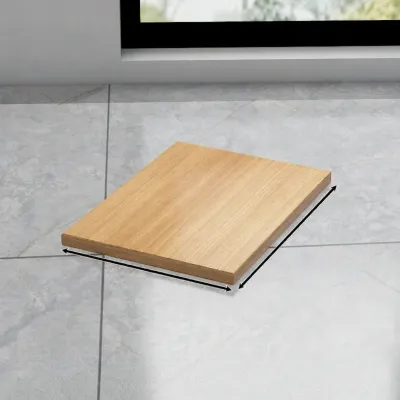
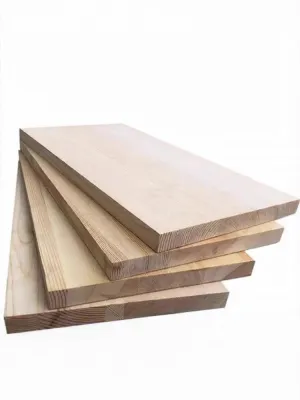
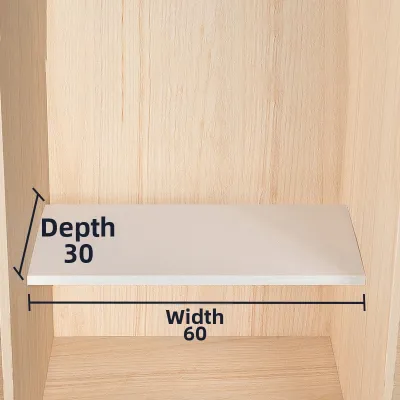
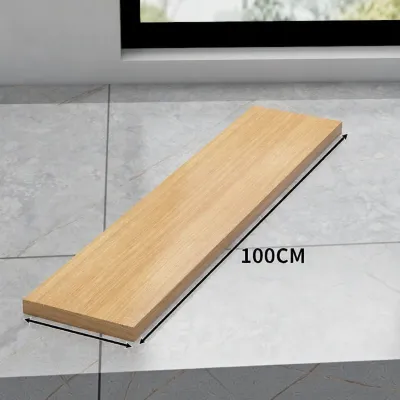
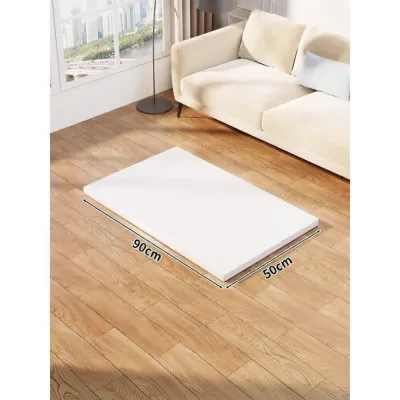
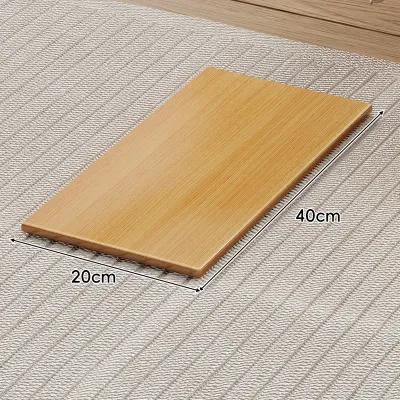
Prices are valid at publication and may change. Please refer to the product page for the latest price.
Plywood is an engineered wood product constructed by gluing together thin layers of wood veneer, known as plies. These layers are stacked with their grain directions alternating at 90-degree angles, a process called cross-lamination. This structural design distributes strength evenly in both directions and significantly reduces the wood’s natural tendency to expand, contract, or split.
Medium-density fiberboard, commonly known as MDF, is an engineered panel made by breaking down softwood residuals into fine wood fibers. These fibers are combined with synthetic resin binders and wax, then compressed under intense heat and pressure. The resulting sheet is highly dense, heavy, and completely uniform throughout, with no grain pattern, knots, or voids.
These manufacturing differences dictate how each material looks and behaves. Pine offers a traditional, rustic appeal with natural variations. Plywood showcases a clean, layered edge profile that many modern designs leave exposed, while MDF provides a completely blank, featureless canvas that is ideal for high-gloss painted finishes.
Comparing Strength and Load-Bearing Capacity
When designing shelves, you must consider the relationship between plank thickness, the unsupported span between brackets, and the risk of deflection, which is the technical term for sagging. A shelf that is too thin or spans too far without support will eventually bow under the weight of books, plants, or storage boxes.

Solid pine possesses excellent natural bending strength along the direction of its grain. However, its structural integrity is highly dependent on the presence of knots. Large or loose knots act as natural weak points where the wood can crack or bend more easily under load, meaning you must carefully inspect and select your planks to ensure consistent strength.
Plywood is the strongest of the three materials for long, unsupported shelf spans. Its cross-laminated construction ensures that the wood fibers run in multiple directions, offering superior resistance to bending and warping. A plywood shelf can support significantly heavier loads over wider gaps without requiring intermediate brackets, making it the standard choice for heavy-duty utility and pantry shelving.
MDF is highly dense but lacks the long, interlocking structural fibers found in solid wood and plywood. Consequently, it has very low tensile strength and is highly prone to progressive sagging under continuous loads, a phenomenon known as creep. If you use MDF for shelves, you must keep the unsupported span short or reinforce the front and back edges with solid wood cleats to prevent noticeable bowing.
Evaluating Workability and DIY Tool Requirements
Your choice of material directly impacts the ease of cutting, drilling, and assembling your shelves, especially if you are working with a basic home tool kit. Each material requires specific handling techniques to achieve clean edges and strong joints.
Cutting MDF produces an extremely fine, powdery dust that can irritate your lungs and eyes. When working with MDF, you must wear a high-quality dust mask and work in a well-ventilated area, preferably outdoors. Plywood presents a different cutting challenge: its top veneer layer is highly prone to splintering or tearing out when cut across the grain, requiring a fine-tooth carbide blade or a layer of painter’s tape along the cut line to keep the edges clean.
Fastening methods also vary significantly across these materials. Solid pine holds screws exceptionally well, though you must drill pilot holes near the ends of the planks to prevent the wood from splitting along the grain. MDF has poor screw-holding capacity on its edges because the compressed fibers can easily split apart; it requires specialized coarse-thread screws, pilot holes, and wood glue to create durable joints.
Plywood offers excellent fastener retention on both its face and edges, making it highly versatile for various joinery methods, including pocket screws and dado joints. However, finishing the exposed edges of plywood requires extra steps, such as applying iron-on wood veneer edge banding or installing solid wood trim to hide the internal layers.
Budget and Cost Considerations for Shelving Projects
Calculating the total cost of your DIY shelving project involves looking beyond the initial price of the raw planks. You must also account for the cost of specialized fasteners, edge treatments, primers, paints, and potential tool wear.
MDF is generally the most economical option, sitting comfortably in the lower S$ price tier. This makes it highly attractive for large-scale projects, such as built-in library walls or extensive closet shelving, where material costs can quickly escalate. Plywood occupies a broad price spectrum; utility-grade plywood is relatively affordable, while cabinet-grade hardwood plywoods sit in the premium S$ price bracket.
Solid pine typically falls into the mid-range S$ tier, though the price can vary based on the grade of the timber. Clear pine, which is virtually free of knots, is significantly more expensive than common utility-grade pine. If your design requires a flawless, knot-free look, the cost of premium pine can easily rival or exceed that of high-quality plywood.
Hidden costs can alter the financial balance of your project. MDF requires specialized, high-build primers because its porous edges absorb standard paint rapidly, which can increase your finishing budget. Additionally, the abrasive glues used in both MDF and plywood will dull standard steel saw blades much faster than solid pine, potentially requiring you to invest in more expensive carbide-tipped blades.
Moisture Resistance and Environmental Suitability
Before purchasing your planks, you must evaluate the humidity and moisture levels of the room where the shelves will be installed. Wood materials react differently to environmental changes, and selecting the wrong type can lead to premature structural failure.
Solid pine is highly sensitive to changes in relative humidity. In damp or humid environments, pine planks will absorb moisture from the air, causing them to expand, warp, or cup. If you plan to use pine in areas with fluctuating humidity, you must seal all six sides of the board with a protective clear coat or paint to minimize moisture movement.
Standard interior plywood can delaminate if exposed to high humidity or direct water contact, as the moisture weakens the glues holding the veneer layers together. For damp environments like kitchens, laundries, or sheltered outdoor areas, you should look for moisture-resistant (MR) graded plywood or marine-grade options that utilize waterproof adhesives.
MDF is highly vulnerable to water damage and should never be used in wet or highly humid areas. When exposed to moisture, the compressed wood fibers absorb water like a sponge, causing the panel to swell, bubble, and permanently lose its structural integrity. Restrict the use of MDF to dry, climate-controlled indoor spaces to ensure your shelves remain flat and stable.
Decision Framework: Which Plank Should You Choose?
To finalize your material selection, match your project requirements to the specific strengths of each material. This systematic approach ensures you do not overspend on materials or end up with shelves that sag under pressure.
Choose Pine if you want a warm, natural wood aesthetic with visible grain patterns, plan to apply a wood stain or clear protective finish, and prefer working with traditional solid timber. It is highly suitable for living room display shelves, rustic kitchen spice racks, and small-to-medium decorative shelving units.
Choose Plywood if your project demands high load-bearing capacity, wide unsupported spans, and long-term structural stability. Plywood is the ideal candidate for heavy book collections, pantry storage, garage shelving, and utility room organizers where strength is the primary priority.
Choose MDF if you are working within a tight budget, want a perfectly smooth, modern painted finish without any visible wood grain, and are installing the shelves in a dry, climate-controlled room. MDF excels in built-in bedroom wardrobes, study room bookshelves, and decorative display ledges.
Before purchasing, always verify the environmental conditions of the installation site and check the manufacturer’s specifications for thickness and recommended span limits. Taking these precautions guarantees a successful DIY project that will remain sturdy and beautiful for years to come.
Frequently Asked Questions (FAQ)
Do I need to seal the edges of plywood and MDF shelves?
Yes, sealing the edges of both plywood and MDF is highly recommended for both aesthetic and structural reasons. The exposed plies of plywood and the porous core of MDF absorb moisture and finishes much faster than their flat faces, which can lead to uneven painting and swelling. You can seal plywood edges using iron-on veneer edge banding or by gluing on thin solid wood strips. For MDF, applying a thin layer of drywall joint compound or specialized wood filler to the edges, followed by thorough sanding and a solvent-based primer, will create a smooth, non-porous surface ready for painting.
How can I prevent MDF shelves from sagging over time?
To prevent MDF shelves from sagging, you must limit the unsupported span between your shelf brackets. As a general guideline, keep the distance between brackets under 60 to 80 centimeters for standard 18mm thick MDF panels. You can also significantly increase the rigidity of an MDF shelf by gluing and screwing a solid wood nosing or a stiffener strip (cleat) to the front or back edge of the board. Using thicker MDF panels, such as 25mm thickness, will also help resist deflection over slightly longer spans.
Is solid pine safe to use in humid areas like bathrooms?
Solid pine can be used in humid areas like bathrooms, but only if it is thoroughly and meticulously sealed on all sides. Untreated or poorly finished pine will quickly absorb bathroom moisture, leading to warping, cupping, and the growth of mold or mildew. To protect the wood, you must apply a high-quality, moisture-resistant finish, such as polyurethane, marine-grade varnish, or outdoor-rated wood sealer, to all six sides of the plank, including any cut ends and screw holes. Regular maintenance and resealing will be required over time to maintain this protective barrier.
Community discussion
Share your experience or ask a question. Comments are reviewed before publication.