
Selecting the ideal oval coffee table style requires evaluating your living room’s existing design elements—such as dominant colors, furniture shapes, and textures—and determining whether you want the table to blend in harmoniously or serve as a striking focal point. By matching the table’s material and silhouette to established design movements like Scandinavian, mid-century modern, industrial, or contemporary glam, you can create a balanced and functional layout that enhances your daily routine.
Assess Your Living Room Aesthetic Before Choosing
Before browsing online catalogs or visiting furniture showrooms, take a structured look at your current living space. A coffee table does not exist in isolation; it must coordinate with your sofa, flooring, wall colors, and lighting. Begin by mapping out the dominant colors and textures in the room. Note whether your space is filled with cool neutrals, warm wood grains, or bold accent colors.
Observe the primary shapes of your existing furniture. If you have a highly structured, boxy sectional sofa, an oval table introduces a welcome organic contrast that breaks up rigid, linear layouts. Conversely, if your seating already features curved armrests or rounded backs, an oval table reinforces a fluid, cohesive flow.
Products mentioned in this guide
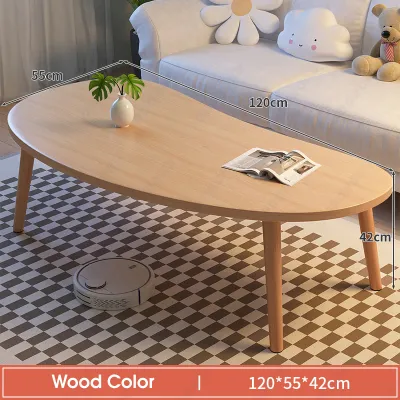
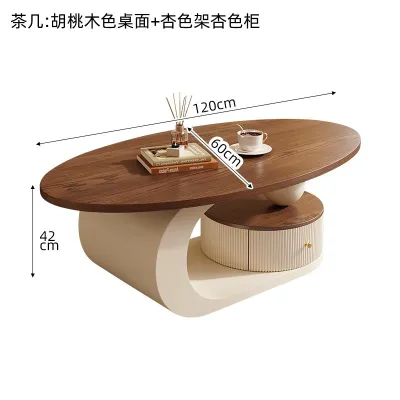
![[SG Seller]Simple Modern Solid Wood Side Table Sofa Corner Table Bedside Table Oval Coffee Tea Table](https://img.lazcdn.com/g/p/8b5b0ca2e99bc3b03d102f40ecdfb52e.jpg_400x400q80.jpg_.webp)
Prices are valid at publication and may change. Please refer to the product page for the latest price.
Next, define the core vibe of your space. A cozy, warm room benefits from different materials than a sleek, ultra-modern apartment. Determine whether you want the new table to blend seamlessly into the background or act as a striking focal point. A glass-topped oval table with a minimalist frame will visually disappear, making a compact room feel larger, whereas a dark walnut or sintered stone table will draw the eye immediately.
To gain an objective perspective, step back and take photos of your living room from multiple angles, including from the entryway and while seated. This photographic baseline helps you see scale, lighting, and color balance more clearly than a simple glance, preventing impulse purchases that clash with your home’s actual atmosphere.
Top Oval Coffee Table Styles and Their Ideal Room Matches
Understanding the defining characteristics of prominent design styles allows you to narrow down your options and choose a table that aligns with your aesthetic goals.

Scandinavian and Minimalist
Characterised by simplicity, functionality, and a connection to natural elements, the Scandinavian oval coffee table is defined by clean lines and light-toned woods such as white oak, ash, or beech. These tables often feature slender tapered legs or a simple central pedestal, keeping the visual weight low. The surfaces are smooth and uncluttered, celebrating the natural beauty of the wood grain without heavy varnishes or ornate carvings.
This style is best suited for bright, airy living rooms that embrace neutral color palettes—think soft whites, greys, and muted earth tones. It pairs beautifully with low-profile, fabric-upholstered sofas and rooms that maximize natural light. If you reside in a typical high-rise apartment where space and light are at a premium, this style keeps the room feeling open. To preserve this aesthetic, keep the tabletop clear of clutter, opting for just one or two carefully curated items rather than piles of books or accessories.
Mid-Century Modern
Mid-century modern design celebrates organic, flowing shapes and rich, warm wood tones. An oval coffee table in this category often features a distinctive surfboard profile, a soft kidney shape, or a classic symmetrical oval. You will typically find these tables crafted from walnut, teak, or cherry, supported by iconic tapered wooden legs, angled peg legs, or delicate metallic hairpin legs.
This style thrives in living rooms that embrace a retro-inspired or eclectic aesthetic. It coordinates effortlessly with bold accent chairs, textured rugs (such as shag or woven wool), and warm, layered lighting from brass floor lamps. The curved edges of a mid-century oval table are particularly effective at softening the geometric, blocky lines of vintage sideboards or modular shelving systems. If your living room features warm color palettes—such as mustard yellow, olive green, or rust orange—a walnut-finished oval table provides a grounding, harmonious center.
Industrial and Raw
For spaces with an edgy, urban, or loft-like atmosphere, industrial-style oval coffee tables offer a striking contrast of raw materials. This design typically pairs heavy, dark-toned wood tops (often reclaimed or distressed) with sturdy black iron or steel frames. Alternatively, some industrial tables feature concrete-look surfaces or riveted metal detailing, emphasizing structural elements rather than hiding them.
The ideal setting for an industrial oval table is a room with exposed architectural features, such as concrete screed floors, exposed brick walls, or track lighting. It pairs exceptionally well with distressed leather sofas, dark charcoal or navy walls, and utilitarian decor. Because industrial furniture relies on textured, raw surfaces, it is essential to check the exact finish and sealing specifications with the manufacturer. Unsealed wood or porous concrete-look materials can absorb liquids quickly, so ensure the surface has been treated to withstand daily spills and humidity.
Contemporary and Glam
If your aesthetic leans toward luxury, elegance, and polished surfaces, contemporary and glam styles offer sophisticated options. These oval tables frequently showcase premium materials such as tempered glass, natural marble, sintered stone, or high-gloss lacquered finishes. The bases are often sculptural, utilizing polished metallic finishes like brushed brass, champagne gold, or reflective chrome to create a sense of grandeur.
These reflective, high-shine surfaces are perfect for formal living rooms, homes with plush velvet or boucle seating, and spaces illuminated by statement chandeliers. The metallic accents bounce light around the room, adding a sense of brightness and luxury. When shopping for this style, always verify the exact material composition. For instance, natural marble is heavy, porous, and prone to etching, whereas engineered sintered stone offers a similar aesthetic with different maintenance needs. Additionally, check the manufacturer’s specified weight limits, particularly for cantilevered or sculptural pedestal bases, to ensure stability.
Sizing and Clearance Rules Specific to Oval Tables
Selecting the right style is only half the battle; the table must also fit your living room’s physical dimensions to remain functional. Because oval tables lack corners, they offer unique spatial dynamics, but they still require precise measurement.
First, apply the length and width proportion rule. As a general standard, your coffee table’s total length should be approximately two-thirds the length of your main sofa’s seating area. For example, if your sofa is 180 cm long, look for an oval table that is roughly 120 cm in length. This proportion ensures the table is long enough for everyone seated to reach, without looking awkwardly small or overwhelmingly large.
Second, calculate your clearance boundaries. To maintain comfortable legroom and smooth traffic flow, you must leave a clearance of 40 to 45 cm between the edge of the oval table and the front of your sofa or adjacent armchairs. This gap is wide enough for comfortable walking but close enough to easily reach a beverage. If the table is placed in a high-traffic pathway, ensure there is at least 60 to 75 cm of open space on the non-sofa sides to prevent collisions.
Third, align the height of the table with your seating. The top surface of your oval coffee table should sit level with, or slightly lower than (by 2 to 5 cm), the top of your sofa’s seat cushions. A table that is too high disrupts the visual line of the room and makes reaching down uncomfortable, while a table that is too low can feel physically awkward to use.
The unique curved silhouette of an oval table provides a distinct spatial advantage in compact living rooms or narrow layouts. Unlike rectangular tables with sharp 90-degree corners, the rounded ends of an oval table allow for smoother movement around the room. If you have young children running around, or if your living room doubles as a walkway to a balcony or dining area, the absence of sharp corners eliminates painful bumps and makes tight walkways feel much more accommodating.
Matching Materials and Finishes to Your Daily Routine
Your lifestyle should dictate the materials you choose. A beautiful table that requires high-maintenance care can quickly become a source of stress if it does not align with your daily habits.
- Wood and Veneer: Wooden tables bring natural warmth, unique grain patterns, and a classic appeal to a living room. However, wood is sensitive to environmental factors. In humid climates, solid wood can expand and contract, while liquid spills can leave permanent rings. If you opt for solid wood or wood veneer, check the manufacturer's care instructions regarding heat and moisture protection. You will need to use coasters for drinks, trivets for hot items, and clean up spills immediately to protect the finish.
- Glass and Acrylic: Transparent materials are excellent for small or dark living rooms because they allow light to pass through, creating an illusion of open floor space. They do not block the view of a beautiful rug underneath. The trade-off is maintenance: glass and acrylic show fingerprints, dust, water spots, and smudges very easily. If you have young children or pets, or if you prefer not to wipe down your table multiple times a day, a glass surface may require more upkeep than you desire.
- Stone and Sintered Surfaces: Natural stone (like marble or travertine) and engineered sintered stone offer incredible stability, heavy-weight anchoring, and a high-end look. Because of their weight, these tables are highly stable and unlikely to tip over, making them great for active households. However, natural stone is porous and requires periodic sealing to prevent staining from coffee, tea, or wine. Engineered sintered stone, on the other hand, is highly non-porous and resistant to scratches. Always verify the exact material composition, sealing requirements, and stain resistance ratings with the retailer before making your choice.
- Laminate and MDF: For budget-conscious households or those seeking low-maintenance, lightweight options, laminate and Medium-Density Fibreboard (MDF) are popular alternatives. These materials can mimic the appearance of wood grain or stone at a fraction of the cost. However, their durability varies widely. Before purchasing, review the product label or manufacturer specifications for scratch, impact, and moisture resistance. Avoid cheap, untreated MDF in high-humidity areas, as moisture can cause the edges to swell and peel over time.
Quick Comparison of Oval Coffee Table Styles
To help streamline your decision-making process, the table below summarizes the key design styles, their primary materials, ideal room vibes, and maintenance focuses.
| Design Style | Key Materials | Best Room Vibe | Primary Maintenance Focus |
|---|---|---|---|
| Scandinavian and Minimalist | Light oak, ash wood, tapered legs | Bright, airy, neutral, low-profile seating | Dusting, wood-safe cleaners, immediate dry wiping |
| Mid-Century Modern | Walnut, teak wood, hairpin/angled legs | Retro, warm-toned, vintage accents, textured rugs | Periodic wood conditioning, coaster use, scratch prevention |
| Industrial and Raw | Dark wood, black iron/steel, concrete-look | Edgy, urban, exposed brick, leather upholstery | Checking metal rust-resistance, sealing raw wood/concrete |
| Contemporary and Glam | Glass, marble, sintered stone, metallic bases | Luxurious, polished, velvet seating, formal spaces | Fingerprint removal, marble sealing, glass polishing |
Frequently Asked Questions (FAQ)
Are oval coffee tables better for small living rooms?
Yes, oval coffee tables are often highly beneficial for smaller living rooms. The lack of sharp corners softens the room’s visual lines, making the space feel less cramped and allowing for smoother physical traffic around the seating area. This is particularly useful in narrow layouts where every centimeter counts. However, keep in mind that the overall footprint and clearance rules still apply. An oversized oval table will still overwhelm a small room; you must ensure you maintain the recommended 40 to 45 cm of walking clearance on all sides.
How do I style the top of an oval coffee table?
Styling an oval coffee table requires working with its curved silhouette rather than against it. Use the central axis of the table to place a focal point, such as a round decorative tray, a small stack of art books, or a low ceramic vase with fresh flowers. Grouping items in odd numbers (like a set of three objects of varying heights) creates visual interest. To maintain the distinct, elegant curve of the table and prevent the surface from looking cluttered, keep the outer edges relatively clear. This also ensures that items are not easily knocked off as people walk past.
Community discussion
Share your experience or ask a question. Comments are reviewed before publication.