
Evaluating a premium massage chair is a significant investment in your personal well-being, especially when comparing a household name like OSIM to other high-end alternatives. While marketing terms often highlight proprietary features, the actual value of a massage chair depends on how its physical mechanisms, track designs, and customization options align with your body and your home. Understanding the practical differences between these technologies allows you to make an informed decision based on comfort, durability, and long-term support.
To choose the right chair, you must look past the brand names and focus on the engineering beneath the upholstery. By evaluating how different rollers, tracks, and sensors perform during a physical trial, you can determine which brand offers the most effective relief for your specific muscle tension.
Core Massage Mechanisms: Evaluating Rollers and Tracks
The foundation of any premium massage chair is its roller and track system, which dictates how far the massage nodes travel and how deeply they press into your muscles. When comparing OSIM to other premium brands, the first technical specification to examine is the track type. Most high-end chairs utilize either an S-track, an L-track, or a hybrid flexible track. An S-track follows the natural curvature of your spine from the neck down to the lower back, providing excellent spinal alignment but stopping at the lumbar region. An L-track extends further, traveling under the seat to massage the glutes and hamstrings, though it may offer slightly less spinal stretch capability. Flexible tracks represent the latest advancement, allowing the chair to recline into a flat position while maintaining continuous roller contact along the entire length of your back.
Products mentioned in this guide
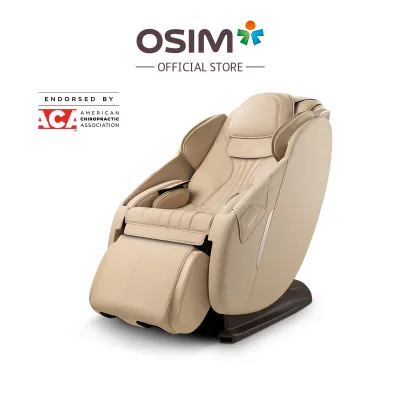
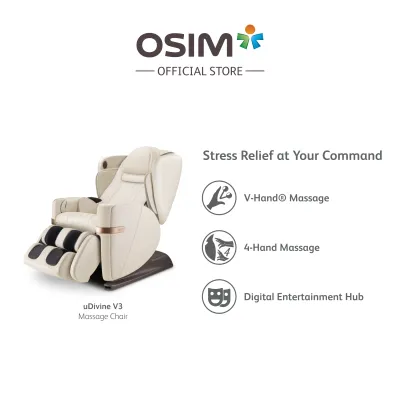

Prices are valid at publication and may change. Please refer to the product page for the latest price.
Beyond the track, the roller mechanism determines the dimensionality of the massage. Standard premium chairs offer 3D rollers, which move up and down, left and right, and in and out to adjust the depth of the massage. Many brands, including OSIM, advertise 4D or even more advanced roller systems. In practical terms, these advanced mechanisms introduce speed variations and real-time adjustments that mimic the changing tempo of a professional masseuse. When evaluating these claims, you should focus on the actual range of depth and width adjustability. A high-quality chair should allow you to manually adjust how far the rollers protrude and how close together they sit, ensuring the mechanism targets your muscles rather than pressing uncomfortably against your shoulder blades or spine.
To verify these mechanisms, a showroom test is essential. Do not rely solely on a five-minute demonstration. Instead, spend at least fifteen to twenty minutes in the chair to observe how the rollers transition between different muscle groups. Pay close attention to the pressure distribution at key transition points, such as the base of the skull and the lower lumbar curve. If a showroom trial is not possible, carefully review the retailer’s return policy and trial periods to ensure you can test the chair’s physical compatibility in your own home.
Proprietary Technologies and Specialized Programs
Premium brands differentiate themselves through proprietary technologies designed to replicate specific massage techniques. OSIM is well-known for its V-Hand technology, which uses specialized roller configurations to mimic the pinching and kneading grip of a professional therapist’s hands. Other high-end brands counter with their own unique mechanisms, such as dual-roller systems that massage the upper and lower back simultaneously, or highly targeted thermal therapy that applies heat to the calves and feet as well as the back. When comparing these features, look for real-world adjustability rather than relying on brand-specific terminology.

Automated programs are highly convenient, but their effectiveness depends on the chair’s customization capabilities. A premium chair should offer a balance of pre-programmed routines for relaxation or recovery and robust manual controls. Check whether you can pause the rollers at a precise spot to target a stubborn knot, adjust the intensity of the airbag compression in specific zones like the shoulders or forearms, and turn off individual features like foot rollers or heat therapy independently. If a chair forces you to use pre-set combinations without manual overrides, its long-term utility may be limited as your physical needs change.
Sensor accuracy is another critical factor in proprietary systems. Most premium chairs use body scanning technology to map your spine and locate your shoulders before a program begins. If the sensors fail to map your body accurately, the rollers may misalign, leading to an uncomfortable or ineffective massage. When testing a chair, observe how quickly and accurately the scanning process completes. If you are shorter or taller than average, verify whether the chair allows you to manually adjust the shoulder height starting point to correct any scanning errors.
Ergonomics, Build Quality, and Space Requirements
A massage chair must physically fit both your body and your living space. Before purchasing, verify the maximum user height, weight capacity, and shoulder width limits of the chair. In a multi-user household, the chair must accommodate the physical dimensions of every family member. Some premium chairs feature extendable footrests and adjustable shoulder panels to accommodate different heights, which is a crucial feature to check if multiple people will be using the chair regularly.
Space constraints are a major consideration for Singapore homes, where living rooms and bedrooms often have compact layouts. Measure the exact footprint of the chair in both its upright and fully reclined positions. Many modern premium chairs feature “wall-hugging” or “zero-gravity” slide mechanisms. These designs allow the chair to slide forward on its base as it reclines, requiring as little as 5 to 10 cm of clearance from the wall behind it. Without this feature, you may need to place the chair in the middle of the room, which can disrupt your home’s traffic flow.
The durability of the upholstery is equally important, particularly in Singapore’s humid climate. Most premium massage chairs use high-grade synthetic leather, such as polyurethane (PU) or specialized microfibers, which are designed to withstand the friction of moving rollers. Inspect the stitching and seams for quality, and ask about the breathability of the material. Sweat and humidity can cause lower-quality synthetic materials to peel or crack over time. Ensure you understand the manufacturer’s care instructions, including the recommended cleaning agents and the frequency of maintenance required to preserve the upholstery.
Pricing, Warranty, and Long-Term Value
Purchasing a premium massage chair involves a significant financial commitment, with prices often reaching several thousand dollars (S$). To evaluate the long-term value of your investment, you must look beyond the initial purchase price and consider the total cost of ownership, starting with the warranty terms. A standard premium warranty should cover parts, labor, and on-site service for at least one to two years. Verify whether the warranty covers the internal motor and roller mechanisms, the electronic components, and the upholstery. Some brands offer extended warranties for an additional fee, which can provide peace of mind for such a complex mechanical product.
Delivery and installation services are critical components of the purchase process. Due to their weight and bulk, premium massage chairs cannot easily be moved by untrained individuals. Confirm whether the retailer includes professional delivery, assembly, and old furniture disposal in the purchase price. In Singapore, navigating tight HDB corridors, lift doors, and narrow entryways requires experienced delivery teams who can disassemble and reassemble the chair if necessary to prevent damage to your home or the product itself.
Finally, consider the availability and responsiveness of local service centers. A reputable brand should have a dedicated local customer support team and qualified technicians capable of performing on-site repairs in Singapore. Ask about typical response times for service requests and the availability of replacement parts. A brand with a strong local presence and a track record of prompt customer service is often worth a higher initial investment than a lesser-known brand with limited local support.
Decision Framework: Choosing the Right Premium Massage Chair
To make your final decision, weigh your personal physical needs against the specific strengths of each brand and the practical constraints of your home.
Choose OSIM if you prioritize highly specialized, branded massage mechanisms like V-Hand technology, prefer a wide selection of automated, app-controlled programs, and want the convenience of testing various models across a broad network of local showrooms. This option is ideal for users who appreciate a high-tech, user-friendly interface and want a well-established local support system.
Choose alternative premium brands if you require specific physical specifications, such as a longer flexible track for full-body stretching, higher weight capacities, or more robust manual customization options. These alternatives may also appeal if you find their specific roller feel or aesthetic designs better suited to your personal preferences and home decor.
Regardless of the brand you choose, always verify your physical suitability before purchasing. If you have pre-existing medical conditions—such as spinal disorders, circulatory issues, joint inflammation, or sensory neuropathy—or if you are pregnant, consult a healthcare professional before using a massage chair to ensure it is safe for your specific health profile.
Frequently Asked Questions (FAQ)
How often should I use a massage chair for optimal relief?
Standard manufacturer guidelines generally recommend using a massage chair for one or two sessions per day, with each session lasting between 15 and 20 minutes. This frequency is typically sufficient to relieve muscle tension without overstimulating your body. Using the chair for extended periods or at excessively high intensities can lead to muscle soreness, bruising, or inflammation. If you experience persistent discomfort or pain after a session, reduce the frequency and intensity, and consult a healthcare professional if the symptoms persist.
Can I move a premium massage chair to another room by myself?
It is highly discouraged to move a premium massage chair by yourself. These chairs are heavy, often weighing between 80 kg and 150 kg, and their bulky shape makes them difficult to maneuver safely. Attempting to lift or slide the chair alone can result in personal injury, damage to the chair’s internal mechanisms, or deep scratches on your flooring. If you need to relocate the chair, check if it has built-in caster wheels for short-distance adjustments on flat surfaces. For moving between rooms or homes, always enlist the help of multiple people or hire professional movers who specialize in handling heavy furniture.
Community discussion
Share your experience or ask a question. Comments are reviewed before publication.