
Choosing between an open-back and a closed-back display cabinet as a room partition depends on whether you prioritize light transmission and visual connection or complete privacy and solid storage. An open-back cabinet excels at maintaining an airy, bright atmosphere and allowing dual-sided access, making it ideal for smaller apartments or shared living-dining zones. Conversely, a closed-back cabinet acts as a true wall substitute, offering complete visual separation, a dedicated backdrop for furniture, and secure storage for items you prefer to keep hidden from one side.
Using a display cabinet as a room divider is an excellent way to define functional zones without the permanence or expense of building a drywall. In modern, open-plan homes, such as apartments in Singapore where maximizing floor area is essential, this approach offers both utility and style. However, selecting the wrong cabinet structure can make a room feel cramped, dark, or structurally unsafe. Understanding how back panel designs affect light, stability, and daily usability is key to making a successful choice that enhances your living environment.
Light, Privacy, and Spatial Flow
The presence or absence of a back panel fundamentally alters how light moves through your home. An open-back display cabinet allows natural light from windows to penetrate deep into adjacent zones, preventing dark corners and maintaining a bright, welcoming ambiance. In contrast, a closed-back cabinet blocks light entirely, casting distinct shadows and potentially requiring you to install additional artificial lighting in the newly shaded area. This is particularly important in deep layouts where windows are only located on one side of the room.
Products mentioned in this guide
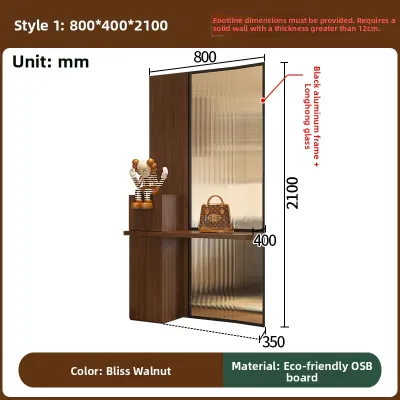
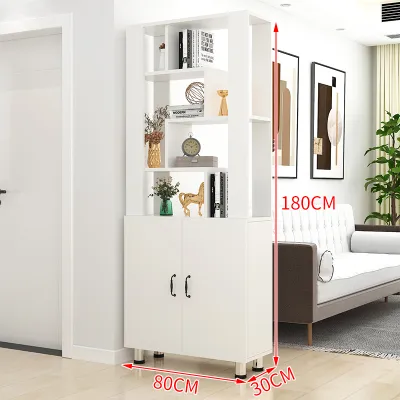
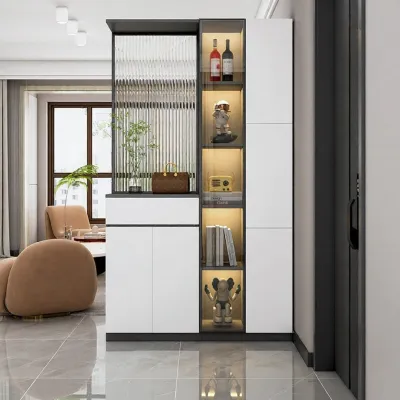
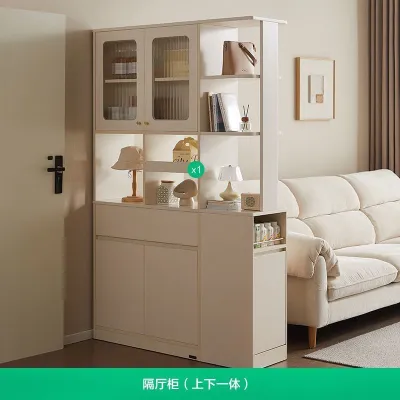
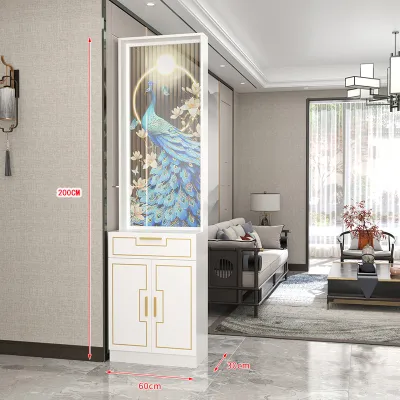

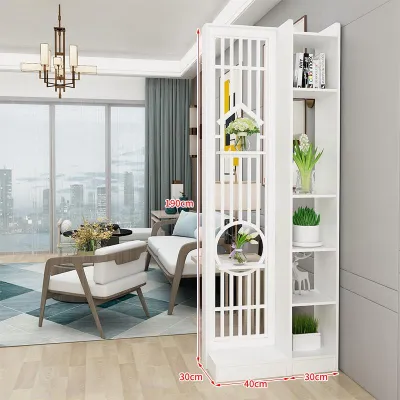
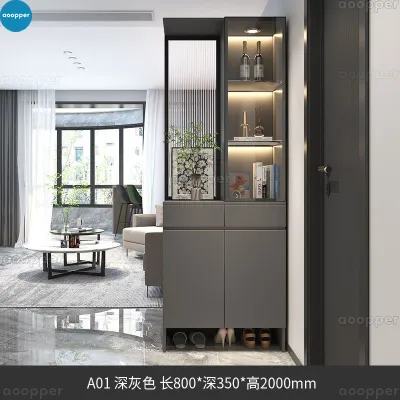
Prices are valid at publication and may change. Please refer to the product page for the latest price.
Visual privacy is another critical factor when dividing a shared space. If you are separating a home office from a busy living room, a closed-back cabinet provides a solid visual barrier that minimizes distractions and hides work-related clutter from guests. However, if you are dividing a living room and a dining area, an open-back design is often preferred because it maintains a sense of social connection and allows family members to converse across the boundary. It creates a soft boundary rather than a hard barrier, keeping the home feeling unified.
Airflow and spatial perception also differ significantly between these two structures. Open-back cabinets allow air from windows or air conditioning units to circulate freely, which is particularly important for maintaining a comfortable indoor climate in warm, humid regions. A solid, closed-back cabinet can disrupt this cross-ventilation, creating stagnant air pockets while making the divided rooms feel noticeably smaller and more confined. By choosing an open structure, you preserve the sightlines, which tricks the brain into perceiving the entire footprint as one large, continuous space.
Structural Stability and Installation Safety
Using a freestanding cabinet as a room partition introduces unique safety challenges because the unit is not backed by a solid wall. Tipping hazards are a major concern, especially in households with active children or pets who might bump into the furniture. Because display cabinets are often tall and narrow, their center of gravity must be carefully managed to prevent accidental tipping. The type of flooring also plays a role; uneven tiles or thick carpets can compromise the stability of a tall, unanchored unit.

To ensure structural safety, you must evaluate the anchoring options recommended by the manufacturer. Since standard wall-tethering straps cannot be used in the middle of a room, look for cabinets that support floor anchoring brackets or can be secured to an adjacent side wall. Some homeowners use custom tension rods or top-braces to wedge the cabinet securely between the floor and the ceiling, though this requires verifying that your ceiling can withstand the upward pressure without cracking.
Load-bearing capacity and shelf security are equally important when a cabinet is accessible from both sides. Ensure that the shelves are locked into place with secure shelf pins or brackets rather than resting loosely on adjustable pegs, which can easily be dislodged from the reverse side. Always place heavier items, such as large books, heavy ceramic vases, or storage boxes, on the lowest shelves to keep the unit’s weight concentrated near the floor, thereby lowering the overall center of gravity.
Storage Access and Dual-Sided Usability
A closed-back display cabinet limits your storage access to a single direction, meaning you can only retrieve items from the front of the unit. The back panel, which faces the secondary room, becomes a blank vertical surface that offers no functional storage. This design can result in dead space along the partition line, as you cannot easily utilize both sides of the cabinet simultaneously, forcing you to plan your furniture layout around a single-facing piece.
An open-back cabinet, on the other hand, offers true dual-sided usability. You can place decorative items, books, or storage baskets on the shelves and access them easily from either room. This makes the cabinet highly versatile, allowing it to serve as a bookshelf for a study area on one side and a display shelf for dinnerware on the dining room side. It maximizes the utility of every square centimeter of floor space it occupies.
However, open-back designs present a challenge when it comes to managing cables and hiding everyday clutter. Without a back panel, power cords for lamps, chargers, or small electronics are fully visible from both sides, which can ruin the clean aesthetic of your room. Closed-back cabinets excel in this area, as they allow you to route cables discreetly behind the panel or conceal messy items behind solid cabinet doors. If you choose an open-back design, you may need to rely on decorative storage baskets or bins to corral smaller, less attractive items.
Styling and Aesthetic Integration
Styling an open-back cabinet requires a deliberate approach to avoid creating visual clutter. Because you can see right through the shelves, overcrowding them with small items will make both divided spaces look disorganized. A good rule of thumb is to leave plenty of empty space on each shelf—aiming for about thirty percent empty space—and use a mix of transparent glassware, plants, and neatly stacked books to let light pass through while adding visual interest. Grouping items in odd numbers, such as clusters of three, creates a balanced look.
If you choose a closed-back cabinet, you must address the appearance of the back panel facing the secondary room. Many standard cabinets are manufactured with unfinished plywood backings that are meant to be hidden against a wall. To make the partition look intentional, you can finish the back panel by painting it to match your walls, applying decorative wallpaper, or mounting a large mirror to help bounce light around the room. Alternatively, you can attach a corkboard or a magnetic whiteboard to the back, turning it into a functional command center for a home office or kitchen side.
Aesthetic integration also requires matching the cabinet’s materials and hardware with the existing furniture in both zones. For a cohesive look, choose neutral wood finishes, matte black metal frames, or clean white lacquer that complements the dining table on one side and the sofa frame on the other. Consistent hardware, such as matching brass or black metal handles, helps tie the two distinct spaces together, ensuring the partition feels like a natural extension of the home’s overall design language.
Decision Framework: Choosing Your Partition Cabinet
To finalize your choice, consider how your daily lifestyle and room layout align with the characteristics of each design.
Choose an open-back display cabinet if:
- Maximizing natural light and maintaining an airy, spacious feel are your top priorities.
- You want dual-sided access to books, decor, or everyday items from both divided zones.
- You enjoy curating minimalist shelf displays and do not need to hide messy items or complex cable setups.
- You want to maintain cross-ventilation and airflow across a shared living and dining area.
Choose a closed-back display cabinet if:
- You require a solid visual barrier to create distinct privacy between two functional areas, such as a bedroom and a study.
- You need to conceal storage clutter, power strips, or electronic cables completely.
- You want a solid vertical surface to place a sofa, console table, or desk against on one side of the partition.
- You plan to customize the back panel with paint, wallpaper, or functional boards to match the adjacent room's decor.
Before making any purchase, always verify the physical dimensions of your home’s entryways, lift doors, stairwells, and ceiling heights. Large partition cabinets can be incredibly difficult to transport and maneuver through tight corridors. Opting for modular units or flat-pack designs that can be assembled directly in the room is often the safest and most practical approach for high-rise apartment living.
Frequently Asked Questions (FAQ)
Do I need to anchor a display cabinet used as a room partition?
Yes, anchoring is highly recommended for safety. Because a partition cabinet stands freely in a high-traffic area rather than against a wall, it is highly susceptible to tipping if bumped, leaned on, or climbed. You should always follow the manufacturer’s instructions for securing freestanding furniture, which may include using floor brackets, side-wall anchors, or specialized ceiling tension systems. Never rely solely on the weight of the items inside to keep a tall cabinet stable.
Can I use an open-back cabinet to hide TV cables in the middle of a room?
It is highly challenging to hide cables in an open-back cabinet because there is no solid panel to conceal them. To manage wires in an open design, you must use creative solutions such as routing cables through hollow frame legs, using paintable cord covers that blend with the cabinet’s vertical supports, or placing decorative storage baskets on the shelves to hide power strips. If you have multiple electronic devices with heavy cabling, a closed-back cabinet or a model with a solid lower cupboard is a much more practical choice.

Community discussion
Share your experience or ask a question. Comments are reviewed before publication.