
Upgrading to a premium Ogawa massage chair is highly justified if you require targeted, deep-tissue muscle recovery, personalized spine mapping for multiple household members, and space-saving wall-hugging technology. Entry-level models, by contrast, are fully sufficient if you seek general daily relaxation, basic full-body kneading, and have ample floor space to accommodate a standard reclining mechanism. The optimal choice depends on matching your specific physical recovery needs, budget, and home layout with the corresponding mechanical capabilities of each tier.
While entry-level models deliver a reliable, soothing experience, premium models introduce sophisticated robotics, multi-sensory therapies, and advanced space-saving engineering. Understanding the engineering differences between these tiers will help you determine whether the long-term therapeutic benefits of a premium model align with your lifestyle and wellness goals.
Core Massage Mechanics: Rollers, Tracks, and Body Scanning
The fundamental performance of any massage chair is determined by its internal mechanical system. This system consists of the rollers that mimic human hands, the track along which those rollers travel, and the scanning technology that aligns the mechanism with your anatomy. Premium and entry-level Ogawa chairs differ significantly across these three core components.
Products mentioned in this guide
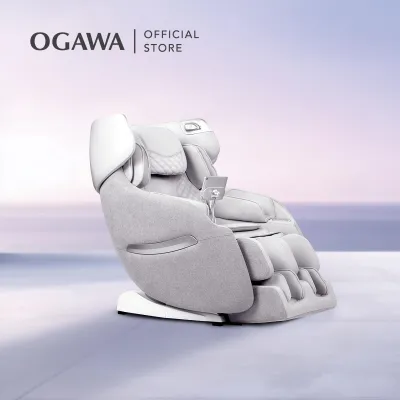
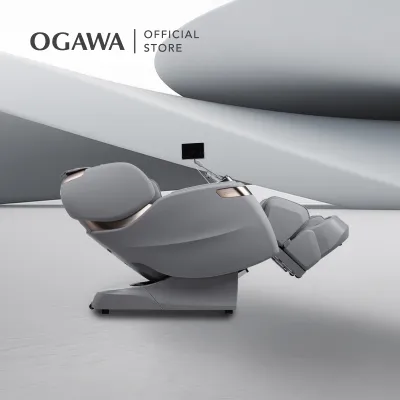
Prices are valid at publication and may change. Please refer to the product page for the latest price.
Understanding Roller Dimensionality: 2D, 3D, and 4D Technologies
Entry-level Ogawa massage chairs typically utilize 2D or basic 3D roller mechanisms. A 2D roller system operates on two axes, moving up and down your spine and left to right across your back. While this provides a highly effective surface massage, it cannot adjust its depth to press deeper into tight muscle groups. Basic 3D rollers introduce a third axis, allowing the rollers to protrude forward and backward to deliver a deeper massage.
Premium Ogawa models elevate this experience with advanced 4D roller technology. The fourth dimension refers to real-time speed and rhythm adjustments. Rather than moving at a constant, mechanical speed, 4D rollers accelerate and decelerate dynamically to mimic the natural pacing of a professional masseuse. These rollers can also protrude much further forward, allowing for highly targeted deep-tissue therapy that can penetrate stubborn muscle knots in the neck, shoulders, and lower lumbar regions.
Track Geometry: The Evolution from S-Tracks to Extended SL-Tracks
The track is the steel or aluminum guide rail that dictates how far the rollers can travel along your body. Standard entry-level chairs often feature an S-track, which is contoured to match the natural curve of the human spine but generally stops at the lower back. Some mid-to-entry models use a standard L-track, which extends past the lower back to massage the glutes but may lose some of the close-fitting spinal contouring along the way.
Premium Ogawa chairs almost exclusively employ extended SL-track systems. These tracks combine the anatomical curvature of the S-track with the extended length of the L-track, often measuring up to 135 centimeters in length. This allows the rollers to travel seamlessly from the base of your skull, down the neck and back, under the glutes, and directly to the upper hamstrings. This continuous coverage is highly beneficial for individuals seeking relief from sciatic discomfort, lower back stiffness, or gluteal muscle fatigue.
Body Scanning Precision: Basic Sensors vs. AI Spine Mapping
To deliver an effective massage, a chair must know exactly where your shoulders, spine, and lower back are positioned. Entry-level models use basic pressure or optical sensors that detect the top of your shoulders when you sit down. While functional, these systems occasionally miscalculate the height of shorter or taller users, requiring manual adjustments via the remote control to prevent the rollers from hitting the back of the skull or stopping too high.
Premium models feature advanced dual-sensor or AI-assisted spine mapping technology. When you sit in a premium chair, the system conducts a comprehensive anatomical scan, measuring the precise curvature of your vertebrae and detecting individual pressure points. This ensures that the rollers target the exact muscular channels running parallel to your spine, adjusting the pressure dynamically to accommodate different body shapes, heights, and spinal alignments. This level of customization is particularly valuable in multi-user households where family members have vastly different physical statures.
Airbag Compression, Heat Therapy, and Foot Reflexology
Beyond the primary roller mechanisms, secondary therapeutic features like airbag compression, targeted heat, and foot reflexology play a critical role in promoting circulation, reducing inflammation, and enhancing overall comfort.

Airbag Distribution and Multi-Chamber Compression
Airbag compression therapy utilizes synchronized air bladders to squeeze and release muscle groups, which stimulates lymphatic flow and relieves tension in areas that rollers cannot easily reach. Entry-level Ogawa models generally feature a modest number of airbags, typically concentrated around the calves, forearms, and shoulders. These airbags operate on basic, single-chamber inflation patterns, providing a straightforward, rhythmic squeeze.
Premium models feature highly dense, multi-chamber airbag arrays that cover the shoulders, waist, hips, hands, forearms, calves, and feet. These systems utilize independent solenoid valves to create sophisticated, wave-like compression sequences. For example, instead of inflating the entire arm bladder at once, a premium chair can perform a sequential squeeze from the fingertips up to the elbow, mimicking the manual compression techniques used in lymphatic drainage therapies.
Thermal Therapy: Targeted Lumbar Heat vs. Full-Body Multi-Zone Warmth
Applying heat to sore muscles dilates blood vessels, increases oxygen flow, and makes muscle fibers more pliable and receptive to the mechanical massage. Entry-level chairs usually offer localized heat therapy, consisting of basic heating pads located in the lower lumbar region. This provides a gentle, soothing warmth that is highly effective for general lower back stiffness.
Premium Ogawa chairs expand this therapeutic warmth into multi-zone thermal systems. These models incorporate rapid-heating carbon fiber or advanced graphene elements not only in the backrest but also around the calves, knees, and footwells. Some premium models even feature heated rollers that warm up as they travel along your spine, delivering a hot-stone massage experience directly to tight muscle groups. This comprehensive warmth is highly beneficial for soothing stiff joints and accelerating recovery after intense physical activity.
Advanced Foot and Calf Care: Active Rollers and Kneading Systems
Foot and leg care is another area where the distinction between product tiers is highly pronounced. In entry-level models, foot therapy is typically passive. The footwell may contain basic stationary plastic nodes, and the chair relies on airbag compression to press the soles of your feet down onto these nodes. While this provides basic relief, it lacks active, dynamic movement.
Premium Ogawa chairs feature dedicated, motorized foot reflexology systems. These include multiple active rollers under the soles that spin, scrape, and knead the arches, heels, and toes. Additionally, premium models often feature active calf-kneading mechanisms—where the side panels of the leg rest physically rotate or slide to rub the calf muscles—along with motorized, extendable footrests that adjust automatically to your exact leg length to ensure perfect ergonomic alignment.
Smart Programs, Zero-Gravity, and User Customization
The software, positioning capabilities, and user interface of a massage chair dictate how easily you can customize your sessions and how effectively the chair can target specific physical issues.
Zero-Gravity Positioning and Spinal Decompression
Zero-gravity positioning, a concept inspired by NASA, reclines the chair to an angle where your knees are elevated slightly above your heart. This specific posture distributes your body weight evenly across the chair, reducing the gravitational pull on your spine and allowing your vertebrae to decompress. Entry-level models often offer a single-stage zero-gravity option, which reclines the chair to a fixed, pre-determined angle.
Premium Ogawa models typically feature multi-stage zero-gravity positioning. These chairs allow you to adjust the angle of weightlessness through multiple phases, finding the exact position that maximizes your lung capacity, improves circulation, and provides the deepest level of spinal decompression. By reclining further back, the chair also uses your own body weight to naturally increase the intensity of the back rollers, providing a deeper massage without requiring more mechanical force.
Automated Programs: Standard Routines vs. AI-Driven Customization
Entry-level chairs come programmed with a select group of standard, pre-set routines, such as “Relax,” “Stretch,” or “Deep Tissue.” These programs run on fixed timers and follow identical mechanical paths every time they are activated. While highly reliable for daily relaxation, they cannot adapt to your changing physical needs.
Premium Ogawa chairs leverage advanced AI and biometric sensors to deliver highly customized routines. These models often feature metal sensors built into the armrests that measure your galvanic skin response, heart rate, and muscle tension levels. The chair’s onboard computer analyzes this data to identify areas of high stress and automatically designs a custom massage program tailored to your body’s immediate needs. Premium models also allow you to save multiple custom user profiles, remembering your preferred roller speed, airbag intensity, and recline angles for a seamless, one-touch startup.
Interface Usability: Classic Remotes vs. Interactive Touchscreens
The interface you use to control your massage chair directly impacts your overall experience. Entry-level chairs are equipped with traditional, tethered remote controls featuring physical buttons and basic LCD screens. While highly durable and straightforward to operate, navigating deeper customization menus on these remotes can sometimes feel clunky.
Premium models replace these traditional remotes with large, interactive tablet touchscreens. These high-resolution screens display intuitive, visual representations of your body, allowing you to point precisely to the areas where you want the rollers to focus. Furthermore, premium models often incorporate hands-free voice control, built-in Bluetooth surround-sound speakers, and mobile app integration, allowing you to download newly released massage programs and control your chair directly from your smartphone.
Space, Dimensions, and Placement Requirements in Singapore Homes
When purchasing a major piece of furniture like a massage chair, practical spatial constraints and delivery logistics are just as important as therapeutic features, especially in Singapore’s compact urban living environments.
Footprint Optimization and Wall-Hugging Technology
One of the most significant practical advantages of premium Ogawa massage chairs is the integration of wall-hugging slide technology. Standard entry-level chairs require a substantial amount of clearance behind the backrest—often between 50 and 80 centimeters—to recline fully. This means the chair must sit far out into your living room or bedroom, consuming valuable floor space.
Premium models utilize a motorized sliding base mechanism. As the chair reclines, the entire body glides forward on its track. This engineering feat allows the chair to require as little as 5 to 10 centimeters of clearance from the wall behind it to achieve a full recline. This wall-hugging capability makes premium models exceptionally well-suited for tight HDB flats and condominium layouts where maximizing usable floor space is a priority.
Navigating Singaporean Homes: Lift, Doorway, and Corridor Clearances
Before finalizing any massage chair purchase, you must carefully measure the delivery path in your home. Standard HDB lift doors typically have a clear opening width of 80 to 90 centimeters, and older residential doorways or tight corridor corners can be even narrower.
Entry-level chairs are often slightly narrower and lighter, making them easier to maneuver through tight spaces. Premium chairs, with their extensive side panels, heavy internal motors, and multi-layered airbag housings, can be exceptionally bulky and often weigh well over 100 kilograms. However, many premium Ogawa models are engineered with detachable side panels, allowing delivery teams to dismantle the chair partially to fit through narrow doorways as slim as 75 centimeters. Always consult the manufacturer’s official delivery specifications and measure your entryways before purchasing.
Load Distribution and Floor Protection Strategies
Because of their heavy internal steel frames and complex robotics, premium massage chairs exert significant localized pressure on your flooring. When a user is seated, the combined weight can exceed 200 kilograms, distributed across four small caster wheels on the base of the chair.
To prevent permanent indentations, scratches, or discoloration on delicate flooring materials like vinyl, laminate, engineered wood, or polished marble, it is highly recommended to place a high-density, non-slip protective polyurethane mat beneath the chair. This mat not only distributes the weight more evenly across the subfloor but also helps dampen any low-frequency vibrations generated by the air pumps and motors during operation, ensuring a quieter environment for your household and neighbors.
How to Decide: Matching Ogawa Tiers to Your Needs
Choosing between an entry-level and a premium Ogawa massage chair ultimately comes down to identifying your physical needs, spatial constraints, and budget.
Choose Entry-Level If:
- Your primary goal is general relaxation: If you simply want a soothing, comfortable place to unwind after a long day at work without requiring intense, deep-tissue therapy.
- You are working with a stricter budget: Entry-level models generally sit within a highly accessible price band, typically under S$3,000, making them an excellent entry point into automated massage therapy.
- You have ample room for reclining: If you have a spacious living room or bedroom where requiring 50 to 80 centimeters of wall clearance is not a structural or aesthetic issue.
Choose Premium If:
- You suffer from chronic pain or muscle tension: If you require targeted, deep-tissue relief for specific areas like the neck, shoulders, lower lumbar, or hamstrings.
- Multiple household members will use the chair: If you need advanced AI spine scanning and user-profile memory to accommodate family members of varying heights and physical statures.
- You live in a compact space: If you require wall-hugging technology to minimize the chair's footprint in an HDB flat or condominium.
- You want a comprehensive, multi-sensory experience: If you value advanced features like active calf kneading, multi-zone thermal therapy, interactive touchscreens, and synchronized Bluetooth audio.
Essential Pre-Purchase Showroom Checks
Because comfort, roller intensity, and ergonomic fit are highly subjective, you should always test the models in person at an official Ogawa showroom in Singapore before making a purchase. When testing the chairs, pay close attention to the following aspects:
- Roller Intensity: Ensure the roller depth and pressure feel therapeutic rather than painful, and verify that the intensity settings can be adjusted easily.
- Seat Width and Ergonomics: Sit in the chair while it is powered off to ensure your shoulders fit comfortably between the side panels and your head rests naturally against the cushion.
- Control Usability: Spend a few minutes navigating the remote control or touchscreen interface to ensure you can easily select programs, adjust recline angles, and pause the session if needed.
- Warranty and Support: Confirm the manufacturer's warranty terms, which typically cover parts and labor for 1 to 2 years, and ask about the availability of local technical support and servicing in Singapore.
Frequently Asked Questions (FAQ)
Do entry-level Ogawa chairs still provide full-body massage?
Yes, entry-level Ogawa massage chairs do provide a comprehensive full-body massage that covers the neck, back, arms, calves, and feet. However, they typically lack the extended physical reach of premium SL-track models, which massage all the way down to the hamstrings. Additionally, entry-level models rely on passive foot reflexology and fewer airbag chambers, whereas premium models utilize active rollers, calf-kneading mechanisms, and highly targeted, multi-zone compression to deliver a more precise and intense full-body therapeutic experience.
How much clearance is needed behind an Ogawa massage chair?
The amount of rear clearance required depends heavily on the specific model’s reclining mechanism. Premium Ogawa models equipped with wall-hugging slide technology typically require only 5 to 10 centimeters of space behind the backrest, as the chair glides forward on its base as it reclines. Entry-level models that lack this sliding mechanism generally require between 50 and 80 centimeters of clearance from the wall to recline fully without obstruction. Always refer to your specific model’s installation manual to verify the precise clearance dimensions before placing the chair in your home.
Community discussion
Share your experience or ask a question. Comments are reviewed before publication.