
Quick Answer: Which Ogawa Category Fits Your Profile?
Selecting the ideal Ogawa massage chair is not a one-size-fits-all decision. The right model for your home depends entirely on the intersection of your budget, your available floor space, and your desired massage intensity. Because the brand regularly updates its product names, focusing on the underlying engineering tiers rather than isolated model numbers will help you make an informed decision when visiting showrooms or browsing online marketplaces.
To simplify your decision, you can categorize the lineup into three distinct tiers based on your specific household profile:
- The Flagship Tier: Choose this if you have a budget of S$6,000 or more, a dedicated room or a spacious living area, and you require highly customizable, deep-tissue massage programs that cover your entire body from your neck down to your hamstrings.
- The Mid-Range Tier: Choose this if you want to spend between S$3,000 and S$5,999, desire a comprehensive full-body massage with zero-gravity positioning, and want to avoid paying a premium for niche, luxury features like advanced voice control or custom aesthetic finishes.
- The Compact Tier: Choose this if your budget is under S$3,000, you live in a cozy apartment such as a smaller HDB flat or condominium, and your primary physical complaints are concentrated in your neck, shoulders, and upper back.
Evaluating your physical space and therapeutic needs first ensures you do not overpay for features you will not use, or purchase a chair that physically dominates your living space.
Products mentioned in this guide
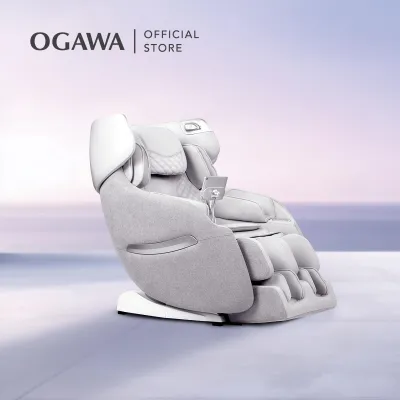
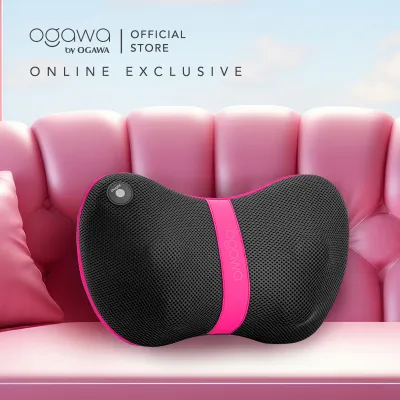
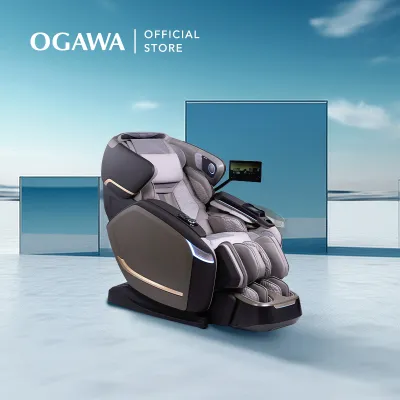
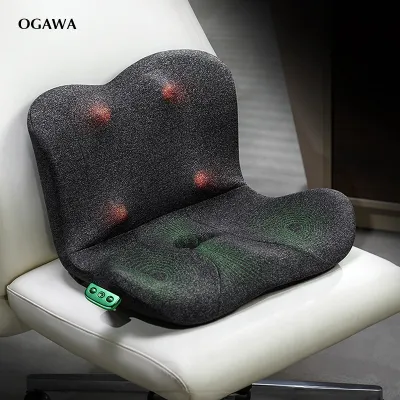
Prices are valid at publication and may change. Please refer to the product page for the latest price.
The 3 Core Decision Factors: Budget, Space, and Features
Before analyzing specific specification sheets, you must establish your household’s baseline constraints. By defining your limits regarding budget, physical space, and ergonomic requirements, you can quickly filter out unsuitable options.

Budget Tiers and Total Cost of Ownership
Ogawa segments its lineup into distinct pricing brackets in Singapore. Entry-level and compact options typically range from S$1,500 to S$3,000. Mid-range models, which offer the most balanced price-to-performance ratio, sit between S$3,000 and S$5,999. Premium flagship chairs often exceed S$6,000 and can reach well over S$10,000 for models equipped with advanced AI diagnostics and premium upholstery.
When setting your budget ceiling, always verify what is included in the purchase price. Ensure the quote accounts for delivery fees, professional assembly, and potential disposal fees if you need an old recliner or massage chair removed. Clarify these details with the retailer before finalizing your purchase to avoid unexpected delivery-day costs.
Space and Recline Clearance
Many buyers measure only the upright footprint of a massage chair, forgetting that these units require substantial clearance to recline fully. A chair that fits comfortably against a living room wall in its upright state may require up to 30 to 50 centimeters of rear clearance to transition into a zero-gravity position.
For tight Singapore apartments, look for models equipped with “wall-hugging” or “zero-wall” slide technology. These chairs are engineered on a forward-sliding track mechanism. When you initiate a recline, the entire chassis slides forward on its base, allowing you to position the chair as close as 5 to 10 centimeters from your wall without risking damage to your paint or plaster.
Body Type and Ergonomics
Your physical height, weight, and shoulder width dictate which chair frame will feel comfortable. A chair designed for a petite frame may pinch the shoulders of a broader user, while a taller individual may find their knees bent uncomfortably if the leg rest does not extend far enough.
Check the maximum weight capacity and the adjustable range of the shoulder airbags and footrest. High-quality chairs feature automatic body-scanning sensors that measure your spine length and shoulder width before every session, adjusting the roller paths to match your unique anatomy.
Comparing Ogawa’s Main Chair Categories
To help you navigate the showroom floor, it is helpful to understand the structural and mechanical trade-offs associated with each of Ogawa’s primary product categories.
Flagship and Premium Series
Flagship models represent the pinnacle of the brand’s mechanical and sensory engineering. These chairs utilize advanced 4D roller mechanisms that do not simply move up, down, left, right, in, and out; they also adjust their speed, acceleration, and rhythm in real-time to mimic the hands of a professional masseuse. These premium units feature extended SL-tracks that measure 130 centimeters or longer, allowing the rollers to travel seamlessly from the base of your skull down to your glutes and upper hamstrings.
This tier is designed specifically for users who require highly targeted, deep-tissue therapy and want the ability to customize every aspect of their massage. You can adjust the roller depth across multiple levels of intensity, target specific muscle groups with pinpoint accuracy, and save custom user profiles for different family members.
The trade-off for this level of performance is physical size and weight. These chairs often weigh well over 100 kilograms, occupy a significant footprint in your home, and require a dedicated, permanent location where they will not obstruct household foot traffic.
Mid-Range and Core Performance Series
Mid-range models are often considered the sweet spot for the average Singaporean household. These chairs typically employ reliable 3D roller mechanisms that allow you to adjust the depth of the massage, though they lack the highly nuanced speed variations of the 4D flagship models. They generally feature standard SL-tracks that provide excellent full-body coverage, ensuring your lower back and glutes receive adequate attention.
These chairs are ideal for buyers who want a thorough, daily full-body massage but do not require ultra-niche luxury add-ons. You will still enjoy essential features like zero-gravity positioning, targeted carbon-fiber heating, and a comprehensive array of pre-programmed massage routines.
The trade-off in the mid-range tier is a slight reduction in customization. You may find fewer manual adjustment steps for the roller width or speed, and the airbag compression systems may operate in larger, less precise zones rather than offering highly localized sequential compression.
Compact and Space-Saving Models
Compact models are engineered specifically for secondary rooms, study areas, or smaller living spaces where a full-sized chair is physically impractical. These units often utilize simplified S-tracks or shorter L-tracks, paired with 2D or basic 3D roller mechanisms that focus primarily on the upper body, neck, and shoulders.
These models are perfect for users who suffer from desk-work fatigue and need quick, daily relief for tight neck and shoulder muscles. Their lightweight chassis makes them easier to reposition within a room, and they often blend more naturally with modern Scandinavian or minimalist interior design styles.
However, the compact form factor requires significant functional trade-offs. These models rarely offer comprehensive lower-body massage options, often omitting calf rollers or foot rollers entirely. They also feature lower weight and height capacities, making them less suitable for taller or heavier individuals.
Essential Specifications to Compare on the Spec Sheet
When comparing different models side-by-side, do not rely solely on marketing descriptions. Instead, request the official technical specification sheet and verify the structural components using the framework below.
| Specification | Why It Matters | What to Verify on the Label |
|---|---|---|
| Track Type and Length | Determines the physical path the rollers travel along your back. | Look for an SL-track measuring at least 120 to 135 cm for full-body coverage from neck to thighs. S-tracks only cover the spine. |
| Roller Mechanism | Controls the depth, realism, and intensity of the mechanical massage. | Verify if the system is 2D (flat movement), 3D (adds depth protrusion), or 4D (adds dynamic speed and rhythm changes). |
| Zero-Gravity Recline | Elevates your knees above your heart to reduce spinal compression and pressure. | Check for a dual-stage zero-gravity function that allows for a deeper, flatter recline angle. |
| Airbag Distribution | Provides compression therapy to areas rollers cannot reach, such as shoulders and arms. | Look for the total airbag count and verify if they offer independent, sequential compression. |
| Heating Zones | Relaxes tight muscle fibers to make the mechanical roller massage more effective. | Confirm if the heating elements are restricted to the lumbar region or extend to the calves and feet. |
Understanding these technical baselines allows you to compare models objectively, ensuring you pay for structural capabilities rather than cosmetic enhancements.
Pre-Delivery Checklist for Singapore Homes
A massage chair is one of the heaviest and most structurally rigid pieces of furniture you will ever purchase. To prevent delivery failures, property damage, or safety hazards, complete these four checks before finalizing your order.
Pathway and Door Clearance
Before purchasing, you must measure the entire delivery pathway from the building’s unloading bay to your designated room. Measure the width and height of all elevator doors, the depth of the elevator cabin, stairwell turns, your front metal gate, and your main wooden door frame.
Most full-sized massage chairs require a minimum door clearance of 75 to 85 centimeters when fully assembled. If your doorway is narrower than this, ask the retailer if the chair’s side panels can be detached and reassembled inside your home, and verify if this service incurs an additional labor fee.
Floor Weight Capacity and Protection
A premium massage chair can weigh between 80 and 130 kilograms. When you add the weight of the user, the total weight concentrated on the chair’s small contact points can exceed 200 kilograms.
If you live in an older HDB flat, have raised timber platforms, or use soft vinyl flooring with thick underlayment, check your floor’s structural suitability. It is highly recommended to place a dense, non-slip polyurethane or rubber protective mat beneath the chair to distribute the weight evenly and prevent permanent indentation or scratching of your flooring material.
Power and Placement Safety
Massage chairs require a stable, grounded power supply. Always plug the unit directly into a dedicated 3-pin wall outlet (Type G in Singapore). Avoid using daisy-chained extension cords or cheap multi-way adaptors, as the high power draw during recline and compression cycles can cause voltage drops or pose a fire hazard.
Ensure there is enough physical clearance around the chair so that family members, pets, or nearby furniture do not obstruct the moving parts. The leg rest and backrest must be able to extend fully without striking walls, side tables, or glass doors.
Warranty and Local Servicing
Because massage chairs rely on complex electronics, pneumatic pumps, and mechanical gears, local warranty support is critical. Verify the exact terms of the local Singapore warranty before buying.
Ensure the warranty explicitly covers the motor, the main motherboard, and the leatherette upholstery against premature peeling. Confirm whether the warranty includes on-site technician visits, transport fees, and spare parts, or if you will be expected to pay transport costs for repairs after the first year.
Final Selection Rules
To make your final decision straightforward and risk-free, apply these three practical rules when shopping for your Ogawa massage chair:
- Rule 1: Prioritize physical space and entry pathways above all else. No matter how advanced a chair's features are, it is useless if it cannot pass through your front door or if it prevents you from walking comfortably through your living room. Measure your space first, and eliminate any model that does not fit your physical constraints.
- Rule 2: Never buy a chair without testing the roller mechanism in person. Spec sheets can tell you the technology type, but they cannot predict how the rollers will feel against your spine. Visit an official showroom to experience the differences in roller intensity and to ensure the airbag pressure does not exceed your personal comfort threshold.
- Rule 3: Match the track length to your primary physical pain points. If you suffer primarily from lower back stiffness and sciatica, do not buy a compact S-track model; you require an SL-track that can actively massage your glutes and hamstrings. Conversely, if you only need shoulder relief, a compact model will save you both space and money.
By systematically evaluating your home’s layout, setting a realistic budget, and testing the mechanical intensity in person, you will select an Ogawa massage chair that provides reliable, therapeutic relief for years to come.
Community discussion
Share your experience or ask a question. Comments are reviewed before publication.