
Protecting an ergonomic office chair is a practical way to extend its lifespan, maintain its appearance, and keep the seating surface clean. If you own a Hinomi ergonomic chair, you have likely considered whether to purchase an official brand-name cover or opt for a more affordable third-party alternative. The decision ultimately depends on whether you prioritize a guaranteed, seamless fit that preserves the chair’s full range of motion, or if you prefer a budget-friendly option that offers a wider variety of colors and textures.
Official covers are designed specifically for the unique contours and moving parts of the brand’s chairs, ensuring that adjustable features like lumbar supports and armrests remain fully functional. On the other hand, third-party alternatives can provide excellent surface protection at a fraction of the cost, provided you are willing to spend time measuring your chair and verifying the attachment methods. By understanding how to evaluate fit, material quality, and overall value, you can make an informed choice that protects your investment without compromising your daily comfort.
Checking Fit and Compatibility for Your Specific Model
Before purchasing any cover, you must verify its compatibility with your specific chair model. Ergonomic chairs often feature complex, multi-segmented backrests, independent lumbar supports, and dynamic adjustment mechanisms that standard, rectangular slipcovers cannot accommodate. To begin, locate the exact model name of your chair by checking your original purchase receipt, order confirmation email, or the manufacturer label typically affixed to the underside of the seat pan.
Products mentioned in this guide
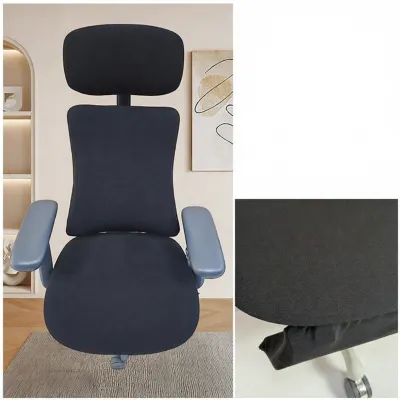
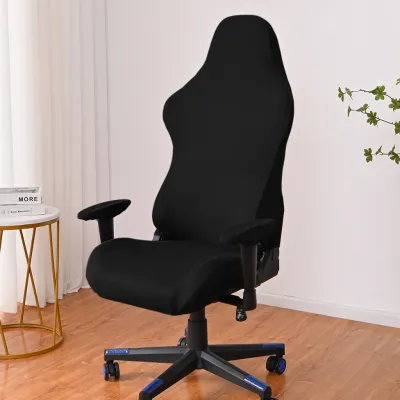
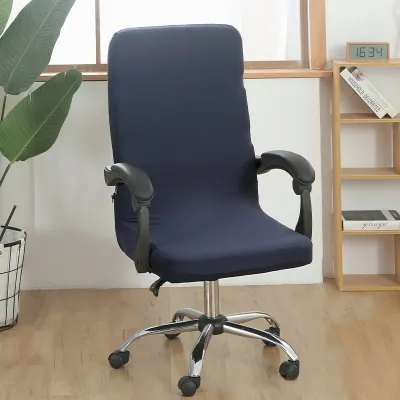
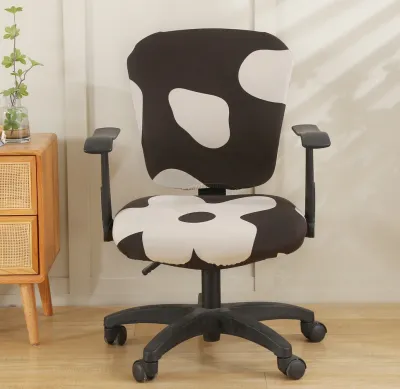
Prices are valid at publication and may change. Please refer to the product page for the latest price.
Once you know your exact model, compare its physical dimensions against the specifications of the cover you are considering. For third-party options, look closely at the product’s stated stretch limits and target dimensions rather than relying solely on generic size labels like “medium” or “large.” A cover that is too small will pull tightly across the gaps in an ergonomic backrest, flattening out the contoured support and putting excessive tension on the fabric seams. Conversely, a cover that is too large will bunch up, creating uncomfortable folds under your thighs and back.
The attachment mechanisms are equally critical to check. Official covers typically use tailored sleeves or integrated fastening points that align perfectly with the chair’s frame. Third-party alternatives often rely on generic elastic bands, zippers, or tie straps. You must carefully examine where these fasteners sit to ensure they do not block or interfere with the chair’s moving parts. For instance, a strap running underneath the seat must not obstruct the height adjustment lever, the seat slide mechanism, or the recline tension knob. If a cover wraps tightly around the armrest supports, it may prevent you from adjusting the armrest height or angle, defeating the purpose of an ergonomic chair.
Evaluating Material Quality and Daily Comfort
The material of your chair cover directly impacts both your daily comfort and the longevity of the product. Because ergonomic chairs are designed to support you through long hours of sitting, the cover fabric must be highly breathable to prevent heat buildup. When reviewing product descriptions or physical samples, check the fabric composition. Materials with a high percentage of spandex or elastane offer the necessary stretch to conform to complex curves, but they should be blended with breathable fibers like polyester or nylon knit to ensure adequate airflow.

Texture and thickness are also important indicators of quality. A cover that is too thin may feel scratchy or fail to protect the underlying mesh or foam from spills and wear. Look for double-knit fabrics or jacquard weaves, which offer a balance of softness, durability, and structure. You can assess the construction quality by closely inspecting the stitching density and seam reinforcement. High-quality covers feature overlocked or double-stitched seams that can withstand the constant tension of being stretched over a frame and the friction of daily movement.
Finally, always review the care labels and maintenance instructions before making a purchase. A cover that requires delicate hand-washing or line-drying may become a hassle if you intend to wash it frequently. Check whether the fabric is machine-washable and if it can tolerate low-temperature tumble drying. Avoid covers that require ironing to look presentable, as high heat can permanently damage the elastic fibers that keep the cover snug. Choosing a low-maintenance, durable fabric ensures that your chair remains clean and comfortable with minimal effort.
Comparing Price Points and Overall Value
When comparing official and third-party options, it is easy to focus solely on the initial purchase price. Official brand accessories generally command a premium, with prices in S$ reflecting the custom design, guaranteed fit, and brand backing. In contrast, third-party alternatives available on general e-commerce platforms are often priced significantly lower, making them highly attractive for budget-conscious buyers. However, a true value comparison requires looking beyond the base price to consider the total cost of ownership.
Hidden costs can quickly narrow the price gap between official and third-party products. When ordering from third-party sellers, check the shipping fees and, more importantly, the return policy. If a universal cover arrives and does not fit your chair’s unique contours, you may have to pay for return shipping or face restocking fees, which can eat into your initial savings. Official purchases often come with more straightforward return policies or customer support channels dedicated to resolving fit issues.
To evaluate the long-term value, consider the cost-per-use of each option. A cheap, poorly made third-party cover that loses its elasticity, pills, or tears after a few months of use will need to be replaced quickly. If you have to buy two or three cheap covers over the lifespan of a single, high-quality official cover, your total expenditure may end up being the same or higher. If you prioritize a set-and-forget solution with guaranteed durability, investing more upfront in an official cover often yields better long-term value. If you only need temporary protection or enjoy changing your workspace’s color scheme frequently, a series of inexpensive third-party covers may be the more practical choice.
Decision Framework: Which Cover Should You Buy?
To decide which cover best suits your needs, you should weigh your budget against your tolerance for fit adjustments and potential return processes. The official cover is the clear choice if you want a guaranteed, glove-like fit without the hassle of measuring and testing. It is also the preferred option if you want to maintain a sleek, professional aesthetic that matches the original design of your chair, or if you are concerned about preserving your chair’s warranty by using approved accessories.
A third-party cover makes the most sense if you are working with a strict budget or if you want to customize your workspace with specific colors, patterns, or textures that the official brand does not offer. It is also an excellent choice for temporary situations, such as protecting the chair from pets, young children, or messy craft projects, where utility and washability are far more important than a flawless aesthetic fit.
Before finalizing any purchase, use this quick verification checklist:
- Verify the seller's return policy, ensuring you can return the cover for a full refund if the fit is unsatisfactory.
- Read recent user reviews specifically searching for mentions of your chair model to see if other buyers successfully installed the cover.
- Double-check your chair's physical measurements against the cover's maximum stretch dimensions to ensure it will not be over-tensioned.
Installation Checks and Maintenance Rules
Proper installation is key to ensuring your cover looks good and does not interfere with your chair’s ergonomic benefits. When installing the cover, start from the top of the backrest and work your way down, carefully aligning the seams of the cover with the outer edges of the chair frame. Before securing any straps or zippers underneath the seat, sit in the chair and move through your normal range of motion to ensure the fabric does not pull or restrict the movement of the lumbar support or seat pan.
Avoid the temptation to pull the cover excessively tight to eliminate minor wrinkles. Over-stretching the fabric puts constant stress on the seams and elastic bands, which can lead to premature tearing or loss of elasticity. Furthermore, a cover that is pulled too tight can restrict the chair’s mechanical functions, such as the recline tension or the independent movement of the backrest segments. If you find that you must stretch the cover to its absolute limit to get it on, the cover is likely too small and should be exchanged for a larger size.
To maintain the fabric’s integrity and keep the cover looking fresh, always follow the specific care instructions provided by the manufacturer. Wash the cover inside out in cold water on a gentle cycle to protect the fibers and prevent pilling. Avoid using bleach or fabric softeners, as these chemicals can break down the elastic components over time. Air-drying is the safest method to prevent shrinkage, but if you must use a dryer, select a low-heat, delicate setting to preserve the cover’s shape and stretch.
Frequently Asked Questions (FAQ)
Will a third-party cover void my Hinomi chair warranty?
Generally, using a third-party slipcover will not void your chair’s warranty, as it is a non-invasive accessory. However, you should review the official warranty terms and conditions for your specific model. The warranty typically does not cover damage caused by external factors, so if an ill-fitting cover with tight straps restricts a mechanism and causes it to break, or if a rough zipper scratches the frame, that specific damage would likely not be covered. To protect your warranty, ensure that any third-party cover you install does not obstruct, bind, or put pressure on the chair’s moving parts.
How do I measure my chair for a universal third-party cover?
To find a universal cover that fits, you need to take three primary measurements using a flexible measuring tape. First, measure the backrest height from the top of the backrest down to the seat pan, and the backrest width at its widest point. Second, measure the seat depth from the front edge to the backrest, and the seat width from side to side. Finally, note the shape of your armrests and how they connect to the frame; if they are attached to the seat pan, you will need a cover with side openings or separate pieces to allow the armrest supports to pass through without bunching the fabric.
Community discussion
Share your experience or ask a question. Comments are reviewed before publication.