
Selecting a stone table for your living room is a significant design decision that shapes the entire character of your home. As the central anchor of the seating area, a coffee table must balance striking visual appeal with the practical realities of daily use. When comparing natural marble and sintered stone, there is no single superior material. The right choice depends on your daily habits, your design philosophy, and how much time you want to spend on furniture care.
Natural marble represents the classic choice, offering an irreplaceable, organic luxury with visual depth that has made it a symbol of elegance for centuries. However, this beauty comes with a catch, as marble is a sensitive, porous material that requires disciplined maintenance to prevent permanent staining and etching. Sintered stone, a modern engineered marvel, offers a high-performance alternative designed to withstand the rigours of a busy household. While it provides outstanding resistance to scratches, stains, and heat, it is an engineered product that lacks the unique, mineral-rich tactile depth of genuine stone. Understanding these trade-offs is the first step toward choosing the perfect centrepiece for your space.
Aesthetic Appeal: Natural Veins vs. Engineered Consistency
The visual allure of natural marble lies in its absolute uniqueness. Formed over millions of years under intense heat and pressure, every slab of marble tells a geological story. The intricate veining patterns, subtle colour gradations, and mineral inclusions mean that no two marble tables are ever identical. When you purchase a natural marble table, you are acquiring a one-of-a-kind functional sculpture. Furthermore, natural marble possesses a distinct crystalline structure that interacts beautifully with light. Natural light entering your living room penetrates the surface of the stone slightly before reflecting back, giving marble a characteristic soft glow and visual depth that synthetic materials struggle to replicate.
Products mentioned in this guide
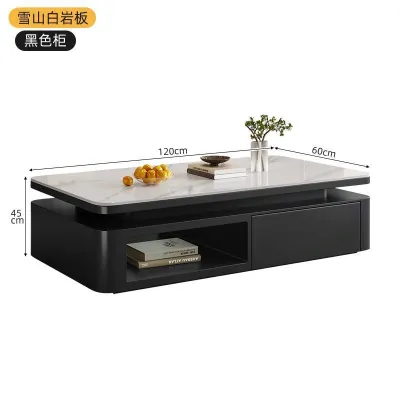

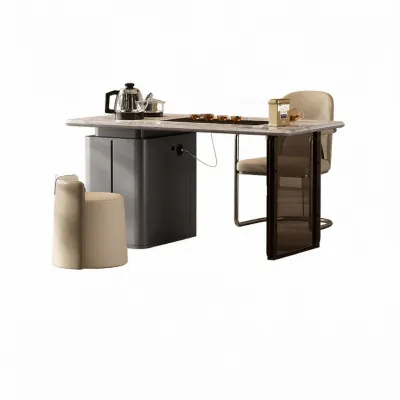
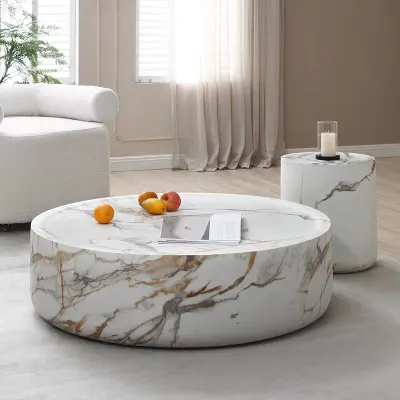
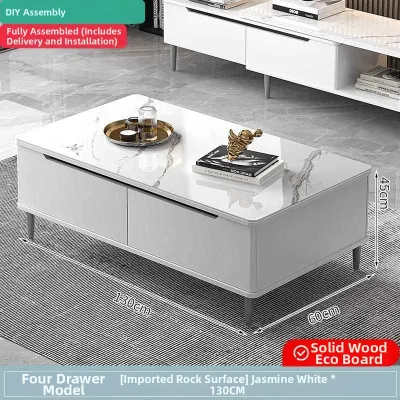
Prices are valid at publication and may change. Please refer to the product page for the latest price.
Sintered stone approaches aesthetics from a perspective of high-tech precision. Manufactured using advanced raw materials subjected to extreme pressure and heat, the surface patterns of sintered stone are created using high-definition inkjet printing technology. This process can replicate the appearance of famous marbles like Carrara or Calacatta with remarkable accuracy, or produce solid, ultra-modern industrial tones like concrete and rust. The primary aesthetic advantage of sintered stone is its flawless consistency. If you are designing a minimalist living space that requires perfect symmetry or a seamless pattern across multiple surfaces, engineered stone delivers a predictable, uniform design without the natural “imperfections” or unpredictable vein breaks found in quarried rock.
To verify what you are actually buying when browsing showrooms, you must inspect the table’s edges and surface depth. On a genuine natural marble table, the veining patterns will continue seamlessly from the top surface down through the cut edges of the slab. If you look closely at the unpolished underside of a natural slab, the mineral patterns and natural stone texture remain visible. In contrast, many sintered stone tables feature patterns that are only printed on the top surface. If you examine the side profile of a lower-tier sintered stone slab, you may see a solid white or grey core that does not match the surface pattern. Premium sintered stone manufacturers have developed “full-body” slabs where the pattern runs through the entire thickness, but this is a premium feature that you should explicitly verify with the retailer.
Durability and Daily Maintenance: Porosity vs. Resistance
When evaluating how a stone table survives the daily wear of a household, porosity is the most critical factor. Natural marble is a relatively soft, highly porous metamorphic rock composed primarily of calcium carbonate. This chemical composition makes it highly sensitive to acids. Common household liquids like coffee, red wine, tea, and citrus juices can cause immediate, irreversible damage. If an acidic liquid is left on unsealed marble for even a few minutes, it chemically reacts with the calcium carbonate, dissolving a tiny layer of the stone and leaving behind a dull, cloudy mark known as an “etch.” This is not a simple stain that can be wiped away; it is physical damage to the stone’s finish.

In Singapore’s highly humid tropical climate, moisture management is another key consideration for natural stone. High humidity can cause moisture to seep into unsealed pores, potentially leading to discolouration, dullness, or the growth of microscopic mildew in unpolished crevices. To protect natural marble, the surface must be treated with a high-quality impregnating sealer, which fills the pores and buys you time to wipe up spills before they penetrate. However, sealers do not make marble acid-proof; they merely slow down the absorption rate. Daily cleaning of natural marble requires strict adherence to pH-neutral stone cleaners, as standard multi-purpose sprays containing vinegar, lemon, or bleach will instantly strip the protective sealant and etch the stone.
Sintered stone offers an entirely different ownership experience. Because the raw minerals are compacted under immense pressure and fired at temperatures exceeding 1200 degrees Celsius, the resulting material is virtually non-porous. Sintered stone has a water absorption rate close to zero, meaning liquids like coffee, ink, and red wine cannot penetrate the surface to cause stains. It is also exceptionally hard, making it highly resistant to scratches from keys, ceramic mugs, or cutlery. You can place hot teapots or coffee mugs directly onto a sintered stone surface without the fear of thermal shock or scorch marks, a practice that would easily crack or discolour natural marble.
Maintaining a sintered stone table is incredibly straightforward. It requires no periodic sealing, and you can clean it using standard household disinfectants, soapy water, or mild abrasive cleaners without damaging the surface. However, you should still avoid using highly concentrated acids or extremely abrasive scouring pads, as these can eventually dull the polished finish over several years.
Before applying any cleaning chemical, protective sealant, or stain remover to either material, always check the applied product’s label and the treated item’s manufacturer instructions. If the care instructions conflict, if the stone type is unidentified, or if your specific use scenario is not covered by the manual, stop immediately and consult the manufacturer or a qualified stone care professional.
Beyond surface durability, you must also evaluate the structural stability of the table. Both natural marble and sintered stone are exceptionally heavy materials. A quality stone table requires a robust, well-engineered supporting frame—typically made of heavy-gauge steel, solid hardwood, or reinforced structural polymer—to prevent the slab from flexing or tipping. When inspecting a table in a showroom, gently apply pressure to the edges to ensure the base does not wobble. Sintered stone slabs are often cut much thinner than natural marble (often 6mm to 12mm, compared to marble’s typical 18mm to 30mm) to keep the furniture lightweight. For thin sintered stone tops, verify that the slab is fully supported by a solid underlay, such as a marine plywood or aluminium honeycomb backing, to distribute weight evenly and prevent cracking under localized impact.
Price and Value: Budgeting for Your Stone Table
Investing in a stone table involves understanding both the upfront purchase price and the long-term cost of ownership. The pricing of natural marble coffee tables varies widely based on several luxury factors. The rarity of the specific marble variety, the prestige of the quarry origin (such as Carrara or Calacatta from Italy), the thickness of the slab, and the complexity of the edge profiling all drive up the cost. A bespoke natural marble coffee table in Singapore typically sits in a premium price band, often ranging from S$1,200 to well over S$4,000. Because quarrying and transporting solid stone blocks is resource-intensive, and fabrication requires highly skilled stonemasons, you are paying a premium for authentic, natural craftsmanship.
Sintered stone tables generally offer a more predictable and accessible price entry point, though premium brands still command respectable figures. High-quality sintered stone coffee tables typically range from S$600 to S$2,000. The cost drivers here are the brand of the sintered slab, the complexity of the printed design, and the structural design of the supporting frame. Because sintered stone is manufactured in standardized sheets, material waste is lower, and fabrication can be semi-automated, which keeps the retail price more competitive while delivering superior physical durability.
When assessing long-term value, you must look beyond the initial receipt. Natural marble has the potential to retain or even increase its prestige value as an heirloom antique, provided it is meticulously maintained. However, if the surface becomes severely stained, scratched, or etched over years of family use, restoring its original lustre requires hiring professional stone restoration specialists to grind down and repolish the surface, which can cost several hundred dollars per treatment. Sintered stone, conversely, offers exceptional functional value. With virtually zero maintenance costs over its lifespan, it represents a highly economical choice for households that want a premium stone look without recurring maintenance bills, even if it does not hold the same resale prestige as genuine quarried marble.
To avoid unexpected expenses, always ask your retailer exactly what is included in the quoted price. For natural marble, verify if the table comes pre-sealed and whether the retailer provides an initial care kit. Because of the extreme weight of these materials, delivery and assembly can be complex. In Singapore, many residential properties, particularly older HDB blocks or specific condominium layouts, have tight lift access or narrow stairwells. Ask the retailer about delivery logistics: Will the table fit into a standard passenger lift? Are there additional surcharges for manual carrying up staircases? Confirming these delivery terms, installation services, and warranty coverages upfront will protect you from hidden fees.
Final Verdict: How to Decide Based on Your Lifestyle
To make your final decision, look closely at your household’s daily routines, your design priorities, and your personal tolerance for maintenance.
Choose Natural Marble if:
- You view your coffee table as a formal statement piece or a work of art rather than a heavy-use work surface.
- You appreciate the organic depth, tactile warmth, and unique mineral variations of real stone, and accept that no two pieces are alike.
- You are willing to commit to regular maintenance, including using coasters for every drink, wiping up spills immediately, and resealing the surface every one to two years.
- Your household does not have young children or highly active pets who might accidentally scratch or spill liquids on the surface.
Choose Sintered Stone if:
- You have a busy, active household with children or pets, or you frequently host social gatherings where drinks and food are placed directly on the table.
- You want a highly functional, low-maintenance surface that can double as a homework station, a dining surface, or a footrest without fear of damage.
- You prefer a highly consistent, clean, and modern minimalist aesthetic with predictable patterns and slim, contemporary profiles.
- You want to maximize your budget, securing a highly durable stone-look table without the worry of future restoration costs.
Verify First if:
- You are browsing online marketplaces and encounter terms like "marble-style," "ceramic-stone," or "engineered marble." Always request the exact material specification sheet from the retailer to ensure you are not accidentally buying cheap MDF laminates, basic porcelain tiles, or resin-heavy engineered quartz, which do not share the same heat-resistant properties as sintered stone.
- You are highly sensitive to colour tones. If possible, visit a physical showroom to view the exact slab or request a material sample under natural light, as digital screens can significantly distort the subtle grey, gold, or beige undertones of both natural marble and printed sintered patterns.
Frequently Asked Questions (FAQ)
Can sintered stone be repaired if it chips or cracks?
Unlike natural marble, which is relatively soft and can be professionally filled with colour-matched epoxy resins and polished back to a seamless finish, sintered stone is extremely difficult to repair invisibly. Because of its dense, glass-like structure and printed surface pattern, any chip or crack will break the printed design layer, exposing the solid core underneath. While minor edge chips can sometimes be smoothed out or filled with specialized acrylic resins, the repair will rarely be completely invisible. For this reason, it is crucial to handle heavy objects carefully around the edges of a sintered stone table and to verify the retailer’s specific warranty and replacement policies regarding structural damage.
Is sintered stone the same as engineered quartz?
No, sintered stone and engineered quartz are manufactured using entirely different processes and ingredients. Engineered quartz is composed of natural quartz aggregates bound together with polymer resins and pigments, typically cured at low temperatures. Because of these resin binders, engineered quartz is sensitive to high heat and can scorch or discolour if hot pots are placed directly on it. Sintered stone, on the other hand, contains no resin binders. It is made from 100% natural minerals that are fused together using extreme pressure and fired at temperatures above 1200 degrees Celsius. This resin-free composition gives sintered stone far superior heat resistance, UV stability, and scratch resistance compared to engineered quartz.
Community discussion
Share your experience or ask a question. Comments are reviewed before publication.