
Finding the right shoe stool bench for a Singapore home requires balancing space-saving efficiency with daily comfort. In high-density housing like HDB flats and condominiums, the entryway is often a narrow corridor where clutter accumulates quickly. A multi-functional shoe storage bench solves this issue by combining a stable seat for putting on footwear with integrated shelving or cabinets to keep the floor clear. Choosing the ideal bench involves assessing your household’s specific storage needs, measuring the physical constraints of your foyer, and verifying the structural integrity of the furniture. Rather than relying on generic designs, selecting a bench tailored to your entryway layout ensures a seamless transition from the outdoors to the comfort of your home.
Key Dimensions to Measure Before You Buy
Entryways in Singapore often feature main doors that swing inward, sometimes accompanied by a metal gate swinging outward. You must measure the exact arc of the main door’s swing to ensure the bench does not block it. Leave at least 90 to 100 centimeters of clear walkway space in front of the bench so family members can walk past comfortably while someone is seated.
Standard shoe benches typically range from 30 to 45 centimeters in depth. For narrow HDB corridors or compact foyers, a slim profile bench of 30 centimeters or less is ideal to prevent the furniture from protruding into the main walking path. If you have a more spacious foyer, a deeper bench of 40 to 45 centimeters allows for larger shoe sizes to be stored straight rather than angled, maximizing internal space.
Products mentioned in this guide
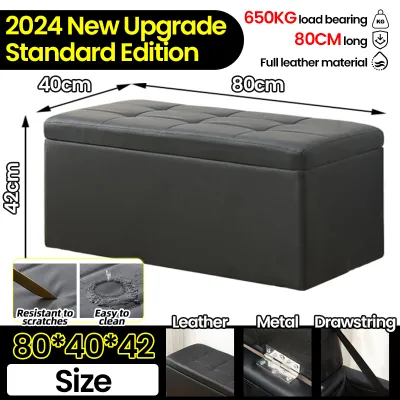
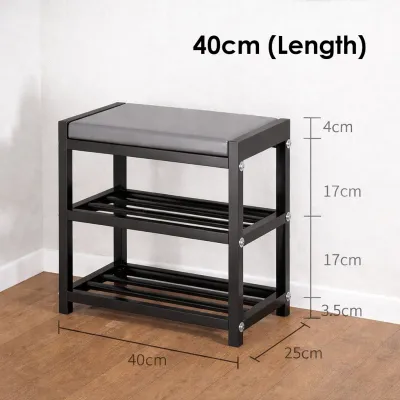
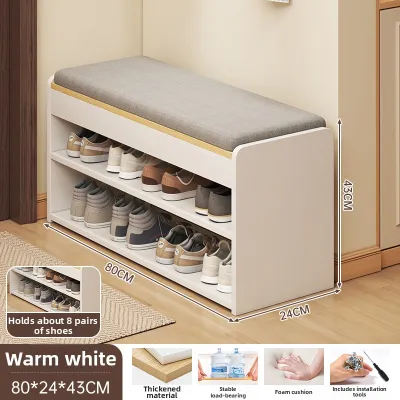
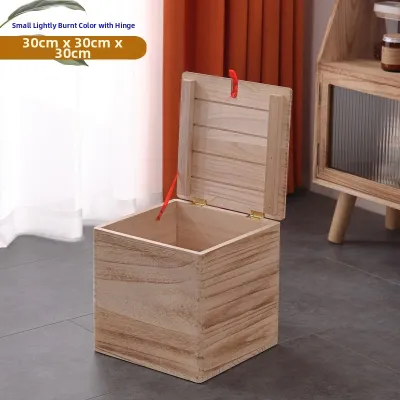
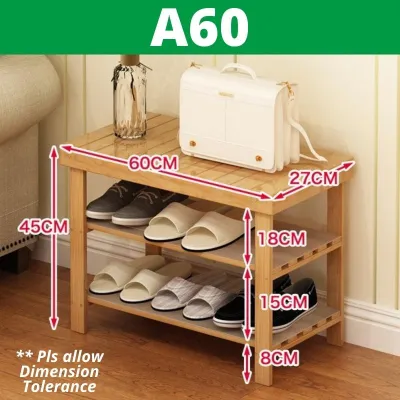
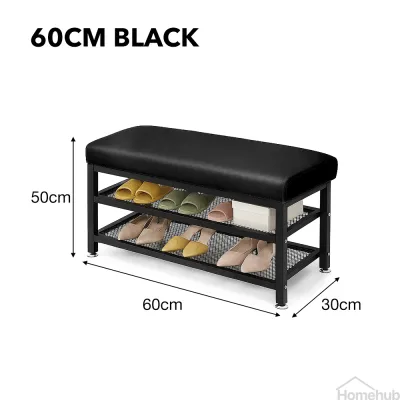
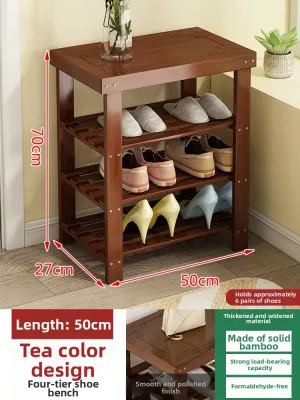
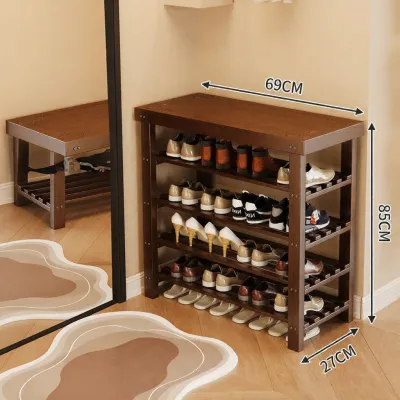
Prices are valid at publication and may change. Please refer to the product page for the latest price.
If your chosen bench features pull-out drawers or drop-down cabinet doors, you must also measure the clearance required to open these compartments fully. A drop-down door can extend an additional 20 to 30 centimeters forward when open, which can completely block a narrow corridor. Ensure there is enough space for you to stand comfortably in front of the open compartment without having to step backward into a wall or doorway.
The height of the bench directly impacts how easily you can sit down and stand up. A standard seating height of 40 to 48 centimeters is generally comfortable for most adults, aligning with typical dining chair heights. If the bench is too low, standing up can strain the knees, especially after a long day. Conversely, a bench that is too high might leave your feet dangling, reducing stability while you lace up your shoes.
Many homeowners forget to account for the thickness of baseboards along the entryway walls. If your bench has a completely flush back without a cutout or recessed legs, the baseboard will prevent it from sitting flat against the wall. This creates an unstable gap where small items can fall, so measuring the height and depth of your baseboards before purchasing is essential.
Evaluating Storage Configurations and Seating Comfort
Open shelving offers immediate access to your daily footwear, making it incredibly convenient for busy mornings. It also promotes natural ventilation, which is crucial in Singapore’s humid climate to prevent moisture buildup and unpleasant odors in your shoes. However, open shelves expose your footwear to view, which can look cluttered if shoes are not neatly arranged.

Enclosed cabinets or flip-top compartments provide a clean, minimalist aesthetic by hiding shoes behind doors. This dust protection is excellent for less frequently worn footwear, though you must ensure the cabinet design includes ventilation holes or slatted doors to maintain airflow.
The choice of seating material affects both comfort and long-term maintenance. Cushioned tops, often wrapped in synthetic leather (PU) or fabric, offer a soft and comfortable seat. Synthetic leather is particularly popular because it can be wiped clean easily with a damp cloth, making it highly practical for entryways.
In Singapore’s tropical climate, humidity levels are consistently high, which can cause fabric cushions to absorb moisture and develop musty odors over time. If you choose a fabric-covered bench, look for breathable weaves or treated fabrics that resist moisture absorption. Alternatively, synthetic leather (PU) is non-porous, preventing sweat and moisture from penetrating the foam padding, though it can feel warm to the touch if placed in direct sunlight near a window.
Solid wood or engineered wood tops, on the other hand, offer superior durability and a timeless aesthetic. While less soft, a wooden surface is highly resistant to wear and tear, does not trap dust or allergens, and can be easily styled with removable cushions if you desire extra comfort later on.
A deeper, multi-tiered cabinet maximizes the total number of pairs you can store, but it may require you to bend down or reach deep into the unit to retrieve your shoes. Drawers and pull-out trays offer excellent organization for small accessories like socks, shoe horns, or keys, but they reduce the vertical space available for high-cut boots or high heels. Balancing these trade-offs means identifying which shoes you wear daily and ensuring they remain easily accessible, while seasonal or formal footwear can be relegated to deeper, less accessible compartments.
Material and Build Quality Checks for Daily Use
Because a shoe stool bench functions as active seating, verifying its structural weight capacity is a critical safety step. Look for explicit manufacturer specifications indicating a safe load limit, ideally at least 100 to 150 kilograms for a single-seater bench, or higher for wider benches designed to accommodate two people simultaneously. Avoid assuming a bench is sturdy based solely on its visual bulk; check the product documentation for certified weight limits.
Entryway furniture is highly susceptible to moisture from wet umbrellas, damp shoes, and humid air, as well as scuffs from shoe soles. For wooden benches, verify that the surface has a water-resistant protective coating, such as a polyurethane lacquer or melamine laminate. Metal frames should feature powder-coating to prevent rust and corrosion over time. If the bench features fabric upholstery, check if the material is treated with a stain-resistant finish or if the cushion cover is removable and washable.
Many homes in Singapore have slightly uneven tiled floors, which can cause a rigid bench to wobble when sat upon. To prevent this, look for benches equipped with adjustable leveling feet. These small, screw-in glides allow you to fine-tune the height of each leg individually, ensuring the bench remains perfectly stable and does not rock, which can loosen the joints over time.
The longevity of your bench depends heavily on how its components are joined. Benches assembled with sturdy metal-to-metal cam locks, dowels, or reinforced corner brackets offer much better stability than those relying solely on simple wood screws. Inspect the base footprint of the bench; a wider, lower base provides a lower center of gravity, significantly reducing the risk of the bench tipping forward when you sit on the edge to pull on tight boots.
Matching the Bench to Your Entryway Scenario
In smaller apartments, every square centimeter counts. Homeowners should prioritize slim-profile benches with vertical storage extensions, such as integrated coat racks or top-facing key trays. Choosing a bench with a light visual weight—such as one with thin metal legs or an open wire-frame bottom shelf—helps maintain an airy, spacious feel in a tight corridor. Light-colored finishes, such as white, light oak, or pale grey, also help reflect light and make the entryway feel larger.
When selecting a bench for a compact apartment, consider how its visual style integrates with your existing built-in cabinetry. A bench that matches the wood tone or color palette of your main shoe cabinet creates a cohesive, built-in look that reduces visual clutter. For open-plan layouts where the entryway flows directly into the living room, choosing a bench with a refined finish—such as a sleek metal frame with a minimalist cushion—allows it to double as extra seating for guests when you have gatherings.
For busy families, high-capacity open tiers are essential to handle the high volume of daily footwear. Look for wide seating spans of 90 to 120 centimeters that allow multiple family members to sit or organize their shoes at the same time. Highly durable, scratch-resistant surfaces like high-pressure laminates or solid hardwoods are ideal for resisting the heavy wear and tear of children dropping school bags and kicking off sports shoes.
Safety and ease of use are paramount when accommodating vulnerable family members. Choose a bench with integrated grab handles or sturdy armrests on the sides to provide physical support when sitting down or standing up. Ensure the seating cushion is firm rather than overly soft, as a firm seat offers better stability for those with balance concerns. Additionally, look for designs with rounded corners to prevent painful bumps, and always prioritize benches that can be securely anchored to the wall to eliminate any risk of tipping.
What to Verify on the Product Page Before Checkout
Before clicking the buy button on any online marketplace, double-check the listed product dimensions against your physical measurements. Pay close attention to the depth and height, and ensure you have factored in any baseboard clearance or nearby light switches that might be blocked by a taller bench. It is helpful to use painter’s tape to outline the bench’s footprint on your entryway floor to visualize its physical presence before ordering.
Many flat-pack furniture items require self-assembly. Review the product description to see if assembly tools are included, or if you will need your own screwdriver or hammer. If you are not comfortable with DIY assembly, check if the seller offers an optional professional installation service for a small fee, which can save time and ensure the bench is put together safely and securely.
Review the seller’s delivery restrictions, especially for bulky furniture items that may require lift access or manual carrying up stairs. Check the return policy carefully; returning a large, heavy item can be costly and logistically challenging if the bench does not fit or match your expectations. Finally, verify the warranty terms to understand what structural defects or material failures are covered after purchase.
Frequently Asked Questions (FAQ)
How many pairs of shoes can a standard storage bench hold?
The capacity of a shoe stool bench depends on its width, the number of tiers, and the style of shoes you own. A standard bench with a width of 80 centimeters and two open shelves can typically accommodate about 6 to 8 pairs of adult shoes. If you store bulky footwear like running shoes or boots, the capacity may decrease, whereas flat sandals and children’s shoes can often be doubled up or nested to fit more pairs. For enclosed cabinets with drop-down compartments, the capacity is often higher, sometimes holding up to 12 pairs by utilizing vertical pocket slots.
Is it safe to sit on a flip-top storage bench?
Yes, sitting on a flip-top storage bench is safe, provided you verify its structural weight rating and hinge quality before use. High-quality flip-top benches feature heavy-duty safety hinges or gas struts that prevent the lid from slamming shut unexpectedly while you are opening or closing the storage compartment. Always check that the lid is fully closed and locked into position before sitting down to ensure your weight is distributed evenly across the supporting frame rather than resting on the hinges alone.

Community discussion
Share your experience or ask a question. Comments are reviewed before publication.