
Finding the perfect multi-functional recliner sofa for a compact Singapore home requires balancing space-saving design with high-quality mechanics. In typical HDB flats and modern condominiums where square footage is at a premium, a standard sofa can feel restrictive, while a traditional bulky recliner can easily overwhelm the living room. By focusing on smart clearance designs, convertible features, and robust local warranties, you can secure a versatile piece of furniture that serves as a comfortable seat, a relaxing lounge, and even an occasional guest bed without cluttering your floor plan.
Assessing Your Space for a Recliner Sofa
Before browsing showrooms or online catalogs, you must establish the exact physical boundaries of your living room. A common mistake is measuring only the upright footprint of the sofa. A recliner requires a dynamic footprint that accounts for both the rearward tilt of the backrest and the forward extension of the footrest. To avoid blocking essential pathways, map out the fully reclined length on your floor using masking tape. This visual guide helps you see exactly how much space remains for daily movement when the sofa is in its most relaxed state.
Wall clearance is another critical factor that dictates where the sofa can sit. Standard recliners require a significant gap—often up to 30 centimeters or more—between the back of the frame and the wall to allow the backrest to tilt backward. For compact HDB living rooms, look specifically for zero-wall-clearance or “wall-hugger” mechanisms. These specialized designs slide the entire seat forward as it reclines, allowing you to position the sofa almost flush against the wall, saving valuable floor space.
Products mentioned in this guide
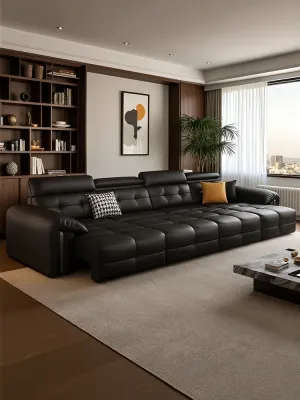
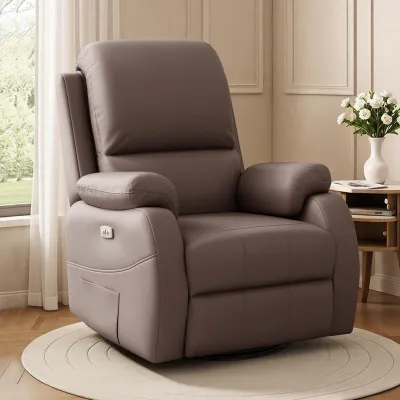
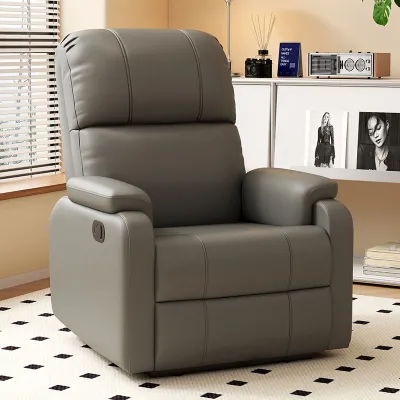
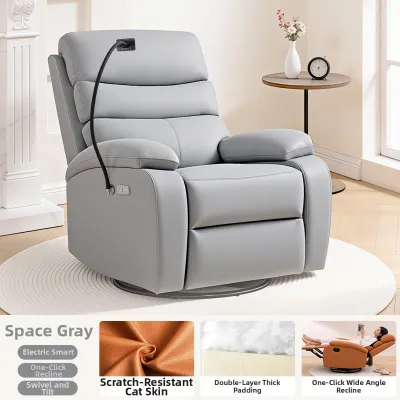
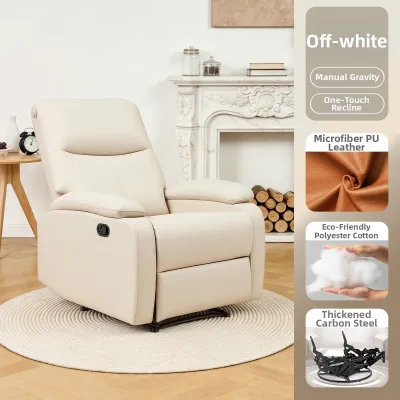

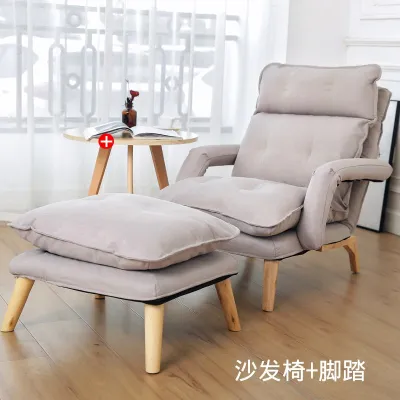
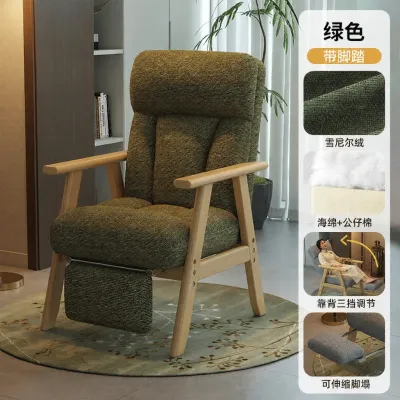
Prices are valid at publication and may change. Please refer to the product page for the latest price.
Finally, consider the surrounding furniture and traffic flow. When the footrest is fully extended, it should not collide with your coffee table, TV console, or side tables. Ensure there is a comfortable walkway of at least 50 to 60 centimeters around the extended footrest so family members can move freely without having to climb over the furniture. If space is exceptionally tight, a lightweight, easily movable coffee table or a nesting table set can be quickly set aside when you want to recline.
Essential Multi-Functional Features for Small Homes
When space is limited, every piece of furniture must earn its place by offering multiple uses. Recliner sofas designed for compact homes often integrate clever features like built-in storage, modular configurations, or bed conversion mechanisms. Choosing the right combination of these features depends on your daily habits and the specific layout of your home.

The choice of reclining mechanism plays a major role in both usability and space management. Manual recliners, operated by pull-tabs or side levers, do not require proximity to a power outlet, giving you more freedom in placement. However, they often snap open quickly and require physical leg strength to close, which might not be ideal for all users. Motorized controls, on the other hand, offer smooth, incremental adjustments, allowing you to stop the recline at the exact angle you prefer. While electric models require cable management, their precise control prevents sudden movements that could strike nearby walls or furniture.
Storage is a premium commodity in compact Singapore apartments. Many multi-functional recliners now feature hidden storage compartments built directly into the armrests or underneath the non-reclining sections of the sofa. These compartments are perfect for tucking away remote controls, charging cables, reading materials, or extra throw blankets, keeping your living area free of visual clutter.
For those who frequently host overnight guests, a recliner that converts into a bed offers excellent utility. When evaluating these hybrid models, distinguish between designs meant for daily sleeping and those intended for occasional use. Occasional-use sofa beds often prioritize seating comfort and a simpler folding mechanism, whereas daily-use models require highly durable joints, supportive cushioning, and breathable upholstery to withstand constant wear.
To maximize flexibility, consider modular or compact two-seater recliner configurations. Modular designs allow you to arrange individual seats to fit your specific room shape, and you can even opt for a configuration where only one seat reclines while the other remains stationary or contains a storage chaise. This tailored approach ensures you do not pay for—or accommodate—more reclining mechanism than your space can comfortably handle.
Evaluating Brands and Retailers in Singapore
With numerous furniture retailers across Singapore offering various recliner options, finding a reliable brand requires looking beyond aesthetics. Because a multi-functional recliner relies on moving mechanical parts, the quality of construction directly impacts the sofa’s lifespan. Visiting physical showrooms in retail hubs like Tai Seng, Toh Guan, or Ubi is essential to test the furniture firsthand.
When testing a sofa in a showroom, pay close attention to the smoothness of the reclining action. The transition should be quiet, fluid, and free of grinding noises or sudden jerks. Sit on the sofa in both the upright and fully reclined positions to evaluate the seat firmness and lumbar support. High-density foam or pocketed spring systems generally offer better long-term support and shape retention compared to low-density alternatives, which can sag quickly under regular use.
A robust warranty is your primary protection against mechanical or electrical failures. When comparing brands, ask for a detailed breakdown of the warranty terms. A comprehensive warranty should ideally cover the structural frame for several years, with separate, specific coverage periods for the moving metal mechanisms and the electronic motors or control buttons. Be cautious of vague warranties that lump all components together under a single, short coverage period.
Additionally, verify the retailer’s local support infrastructure. Ask whether they maintain a dedicated local repair network and keep replacement parts, such as motors, transformers, and hinges, in stock in Singapore. If a component fails a few years down the road, a brand with a strong local presence can easily dispatch a technician to service the sofa in your home, saving you the hassle and expense of replacing the entire unit.
Establish a realistic budget allocation in S$ that reflects both the initial purchase price and potential long-term value. While entry-level manual recliners can be found at lower price points, investing in a mid-range to premium model often secures better frame materials (such as kiln-dried hardwood or steel), more reliable motor systems, and superior upholstery fabrics. Factor in potential delivery and assembly fees, as well as any extended warranty options, to determine the true cost of ownership.
Pre-Purchase Verification and Delivery Logistics
Even the most suitable recliner sofa is of no use if it cannot fit through your front door. Delivery logistics are a critical, yet frequently overlooked, aspect of purchasing furniture for compact Singapore homes. Narrow corridors, tight lift doors, and sharp turns in HDB or condominium lobbies can present significant obstacles during delivery day.
Before finalizing your purchase, obtain the exact packaging dimensions of the sofa from the retailer. Measure every point of entry along the delivery path, starting from the lift lobby and the lift car interior dimensions. Next, measure your unit’s main gate, front door frame, and any internal hallways or doorways the delivery team must navigate. If your building requires using the stairs, measure the clearance height and the turning radius of the stairwells to ensure the delivery personnel can safely maneuver the package.
Weight is another factor to consider, particularly for heavy motorized recliners or models with integrated metal bed frames. If you plan to place the sofa on an elevated platform, a loft area, or sensitive flooring like vinyl or soft solid wood, verify the structural weight limits and ensure the sofa’s feet are equipped with protective pads to distribute the weight evenly and prevent deep indentations.
For motorized models, plan your electrical layout carefully before delivery. Identify the nearest wall outlet and map out how the power cord will reach it. Avoid running cords across high-traffic walkways where they can pose a tripping hazard or become pinched under the sofa’s moving metal frame. If the outlet is not directly behind the sofa, consider using low-profile cable protectors or routing the cord along the baseboards to keep your living space safe and visually tidy.
Maintaining Recliner Mechanisms and Upholstery
Regular maintenance is key to keeping your multi-functional recliner operating smoothly and looking fresh for years to come. Because these sofas combine mechanical, electrical, and upholstery components, they require a multi-faceted care routine.
The moving metal parts of the reclining mechanism should be inspected periodically. Over time, dust and household debris can accumulate in the hinges and tracks, leading to friction, squeaking, or stiffness. Follow the manufacturer’s specific instructions for cleaning and lubricating these joints. If lubrication is recommended, use only the approved type of silicone spray or light machine oil, applying it sparingly to avoid dripping onto your flooring or the sofa’s fabric.
For motorized models, make it a habit to inspect the electrical cords, power bricks, and connections every few months. Ensure that cords are not tightly bent, stretched, or positioned where they can be crushed by the reclining mechanism when it moves. If you notice any signs of wear, fraying, or exposed wires, unplug the sofa immediately and contact the manufacturer or a qualified technician for a replacement part.
Upholstery care is equally important, especially in high-friction zones like the headrest, armrests, and footrest. If you choose a leather recliner, apply a high-quality leather conditioner every six to twelve months to prevent the material from drying out and cracking under Singapore’s humid climate. For fabric recliners, regular vacuuming with a soft brush attachment removes dust and prevents dirt from grinding into the fibers. Address spills immediately using a clean, damp cloth and a mild, fabric-safe cleaner, always testing it on an inconspicuous area first.
Frequently Asked Questions (FAQ)
Can a motorized recliner sofa be placed flush against the wall?
Whether a motorized recliner can sit flush against the wall depends entirely on its mechanism design. Standard motorized recliners require a clearance gap of 15 to 30 centimeters behind the backrest to allow it to tilt backward. However, zero-wall-clearance (or wall-hugger) models are specifically engineered to slide the seat forward as the backrest reclines, requiring only a minimal gap of 5 to 10 centimeters from the wall. Always check the manufacturer’s detailed specification sheet to confirm the exact clearance distance required before making a purchase.
What power requirements are needed for electric recliner sofas?
Electric recliner sofas operate on standard Singapore household electrical outlets (230V). They typically come with a power adapter (transformer brick) that steps down the voltage for the motors. Ensure the power outlet is easily accessible and not overloaded with other high-power appliances. To maintain a safe and neat setup in a compact room, use cable management sleeves, cord covers, or low-profile extension strips to secure the cables along the wall or baseboards, preventing them from becoming caught in the sofa’s moving parts.
How do I measure the full reclined length accurately?
To measure the full reclined length, start from the absolute backmost point of the sofa frame (or the wall, if the sofa is positioned against it) and measure in a straight line to the furthest tip of the fully extended footrest. It is highly recommended to add a buffer zone of at least 30 to 40 centimeters beyond this measurement. This extra space ensures that your feet do not press against other furniture and allows for comfortable movement around the room even when the recliner is fully extended.

Community discussion
Share your experience or ask a question. Comments are reviewed before publication.