
Finding the right multi-functional folding cabinet drawer for a compact Housing & Development Board (HDB) flat requires moving past generic “small space” labels. Because HDB layouts—especially in newer Build-To-Order (BTO) flats—often feature tight corridors, narrow kitchen galleys, and compact household shelters, standard furniture dimensions rarely tell the whole story. The best-fitting drawer unit is one that matches your specific alcove dimensions, accounts for the physical sweep of its opening mechanism, and respects the structural limits of your existing cabinetry.
To achieve a seamless fit, you must prioritize precise physical measurements over aesthetic appeal. A drawer that looks compact on an ecommerce platform might become a major obstruction once fully extended in a narrow service yard or kitchen. By focusing on clearance paths, mounting requirements, and weight capacities, you can maximize your storage without compromising the flow of your home.
Assessing Your Available Space and Clearance
Before browsing online marketplaces or visiting local showrooms, you must establish an accurate three-dimensional map of your target installation area. Start by measuring the absolute width, depth, and height of the alcove, niche, or existing cabinet carcass where the drawer will reside. Use a metal measuring tape rather than a fabric one to prevent sagging, and take measurements at three different points—top, middle, and bottom—as HDB walls and built-in carpentry can feature slight alignment variations.
Products mentioned in this guide
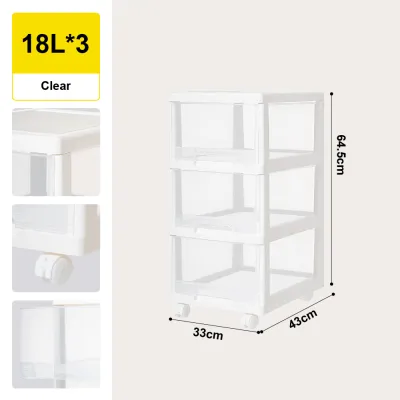
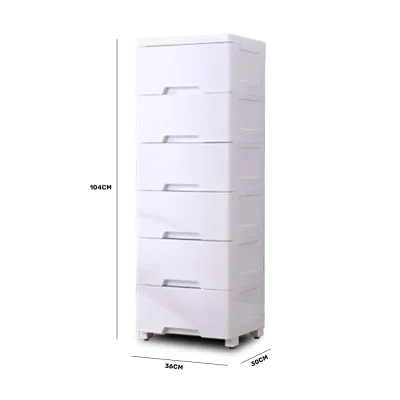
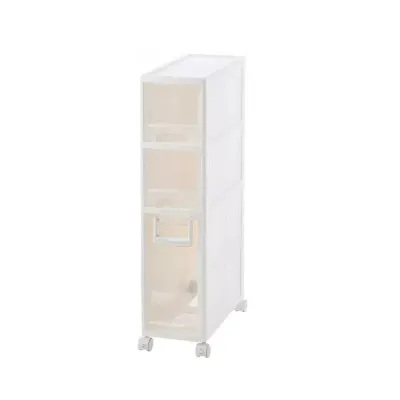
![(JIJI.SG) Modern Storage Drawers [L] & [XL] Cabinet / Cabinets - Plastic Storage Box Drawer / Household / Bedroom Furniture / jt](https://img.lazcdn.com/g/p/86a3a887a1319a62564287336c7aed89.jpg_400x400q80.jpg_.webp)
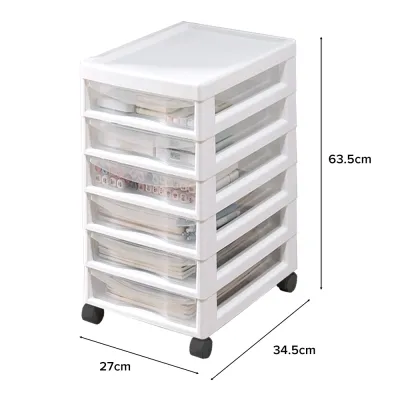
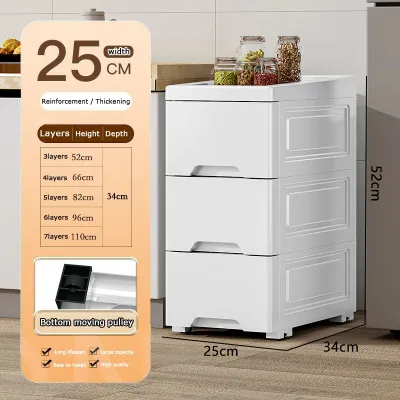
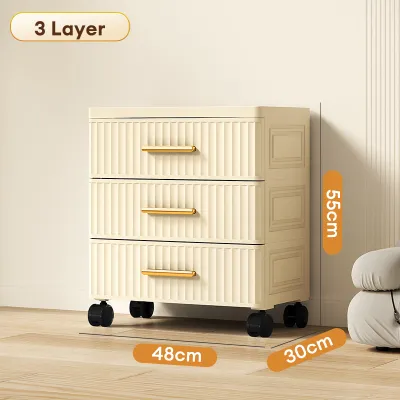
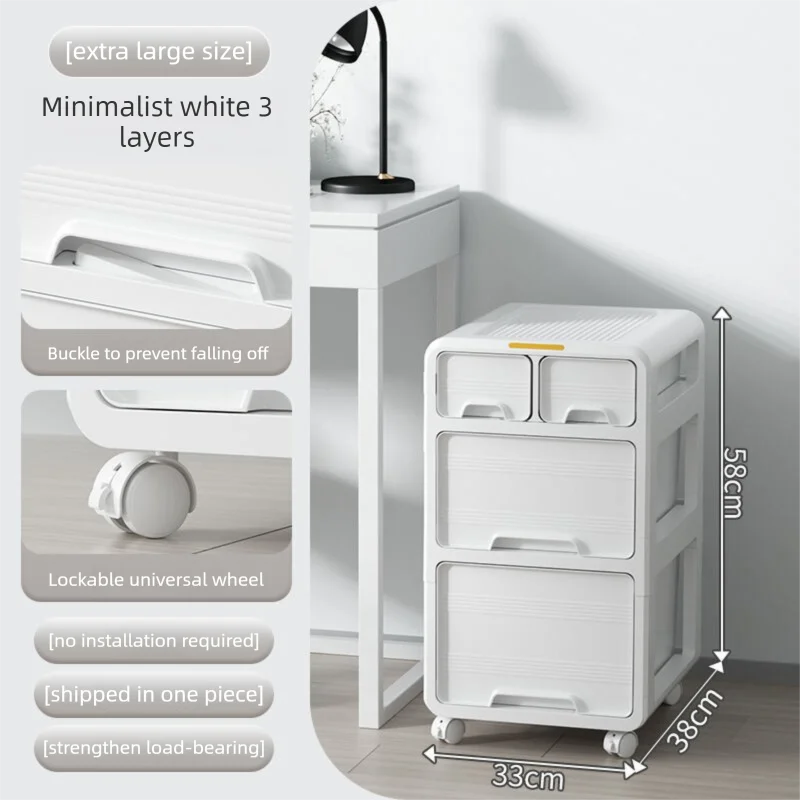
Prices are valid at publication and may change. Please refer to the product page for the latest price.
The most critical dimension for any folding or pull-out cabinet drawer is its full extension clearance. This is the total distance the drawer projects into your living space when completely open. To calculate this, add the depth of the cabinet frame to the maximum length of the drawer slide or folding arm. Mark this boundary on your floor using masking tape to visually verify that the open drawer leaves sufficient room for you to stand, bend down, and walk past comfortably.
Beyond the basic footprint, look out for hidden architectural obstacles that can disrupt your installation. Skirting boards along the base of HDB walls often protrude by one to two centimeters, which can prevent a drawer unit from sitting flush against the wall. Similarly, wall-mounted power outlets, light switches, gas pipes in the kitchen, and the swing radius of nearby room doors or window panes must be factored into your depth calculations. If a drawer slide extends directly into the path of an opening bathroom door, the setup will quickly become a daily frustration.
Types of Multi-Functional Cabinet Drawers for Narrow Areas
Selecting the right space-saving drawer involves matching the opening mechanism to the specific layout constraints of your room. Different mechanical designs solve different spatial puzzles, meaning a mechanism that excels in a narrow kitchen gap might fail in a tight bedroom corner.

Pull-Out and Sliding Drawer Units
Vertical pull-out drawers, often referred to as cargo drawers or slim apothecary units, are highly effective for utilizing narrow gaps, such as the space between a refrigerator and a kitchen counter. These units slide straight out on heavy-duty tracks, offering multi-tiered storage that is accessible from both sides. Horizontal sliding tracks, on the other hand, are the standard choice for deep cabinets, allowing you to access items at the very back without kneeling.
When choosing a pull-out unit, always check the manufacturer’s manual for the exact track thickness and side-clearance requirements. Some sliding hardware requires a precise clearance of 12.7 millimeters on each side of the drawer box to function smoothly. If your cabinet opening is even slightly too narrow, the tracks will bind, causing the drawer to stick or fail to open entirely.
Folding and Drop-Leaf Cabinet Integrations
Folding cabinet drawers and drop-leaf integrations offer a dynamic way to save space by changing their physical footprint when not in use. These designs typically feature a drawer front that hinges downward to reveal internal storage, or a drop-leaf extension that folds out to create a temporary workspace or sorting platform. This dual-purpose functionality is particularly useful in HDB service yards or study corners where floor space is at a premium.
Because these units rely on moving joints, you must carefully inspect the hinge and support mechanisms detailed on the product label. Look for sturdy steel hinges and locking brackets that secure the folding components in place when extended. Verifying these weight limits is essential; a folding desk drawer that cannot support the dynamic pressure of a user leaning on it poses a risk of sudden collapse and damage to your belongings.
Key Dimensions and Installation Checks
Ensuring a cabinet drawer is safe and functional requires verifying its physical limits against your household’s daily demands. Never assume a drawer can handle heavy kitchen pantry items or tools simply because it is constructed from metal or solid wood.
First, locate the maximum load capacity on the manufacturer’s specification sheet. This rating is typically split into static load (the weight the drawer can hold when closed) and dynamic load (the weight it can safely support while being pulled open or fully extended). For folding or cantilevered drawer units, the dynamic load capacity is often significantly lower than the static capacity due to the leverage exerted on the hinges.
Next, evaluate the structural integrity of the host cabinet or wall that will support the drawer. If you are mounting a heavy pull-out drawer inside an existing modular wardrobe, ensure the side panels are thick enough to hold mounting screws securely without splitting. For wall-mounted folding units, you must anchor them into a solid concrete wall or locate the structural studs behind partition walls. Attempting to mount a heavy, dynamic drawer system directly into thin drywall or hollow partition panels without proper anchoring can lead to structural failure.
Finally, review the assembly instructions thoroughly before starting the installation. Note the specific tools required, such as spirit levels, specific drill bit sizes, or specialized tension drivers. If the manufacturer’s guide indicates that the unit requires precise leveling to prevent self-opening, or if the anchoring steps seem overly complex, consider hiring a qualified local carpenter to ensure a safe, level, and durable installation.
Avoiding Common Space-Matching Mistakes
One of the most frequent errors when retrofitting HDB storage is assuming that standard modular furniture dimensions will perfectly match built-in cabinetry. Built-in wardrobes and kitchen counters in Singapore are often custom-made, meaning their internal cabinet widths may not align with off-the-shelf drawer inserts. Always measure the internal clear width—the distance between the inside faces of the cabinet walls—rather than the external cabinet width.
Another common oversight is ignoring the “open state” footprint of the drawer during emergency situations or high-traffic hours. A drawer installed in a narrow hallway might seem fine when closed, but if left open, it can completely block an evacuation route or trap a family member in an adjacent room. Ensure that even with the drawer fully extended, there is still a clear path of travel through the home.
Lastly, avoid the temptation to overload folding mechanisms beyond their tested specifications. While a drop-leaf drawer front might feel sturdy when first installed, repeatedly placing heavy appliances or leaning on the extended surface will gradually warp the hinges and loosen the mounting screws. Regularly check the tightness of all structural fasteners and hinges to maintain the unit’s stability over time.
Frequently Asked Questions (FAQ)
Can I install a pull-out drawer in an existing built-in HDB cabinet?
Yes, you can retrofit a pull-out drawer into existing cabinetry, provided you verify the internal dimensions and structural stability first. Before drilling, carefully inspect the cabinet interior for hidden hazards such as electrical wiring, gas lines, or plumbing pipes, which are common in kitchen and service yard walls. If the cabinet carcass is made of thin particleboard or if you are unsure of its load-bearing capacity, consult a qualified local carpenter or the original cabinet manufacturer to assess whether reinforcement is necessary before proceeding with the installation.
What is the minimum walkway clearance needed when a drawer is fully extended?
The safe walkway clearance depends entirely on the drawer’s extension length and the traffic patterns of your household. As a general rule for comfortable movement, aim to maintain a clear passage width of at least 60 to 90 centimeters beyond the edge of the fully extended drawer. This space allows an adult to walk past or bend down to access the drawer without bumping into opposing walls or furniture. For precise safety and accessibility standards in tight layouts, refer to local building guidelines or residential ergonomic recommendations.
Community discussion
Share your experience or ask a question. Comments are reviewed before publication.