
Choosing between Muji polypropylene (PP) boxes and generic clear plastic storage bins depends on whether you prioritize a highly standardized, modular system with a minimalist matte finish or maximum storage volume per dollar with high-clarity visibility. Muji PP boxes offer a cohesive, semi-translucent aesthetic and precise dimensional stacking that suits open shelving and uniform wardrobe organization. Conversely, generic clear plastic bins provide immediate visual identification of contents and are often more economical for bulk storage in hidden areas like storerooms or under beds.
Singapore homes, particularly HDB flats and condominiums, often require highly efficient spatial planning. Maximizing vertical space and fitting storage units into precise alcoves, built-in wardrobes, or bomb shelters is essential. Understanding how these two storage styles perform under local conditions—such as high humidity—will help you make a practical, long-lasting investment.
This guide breaks down the structural philosophies, spatial suitability, cost implications, and maintenance requirements of both options so you can select the right system for your home.
Products mentioned in this guide
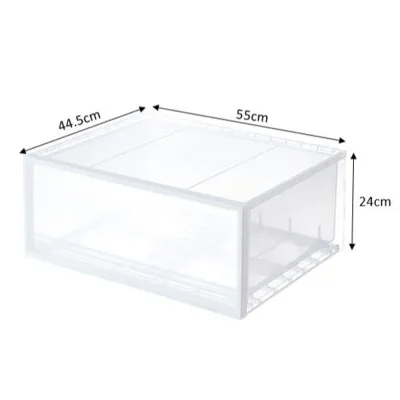
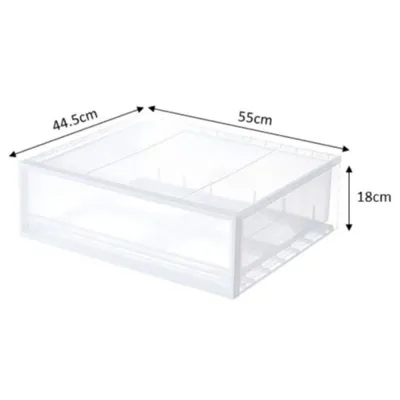
![[Bundle of 2] MUJI PP Storage Width 55 x Depth 44 series](https://img.lazcdn.com/g/p/1f6d45d88ce47a0d5e6b8cc67d8a1bf3.jpg_webp_400x400q80.jpg_.webp)
Prices are valid at publication and may change. Please refer to the product page for the latest price.
Core Differences in Design and Modularity
Muji’s design philosophy centers on a strict, standardized grid system. This means that different heights and widths of their PP boxes are engineered to stack perfectly on top of one another, maintaining a flush exterior profile. This modularity allows you to build custom storage towers that look like a single integrated furniture piece.
In contrast, generic clear plastic bins from online marketplaces or local houseware shops often feature standalone dimensions. While they may stack, they frequently have tapered walls—wider at the top and narrower at the bottom—to allow nesting during shipping. This tapering can result in wasted space between bins when placed side-by-side on a shelf and can make stacking less stable if the lids are not perfectly rigid.
Muji PP boxes typically feature molded grooves on the bottom that lock securely into the lids or top rims of the unit below them. Some models are designed as drawer units within an outer frame, preventing the stack from shifting when you pull a drawer out. Generic bins often rely on simple recessed lids. If you stack generic bins too high, the weight of the upper bins can cause the lids of the lower bins to bow, especially if the plastic is thin or flexible.
The visual impact of these two styles is distinct. Muji’s PP boxes are semi-translucent, which diffuses the shapes and colors of the items inside. This creates a clean, uncluttered look that is ideal for open shelving in living rooms or study areas, as it hides visual noise. Fully clear plastic bins, usually made of polystyrene or acrylic, offer absolute transparency. While this makes finding specific items effortless, it can look chaotic on open shelves if the contents are not meticulously organized.
Evaluating Space and Suitability for Your Rooms
Before purchasing any storage container, precise physical measurements of your home’s built-in spaces are critical. In Singapore, built-in wardrobes, kitchen cabinets, and bomb shelter metal racks have fixed depths and heights. You must measure the clear opening width, depth, and height—accounting for door hinges, sliding door overlaps, and shelf supports. Muji’s standardized dimensions are highly predictable, making it easier to calculate exactly how many units will fit across a shelf. Generic bins require careful checking of their maximum exterior dimensions, including any protruding handles or lid latches.

The structural design of the bin dictates what you can safely store. Heavy items like books, tools, or pantry cans require thick-walled containers with reinforced bases. Many generic clear bins feature structural ribs along the corners and bottom to prevent flexing under load. When evaluating Muji PP boxes, check the manufacturer’s recommended load capacity for both individual drawers and stacked configurations. Overloading drawers can cause the outer frames to sag, making it difficult to slide the drawers open or closed.
Singapore’s tropical climate brings high relative humidity year-round, which can trap moisture inside sealed plastic containers. If you store textiles, leather goods, or paper documents in airtight clear plastic bins, trapped humidity can lead to mold or mildew growth. Look for bins with ventilation gaps or consider adding silica gel desiccant packs. Muji PP drawer units are not completely airtight, allowing minor air exchange, which can be beneficial for everyday items but may require extra moisture-absorbing products if placed in damp areas like under-sink cabinets.
Price, Value, and Long-Term Expansion Costs
The initial investment varies significantly between these options. Muji PP boxes are premium organizational products, with individual units often costing more than generic alternatives found on ecommerce platforms or in local budget department stores. If you need to organize an entire walk-in wardrobe or a large storeroom, the upfront cost of a complete Muji system can accumulate quickly.
A major advantage of the Muji system is the availability of dedicated accessories. You can purchase matching casters to make under-bed or wardrobe boxes mobile, inner dividers to organize small items, and specialized lids. While these accessories enhance functionality, they also add to the total cost. Generic clear bins rarely offer standardized accessories, meaning you may have to source third-party dividers or DIY your own organizational solutions.
Consider the ease of expanding your storage system in the future. Muji maintains consistent dimensions for its PP box lineup over many years, allowing you to buy additional matching units next year or five years from now with confidence that they will stack perfectly. Generic bins, however, are subject to frequent manufacturing changes. A specific model of clear bin bought from an online marketplace today may be discontinued or redesigned next season, making it difficult to find matching replacements if a lid cracks or if you need to expand your setup.
Decision Framework: Which Storage Bin Fits Your Needs?
Opt for the Muji PP Box system if your primary goal is a cohesive, visually quiet home environment with open shelving or semi-exposed wardrobe storage. It is the ideal choice if you appreciate modular flexibility, plan to expand your storage setup gradually over several years, and require precise, flush-fitting dimensions that eliminate wasted gaps on your shelves.
Choose generic clear plastic bins if you are organizing hidden storage areas like bomb shelters, storerooms, or deep under-bed spaces where visual uniformity is secondary to utility. They are also the superior choice if you need absolute transparency to identify contents instantly, require irregular or extra-large sizes for bulky items, or are working within a strict budget that prioritizes maximum storage volume per dollar.
Regardless of your choice, always verify the manufacturer’s specifications for load limits and material safety before purchasing. Check the physical dimensions of your storage space twice, and inspect the bins in person if possible to assess plastic thickness, joint stability, and lid fit before committing to a large-scale organization project.
Frequently Asked Questions (FAQ)
How do I clean and maintain clear plastic bins to prevent yellowing?
To maintain the clarity and appearance of your plastic storage bins, always check the manufacturer’s care instructions first. Clean the surfaces using a soft microfiber cloth dampened with mild dish soap and lukewarm water; avoid abrasive scrubbing pads or harsh chemical solvents like acetone or alcohol, which can scratch or cloud the plastic. To prevent yellowing and brittleness, keep both polypropylene and clear acrylic bins out of direct, prolonged sunlight, as ultraviolet rays degrade the polymer chains over time.
Can I mix Muji PP boxes with other brands on the same shelf?
While you can physically place different brands of bins on the same shelf, they will rarely stack securely together due to differences in interlocking grooves and lid designs. Mixing Muji PP boxes with generic clear bins also creates visual contrast between the frosted, semi-translucent finish of the PP material and the high-clarity transparency of other plastics. If you must mix systems, dedicate separate shelves or distinct zones to each brand to maintain both physical stability and visual order.
Community discussion
Share your experience or ask a question. Comments are reviewed before publication.