
To ensure a Montessori floor bed is safe for a young child in Singapore, you must verify that the frame complies with recognized international safety standards such as ASTM F1821 for toddler beds or EN 1725 for domestic furniture, alongside local consumer product safety guidelines. Because floor beds sit directly on or near the ground, safety extends beyond the frame itself to include material toxicity, structural stability, and the complete childproofing of the surrounding bedroom.
Transitioning a child to a floor bed is a key milestone in the Montessori philosophy, which emphasizes independence, freedom of movement, and self-regulation. However, this independence means the child can access their entire room unsupervised during sleep hours. Consequently, selecting a bed frame requires a rigorous evaluation of physical design, material safety, and room preparation rather than relying solely on aesthetic appeal or marketing claims on online marketplaces.
Understanding International Safety Standards for Children's Beds
When evaluating a montessori floor bed, you will often encounter references to international safety frameworks. The most common standards are established by ASTM International (formerly the American Society for Testing and Materials) in the United States and the European Committee for Standardization (CEN) in Europe. Understanding what these standards test can help you identify a structurally sound product.
Products mentioned in this guide
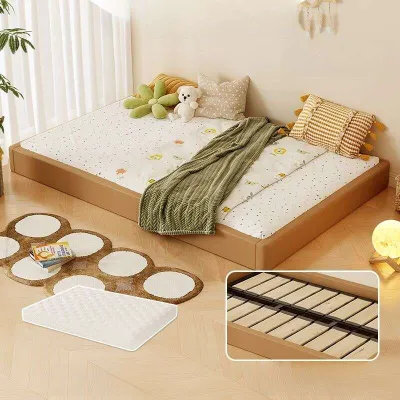
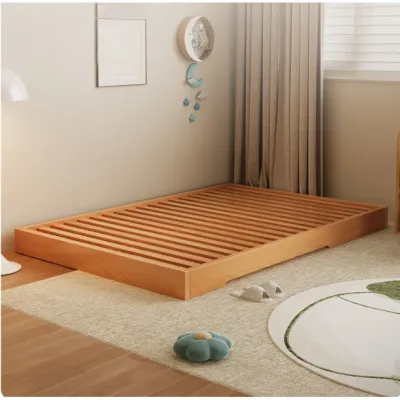
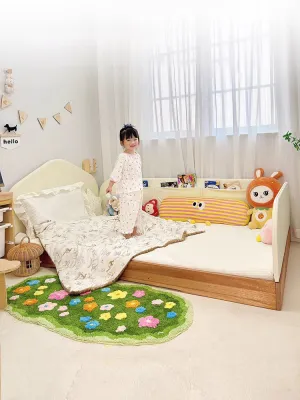
![[Pre-order]Childrens tatami 2024 new single island or simple modern childrens Montessori platform bed](https://img.lazcdn.com/g/p/dbbd457ab7f6a0c61ca39b4269e7aa21.jpg_400x400q80.jpg_.webp)
Prices are valid at publication and may change. Please refer to the product page for the latest price.
ASTM F1821 is the standard consumer safety specification for toddler beds. This framework specifically tests for structural integrity, the strength of guardrails, and the prevention of entrapment. It ensures that any gaps in the bed frame are either small enough to prevent a child’s limbs from getting stuck or large enough to allow them to pass through safely without head or neck entrapment.
In Europe, EN 716 covers children’s cots and folding cots, while EN 1725 specifies safety requirements and test methods for domestic beds and mattresses. These standards subject furniture to rigorous load testing, checking how the frame responds to repeated impact and weight distribution. They also regulate the spacing of slats and the height of protective barriers to minimize fall risks.
It is important to recognize that these international standards are often region-specific and voluntary for floor beds, which sometimes fall into a regulatory gray area between cribs and standard adult beds. Manufacturers are not always legally mandated to meet these criteria before selling a product. Therefore, you should look for explicit manufacturer declarations of compliance and request third-party laboratory test reports from recognized bodies like SGS, TÜV, or Intertek to verify these claims.
Verifying Product Labels and Local Safety Compliance
Navigating product documentation requires looking past generic marketing phrases. Terms like “tested for safety,” “child-friendly,” or “eco-friendly” carry no legal weight unless backed by verifiable certifications. A genuine safety certification will be accompanied by a specific standard number and a traceable test report from an independent testing facility.

In Singapore, consumer goods are overseen by the Consumer Product Safety Office (CPSO) under Enterprise Singapore. While standard adult furniture does not require mandatory registration under the Consumer Protection (Safety Requirements) Registration Scheme, children’s specialty furniture must comply with general product safety regulations. You can check if a manufacturer aligns with local voluntary guidelines or has registered their products with relevant safety authorities.
When inspecting a physical bed frame or its packaging, look for permanent warning labels and clear assembly instructions. A compliant manufacturer will provide labels that specify the recommended age range, maximum weight capacity, and the exact mattress dimensions required for the frame. These labels are crucial because using an incorrectly sized mattress can create dangerous gaps along the sides of the bed.
Additionally, review the assembly manual before purchasing or assembling the bed. A high-quality manual will outline all necessary hardware, specify torque requirements for fasteners, and include clear safety warnings. If a product arrives with vague instructions, missing hardware, or poorly aligned pre-drilled holes, its structural integrity may be compromised, and you should contact the manufacturer immediately.
Essential Physical Safety Checks for the Bed Frame
Even if a bed frame claims compliance with international standards, you must perform physical checks to ensure the product is safe for your specific home environment. These checks focus on preventing entrapment, managing fall risks, and ensuring long-term structural stability.
Guardrail Gaps and Entrapment
If the montessori floor bed features partial guardrails or decorative spindles, you must measure the gaps between them. To prevent head and neck entrapment, the distance between slats must be less than 60 mm (6 cm). Additionally, check the gap between the mattress and the guardrail; any space between 60 mm and 230 mm is a known hazard where a child’s torso could slip through while their head remains trapped.
Height and Fall Risk
While floor beds are designed to be low to the ground to minimize fall injuries, the transition from a raised frame to the floor still requires attention. Evaluate the height of the mattress platform. If the frame has a raised outer wooden lip, ensure it does not create a tripping hazard when the child climbs in and out. For very active sleepers, a frame that allows the mattress to sit flush with the floor is often safer than one with a shallow wooden lip.
Structural Stability
Singapore’s high humidity can affect wood joints over time, potentially causing them to loosen, warp, or squeak. Inspect the joint connection types used in the frame. Look for metal-on-metal connections, such as barrel nuts and bolts, which provide superior long-term stability compared to simple wood screws driven directly into timber. Once assembled, apply physical pressure to the frame from multiple angles to verify that it does not wobble, slide, or shift.
Edge and Corner Finishes
Run your hands along every accessible surface of the bed frame. All edges must be rounded or chamfered rather than left as sharp 90-degree angles. Check for exposed hardware, such as protruding screw heads or brackets, which can cause scratches or snag clothing. The wood must be sanded completely smooth to eliminate the risk of splinters.
Evaluating Material Safety and Non-Toxic Finishes
Young children, especially those who are teething, frequently chew on bed rails and frames. Consequently, the chemical composition of the paints, stains, and sealants used on the bed frame is just as important as its structural design.
Look for manufacturers that specify the use of non-toxic, water-based paints or food-grade natural oil finishes. A reliable indicator of chemical safety is compliance with EN 71-3, the European standard that restricts the migration of heavy metals and toxic elements in toys and children’s products. Another valuable certification is Greenguard Gold, which ensures the product meets strict limits for chemical emissions and volatile organic compounds (VOCs).
When unboxing the bed frame, pay close attention to any strong chemical odors. A strong, pungent smell indicates off-gassing of VOCs, which can irritate a child’s respiratory system. If you detect an odor, assemble the bed in a well-ventilated area or an unoccupied room, and allow it to air out for several days until the smell completely dissipates before introducing it to your child’s bedroom.
Furthermore, verify the material specifications of the frame. Solid hardwoods like beech, birch, or maple are highly durable and less likely to splinter compared to softwoods like cheap pine. If the frame uses engineered wood, such as MDF or plywood, ensure the manufacturer certifies that it meets low-formaldehyde emission standards, such as CARB Phase 2 or EPA TSCA Title VI compliance. Keep in mind that material names alone do not guarantee safety; you must still inspect the joints and follow the manufacturer’s care instructions to prevent mold or structural degradation in Singapore’s humid climate.
Securing the Room Environment Around the Floor Bed
A Montessori floor bed functions under the premise that the entire bedroom is a safe, enclosed play and sleep space. Therefore, the safety of the bed cannot be separated from the safety of the surrounding room.
First, establish a clear fall zone around the bed. Maintain a clearance of at least 50 cm to 1 meter between the bed and any adjacent walls or hard furniture. If the bedroom floor is made of a hard material like tile, marble, or polished vinyl, place a soft, low-pile rug next to the bed to cushion any accidental rolls during the night. Avoid thick, plush rugs that could pose a suffocation hazard to very young children.
Second, secure all heavy furniture in the room. Because your child can freely exit the bed at any time, every wardrobe, chest of drawers, and bookshelf in the room must be securely anchored to the wall using L-brackets or anti-tip straps. Children may attempt to climb shelves or open drawers, which can lead to severe tip-over accidents if the furniture is unsecured.
Finally, eliminate all accessible hazards at the floor level. Cover all electrical outlets with safety plugs or install box covers over plugged-in cords. Secure loose electrical cables, charger cords, and window blind strings well out of the child’s reach. Regularly sweep or vacuum the floor to ensure there are no small objects, coins, or toys that could present a choking hazard to an unsupervised child.
Frequently Asked Questions (FAQ)
At what age is it safe to transition a child to a Montessori floor bed?
While some families transition infants as early as 6 months, many pediatric safety guidelines and manufacturers recommend waiting until the child is at least 18 months to 2 years old. At this stage, children have developed the gross motor skills to roll, sit up, crawl, and stand independently, reducing the risk of getting trapped or injured. Always consult your pediatrician and verify the manufacturer’s minimum age and weight recommendations before making the transition.
Do I need a specific type of mattress for a floor bed?
Yes, the mattress must be firm to support a developing child and prevent suffocation risks. It must fit the bed frame precisely, leaving no gaps wider than 30 mm between the mattress edge and the frame to prevent limb entrapment. Additionally, because the mattress sits close to the floor, you should use a slatted bed base rather than placing the mattress directly on the ground. This setup promotes airflow and prevents moisture buildup and mold growth, which is especially important in Singapore’s humid climate.
Community discussion
Share your experience or ask a question. Comments are reviewed before publication.