
Buying metal table legs allows you to customize your furniture, whether you are pairing them with a solid wood slab or a sleek quartz top. To ensure a successful assembly, you must verify several critical physical specifications before purchasing. Checking the exact height, load capacity, mounting plate dimensions, and surface finish prevents costly compatibility issues and ensures your completed table remains stable and safe for daily use. Before ordering large, pre-assembled metal leg frames, measure your building’s lift doors and corridors to ensure the components can be transported easily to your unit.
Table Height and Floor Clearance
To determine the correct leg length, you must calculate the total finished height of your table. This is done by adding the exact height of the metal legs to the thickness of your chosen tabletop. Standard dining tables typically stand between 73 and 76 centimetres tall, while counter-height tables range from 89 to 91 centimetres, and bar tables reach around 101 to 106 centimetres. Matching these finished heights to your existing chairs or stools ensures comfortable seating ergonomics.
Beyond the overall height, you must verify the available floor clearance and knee space. If the metal legs feature integrated crossbars or a trestle design, check the manufacturer’s technical drawings to ensure these supports do not block your knees or restrict chair placement. In compact dining areas common in Singapore apartments, maximizing the space under the table is essential for tucking chairs completely away when not in use.
Products mentioned in this guide
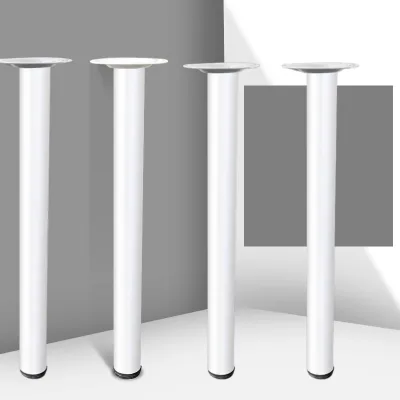
![[SG In Stock]Metal Adjustable Table Leg 8-42CM Height Table Leg Sofa Leg Support Cabinet Foot Coffee Table Leg Bed Leg](https://img.lazcdn.com/g/p/e78187956e5e275d0c3db08ff12669b7.jpg_400x400q80.jpg_.webp)
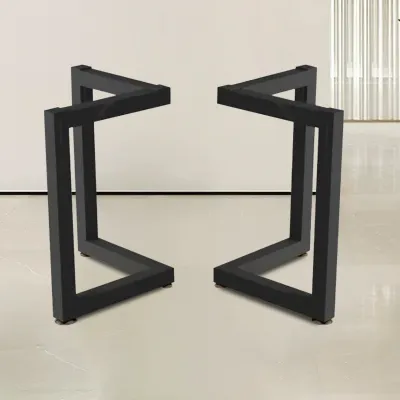
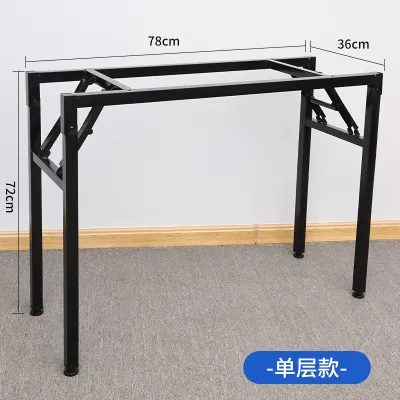
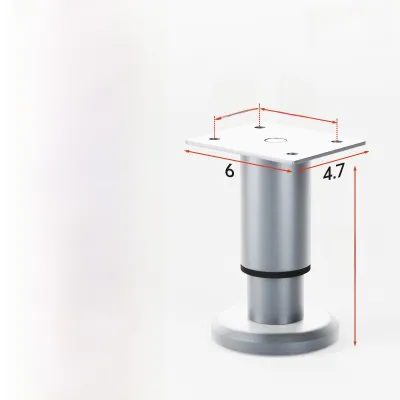
Prices are valid at publication and may change. Please refer to the product page for the latest price.
Load Capacity and Structural Stability
Before finalizing your purchase, locate the manufacturer’s rated load capacity for the legs. You must confirm whether this weight limit is specified per leg or as a total capacity for a set of four. Always subtract the weight of your tabletop from this rated capacity to determine the actual safe weight limit for items placed on top of the table.

The dimensions of your tabletop also dictate how many legs you need and where they should be positioned. Large tabletops require wider leg placement or additional support frames to prevent the center of the table from sagging over time. If your design includes significant overhangs, ensure the legs are robust enough to prevent the table from tipping when pressure is applied to the edges.
For heavy tabletop materials such as solid suar wood, marble, or engineered quartz, look for structural reinforcements in the leg design. Thicker gauge steel, wider profiles, and integrated cross-bracing significantly reduce lateral movement and wobble. Checking these structural specifications ensures your table remains rock-solid even under heavy daily use.
Mounting Plate Size and Attachment Hardware
The mounting plate is the critical interface between the metal leg and your tabletop. You must compare the physical dimensions of this plate against the width and depth of your tabletop’s underside. A mounting plate that is too small may fail to distribute the weight evenly, while one that is too large might protrude past the edges of a narrow table.
Examine the pre-drilled hole pattern on the mounting plate and check the length of the included screws. The screws must be short enough to avoid piercing through the top surface of your table, yet long enough to bite securely into the material. If you are using a thin tabletop, you may need to source shorter, specialized screws separately.
Different tabletop materials require specific anchoring methods to ensure a secure hold. For solid wood, using threaded brass inserts allows you to bolt the legs securely while permitting seasonal wood expansion. Budgeting an extra S$10 to S$30 for high-quality threaded inserts and matching bolts is a worthwhile investment to protect an expensive tabletop. For composite boards or MDF, specialized wood screws or heavy-duty anchors are necessary to prevent the hardware from stripping out of the softer core material.
Leg Profile, Tube Diameter, and Floor Protection
The visual proportion and structural stiffness of metal legs depend heavily on their profile and tube diameter. Thinner legs may look elegant but can flex under heavy loads, whereas thicker legs offer superior rigidity at the expense of legroom. Review the manufacturer’s specifications for tube wall thickness, often measured in gauge or millimetres, to assess the overall strength of the metal.
Consider the physical footprint of the leg base where it meets the floor. Splayed legs or wide pedestal bases can extend outward, creating potential tripping hazards in tight walkways. Ensure the leg design allows enough clearance for your dining chairs to slide in and out without constantly striking the metal frame.
Protecting your flooring is another essential consideration when selecting metal legs. Verify whether the legs come equipped with adjustable levelers or non-marking floor protectors. Adjustable levelers are particularly useful for stabilizing tables on uneven tile or parquet floors, while soft rubber or felt pads prevent the heavy metal from scratching delicate surfaces.
Surface Finish and Environment Suitability
The surface finish of metal table legs determines both their aesthetic appeal and their resistance to wear. Common treatments include powder coating, electroplating, and clear-coating over raw steel. Powder-coated finishes offer excellent resistance to scratches and chipping, making them ideal for high-traffic family dining tables.
You must check the manufacturer’s environmental guidelines to ensure the finish matches your intended location. In Singapore’s humid tropical climate, raw steel or poorly sealed finishes can rust rapidly, even indoors. If you plan to use the table on a semi-outdoor balcony or in a damp kitchen environment, look for legs specifically rated for outdoor or high-humidity use, such as those made from stainless steel or treated with rust-resistant coatings.
Maintaining the appearance of your metal legs requires proper care based on the finish type. Always follow the manufacturer’s cleaning instructions, which typically recommend using a soft, damp microfiber cloth and mild soapy water. Avoid harsh chemical cleaners, solvents, or abrasive scrubbing pads, as these can strip away the protective clear coat or scratch the powder-coated surface.
Frequently Asked Questions (FAQ)
Can I use outdoor metal table legs indoors?
Yes, outdoor-rated metal table legs are perfectly suitable for indoor use and often provide superior rust resistance due to their heavy-duty protective coatings. However, they may carry a higher price tag due to specialized materials like stainless steel or advanced powder coatings. Ensure the industrial or rugged aesthetic of outdoor legs aligns with your indoor interior design before purchasing.
How do I fix wobbly metal table legs after assembly?
If your table wobbles after assembly, first check if the floor surface is uneven and adjust the built-in leveling feet if available. Next, verify that all mounting screws are tightened securely into the tabletop without being stripped. If the wobble persists, inspect the structural joints of the legs or consider adding a cross-brace to reinforce the frame against lateral movement.
Community discussion
Share your experience or ask a question. Comments are reviewed before publication.