
Finding storage solutions that do not crowd a compact HDB flat or condominium living room requires smart spatial planning. Standard rectangular furniture often leaves awkward gaps or blocks natural walkways, making a room feel smaller than it is. A triangle corner display cabinet offers an elegant way to reclaim underutilized corner space, turning a blank junction into a functional focal point. By fitting flush against intersecting walls, these specialized units maximize storage capacity while preserving valuable floor space for daily movement. Choosing the right piece involves balancing physical dimensions, visual weight, and structural safety to ensure the cabinet complements your home seamlessly.
Assessing Your Corner Space and Layout Constraints
Before browsing online marketplaces or visiting local furniture showrooms, you must take precise measurements of your target corner. Start by measuring the floor footprint along both intersecting walls, extending outward to where the front of the cabinet will sit. It is vital to measure the corner angle itself; while most modern apartments feature standard 90-degree walls, older estates or custom renovations may have slight structural variations. Do not forget to account for skirting boards or baseboards, which can prevent a flat-backed cabinet from sitting flush against the wall. Measuring the height of these baseboards and their depth will help you determine if the cabinet needs a recessed base or adjustable feet to clear them.
Vertical clearance is equally critical, especially if you are considering a tall, floor-to-ceiling unit. Measure the height from the floor to the ceiling, keeping an eye out for low-hanging beams, cornices, or false ceilings common in renovated HDB flats. If the cabinet features top-mounted lighting or decorative crown molding, ensure there is sufficient clearance to install and maintain the unit without scraping the ceiling.
Products mentioned in this guide
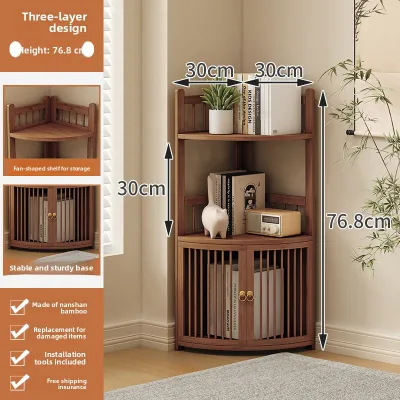
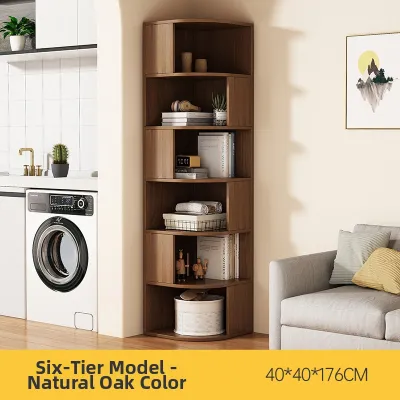
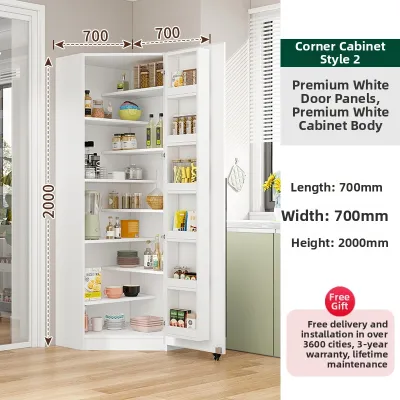
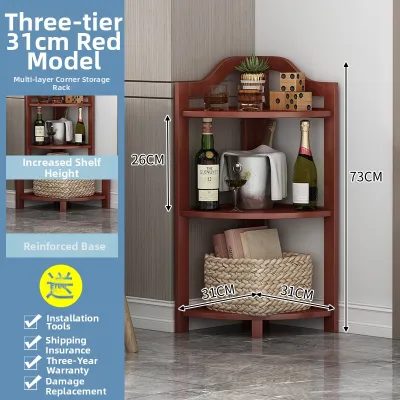
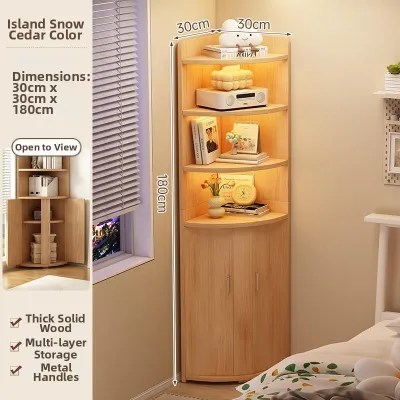
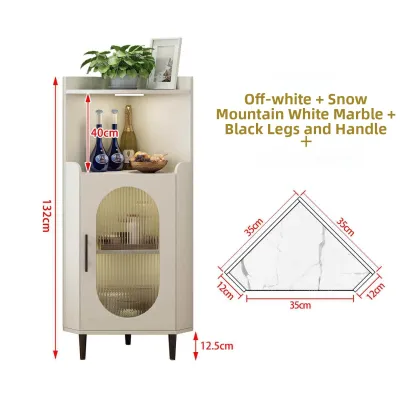
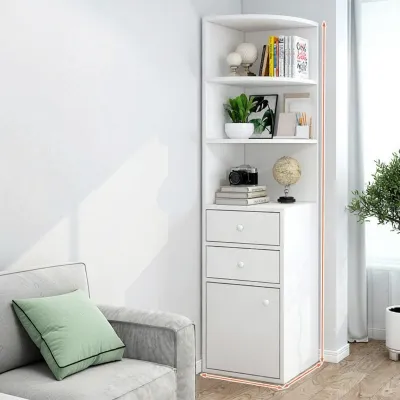

Prices are valid at publication and may change. Please refer to the product page for the latest price.
Beyond the physical footprint of the cabinet, evaluate the surrounding environment for potential obstructions. Check the swing path of nearby room doors, balcony doors, or adjacent cabinet doors to prevent collisions. Ensure the cabinet does not block access to wall switches, electrical outlets, or air conditioning vents, which require regular servicing. Walkway clearance is paramount in compact layouts; maintain a clear path of at least 60 to 90 centimeters in front of the cabinet to allow comfortable passage and easy access to the cabinet doors.
Key Design Features for Compact Living Rooms
When selecting a triangle corner display cabinet for a smaller living room, prioritizing vertical proportions is a highly effective design strategy. Tall, narrow cabinets draw the eye upward, creating an illusion of height that makes low ceilings feel loftier. This vertical orientation maximizes storage capacity on a minimal floor footprint, allowing you to display prized possessions without sacrificing precious floor space.

The choice of cabinet doors and panels significantly influences the visual weight of the furniture in a tight space. Glass-front doors are ideal for display purposes, as they protect items from dust while maintaining an open, airy feel that prevents the room from looking cramped. If you prefer to conceal clutter, consider a hybrid design featuring solid lower panels and glass upper shelves. Open shelving offers the lightest visual footprint but requires more frequent dusting and meticulous organization to avoid a cluttered appearance.
To further enhance the perception of space, look for cabinets equipped with reflective back panels or integrated lighting. Mirrored backs bounce light around the room, making the cabinet interior look deeper and the entire corner feel brighter. Built-in LED spotlights or strip lighting not only highlight your displayed items but also eliminate dark shadows in the corner, contributing to a warm and inviting atmosphere. When choosing lighting, opt for low-heat LED fixtures to protect both the cabinet material and your displayed collectibles from heat damage.
Material and Structural Checks for Durability and Safety
Ensuring the durability and safety of your corner cabinet requires a careful review of manufacturer specifications and material treatments. Rather than relying solely on generic material names like solid wood or engineered board, inspect the specific surface finishes. In Singapore’s humid climate, look for moisture-resistant laminates, sealed veneers, or protective lacquers that prevent warping, swelling, or mold growth. Scratch-resistant coatings are also beneficial if you plan to display heavy ceramic or metallic items that could mar the shelves over time.
Load capacity is a critical safety consideration, particularly for tall, narrow cabinets with glass shelves. Always check the manufacturer’s specified weight limit per shelf and distribute heavier items on the lower shelves to maintain a low center of gravity. Verify that glass shelves are made of tempered safety glass, which is much stronger than standard glass and breaks into small, blunt pieces if damaged.
Because triangle cabinets have a narrow base relative to their height, they are inherently more susceptible to tipping. It is essential to verify that the cabinet comes with robust anti-tip hardware, such as wall anchors or safety straps. Check your wall type—whether concrete, drywall, or brick—to ensure you use the correct wall plugs and screws for installation. Securely anchoring the cabinet to the wall is a non-negotiable step to prevent accidental tipping, especially in households with active pets or young children.
Styling and Placement Tips to Avoid Overcrowding
Once your triangle corner cabinet is safely installed, how you style its interior plays a major role in how it affects the room’s overall ambiance. The golden rule for small-space styling is to embrace negative space. Avoid packing every shelf to its absolute capacity; instead, leave empty space around each item to let the eye rest. Group items in odd numbers, such as clusters of three, and vary their heights to create visual interest without creating clutter.
Positioning the cabinet strategically within your layout can dramatically improve the flow of your living room. Place the cabinet in a corner that is visible from the main seating area but does not disrupt the primary sightlines toward windows or television screens. This placement integrates the cabinet into the room’s design narrative without making it feel like an obstacle.
To create a cohesive look, coordinate the cabinet’s finish and hardware with your existing furniture. If your living room features light oak or minimalist white tones, choosing a corner cabinet in a matching palette will help it blend seamlessly into the walls, reducing its visual impact. Conversely, if you want the cabinet to serve as a statement piece, select a contrasting finish but tie it to the rest of the room using coordinated decor items inside, such as matching metallic accents or color-coordinated books.
Frequently Asked Questions (FAQ)
Can I use a triangle corner cabinet in a room with uneven walls?
Yes, but you must take extra precautions during installation to ensure stability. Use a spirit level to check both the wall plumb and the floor levelness before placing the cabinet. If the floor is slightly uneven, look for cabinets equipped with adjustable leveling feet, which allow you to compensate for minor variances. For small gaps between the cabinet and uneven walls, you can use manufacturer-approved shims or spacers to secure the unit firmly before anchoring it. If the walls are significantly warped or out of plumb, creating large gaps that prevent secure wall anchoring, consult a professional carpenter to custom-fit the unit or reinforce the mounting points safely.
How do I clean glass-front triangle cabinets without leaving streaks in humid climates?
Cleaning glass in high humidity requires the right tools and techniques to prevent unsightly streaks and moisture buildup. Use a clean, dry microfiber cloth paired with a mild, alcohol-based glass cleaner, which evaporates quickly in humid conditions. Avoid spraying the cleaner directly onto the glass; instead, spray it onto the cloth to prevent liquid from seeping into the wooden or metal frame joints, which can cause rot or rust. Wipe the glass in a consistent Z-shaped motion to ensure even coverage. Always ensure the room is well-ventilated during and after cleaning to allow any residual moisture to dry completely, protecting both the cabinet frame and the items displayed inside.
Community discussion
Share your experience or ask a question. Comments are reviewed before publication.