
Maximizing storage in a standard Singapore HDB flat requires a strategic approach to every square centimeter of available space. As flat layouts become more compact, homeowners often find themselves dealing with awkward, narrow gaps between major appliances, walls, and cabinetry. A slim gap drawer is one of the most efficient ways to reclaim these underutilized areas, transforming a dusty void into a highly functional storage zone. However, selecting the right unit is not merely a matter of finding the narrowest cart available on an online marketplace. It requires a careful evaluation of your specific household layout, the environmental conditions of the room, and the mechanical limits of the storage unit itself.
To choose the best gap drawer for your HDB flat, you must balance spatial efficiency with safety and accessibility. A poorly chosen drawer can block essential appliance ventilation, scratch your flooring, or tip over when fully loaded. By understanding how to measure your space accurately, select durable materials suited to local humidity, and evaluate structural stability, you can find a storage solution that seamlessly integrates into your home. This guide provides a comprehensive framework to help you navigate the selection process, ensuring your new storage unit is both practical and safe.
Assessing Your HDB Space: Where a Gap Drawer Fits Best
In typical HDB layouts, narrow gaps are common byproducts of standard appliance installations and modular kitchen designs. The most frequent locations for these gaps include the space beside the refrigerator in the kitchen, the tight area between the washing machine and the wall in the service yard, and the narrow clearance next to the toilet bowl or vanity in the bathroom. While these gaps may seem like prime real estate for extra storage, you must first evaluate whether filling them is appropriate. For instance, leaving a gap empty is sometimes necessary to allow for adequate appliance maintenance access or to prevent heat buildup.
Products mentioned in this guide
![[NO NEED INSTALL] SG 2/3|4 Tier Drawers Slim Storage Cabinet Bathroom Storage Cabinet/Kitchen/Living Room/Space Saving Gap Cabinet](https://img.lazcdn.com/g/p/e56cf536fe4f934a980ebfe83d10e4db.jpg_400x400q80.jpg_.webp)
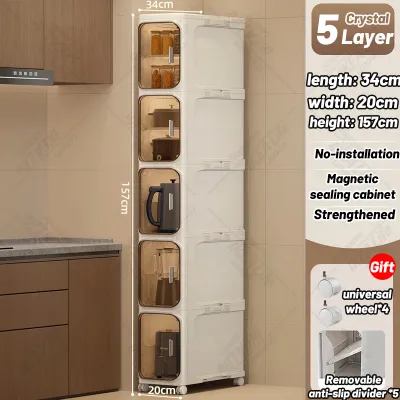


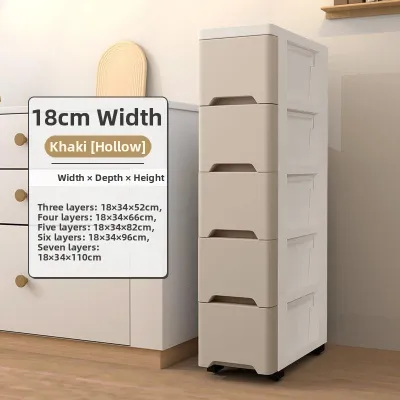
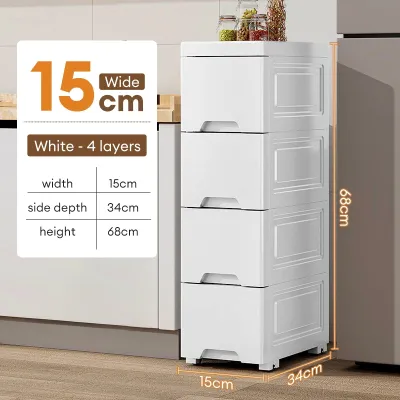
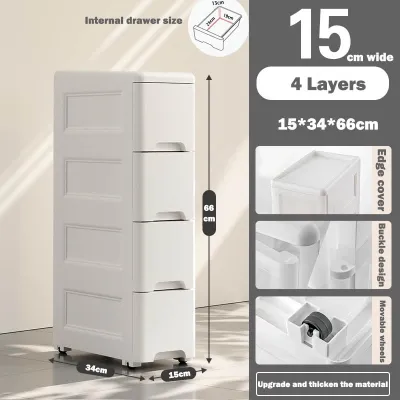
Prices are valid at publication and may change. Please refer to the product page for the latest price.
Before purchasing a gap drawer, inspect the target area for hidden physical obstructions that could restrict the usable width. In Singapore, HDB flats frequently feature surface-mounted copper water pipes, PVC drainage pipes, electrical trunking, and wall skirting boards. A gap that measures 20 cm wide at eye level might narrow to just 17 cm near the floor due to a protruding skirting board or electrical outlet. Additionally, look out for floor traps and drainage grates, especially in the service yard or bathroom. Placing a heavy storage unit directly over a floor trap can block water drainage during cleaning or washing machine discharge cycles, leading to pooling water and potential floor damage.
Key Dimensions and Clearance Requirements
Accurate measurement is the foundation of a successful gap drawer installation. When measuring the width of a gap, do not rely on a single measurement taken at the front of the opening. Walls in residential buildings are rarely perfectly plumb, and appliances like refrigerators often have slight bulges along their side panels or handles that protrude into the gap. Take measurements at three distinct heights—near the floor, in the middle, and near the top—and at both the front and the back of the gap. Use the smallest measurement as your maximum allowable width, and subtract at least 1 to 2 cm to ensure the drawer can slide in and out smoothly without scraping against adjacent surfaces.

Depth and height clearances are equally critical for maintaining a safe and functional living space. In compact HDB kitchens and service yards, walkways are often narrow. A gap drawer that is too deep will protrude into these high-traffic paths, creating a constant tripping hazard or preventing you from fully opening adjacent cabinet doors, oven doors, or front-loading washing machine lids. Measure the depth of the surrounding cabinetry or appliances and select a drawer that sits flush or slightly recessed. For height, check for overhanging shelves, wall-mounted gas meters, water heaters, or low-hanging kitchen countertops. Ensure there is sufficient vertical clearance not only for the drawer unit itself but also for comfortably lifting items out of the top shelf or compartment.
Material and Feature Selection for Different Rooms
The environmental conditions of the room should dictate the material of your gap drawer. In the kitchen, storage units are exposed to airborne grease, food spills, and heat from cooking appliances. For this zone, prioritize materials with easy-to-clean surfaces that do not absorb oils or odors. High-grade polypropylene plastics are highly practical for kitchen gaps as they can be easily wiped down or washed in the sink. If you prefer a metal unit to match modern kitchen aesthetics, check that it features a durable powder-coated finish to resist scratches and rust, and verify that the joints are securely welded to prevent grease buildup in hard-to-reach crevices.
For bathrooms and laundry service yards, water resistance and mold prevention are the primary concerns. Singapore’s high humidity, combined with direct water exposure from showers or washing machines, can quickly degrade unsuitable materials. Avoid untreated wood, medium-density fibreboard (MDF), or low-grade chrome-plated steel, which are highly susceptible to swelling, warping, and rusting. Instead, opt for rust-proof materials such as stainless steel, heavy-duty plastics, or specially treated aluminum. Additionally, look for designs that incorporate slatted shelves or mesh baskets. These features promote airflow, allowing damp items like sponges, cleaning cloths, or toiletries to dry quickly, thereby reducing the risk of mold and mildew growth.
Modern gap drawers often come with multi-functional features that enhance their utility in tight spaces. Some models offer modular designs, allowing you to stack or remove individual tiers to adjust the overall height as your storage needs change. Others feature adjustable internal dividers, which are incredibly useful for keeping small spice jars, cosmetic bottles, or cleaning supplies organized and upright. For ultimate versatility, consider units with foldable or collapsible frames. These can be easily packed away when not in use, making them ideal for temporary storage setups or transitional living arrangements.
Evaluating Mobility, Stability, and Load Capacity
The mechanical design of a gap drawer directly impacts its safety and ease of use. Because these units are exceptionally narrow and tall, their mobility and stability must be carefully evaluated. Most gap drawers rely on wheels or casters to slide in and out of tight spaces. Standard hard plastic wheels can easily scratch delicate vinyl flooring or slip uncontrollably on smooth homogeneous tiles. Look for units equipped with high-quality, silent rubberized or polyurethane wheels that roll smoothly without leaving marks. At least two of these wheels should feature reliable locking mechanisms to keep the drawer securely in place when you are retrieving items.
Stability is a major safety concern for slim storage units, particularly when they are fully extended. A narrow drawer has a high center of gravity, making it prone to tipping over if it is top-heavy or pulled out too quickly. To minimize this risk, look for models with a wider base design or those that can be anchored to an adjacent wall or cabinet if necessary. When organizing your items, always place the heaviest objects—such as large laundry detergent bottles, cooking oil, or canned goods—on the bottom shelf. Reserve the upper shelves for lightweight items like paper towels, sponges, or small spice containers. This simple distribution of weight significantly lowers the center of gravity, ensuring the unit remains stable during operation.
Pre-Purchase Checklist and Measurement Guide
Before finalizing your purchase from an online marketplace or a local furniture retailer, run through a systematic pre-purchase checklist to avoid the hassle of returns or exchanges. First, perform a final measurement verification: confirm the minimum width (accounting for skirting boards), the maximum depth (ensuring walkway clearance), the maximum height (checking for overhead obstructions), and the diagonal clearance (ensuring you can physically maneuver the unit into the gap during installation). Next, carefully review the retailer’s return policy; many online sellers do not accept returns for assembled furniture or units that have been opened, making accurate pre-purchase measurements even more critical.
Additionally, consider the assembly requirements of the gap drawer. Flat-pack units require self-assembly, so ensure you have the necessary tools and that the assembly instructions are clear. If you are purchasing a pre-assembled unit, verify that its finished dimensions will fit through your doorways and lift access points. Finally, check that the placement of the drawer will not void any manufacturer warranties on your major appliances. Many refrigerators and washing machines require a specific clearance distance on all sides to allow heat to dissipate. Blocking these ventilation grilles with a tightly packed gap drawer can cause the appliance to overheat, reducing its lifespan and potentially voiding its warranty.
Frequently Asked Questions (FAQ)
How do I clean a gap drawer stuck between heavy appliances?
Cleaning a gap drawer that is wedged between heavy appliances requires care to avoid scratching the appliance finishes or damaging the drawer itself. Before attempting to move the unit, ensure that any wheel locks are fully disengaged. Gently pull the drawer straight out along its rolling path; avoid pulling at an angle, which can cause the wheels to bind or scrape against the adjacent appliances. Once the drawer is removed, use an extendable microfiber duster or a slim vacuum attachment to clean the empty gap. Wipe down the drawer unit itself with a damp cloth and mild detergent, ensuring it is completely dry before sliding it back into place.
Can a gap drawer block the ventilation of my refrigerator or washing machine?
Yes, placing a gap drawer too close to heat-generating or moisture-releasing appliances can block essential ventilation. Refrigerators rely on side or rear condenser coils to dissipate heat, while washing machines require airflow to manage moisture and vibration. Always consult your appliance user manuals to determine the manufacturer’s recommended clearance distances. If a gap drawer must be placed nearby, ensure there is at least a 2 to 5 cm buffer zone of open space, or choose a highly ventilated mesh cart that allows air to circulate freely around the appliance vents.
Community discussion
Share your experience or ask a question. Comments are reviewed before publication.