
Investing in home massage chairs can transform your wellness routine, but navigating technical specifications like “4D rollers,” “120 airbags,” and “AI body scanning” is often confusing. Many highly marketed features do not directly improve your massage, while other overlooked specifications can make or break your daily experience. Understanding what these technical terms actually mean for your body allows you to bypass the marketing noise and choose a chair that delivers genuine, therapeutic relief. Let’s break down the core mechanical components, compression systems, and positioning technologies that define how a massage chair performs in your living space.
The Core Mechanics: Roller Types and Track Systems
The mechanical rollers and the track they travel along form the foundation of any massage chair. The rollers act as the “hands” of the machine, while the track determines how far those hands can reach.
To understand roller technology, look past the dimensional labeling. Standard 2D rollers move along two axes: up and down, and left to right. While functional, 2D systems offer a relatively flat experience because they cannot adjust their depth. True 3D rollers introduce an in-and-out motion, allowing the roller heads to protrude forward into your muscles. This depth control is what creates a realistic kneading or deep-tissue sensation. On the other hand, “4D” is largely a marketing term rather than a physical dimension. In most cases, 4D specifications simply refer to a 3D roller system that can dynamically vary its speed during a single stroke—slowing down as it crosses a tight muscle knot and speeding up over flatter areas.
Products mentioned in this guide
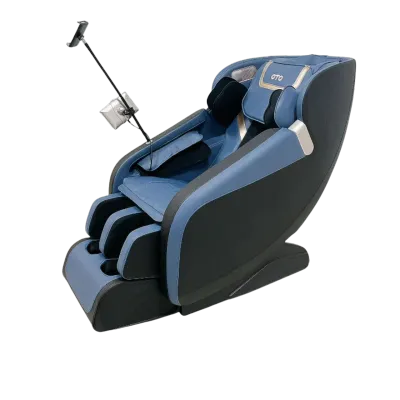
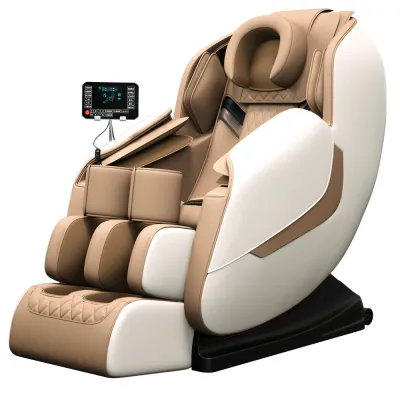
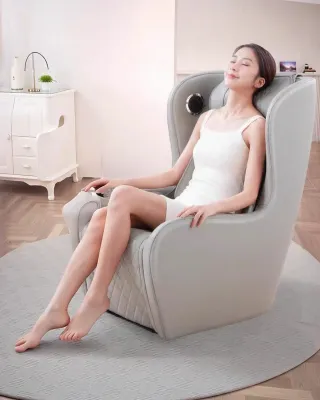
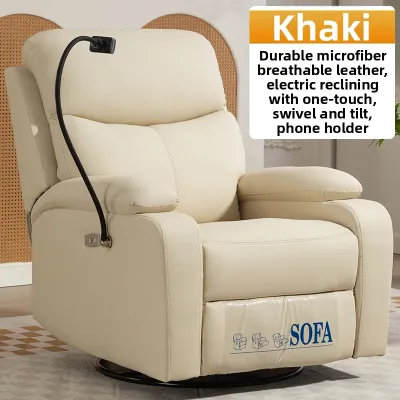
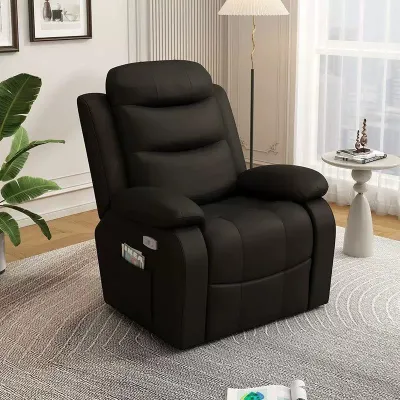
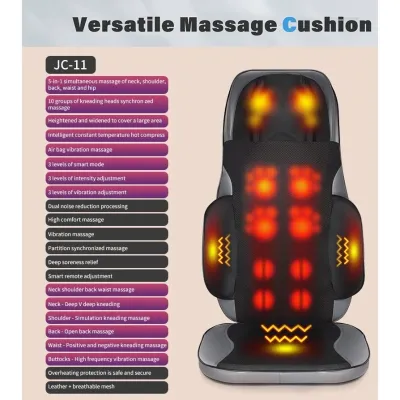
Prices are valid at publication and may change. Please refer to the product page for the latest price.
The track system dictates the path these rollers travel. Older or budget-friendly chairs use an S-track, which curves to match the natural “S” shape of the human spine but stops at the lower back. An L-track extends much further, running from the neck down past the lower back and wrapping under the seat to massage the glutes and hamstrings. For the most comprehensive coverage, look for an SL-track. This hybrid system curves along the natural contours of your spine while extending all the way to your thighs, combining the ergonomic comfort of the S-track with the extended reach of the L-track.
When sharing a massage chair with family members, roller width adjustment is a crucial specification to check. A track that is too wide will miss the spinal muscles of a petite user, while a track that is too narrow can painfully press against the shoulder blades of a broader individual. Ensure the chair allows you to manually adjust the horizontal spacing of the rollers, typically offered in three distinct width settings.
Compression and Coverage: Understanding Airbag Counts and Placement
While rollers handle the deep kneading along your spine, airbags manage the compression massage for your extremities. These inflatable chambers use air pressure to squeeze muscles, promote circulation, and hold your body in place so the rollers can work more effectively. However, evaluating a chair solely on its total airbag count is a common consumer mistake.

A massive airbag count—such as 80 or 100 airbags—does not automatically guarantee a superior massage. In fact, many manufacturers inflate this number by using dozens of tiny, separate chambers connected to a single, weak air compressor. This configuration often results in sluggish inflation and weak compression. A more efficient design utilizes fewer, larger, and strategically designed airbags powered by multiple dedicated valves. This setup delivers consistent, firm pressure exactly where you need it.
Instead of counting individual airbags, focus on their strategic placement zones. Shoulder airbags are essential; when they inflate, they push your shoulders back against the chair, allowing the back rollers to penetrate deeper into your upper back. Arm and hand sleeves use sequential compression to relieve tension from typing or physical labor. Finally, calf and foot airbags are vital for lower-limb recovery, squeezing the lower legs to encourage blood flow back up the body.
Because pain tolerance varies widely, adjustable airbag intensity is a non-negotiable specification. A chair with a single, high-pressure setting can quickly become uncomfortable or even cause bruising. Look for models that offer at least three to five levels of independent pressure control, allowing you to soften the compression on sensitive areas like the forearms while keeping a firm grip on the calves.
Personalization: How Body Scan Technology Adapts the Massage
No two bodies are shaped exactly alike, which is why automated body scanning is a vital component of modern massage chairs. Without an accurate scan, a chair will treat a 150 cm user and a 190 cm user identically, leading to rollers hitting the back of the head or completely missing the lumbar arch.
Modern body scanning systems rely on optical sensors, pressure sensors, or roller resistance to map your physical frame. When you select a program, the rollers glide up and down your back to locate the top of your shoulders and trace the curvature of your spine. This data allows the internal microprocessors to calibrate the roller depth and vertical limits, ensuring the massage targets muscle tissue rather than bone.
The primary benefit of this technology is safety and comfort. An accurate scan prevents the hard rollers from digging painfully into the base of your skull or your tailbone. It also ensures that targeted techniques, like acupressure or spinal rolling, align perfectly with your actual anatomy.
However, buyers must understand the limitations of automatic body scans. A scan provides an algorithmic baseline, but it is rarely perfect. Factors like slouching during the scan or having atypical body proportions can throw off the sensors. Because of this, the quality of a chair’s manual micro-adjustment options is just as important as the scan itself. A quality chair will always give you a brief window after the scan to manually nudge the roller starting position up or down using the remote control.
Beyond the Hype: Specs That Matter Less Than You Think
The massage chair market is highly competitive, leading brands to heavily promote secondary features that have little impact on the actual therapeutic quality of the massage. Distinguishing between core mechanical performance and high-tech novelties will save you from overpaying for marketing gimmicks.
“Zero Gravity” is one of the most frequently hyped features, often presented as space-age technology. In reality, it is simply a specific recline angle—typically around 120 to 130 degrees—where your knees are elevated slightly above your heart. This position is highly beneficial because it distributes your body weight evenly across the chair, reducing the gravitational load on your spine and allowing the rollers to press deeper. However, because this is now a standard mechanical feature on almost all mid-range and premium chairs, you should not pay an exorbitant premium for it.
Heat therapy is another feature that requires close inspection of the product specifications rather than the marketing headlines. Many brands advertise “soothing heat therapy,” but a look at the product label reveals this heat is restricted to two small heating pads in the lower back. If you suffer from cold feet, calf tightness, or neck tension, a basic lumbar heater will not address your needs. Verify whether the heat elements actually extend to the areas you care about before purchasing.
Finally, ancillary features like built-in Bluetooth speakers, ambient LED lighting, voice control, and touchscreen tablets are purely convenience add-ons. While they can make your session more enjoyable, they do not affect the physical massage mechanism, roller durability, or structural longevity of the frame. If you are working within a specific budget, always prioritize superior roller and track mechanics over digital conveniences.
Matching Specs to Your Needs: A Practical Comparison Framework
To find the right massage chair, you must match its technical specifications with your physical requirements and the physical realities of your home. In Singapore, where residential space in HDB flats and condominiums is often at a premium, physical dimensions and clearance requirements are just as critical as roller types.
For space-constrained environments, look specifically for “wall-hugging” or space-saving technology. Standard reclining chairs require up to 50 cm of empty space behind them to fully recline. Wall-hugging models, however, are mounted on a forward-sliding track. As the chair reclines, the entire body slides forward, requiring as little as 5 to 10 cm of clearance from the wall behind it. This single specification makes it possible to place a full-sized massage chair in a compact living room or study without blocking walkways.
If you are sharing the chair with multiple household members of varying heights, prioritize an SL-track of at least 130 cm paired with an extendable footrest. An automatic footrest extension uses sensors to slide the calf massager outward to accommodate longer legs, ensuring taller users do not feel cramped. For deep-tissue enthusiasts, the absolute priority should be adjustable 3D rollers with a high protrusion depth (ideally 8 cm or more) and multi-level airbag intensity settings.
To help guide your decision, use the following comparison framework to map your specific profile to the most critical specifications:
| User Profile | Key Priority Specifications | Why It Matters |
|---|---|---|
| Tall or Broad Frame | SL-track (130cm+), adjustable roller width, extendable footrest | Ensures rollers cover the full spine and glutes without cramping the shoulders or legs. |
| Deep Tissue Seeker | 3D rollers (adjustable depth), multi-level airbag intensity | Allows deep physical penetration into tight muscle groups with controlled compression. |
| Compact Living (HDB/Condo) | Wall-hugging mechanism (zero-wall clearance) | Reduces the rear clearance space needed to just 5–10 cm, saving valuable floor area. |
Frequently Asked Questions (FAQ)
Does a higher price always guarantee better roller and airbag technology?
Not necessarily. While entry-level chairs under S$1,500 often utilize older 2D systems and short S-tracks, the price difference between a S$4,000 mid-range chair and an S$8,000+ premium model is rarely driven by the core massage mechanics. Instead, the extra cost of ultra-premium models usually pays for genuine leather upholstery, advanced digital touchscreens, brand licensing, voice control, and complex aesthetic designs. Many mid-range models offer the exact same SL-track and high-quality 3D roller systems as their high-end counterparts, making them a more cost-effective choice for pure physical relief.
Can I manually override the body scan if the automatic adjustment feels incorrect?
Yes, almost all modern massage chairs allow you to manually override the automatic body scan. If the rollers are hitting too high on your neck or missing your lower back, you can use the remote control or companion app to nudge the roller starting position up or down. You can also manually adjust the roller width, speed, and airbag compression levels at any point during your massage session. You are never locked into the initial automated scan settings.
Community discussion
Share your experience or ask a question. Comments are reviewed before publication.