
Integrating a marble coffee table into a modern minimalist living room requires a deliberate balance between natural luxury and structural restraint. While marble is inherently opulent and heavy, its application in a minimalist setting relies on clean lines, controlled proportions, and a thoughtful relationship with the surrounding space. Rather than serving as an ornate centerpiece that dominates the room, a minimalist marble table anchors the seating area, offering a tactile, organic element that complements clean-lined sofas and neutral color palettes. By focusing on simple geometries, subtle veining, and functional bases, you can introduce the timeless elegance of natural stone without disrupting the serene, uncluttered atmosphere of your home.
Defining the Minimalist Aesthetic for Marble Furniture
Minimalist interior design is anchored by the philosophy of ‘less is more,’ where every piece of furniture must justify its place through both utility and aesthetic restraint. When dealing with a material as dense and visually commanding as marble, understanding visual weight is crucial. Visual weight refers to how much attention an object attracts within a space. A massive, dark marble slab with high-contrast veining will naturally draw the eye downward, but if not balanced correctly, it can make a compact living area feel cramped and heavy.
To maintain a sense of openness, minimalist design relies heavily on negative space—the empty areas around and between furniture. A marble coffee table should allow the surrounding floor, sofa, and walls to breathe. This means avoiding traditional design elements such as heavily carved baroque legs, ornate beveling, or complex multi-stone inlays. Instead, the focus shifts to unadorned, continuous surfaces where the natural variation of the stone is the primary decorative element. By stripping away unnecessary ornamentation, the inherent texture, subtle color transitions, and unique geological history of the marble are elevated, aligning perfectly with the minimalist appreciation for authentic materials.
Products mentioned in this guide


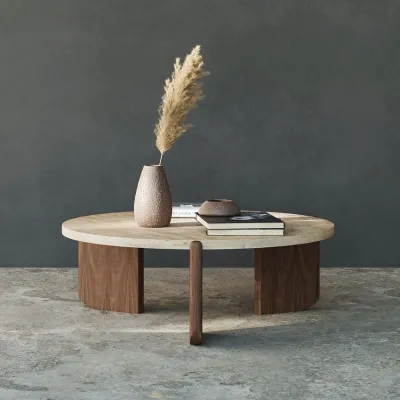





Prices are valid at publication and may change. Please refer to the product page for the latest price.
Marble Coffee Table Styles That Fit a Minimalist Space
Selecting the right structural style for your marble coffee table involves analyzing the architectural lines of your living room. Modern minimalist spaces often feature a mix of rigid, linear elements—such as rectangular modular sofas and sharp window frames—and softer, organic textures. The coffee table you choose can either reinforce these clean, straight lines or introduce a gentle contrast to soften the overall look.

The primary style categories for minimalist marble tables generally fall into three design languages: solid monolithic blocks, mixed-material frames with slender bases, and organic curved silhouettes. Each of these styles interacts differently with light, space, and surrounding furniture. Understanding how these forms function structurally and visually will help you choose a piece that harmonizes with your existing layout rather than competing with it.
Monolithic and Geometric Block Designs
Monolithic marble coffee tables, often designed as solid cubes, rectangular plinths, or low cylinders, represent the pinnacle of architectural minimalism. These pieces celebrate the raw, uninterrupted mass of the stone, creating a powerful sense of permanence and stability in a room. Because they feature continuous marble surfaces on all visible sides, they showcase the natural veining patterns across multiple planes, making them look like functional sculptures.
These block designs perform exceptionally well in spacious, open-plan living rooms where they have ample clearance on all sides. When placed in a large room, a low-profile marble plinth anchors the seating arrangement without blocking sightlines, preserving the airy feel of the space. However, monolithic designs come with distinct practical limitations. Their solid construction makes them incredibly heavy, which can complicate home delivery, especially in high-rise apartments where lift dimensions and doorway clearances are tight. Additionally, their lack of under-table clearance means they block light and floor visibility, which can make smaller rooms feel more enclosed. If you opt for a geometric block, ensure you have a permanent spot for it, as moving it for cleaning or rearranging is a multi-person task.
Mixed-Material Designs with Slender Bases
For living rooms where space is at a premium or where a lighter aesthetic is preferred, mixed-material marble coffee tables offer an elegant solution. These designs pair a relatively thin marble top with a slender, minimalist base made from materials like powder-coated steel, brushed brass, or slim timber frames. By elevating the heavy stone slab on a delicate structure, these tables create a striking ‘floating’ effect that reduces the overall visual bulk of the piece.
The open space beneath a slender-legged table allows light to pass through and keeps the floor visible, which visually expands the footprint of the room. When selecting a mixed-material design, pay close attention to the structural integrity of the base. Because marble is exceptionally heavy, the frame must be engineered to distribute weight evenly and prevent any wobbling or tipping. Look for high-quality welded joints in metal frames or robust joinery in wooden bases. The contrast between the cool, smooth marble surface and a matte black steel or warm brushed brass base adds depth to a minimalist color scheme without relying on superficial decoration.
Organic and Curved Silhouettes
While linear designs are a staple of modern minimalism, an entirely angular room can sometimes feel clinical or rigid. Introducing organic and curved marble coffee tables—such as round, oval, kidney, or pebble-shaped designs—is an excellent way to soften the sharp edges of modular sofas and rectangular rugs. The gentle curves invite movement around the seating area, making the layout feel more fluid and welcoming.
When choosing a curved marble table, the treatment of the stone’s edge is just as important as its overall shape. For a minimalist look, prioritize smooth, eased, or bullnose edges over complex, multi-tiered beveled cuts. An eased edge maintains a clean, modern profile while removing the sharpness of a raw cut. Additionally, keeping curved tables relatively low to the ground helps them remain visually grounded, ensuring that the organic silhouette integrates seamlessly with low-slung, contemporary furniture.
Selecting Marble Finishes and Veining for Visual Restraint
The visual impact of a marble coffee table is heavily influenced by its surface finish and the intensity of its natural veining. In minimalist interiors, where the goal is to create a calm and cohesive environment, selecting the right finish and pattern is critical to avoiding visual clutter.
The two primary finishes for marble are polished and honed. A polished finish offers a high-gloss, reflective surface that highlights the depth of the stone’s colors and patterns. While beautiful, polished marble can create harsh glare under bright overhead lighting or direct sunlight, which can disrupt the serene atmosphere of a minimalist room. Furthermore, polished surfaces are highly susceptible to showing scratches, dust, and fingerprints. A honed finish, on the other hand, provides a smooth, matte surface that diffuses light softly. This matte appearance aligns perfectly with the understated elegance of minimalist design and is much more forgiving when it comes to daily wear and minor etch marks.
When it comes to veining, restraint is key. High-contrast, dramatic veining patterns can easily dominate a room, turning the coffee table into a loud focal point that clashes with other minimalist elements. Instead, look for marbles with subtle, low-contrast veining, where the lines gently blend into the background color of the stone. Classic white marbles with soft grey veining, or muted beige and grey varieties, offer just enough natural texture to be interesting without becoming distracting. For homes with a darker, moodier minimalist aesthetic, deep charcoal or black marbles with very fine, sparse white veins can create a sophisticated, grounded look.
Sizing and Proportions for a Balanced Layout
Even the most beautiful marble coffee table will fail to complement a minimalist living room if its proportions are incorrect. Achieving a balanced layout requires careful measurement of both the physical footprint and the vertical lines of your seating area.
Start by calculating the clearance around the table. To ensure comfortable movement and easy access to the sofa, maintain a distance of 30 to 45 centimeters between the edge of the coffee table and the front of the sofa cushions. This spacing provides enough legroom while keeping the table within easy reach for placing drinks or books. Additionally, ensure there is at least 60 to 75 centimeters of clearance between the table and any surrounding walkways or media consoles to prevent traffic bottlenecks.
The height of the coffee table is another critical factor in maintaining the clean horizontal sightlines characteristic of minimalist design. Ideally, the top of the marble table should sit at the same height as, or slightly lower than, the seat cushions of your sofa—typically between 35 and 45 centimeters from the floor. A table that is too tall breaks the low-profile flow of modern furniture, while one that is too low can be awkward to use. Before making a purchase, map out the proposed dimensions on your living room floor using painter’s tape to visualize how the piece will interact with your existing furniture and flow.
Pre-Purchase Checks and Long-Term Care Requirements
Owning a marble coffee table is a commitment to preserving a natural, living material. Because marble is a metamorphic rock composed primarily of calcium carbonate, it is naturally porous and highly sensitive to acids and moisture. To ensure your table remains a pristine centerpiece for years to come, several pre-purchase checks and maintenance routines must be established.
Before finalizing your purchase, verify the manufacturer’s specifications regarding factory sealing. A high-quality penetrating sealer should be applied to fill the stone’s pores, providing a temporary barrier against liquid absorption. Keep in mind that sealing does not make marble completely stain-proof; it merely buys you time to wipe up spills before they penetrate the surface.
For heavy monolithic block tables, consider the structural load on your flooring. Solid stone pieces can exert significant concentrated pressure on a small area. If you have hardwood, laminate, or luxury vinyl tile flooring, place heavy-duty felt pads or a thick area rug beneath the table’s base to distribute the weight and prevent deep scratches or indentations.
Daily care for a marble table is straightforward but requires consistency. Always use coasters under glasses, mugs, and bottles to prevent water rings and condensation damage. Avoid placing hot items directly on the stone surface; use trivets or decorative trays instead. When cleaning, steer clear of generic household glass cleaners, vinegar, lemon juice, or any abrasive scrubbing pads, as these acidic substances will chemically react with the marble, causing permanent dull spots known as etching. Instead, use a soft microfiber cloth dampened with warm water and a mild, pH-neutral soap specifically formulated for natural stone. Wipe the surface dry immediately after cleaning to prevent water spots.
Frequently Asked Questions (FAQ)
Is marble too visually heavy for a small minimalist living room?
No, marble can work beautifully in smaller spaces if you select the right design. To keep the room feeling airy, avoid solid block designs and instead choose a round or oval marble table with a slender, open metal base. This allows light to pass through and keeps more of the floor visible, reducing the visual footprint. Alternatively, you can opt for a nested set of two smaller tables; these offer flexible surface area and can be partially stacked together to save space when not in use.
How do I protect a marble coffee table from daily wear and stains?
Protecting your marble table requires a combination of preventative habits and regular maintenance. Ensure the table is sealed upon arrival, and plan to reapply a high-quality stone sealer every six to twelve months, depending on usage. Always use coasters, placemats, or low-profile decorative trays to create a physical barrier against spills and hot items. Clean up any spills—especially acidic liquids like coffee, tea, wine, or citrus juices—immediately with a soft cloth. For daily cleaning, use only warm water and a pH-neutral stone cleaner, avoiding any abrasive or acidic household chemicals.
Community discussion
Share your experience or ask a question. Comments are reviewed before publication.