
Quick Answer: How the m57c Stacks Up
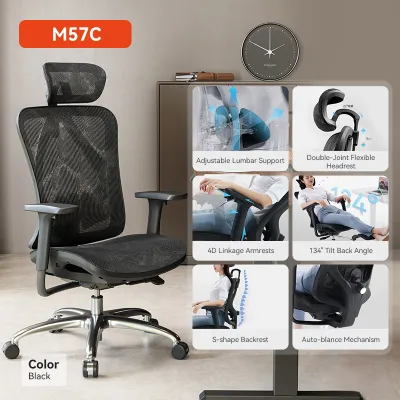
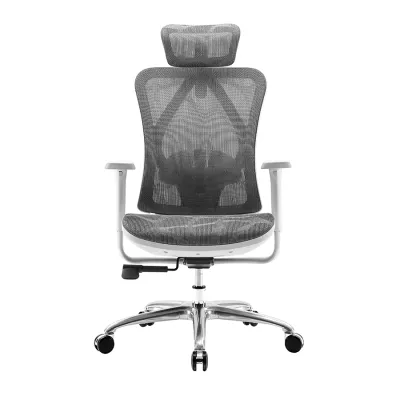
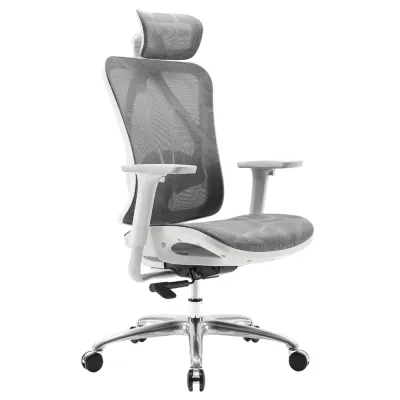
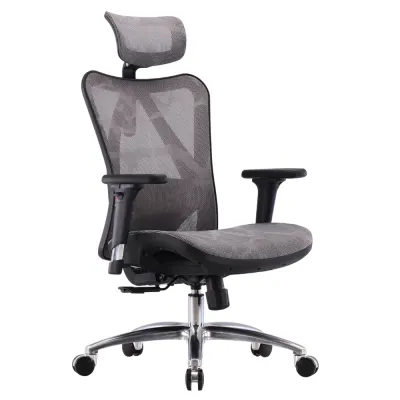
The m57c ergonomic office chair represents a highly competitive option within the mid-range seating segment, which typically spans the S$200 to S$400 price bracket in Singapore. It distinguishes itself by offering a full-mesh design, an adjustable lumbar support system, and multi-directional armrests—features that are often compromised or entirely absent in entry-level models. For professionals seeking a highly breathable chair that mitigates heat buildup during long working hours, this model provides an excellent baseline of ergonomic utility without requiring the premium investment associated with high-end corporate seating.
However, choosing the m57c involves clear trade-offs when compared to other mid-range alternatives. While its structural frame and mesh tension are robust for daily use, it lacks some of the highly customized micro-adjustments found in slightly more expensive competitors, such as an independent seat depth slider or a fully synchronized tilt mechanism that mimics the body’s natural pivot points. The value of this chair is therefore highly conditional; it offers outstanding utility if its default physical proportions match your body shape, but may fall short if you require specialized orthopedic adjustments or a plush, padded seating surface.
Key Comparison Dimensions Against Similarly Priced Chairs
Navigating the mid-range ergonomic chair market requires a systematic evaluation of physical components. To determine whether the m57c or a competing model will better support your daily routine, you must analyze how these products perform across three critical structural dimensions: lumbar support adjustability, seat material performance, and overall chassis stability.
Products mentioned in this guide
Prices are valid at publication and may change. Please refer to the product page for the latest price.

Lumbar Support and Adjustability
Proper lumbar support is the foundation of any ergonomic chair, as it maintains the natural inward curve of the lower spine during extended sitting. The m57c typically utilizes a dedicated, externally mounted lumbar support module that adjusts both vertically and horizontally. This dual-axis adjustment allows you to control not only where the support contacts your back, but also the depth of the pressure applied to your lumbar spine. In contrast, many competing chairs in this price tier rely on a simple integrated backrest curve or a basic height-only adjustable plastic band, which can feel flat or fail to provide sufficient forward protrusion for users with deeper spinal curves.
To determine if this mechanism will work for your body, you must verify the physical adjustment ranges against your own anatomy. Sit upright against a flat wall and measure the distance from the seating surface to the natural curve of your lower back, which corresponds to the L1 to L5 vertebrae. Compare this measurement with the manufacturer’s specified travel range for the lumbar support. If a chair’s lumbar pad cannot be aligned precisely with this zone, it will press against your thoracic spine or your sacrum, which can lead to muscle fatigue and slouching.
Furthermore, consider the mechanism’s stiffness and stability. Some mid-range competitors feature dynamic, spring-loaded lumbar systems that automatically adjust to your weight as you recline. While dynamic systems offer convenience for shared workspaces, they often lack the firm, locked-in support that a manual dial-in system like the m57c provides. If you prefer a highly rigid support that does not yield when you lean back, a manual lock-in mechanism is generally superior, whereas dynamic systems are better suited for users who constantly shift positions throughout the day.
Seat Comfort and Material Breathability
In warm and humid climates like Singapore, seat material selection plays a massive role in long-term comfort. The m57c features a full-mesh seat and backrest, which maximizes airflow and prevents the heat and moisture retention typical of traditional polyurethane foam cushions. However, mesh performance is not uniform across all brands. High-quality mesh must balance elasticity with high tensile strength to distribute your body weight evenly across the seat pan without stretching out of shape over time.
When evaluating a mesh seat, look closely at the frame design and edge profile. The m57c incorporates a pronounced waterfall front edge, which curves downward at the front of the seat pan. This design is critical because it relieves pressure on the popliteal fossa—the area behind your knees—thereby maintaining healthy blood circulation to your lower legs. If a mesh chair lacks a proper waterfall edge or uses insufficient padding under the front edge of the frame, the rigid plastic border of the seat pan will press directly into your thighs, causing numbness or tingling during long sessions.
Conversely, many mid-range competitors opt for high-density molded foam seats covered in fabric. Foam cushions provide a highly consistent, plush surface that eliminates the risk of frame pressure points, making them a preferred choice for individuals who find full-mesh seats too firm or restrictive. However, foam acts as an insulator, trapping body heat and potentially causing discomfort in non-air-conditioned environments. If you decide on a foam-based competitor, verify that the manufacturer uses high-density, cold-cured foam rather than low-density cut foam, as cold-cured variants retain their structural integrity and supportive properties for significantly longer periods.
Build Quality, Stability, and Weight Capacity
An ergonomic chair’s long-term durability is determined by its base materials, cylinder classification, and frame construction. The m57c is generally constructed with a reinforced nylon or aluminum alloy base, paired with a heavy-duty gas lift cylinder. When comparing this to other mid-range options, always check the gas lift class on the official product specification sheet. A Class 4 gas lift is the industry standard for safety and durability in this price tier, offering thicker steel walls and better pressure seals than lower-class cylinders, which can fail prematurely and lose their height-adjustment capabilities.
Weight capacity is another vital indicator of structural integrity. While a higher weight rating (such as 120kg to 150kg) suggests robust construction, you should never assume a chair is suitable for your body weight based on price alone. Always verify the manufacturer’s official weight limits and check for industry safety certifications, such as BIFMA or TUV, which confirm that the chair has undergone rigorous load-bearing and cycle testing. A sturdy base paired with high-quality casters ensures smooth movement and prevents the chair from tipping when you fully recline.
Beyond weight capacity, you must perform a spatial compatibility check before finalizing your purchase. Measure your available floor space, the width between your desk legs, and the height of your desk surface. Pay close attention to the armrest height range; if the armrests cannot be lowered sufficiently to slide underneath your desk, you will be forced to sit further away from your screen, which can cause you to lean forward and strain your neck. Additionally, verify that the caster material is compatible with your flooring. Hard nylon casters are ideal for carpeted areas, but if your home office has vinyl, laminate, or parquet flooring, you should look for soft polyurethane (PU) coated casters to prevent surface scratches.
Evaluating the Price-to-Value Ratio
To understand the true value of the m57c, it is helpful to analyze what features are typically included in this price bracket and what premium features are sacrificed. Understanding these boundaries prevents post-purchase regret and helps you allocate your budget effectively.
In the S$200 to S$400 mid-range tier, manufacturers must make strategic component choices to keep prices competitive. The table below outlines the typical feature differences you will encounter when comparing a standard mid-range chair like the m57c against premium ergonomic models:
| Feature | Typical Mid-Range Tier (e.g., m57c) | Premium Tier (S$800 and above) |
|---|---|---|
| Tilt Mechanism | Standard tilt with multi-position lock | Synchronized tilt with tension control and forward tilt |
| Seat Adjustability | Fixed seat depth (or basic manual slider) | Independent seat depth slider and tilt angle fine-tuning |
| Armrest Adjustments | 3D adjustments (height, angle, front-back) | 4D adjustments (including width and lateral pivot) |
| Frame Materials | Reinforced nylon polymer with steel inserts | Polished cast aluminum or magnesium alloy frames |
| Warranty Coverage | 1 to 3 years, often limited to specific parts | 10 to 12 years, comprehensive with on-site service |
By choosing a mid-range chair, you are primarily sacrificing advanced mechanical synchronization and premium structural materials. For example, a synchronized tilt mechanism in a premium chair ensures that as you recline, the seat pan tilts at a smaller ratio (usually 2:1) compared to the backrest. This keeps your feet flat on the floor and maintains constant lumbar alignment. Mid-range models often use simpler tilt-lock systems where the angle between the seat and backrest remains relatively fixed, which can cause your knees to rise slightly as you lean back.
To assess the price-to-value ratio accurately in Singapore, you must look beyond the initial sticker price on online marketplaces. Factor in the total cost of ownership, which includes shipping fees, assembly charges, and local warranty support. Some local retailers import these chairs directly and offer local warranties, assembly services, and showroom testing, which adds significant value. Conversely, buying a parallel-imported model directly from overseas storefronts may save you money upfront, but can leave you without recourse if a critical component like the gas lift or mesh frame fails within the first year.
Decision Framework: Choose the m57c or Look Elsewhere?
To simplify your buying decision, use the following conditional guidelines to determine if the m57c is the correct fit for your home office or if you should explore alternative models.
- Choose the m57c if:
- You work in a warm, non-air-conditioned room and require a full-mesh design to maximize airflow and prevent sweating.
- Your body proportions fall within average height and weight ranges, allowing you to sit comfortably without needing to adjust the seat depth.
- You want a firm, highly supportive lumbar pad that can be manually locked into a specific depth and height.
- You are working with a strict budget of under S$400 and want a proven model with reliable local distributor options in Singapore.
- Choose a different mid-range alternative if:
- You have very long or very short legs and require an independent seat depth slider to ensure your thighs are fully supported without the seat frame pressing into the back of your knees.
- You prefer the soft, conforming feel of a high-density memory foam cushion over the suspended tension of a mesh seat.
- You require highly customizable 4D armrests to align perfectly with specialized ergonomic keyboards, graphics tablets, or low-profile desks.
- You want a comprehensive, long-term warranty of five years or more that covers both the frame and the mesh material against sagging.
- Verify first if:
- Your body weight is close to the manufacturer's stated limit, as you will need to confirm the exact gas lift class and base material of the specific batch being sold.
- The retailer's purchase price includes professional assembly, or if you will need to supply your own tools and spend time assembling the complex multi-bolt frame yourself.
- The seller's return policy allows you to test the chair and return it if it does not suit your posture, or if they charge substantial restocking and return shipping fees.
Frequently Asked Questions (FAQ)
Is the m57c suitable for long hours of working from home?
The suitability of the m57c for extended working hours depends on how well its fixed dimensions align with your body shape. To ensure comfort during long sessions, you must verify that the chair allows your feet to rest flat on the floor while maintaining a two-inch gap between the front edge of the seat and the back of your knees. While the highly breathable mesh and adjustable lumbar support are designed to reduce fatigue, no chair can prevent physical strain if your overall desk setup is incorrect. You must pair the chair with a desk at the correct height, position your monitor at eye level, and take regular standing breaks to encourage circulation and muscle recovery.
How do I verify the warranty and return policy before buying?
Before completing your purchase on any online marketplace or local retail site, navigate to the seller’s profile or the official brand page to locate the specific warranty terms. Carefully check which components are covered under the warranty, as manufacturers often offer different coverage lengths for the structural frame, the mesh material, and the mechanical gas lift. Additionally, read the return policy terms to determine who covers the cost of return shipping for bulky furniture items. Keep all original packaging, box inserts, and assembly tools intact until you have used the chair for several days, as most retailers require items to be returned in their original packaging to qualify for a full refund.
Community discussion
Share your experience or ask a question. Comments are reviewed before publication.