
Choosing between loft bed stairs and a ladder is one of the most critical decisions parents face when configuring a child’s bedroom. While both access methods serve the same basic purpose, they present distinct physical demands, safety profiles, and spatial requirements. Stairs generally offer a more stable, wider foot placement and integrated hand support, making them highly suitable for younger children who are still developing their motor skills. Ladders, on the other hand, require greater vertical coordination and grip strength, but they offer a highly compact footprint that is ideal for smaller rooms.
To make an informed choice, parents must evaluate their child’s current developmental stage, physical coordination, and the specific layout of the bedroom. Balancing these factors ensures that the selected loft bed remains a safe, functional, and comfortable space for sleep and play. By understanding the structural and ergonomic differences between these two options, you can select the setup that best supports your child’s daily routine.
Key Safety Differences Between Stairs and Ladders
The fundamental difference between stairs and ladders lies in how they support a child’s body weight and center of gravity during ascent and descent. Stairs feature wide, flat horizontal steps—often referred to as treads—that allow a child to place their entire foot flat on the surface. This design distributes body weight evenly and provides a highly stable foundation, which significantly reduces the likelihood of slipping or losing balance.
Products mentioned in this guide
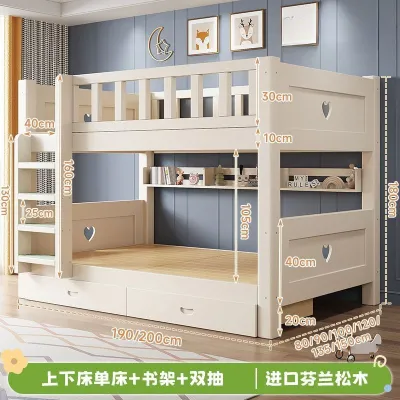
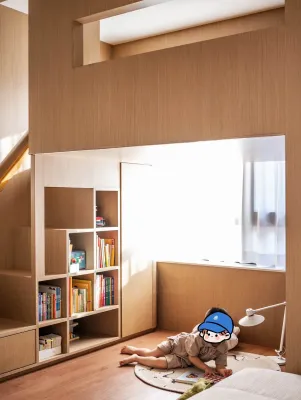



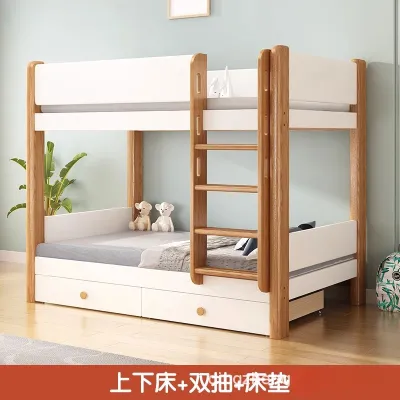
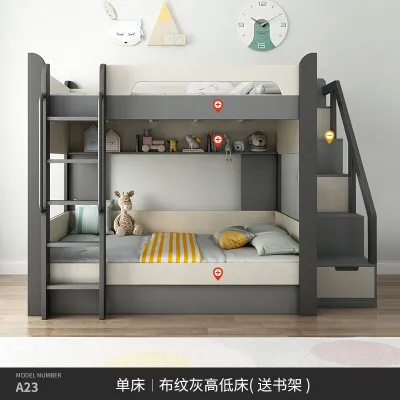
Prices are valid at publication and may change. Please refer to the product page for the latest price.
In contrast, ladders utilize narrow, often rounded rungs that only support the midfoot or forefoot. This limited surface area requires a child to balance on a much smaller point of contact, increasing the physical effort needed to remain stable. When climbing a ladder, a child must rely heavily on their grip and upper-body strength to maintain three points of contact at all times, which can be challenging during rapid movements.
Hand support systems also differ dramatically between the two designs. Staircases designed for loft beds typically include dedicated, continuous handrails that run parallel to the steps at an accessible height. These handrails allow children to maintain a steady, upright posture while holding on with a natural grip. Ladders, however, require children to grip the vertical or slightly angled side rails, which forces a more forward-leaning posture and demands continuous, coordinated hand-over-hand movement.
The angle of ascent is another critical factor influencing fall risks. Loft bed stairs are built at a gentle incline, usually under 45 degrees, which keeps the child’s center of gravity positioned safely over their feet. Ladders are positioned much closer to the vertical plane, often at angles between 70 and 90 degrees. This steep incline shifts the child’s center of gravity outward, meaning any slip or loss of grip is more likely to result in a direct fall to the floor rather than a minor stumble on a step.
Age and Mobility Guidelines for Access Methods
When assessing safety, age is a primary indicator of a child’s readiness for different climbing structures. Most furniture safety standards and manufacturers recommend that loft beds and top bunks should not be used by children under six years of age, regardless of whether the bed uses stairs or a ladder. Before purchasing, always locate the manufacturer’s safety label on the bed frame to verify the specific age and weight limits designated for that model.

Beyond chronological age, individual motor skills and physical coordination are highly reliable indicators of readiness. Parents should observe how their child navigates standard household staircases and playground climbing equipment. A child who still struggles with alternating feet on regular stairs, or who hesitates on playground ladders, is likely not ready for a vertical loft bed ladder and would benefit from the wider, more forgiving steps of a staircase.
Spatial awareness and balance also play a major role in safe navigation, particularly during the night. Children often wake up groggy, disoriented, or needing to use the bathroom in the dark. Navigating a steep, narrow ladder in a semi-conscious state carries a much higher risk of missteps than walking down a set of wide stairs. If your child frequently wakes up during the night, stairs paired with motion-activated low-level lighting can provide a much safer path of travel.
Space, Layout, and Room Constraints
While safety is the top priority, the physical dimensions of the bedroom will heavily influence which access method is feasible. Staircases require a substantial amount of floor space because their gentle incline forces them to project far outward from the bed frame. Parents must carefully measure the room’s finished dimensions to ensure that a staircase model will not block doorways, wardrobe doors, or natural walkways.
Ladders offer exceptional placement flexibility and are highly favored in compact living spaces, such as urban apartments where floor area is limited. A vertical ladder takes up virtually no additional floor space beyond the bed frame itself, while an angled ladder requires only a small clearance zone at the base. Many ladder designs are also removable or can be hooked onto different sides of the bed, allowing you to adapt the layout as your storage or study needs change.
Regardless of the access method you choose, establishing a safe clearance zone around the climbing area is essential. There should be a completely unobstructed landing space at the bottom of the stairs or ladder, free from other furniture, toys, or sharp corners. If a child does slip, a clear landing zone prevents secondary injuries caused by colliding with nearby objects. Additionally, ensure the bed’s placement allows for easy delivery and assembly, with adequate clearance from ceiling fans and light fixtures.
Essential Safety Features to Verify Before Buying
Before finalizing your purchase, it is crucial to inspect the specific construction details of the loft bed to ensure it meets rigorous safety standards. For stairs, verify that each tread is deep enough to accommodate a child’s foot comfortably and features an anti-slip surface, such as grooved wood, rubber grip strips, or low-pile carpeting. Check that the steps are securely bolted to the main frame rather than held in place by simple wood screws, which can loosen over time.
For ladders, inspect the rungs to ensure they are wide enough to provide a secure foothold and are spaced evenly apart. Avoid ladders with perfectly smooth, polished metal or wooden rungs, as these can become incredibly slippery when a child is wearing socks. Look for textured surfaces or built-in grooves that provide traction. The ladder must also feature a robust anchoring system, such as heavy-duty metal brackets or locking bolts, to prevent it from shifting or detaching during use.
Guardrails and handrails must integrate seamlessly with the bed frame to eliminate any hazardous gaps. Check that the handrails on a staircase are sturdy, wobble-free, and sized appropriately for small hands to grip firmly. The top of the staircase or ladder must transition into the upper guardrails without leaving openings wider than 90 millimeters, which prevents accidental entrapment of a child’s head or limbs. Finally, review the manufacturer’s maximum load capacity for both the bed and the climbing structure to ensure it can safely support your child and any temporary additional weight during storytime.
Decision Framework: Which Access Method Fits Your Child?
To determine the best configuration for your home, use this straightforward decision framework based on your child’s needs and your room’s physical layout:
- Choose stairs if: Your child is on the younger side of the age recommendation (around six to eight years old), is still developing consistent physical coordination, or frequently wakes up during the night. Stairs are also the ideal choice if your bedroom layout has ample floor space and you want to utilize the under-stair area for integrated storage drawers or shelving.
- Choose a ladder if: Your child is older, highly coordinated, and demonstrates excellent balance on playground equipment. Ladders are also the practical choice if you are working with a highly compact bedroom where maximizing floor space for a desk or play area is a necessity.
- Verify first if: The loft bed frame you are considering supports convertible options. Some modular furniture systems allow you to start with a staircase assembly and later convert to a space-saving ladder as your child grows and gains climbing confidence. Always check that any conversion kits are officially approved and supplied by the original manufacturer to maintain structural integrity.
Frequently Asked Questions (FAQ)
Can I convert a loft bed ladder to stairs later?
Whether you can convert a ladder to stairs depends entirely on the design and brand of the loft bed. Some modular children’s furniture systems are specifically engineered to be customizable, allowing you to purchase a matching staircase unit that bolts directly into the existing frame. However, many standard loft beds are sold as fixed, single-configuration units that cannot be modified.
Attempting a do-it-yourself conversion on a non-modular bed is highly discouraged. Modifying the frame with unapproved aftermarket parts or custom woodwork can compromise the structural integrity of the bed, alter the weight distribution, and void the manufacturer’s warranty. Unofficial modifications also risk creating non-compliant gaps that pose entrapment or fall hazards, so it is always best to purchase a certified modular system if you plan to upgrade the access method later.
Are angled ladders safer than vertical ones?
Angled ladders generally offer a safer and more comfortable climbing experience than vertical ladders. The slight incline of an angled ladder allows a child to maintain a more natural center of gravity, keeping their body weight distributed over their feet rather than relying almost entirely on upper-body strength to pull themselves upward. This makes ascending and descending feel much more secure for a developing child.
However, angled ladders do require more floor space than vertical models, as the base of the ladder extends outward from the bed frame. When choosing an angled ladder, it is vital to check the anchoring mechanism. Ensure the ladder is securely bolted to the top rail of the bed and features non-slip rubber feet at the base to prevent the ladder from sliding outward on smooth flooring surfaces like polished wood or tile.

Community discussion
Share your experience or ask a question. Comments are reviewed before publication.