
Choosing between a lift-up and a pull-out storage sofa bed for a small Singapore HDB bedroom comes down to a trade-off between vertical clearance and forward floor space. There is no single option that works for every layout; instead, the right mechanism depends on your room’s physical boundaries, how often you plan to convert the sofa into a bed, and what you intend to store inside it.
How Lift-Up and Pull-Out Storage Mechanisms Work
To make an informed decision, it helps to understand how these two mechanisms operate mechanically. A lift-up storage sofa bed, often referred to as an ottoman style, uses gas struts or spring-loaded hinges to lift the entire seating platform upward. This action reveals a deep, continuous storage compartment that spans the entire footprint of the sofa base. Because the lifting mechanism supports the weight of the seat and mattress, it allows you to access the storage space without needing to roll anything across your floor.
In contrast, a pull-out storage sofa bed relies on a horizontal movement. This design typically features a trundle frame or independent storage drawers that slide out from the front of the sofa base on tracks, rails, or wheels. To access the storage or deploy the bed, you pull the lower section forward into the room. This horizontal motion means the storage compartments are often divided into drawers or shallower sections rather than one large, open cavity.
Products mentioned in this guide


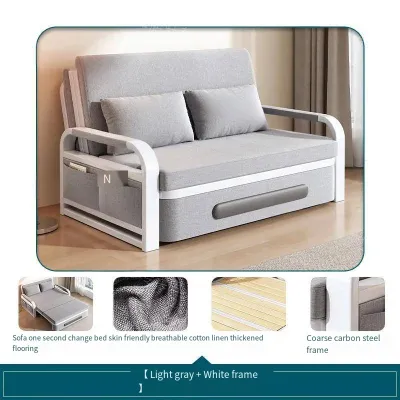
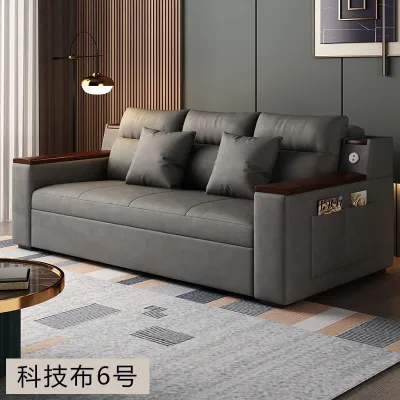
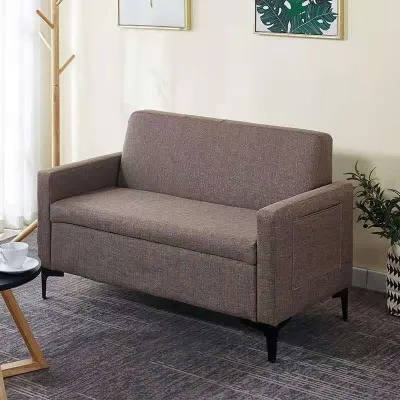
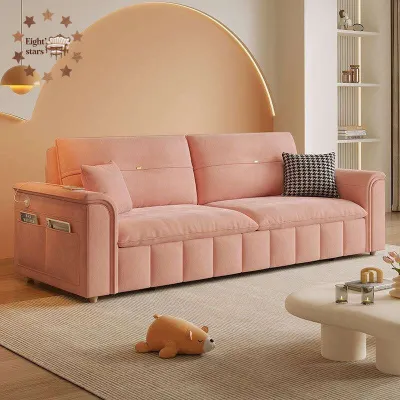
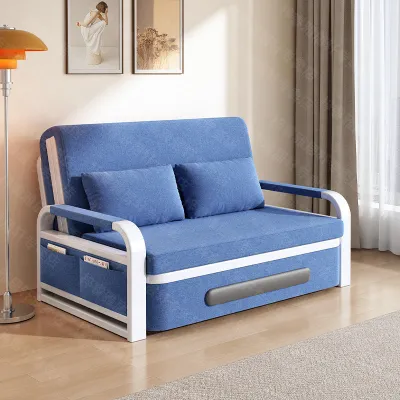
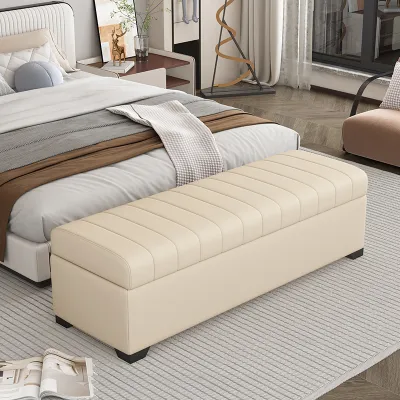
Prices are valid at publication and may change. Please refer to the product page for the latest price.
The choice of upholstery material also plays a significant role in how these mechanisms feel in daily use. Fabric upholstery, while comfortable and popular for HDB bedrooms, adds substantial weight to the moving parts. For a lift-up model, heavier fabric means the gas struts must work harder, and you will feel more resistance when initiating the lift. For a pull-out model, heavy fabric-wrapped panels require smooth tracks and sturdy wheels to prevent dragging or scraping against your flooring.
Space and Clearance Requirements for HDB Bedrooms
HDB bedrooms are known for their compact layouts, making precise spatial measurements essential before purchasing any multi-functional furniture. A lift-up sofa bed primarily demands vertical and overhead clearance. When the seat is raised, it swings upward and slightly backward, requiring clear space above the sofa. You must check that the fully extended height of the lift-up mechanism will not interfere with low-hanging ceiling fans, wall-mounted air conditioning units, or decorative wall lights.

A pull-out sofa bed, on the other hand, prioritizes forward floor clearance. When you pull the bed frame or drawers forward, they occupy a significant amount of floor space directly in front of the sofa. You must measure the distance from the back wall to the edge of the fully extended bed to ensure it does not block essential pathways. If the extended bed leaves no room to walk around, daily use can quickly become frustrating.
Beyond the footprint of the sofa itself, you must account for the swing radiuses of other bedroom fixtures. Ensure that neither mechanism, when fully deployed or opened, blocks the swing of your HDB bedroom door or built-in wardrobe doors. If your wardrobe has sliding doors, check that the pulled-out bed frame does not sit so close that it prevents you from sliding the wardrobe panels open to access your clothes.
Wall proximity is another critical factor that is easily overlooked. Many lift-up storage sofa beds cannot sit completely flush against a wall. As the hinges rotate to lift the seat, the backrest or the rear edge of the seat cushion often tilts backward. Without a calculated gap between the sofa frame and the wall, the fabric can rub against the wall surface, leading to unsightly scuffing, fabric pilling, or even binding of the metal hinges.
Daily Usability and Bedding Management
The effort required to convert your sofa bed and manage your bedding depends heavily on how you plan to use the room. If the sofa bed serves as a primary bed used every night, physical conversion effort is a major consideration. Pull-out mechanisms generally require less lifting force because the weight is supported by wheels or tracks rolling along the floor. This horizontal glide makes daily setup and pack-away manageable for most users without putting strain on the back.
Lift-up mechanisms require you to lift the weight of the seat cushion, fabric upholstery, and any bedding left on top. While gas-assist struts reduce the physical effort, you still need to initiate the upward pull and pull the frame back down to close it. If you plan to access the storage compartment daily, this repetitive lifting can become tedious, especially if the struts are stiff or if you have physical limitations.
However, when it comes to storage capacity, lift-up models offer a clear advantage for bedding management. The deep, continuous cavity beneath a lift-up sofa is ideal for storing bulky items like thick duvets, winter blankets, and large sleeping pillows. Because the compartment is unified, you do not have to fold or compress your bedding excessively to make it fit.
Pull-out storage is typically much shallower and often divided into separate drawers or compartments to accommodate the sliding frame. This design is highly practical for storing bed sheets, pillowcases, or thin blankets, but it may struggle to fit a plush duvet. If you choose a pull-out model, you may need to store your larger pillows and duvets elsewhere in the room, or use vacuum-sealing bags to compress them before sliding the drawers shut.
Durability, Weight, and Maintenance Checks
To ensure your storage sofa bed remains functional for years, you must inspect specific structural components before making a purchase. For lift-up models, the gas struts and hinges are the most critical failure points. You should check the manufacturer’s specifications for the weight rating of the struts to ensure they are designed to handle the weight of the specific fabric and mattress. Struts that are rated too low will lose their lifting power quickly, causing the heavy seat to slam shut or require excessive manual lifting.
For pull-out models, the durability of the tracks, rails, and wheels is paramount. Inspect the smoothness of the sliding mechanism in the showroom or check the product specifications. The wheels or glides must have a load capacity that can handle both the weight of the frame and the weight of anyone sitting or sleeping on it. If you have hard flooring like vinyl, laminate, or parquet in your HDB bedroom, verify that the wheels are made of a non-marking material to prevent scratches.
Fabric wear is another important maintenance check for both types of sofa beds. Because these pieces of furniture fold, slide, and compress, the fabric upholstery is subjected to friction at various contact points. Examine how the fabric folds when the sofa is converted or opened. If the fabric rubs tightly against metal hinges, wooden frames, or other upholstered panels during operation, it can lead to premature pilling, thinning, or tearing.
Look for models that feature protective fabric guards or have clearance gaps designed into the moving joints. Regular maintenance, such as vacuuming the tracks of a pull-out sofa to remove dust and lint, or checking that the hinge bolts on a lift-up model remain tight, will extend the lifespan of your furniture. Taking a few minutes to inspect these details helps prevent mechanical alignment issues down the road.
Decision Framework: Choosing the Right Sofa Bed
To finalize your choice, evaluate your bedroom’s physical layout alongside your daily routine. A lift-up storage sofa bed is the ideal choice if your primary goal is to maximize storage space for bulky items like seasonal bedding, extra pillows, or luggage. This mechanism is highly suited for rooms that have limited forward floor space but plenty of vertical clearance. Because the storage is accessed from above, you do not need to worry about clearing a wide path on the floor in front of the sofa every time you want to open it.
Conversely, a pull-out storage sofa bed is the better option if you plan to convert the sofa into a bed on a daily or frequent basis. The horizontal sliding motion requires less physical effort, making the transition quick and easy. This design is perfect for bedrooms that have ample floor space in front of the sofa but may have low ceilings, overhead fans, or wall decorations that would obstruct a lift-up mechanism.
Before making any purchase, always verify the specific dimensions and clearance requirements of the model you are considering. Measure your HDB bedroom’s narrowest walkways, the height of your ceiling fans, and the swing path of all doors. Consult the manufacturer’s product manual or specification sheet to confirm the exact clearance distances required for both the closed and fully deployed positions. Taking these measurements beforehand ensures your new storage sofa bed fits seamlessly into your home.
Frequently Asked Questions (FAQ)
Can I install a lift-up storage sofa bed directly against the wall?
Most lift-up storage sofa beds cannot be installed completely flush against a wall. As the lifting mechanism operates, the backrest or the rear edge of the seat cushion typically pivots backward slightly before moving upward. If there is no clearance gap, the fabric will rub against the wall, causing friction damage, scuffing, or hinge binding. It is recommended to leave a small gap behind the sofa, as specified in the product’s installation manual, to allow the mechanism to move freely without touching the wall.
Do pull-out sofa beds offer enough storage for thick blankets?
Pull-out sofa beds generally feature shallower storage compartments or drawers compared to the deep, continuous cavities found in lift-up models. While they are excellent for sheets, pillowcases, and thin blankets, they may not easily accommodate thick, fluffy duvets or winter blankets. If you choose a pull-out model and need to store bulky bedding, consider using vacuum storage bags to compress the items first, or roll them tightly to fit within the drawer’s height limits.

Community discussion
Share your experience or ask a question. Comments are reviewed before publication.