
Selecting the ideal ergonomic seating for your home workspace requires a careful balance of physical support, material durability, and financial investment. When comparing a libernovo chair to other prominent office chair brands available in Singapore, there is no single option that universally suits every individual. The right decision depends heavily on your unique body proportions, daily usage patterns, and the specific environmental conditions of your study or home office.
A libernovo chair can serve as an appropriate choice if you are seeking standard ergonomic adjustability and modern design aesthetics within a mid-range budget. However, if you require specialized heavy-duty support, clinical-grade orthopedic adjustments, or an extended local warranty backed by long-standing physical service centers in Singapore, alternative brands may better meet your needs. Rather than relying on brand names alone, matching verified technical specifications to your physical requirements is the most reliable way to secure long-term comfort.
Evaluating the Libernovo Chair and Alternatives Across Core Dimensions
To make an informed comparison between a libernovo chair and other market alternatives, you must analyze how each brand addresses the fundamental pillars of seating design. These pillars consist of ergonomic comfort, structural build quality, and overall value for money.
Products mentioned in this guide
![[Ready Stocks] LiberNovo Omni Pro | Worlds 1st Dynamic Ergonomic Chair](https://img.lazcdn.com/g/p/1448a4b586f3a401e0d865fbad69aa5d.jpg_400x400q80.jpg_.webp)
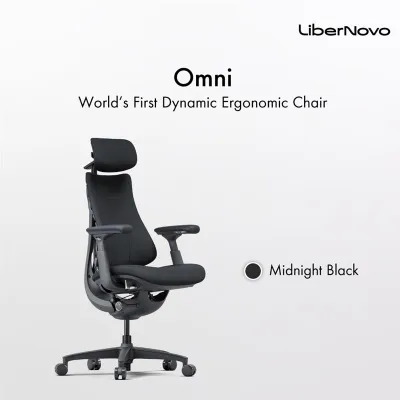
![[Ready Stocks] LiberNovo StepSync Footrest for Omni Pro](https://img.lazcdn.com/g/p/d7e0e560ecd31aa47b3e1a41db0dd23e.jpg_400x400q80.jpg_.webp)
Prices are valid at publication and may change. Please refer to the product page for the latest price.
Evaluating Ergonomic Comfort
Ergonomic comfort is determined by how effectively a chair supports the natural curvature of your spine and distributes your body weight during extended sitting sessions. When evaluating any office chair, the primary focus should be on the adjustability of the lumbar support mechanism, as this directly influences pelvic alignment and reduces lower back strain.
Look for chairs that offer both vertical and depth adjustments for the lumbar pad, allowing you to position the support precisely against your lumbar spine. A fixed or non-adjustable lumbar support can cause discomfort if your torso length deviates from the manufacturer’s default design profile.
Seat depth adjustment, often referred to as a seat slider, is another critical ergonomic feature that prevents pressure buildup behind your knees. Maintaining a gap of approximately two to three fingers between the front edge of the seat cushion and the back of your knees ensures optimal blood circulation in your legs.
Armrest adjustability also plays a significant role in preventing shoulder and neck tension. Highly adjustable armrests—moving in three or four dimensions (height, width, depth, and pivot angle)—allow you to rest your forearms comfortably while keeping your shoulders relaxed, regardless of your desk height.
In Singapore’s warm and humid tropical climate, the choice of backrest and seat material is highly consequential for daily comfort. Mesh backrests provide excellent ventilation by allowing air to circulate freely, which helps regulate body temperature in non-air-conditioned rooms.
In contrast, high-density molded foam cushions offer superior pressure distribution and support for your thighs and hips, though they tend to retain heat more than mesh. When comparing brands, consider whether a full-mesh design or a hybrid design featuring a mesh back and a foam seat aligns better with your personal comfort preferences and home cooling setup.
Assessing Build Quality and Durability
Structural durability determines whether an office chair remains supportive over several years of daily use or begins to sag, squeak, and wobble. Frame construction is the first indicator of longevity; look for reinforced fiberglass nylon or die-cast aluminum alloy frames rather than basic molded plastics.
The base of the chair, which bears the entirety of your weight, should ideally be constructed from heavy-duty aluminum or reinforced nylon with a wide diameter to prevent tipping. Check the manufacturer’s specifications for the maximum weight capacity and dynamic load limits to ensure the chair is rated for your body type.
The gas lift cylinder is the heart of the chair’s height adjustment mechanism and a critical safety component. Ensure any chair you consider utilizes a Class 3 or Class 4 gas lift certified by independent testing bodies such as BIFMA or TÜV, as these classes indicate thicker steel walls and higher pressure resistance.
Caster quality is also essential for smooth mobility and floor preservation. Hard nylon casters are standard but can cause micro-scratches on delicate hard flooring over time, whereas soft polyurethane-coated casters glide quietly and protect sensitive surfaces.
Finally, the structure of the manufacturer’s warranty serves as a practical indicator of brand confidence and product durability. When purchasing in Singapore, verify which components are covered under the warranty, as some brands offer long coverage on the structural frame but limit coverage on the mesh, foam, and gas lift to just one or two years.
Defining Value for Money
Value for money is not simply a matter of finding the lowest retail price; it is a calculation of the features provided relative to the purchase price and the expected lifespan of the chair. A low-cost chair that requires replacement after twelve months of use is ultimately more expensive than a mid-range chair that performs reliably for five years.
To determine true value, distinguish between essential ergonomic adjustments—such as lumbar support, seat depth, and tilt tension—and premium aesthetic upgrades like polished chrome bases or genuine leather upholstery. If a brand charges a premium primarily for visual design rather than functional adjustability, the practical value to your physical well-being may be limited.
Consider the long-term cost per use by dividing the purchase price by the warranty period. A S$400 chair backed by a five-year warranty costs S$80 per year of guaranteed operation, whereas a S$200 chair with a one-year warranty carries a higher annual cost risk.
Additionally, investigate the availability of replacement parts from the retailer or local distributors in Singapore. Brands that offer individual replacement casters, armrest pads, and gas lifts allow you to extend the life of your chair without needing to purchase an entirely new unit if a single component wears out.
Feature and Specification Checklist for Shoppers
Before finalizing your purchase of a libernovo chair or an alternative model, you should cross-reference the manufacturer’s technical specifications against your personal physical measurements and workspace dimensions. Use the following structured checklist to evaluate and compare models in a showroom or on online product pages:

- Seat Height Range: Verify that the minimum and maximum seat height allows your feet to rest flat on the floor while your knees maintain a 90-degree angle. Standard ranges typically span from 42 cm to 52 cm, but you must measure your desk height to ensure your forearms can rest parallel to the desktop.
- Seat Dimensions: Check the exact seat width and usable seat depth. A seat that is too wide may prevent you from using the armrests comfortably, while a seat that is too deep will prevent your back from contacting the lumbar support without causing pressure behind your knees.
- Backrest Height and Width: Ensure the backrest is tall enough to support your entire thoracic spine. If you prefer a chair with a headrest, verify that the headrest adjustability range aligns with your neck curve when sitting upright and when reclined.
- Recline and Tilt Lock Mechanism: Look for a mechanism that offers multiple tilt-lock positions or a synchro-tilt feature, where the backrest reclines at a 2:1 ratio relative to the seat pan. This movement keeps your feet flat on the floor and maintains proper spinal alignment as you stretch.
- Gas Lift Certification: Confirm that the gas lift is marked as Class 3 or Class 4 and carries BIFMA X5.1 certification. This ensures the cylinder has undergone rigorous safety and durability testing.
- Base Diameter and Material: Look for a base diameter of at least 650 mm to 700 mm to ensure stability when fully reclined. Aluminum bases offer superior tensile strength, while reinforced nylon bases provide a lighter weight profile with comparable durability if engineered correctly.
- Mesh Tensile Strength: If choosing a mesh chair, check if the manufacturer specifies the use of elastomeric mesh. Low-grade polyester mesh can stretch permanently over time, leading to a saggy seat that loses its ergonomic support.
- Armrest Adjustability Range: Measure the height range of the armrests to ensure they can slide under your desk when the chair is not in use, saving valuable floor space in smaller rooms.
Decision Framework: Choosing the Right Chair for Your Setup
To help you decide whether to purchase a libernovo chair or look toward alternative brands in Singapore, apply this targeted decision framework based on your specific requirements and constraints.
Choose Libernovo if:
- Your body dimensions fall within standard ranges (typically between 160 cm and 180 cm in height) and you do not require specialized bariatric support.
- You prefer a modern, minimalist design aesthetic that integrates cleanly into a contemporary home office environment without the bulky appearance of traditional office furniture.
- Your budget is positioned in the mid-range category, and you want a balanced combination of essential ergonomic adjustments—such as adjustable lumbar support and 3D armrests—without paying the premium prices associated with high-end global brands.
- You primarily use your home office for standard administrative work, study, or moderate gaming sessions rather than continuous, round-the-clock professional use.
Choose Competing Brands if:
- You require specialized orthopedic support, such as independent upper and lower thoracic tension adjustments or medical-grade pelvic support systems.
- Your physical profile requires a heavy-duty chair with a verified weight capacity exceeding 130 kg or a seat width broader than standard mid-range models.
- You prioritize a brand with a long-established history of physical showrooms in Singapore, where you can physically test and compare dozens of different ergonomic configurations before purchasing.
- You want an extended, comprehensive warranty of five to ten years that covers all functional components, including the mesh fabric and upholstery, with local on-site servicing.
Verify First if:
- You have pre-existing chronic back pain, herniated discs, or other spinal conditions. In these scenarios, consult a medical professional or physical therapist to identify the exact support features your body requires before relying on commercial marketing descriptions.
- Your home office desk is custom-built, exceptionally high, or exceptionally low. You must verify the chair's maximum armrest height and seat height to ensure proper alignment with your working surface.
- Your workspace is highly constrained. Measure the outer base diameter of the chair to ensure it can roll freely between desk legs and does not obstruct walkways when fully reclined.
Pre-Purchase Verification and Space Planning
Before placing an order for any office chair, you must conduct physical space planning to prevent delivery and installation issues within your Singapore residence. Measure the designated floor area in your study or bedroom, keeping in mind that an ergonomic chair requires a larger operational footprint than a standard dining chair.
Account for the maximum depth of the chair when the backrest is fully reclined and the seat slider is extended. Ensure there is at least 80 cm to 100 cm of clear space behind your desk to allow you to push back, turn, and stand up without striking walls, wardrobes, or other furniture.
If you reside in an HDB flat, condominium, or apartment with tight access routes, verify the dimensions of your building’s lift doors, common corridors, and your apartment’s main entryway. Most office chairs are delivered flat-packed in large cardboard boxes, but some premium options or assembly services deliver the chair fully constructed, which requires sufficient clearance through doorways.
Additionally, carefully review the retailer’s delivery, assembly, and return policies before completing your transaction. Confirm whether assembly is included in the purchase price or if it carries an additional service fee.
Understanding the return policy is particularly important when buying online without a physical trial. Verify if the retailer offers a risk-free trial period, who covers the cost of return shipping for bulky furniture, and whether restocking fees apply if the chair is returned after being unboxed and assembled.
Frequently Asked Questions (FAQ)
How do I test an office chair's lumbar support before buying online?
When physical testing is not possible, review the manufacturer’s technical drawings to find the exact vertical travel range and depth of the lumbar support protrusion. Look for verified customer reviews written by individuals of a similar height and weight to yours, paying close attention to comments regarding the firmness and positioning of the lumbar pad. Additionally, prioritize purchasing from retailers that offer a clear return or exchange policy, allowing you to test the support in your home environment and return the chair if it does not match your spinal curvature.
What floor protectors are needed for office chairs in HDB flats?
Most office chairs are equipped with hard nylon casters designed for low-pile carpets, which can easily scratch, scuff, or wear down the vinyl, laminate, or parquet flooring commonly installed in Singapore HDB flats. To protect your floors, check if the retailer offers soft polyurethane (PU) casters, which distribute weight more evenly and glide quietly on hard surfaces. Alternatively, you can place a dedicated polycarbonate or silicone chair mat beneath your workstation, or use slip-on silicone caster cups if you want to prevent the chair from rolling altogether on smooth tiles.

Community discussion
Share your experience or ask a question. Comments are reviewed before publication.