
Finding the perfect accent piece to complete your living room layout often comes down to the details, and choosing between a leather and a fabric pouf can quickly become a balancing act between tactile comfort, daily durability, and visual style. The right choice depends on your household’s daily habits, climate comfort preferences, and maintenance tolerance: leather offers sleek, structured durability and easy wipe-down cleaning, while fabric provides cozy warmth, breathable comfort, and a wide array of versatile textures. By evaluating how each material handles your home’s unique demands, you can select a piece that remains both functional and beautiful for years to come.
Which Pouf Material Provides Better Comfort and Breathability?
Fabric poufs generally offer superior breathability and a softer, more inviting initial feel, whereas leather poufs can retain body heat and feel somewhat sticky in warm, humid conditions unless your living space is consistently air-conditioned. In tropical climates like Singapore, the ambient temperature and humidity play a significant role in how materials feel against bare skin. Woven fabrics, particularly natural fibers like cotton or linen blends, allow air to circulate freely, preventing heat buildup when you rest your feet or sit for extended periods.
Leather, while luxurious and highly supportive, acts as an insulator. Genuine leather eventually adapts to your body temperature, but during the initial contact, it can feel cool, and over time, it may trap moisture if the room lacks proper ventilation. Faux leather options, such as polyurethane (PU), tend to have even lower breathability, making them prone to feeling warm during humid afternoons. If you prefer a leather look but worry about heat, placing the pouf in a well-ventilated area or directly under an air conditioning vent can help mitigate this temperature retention.
Products mentioned in this guide
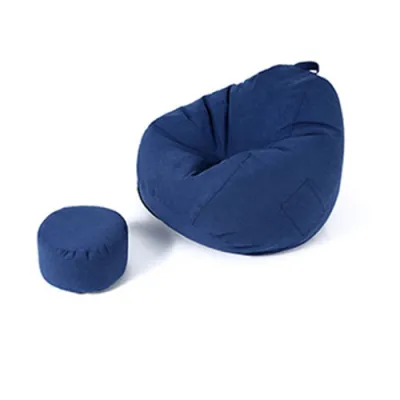
23 Lazada user ratings
Ordered 3 pieces of beanbags in 3 colors on 18/4, received them physically on 29/4. Actual colors are pretty close to the photos on the scre…Read full reviewShow less
Ordered 3 pieces of beanbags in 3 colors on 18/4, received them physically on 29/4. Actual colors are pretty close to the photos on the screen. Overall, aesthetically, I’m happy with what I got.
Stylish design,
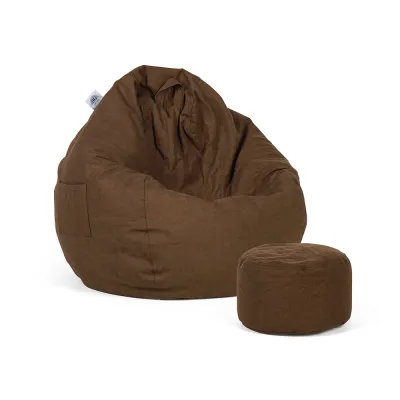
75 Lazada user ratings
another great bean bag, our 3rd crom SG bean, mostly use as a foot rest and even the cat loves it, great for small spaces
Nice colour. Adults will not get to rest your head on it so this is more suitable for kids.
In good condition, delivery is fast. Highly recommended , will order in future
Item as described. Fast shipping. Well packed. Satisfied with purchase.
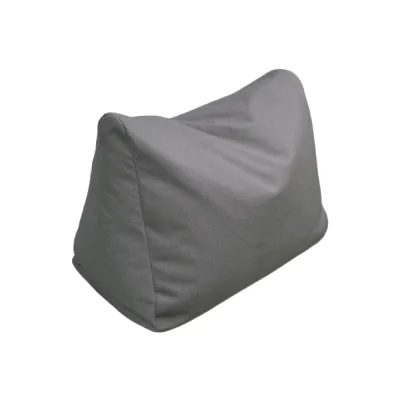
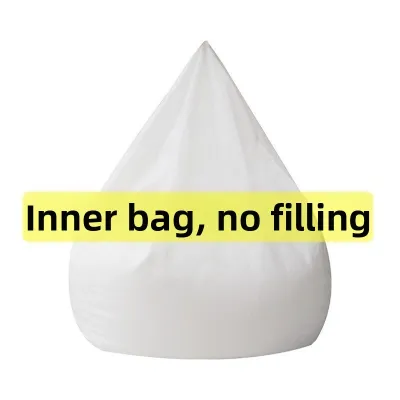
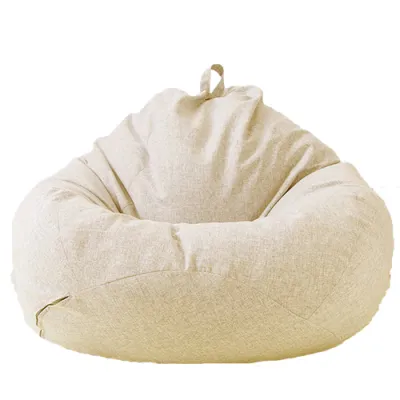
139 Lazada user ratings
213 baht only gets you the cover, no foam balls included 🖕🏻 When I ordered the foam balls, they only lasted a day before they fell apart.
The fabric of this cover feels just right. I was looking for a cover in a color that wasn't too flashy, so I'm glad I found this one.
Uses high-quality fabric, comfortable and stylish design, very fast delivery. Thank you, shop.
good product, good value for money and excellent service by seller and thank you 😊
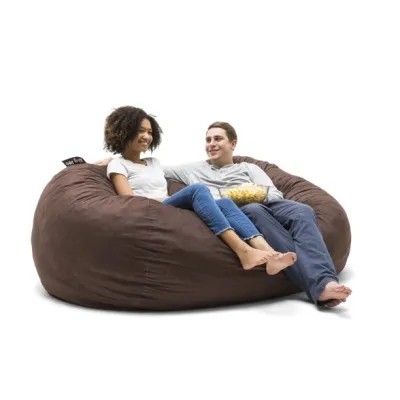
656 Lazada user ratings
Ideal for both adults and kids, Great addition to any living room, Perfect for relaxation, Provides great support for your feet, High-qualit…Read full reviewShow less
Ideal for both adults and kids, Great addition to any living room, Perfect for relaxation, Provides great support for your feet, High-quality fabric
2nd purchased and now I have 4 beanbags and thank you for the small beanbag (super cute) and so far I’m happy with the service.
Provides great support for your feet, Comfortable and spacious, Includes filling for convenience,
Ideal for both adults and kids, Great addition to any living room, Comfortable and spacious
🔧Durability:good 🎨Design:very nice. matches our living room
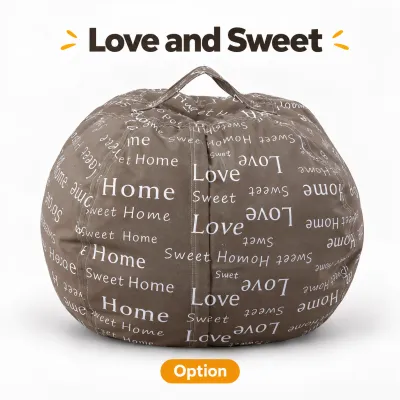
18 Lazada user ratings
do not like the material. it's very rough and not nice to touch/lie on
Design is nice. Packing is well packed.
Received. Quality feel great.
Design is nice. Well packed

Prices are valid at publication and may change. Please refer to the product page for the latest price.
Beyond the cover material, the overall comfort and support of your pouf depend heavily on the inner filling and the thickness of the cover. Poufs stuffed with high-density polystyrene beads offer a malleable, beanbag-like feel that conforms to your body shape, which pairs exceptionally well with soft, flexible fabric covers. On the other hand, structured leather poufs often feature dense foam cores or polyester fiberfill, providing a firmer, more stable surface that is ideal for use as an extra seat or a temporary tray table.
How Do Leather and Fabric Poufs Compare in Everyday Durability?
In terms of everyday durability, leather poufs—especially those crafted from high-grade genuine leather—excel at resisting structural wear, punctures, and stretching, whereas fabric poufs rely heavily on their weave density and fiber composition to prevent fraying, pilling, and snagging. Genuine leather is naturally tough and develops a unique patina over time, which can actually help disguise minor scuffs and creases. However, faux leather alternatives do not share this long-term resilience; lower-quality synthetic leathers are susceptible to peeling, cracking, and flaking after a few years of regular use, particularly along the seams where pressure is greatest.

Fabric poufs offer a different set of durability considerations. While high-quality synthetic blends like polyester are highly resistant to abrasion, loose weaves can easily snag on clothing hardware or pet claws. If you are leaning toward fabric, look for manufacturer specifications such as the Martindale rub count; a higher rub count indicates a more durable weave suitable for high-traffic areas. Additionally, consider sunlight exposure. If your pouf sits near a large window, fabric is prone to gradual fading, while leather can dry out, stiffen, and crack if exposed to intense UV rays without protective window films or regular conditioning.
Regardless of the material, the structural integrity of a pouf is only as good as its construction. Examine the seam strength and stitching quality before making a purchase. Double-stitched seams, piped edges, and heavy-duty zippers are essential indicators of a pouf that can withstand the pressure of being sat on or kicked around the room. Leather poufs require robust, thick thread to hold the heavy panels together, while fabric poufs benefit from reinforced inner overlock stitching to prevent the raw edges of the fabric from fraying internally over time.
What Are the Actual Cleaning and Maintenance Requirements?
Leather poufs require straightforward, low-effort maintenance for daily spills but demand periodic conditioning to prevent drying, while fabric poufs require prompt spot-cleaning or regular washing of removable covers to manage deep stains and dust accumulation. For busy households, the ease of cleaning is often the deciding factor. A leather pouf can be quickly wiped clean with a damp cloth if a drink spills or dust settles on its surface. Because leather is naturally non-porous compared to woven textiles, liquids tend to bead up on the surface rather than soaking into the filling, giving you ample time to clean up accidents before they cause permanent damage.
Fabric poufs, conversely, act like a sponge for liquids and dust. If a spill occurs, blot it immediately with a clean cloth to prevent the liquid from penetrating the fibers and inner filling. To simplify maintenance, look for fabric poufs with removable, machine-washable covers. If the cover is non-removable, you must rely on upholstery cleaners, vacuum attachments, or fabric protectant sprays. Always check the manufacturer’s care tag for specific cleaning codes (such as ‘W’ for water-based cleaners or ‘S’ for solvents) before applying any cleaning agents to avoid shrinking or discoloring the fabric.
Long-term upkeep also differs significantly between the two materials. To keep a genuine leather pouf looking its best, you should apply a specialized leather conditioner once or twice a year to maintain its suppleness and prevent cracking. Faux leather does not require conditioning but can be damaged by harsh chemical cleaners, so mild soap and water are best. If a fabric pouf suffers from deep, set-in stains or unpleasant odors, or if a leather pouf experiences severe discoloration, it is best to stop DIY cleaning attempts and consult a professional upholstery cleaning service. Attempting to scrub out tough stains with incorrect chemicals can cause irreversible ring marks, color bleeding, or fabric degradation.
How Does Each Material Influence Your Room's Aesthetics and Style?
A pouf’s material significantly influences the visual weight and style of your room, with leather adding a rich, structured anchor to classic or industrial spaces, and fabric offering a softer, lighter touch that complements modern, minimalist, or bohemian interiors. Visual weight refers to how heavy an object appears in a space; a dark, structured leather pouf draws the eye downward and provides a solid, grounded presence. This makes it an excellent companion for heavy wooden furniture, metal accents, or mid-century modern layouts where clean lines and organic materials take center stage.
Fabric poufs, on the other hand, excel at softening a room’s aesthetic. They introduce cozy textures that break up the hard surfaces of coffee tables, media consoles, and hardwood floors. Because fabric is incredibly versatile, it allows for a wide range of colors, intricate patterns, and woven textures like boucle, tweed, or macrame. This versatility makes fabric poufs highly adaptable; a neutral boucle pouf can add subtle warmth to a Scandinavian living room, while a brightly patterned woven pouf can serve as a playful focal point in a bohemian bedroom.
When coordinating your pouf with existing furniture, consider the concept of texture contrast. If you already own a large leather sofa, adding a leather pouf might make the room feel overly sterile or heavy. In this scenario, a fabric pouf in a contrasting texture can break up the monotony and make the seating area feel more inviting. Conversely, if your living room is dominated by soft, upholstered fabric seating, a leather pouf introduces a sophisticated contrast in material, elevating the overall design and preventing the space from looking flat or one-dimensional.
How Should You Evaluate Price and Long-Term Value?
When evaluating the financial aspect, genuine leather poufs require a higher upfront investment but offer exceptional long-term value due to their extended lifespan, whereas fabric poufs are highly accessible initially but may incur replacement costs sooner. Understanding the primary price drivers can help you set a realistic budget. Genuine leather poufs, particularly those made from full-grain or top-grain leather, are premium items due to the cost of raw materials and the craftsmanship required to stitch thick hides. Faux leather and synthetic fabric poufs sit at a much lower price point, making them attractive options for temporary setups or budget-conscious decorators.
To put this into perspective using typical market tiers, an entry-level synthetic fabric or faux leather pouf might cost under S$50 to S$100 in local retail spaces. These budget-friendly options are excellent for low-use areas or children’s playrooms. However, a high-quality, hand-stitched genuine leather pouf or a designer woven fabric pouf can easily range from S$150 to over S$400. While the initial cost of a premium leather pouf is higher, its ability to withstand years of use without needing a replacement cover or structural repair often makes it the more economical choice over a decade.
Before finalizing your purchase, factor in potential hidden costs and review the manufacturer’s warranty terms for seam splits, zipper failures, or material defects. Additionally, consider the cost of replacement covers. If a fabric cover becomes permanently stained or torn, finding a replacement that fits your specific inner filling can be difficult, occasionally forcing you to buy an entirely new unit. Leather poufs, while harder to repair if punctured, rarely suffer from the fabric thinning or structural sagging that can retire a well-loved fabric pouf prematurely.
Which Material Best Fits Your Specific Household Needs?
Choosing the ideal pouf ultimately requires matching the material’s physical limits to your household’s daily activities, particularly if you have active pets, young children, or limited floor space. For households with young children or pets, a leather pouf is often the more practical choice because it does not trap pet hair, dander, or odors, and it can be wiped clean after messy snack times. However, if you have cats or dogs with sharp claws, a leather pouf is highly vulnerable to deep scratches that cannot be easily buffed out. In this case, a tightly woven, heavy-duty synthetic fabric pouf in a textured pattern can help camouflage minor claw marks and resist snags.
To help you finalize your decision, consider this quick comparison of core trade-offs:
- Leather Pouf: Best for easy spill cleanup, hypoallergenic households, and structured styling; but has a higher initial cost, can feel warm in humid climates, and is susceptible to pet claw scratches.
- Fabric Pouf: Best for cozy comfort, breathable seating, and diverse color/pattern options; but absorbs liquids easily, traps dust and pet hair, and requires more intensive spot-cleaning or washing.
Before purchasing, perform a final check of the product’s physical specifications. Measure your available floor space and compare it to the pouf’s finished dimensions to ensure it will not block walking paths. If you plan to use the pouf as a footrest, check its height against your sofa’s seat height—ideally, the pouf should be slightly lower than or equal to the height of your sofa cushions. Verify the weight capacity if you intend to use it as extra seating, and ensure that the delivery package can easily fit through your lift or doorway access. If neither leather nor fabric fits your needs, explore alternative solutions like outdoor-rated synthetic woven poufs or structured wooden ottomans with removable cushions.
Community discussion
Share your experience or ask a question. Comments are reviewed before publication.