
Quick Answer: What Defines "Best Value" for Small Spaces?
Finding the best value in a leather sofa bed for a compact Singapore home is not simply a matter of chasing the lowest price tag. In a market where space is premium, real value is found at the intersection of a compact physical footprint, durable upholstery that can withstand tropical humidity, and a smooth, robust dual-function mechanism. A cheap sofa bed that peels within a year or blocks your main living room walkway is a poor investment, whereas a slightly higher upfront investment that fits your layout and lasts for a decade represents excellent long-term value.
Your ideal choice depends heavily on your primary use case. If you expect frequent overnight guests, your priority must be a robust pull-out mechanism with a high-density mattress that supports spinal alignment. If the bed is purely for occasional use, a compact, budget-friendly click-clack design will suffice, freeing up both floor space and budget. In Singapore’s unique housing landscape, value is also deeply tied to delivery logistics—such as navigating tight HDB lifts and narrow corridors—and selecting materials that do not trap heat or succumb to mold in our year-round humidity.
Sizing and Space Planning for HDB and Condo Living Rooms
Living in a typical HDB flat or a modern condominium requires meticulous spatial planning. Before browsing online catalogs or visiting showrooms, you must map out your living room’s exact dimensions. A common mistake is measuring only the sofa’s closed footprint. A sofa bed operates in three distinct dimensions: the closed sofa state, the transition phase where the mechanism swings outward, and the fully extended bed state.
Products mentioned in this guide
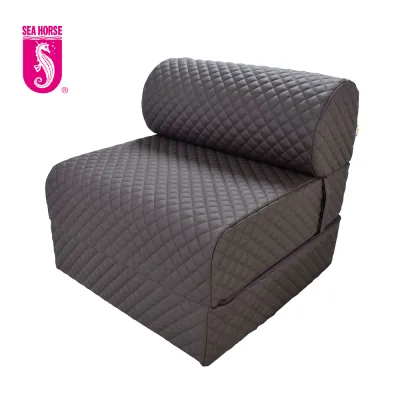
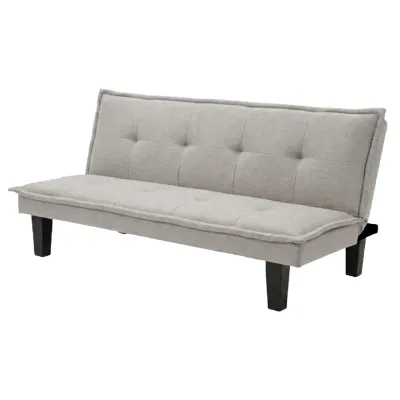
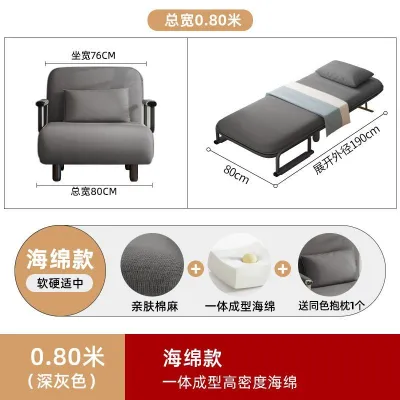
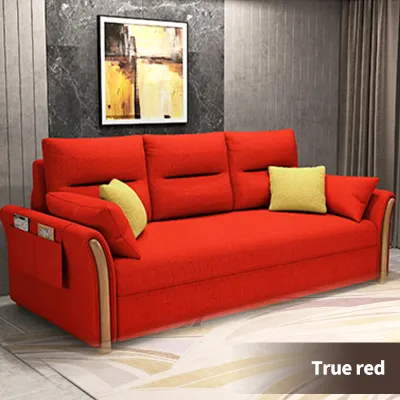
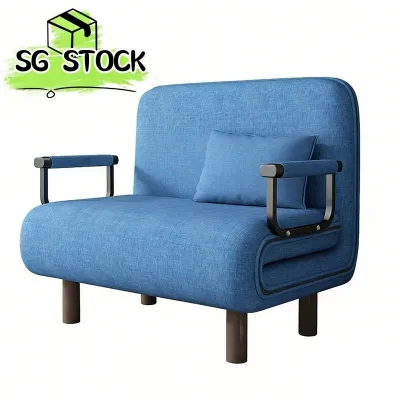
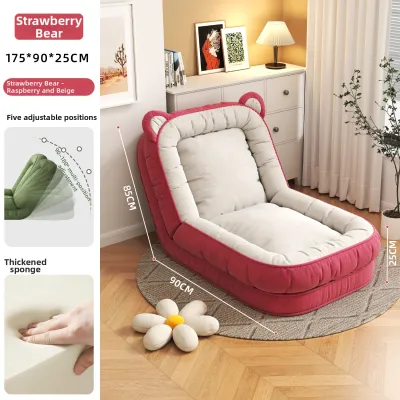
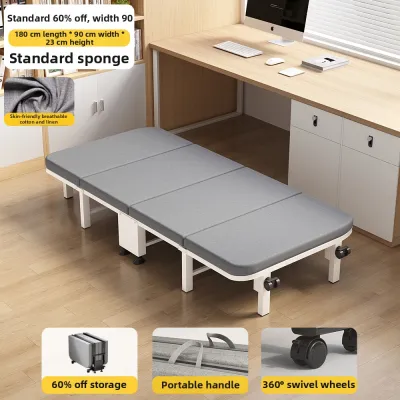
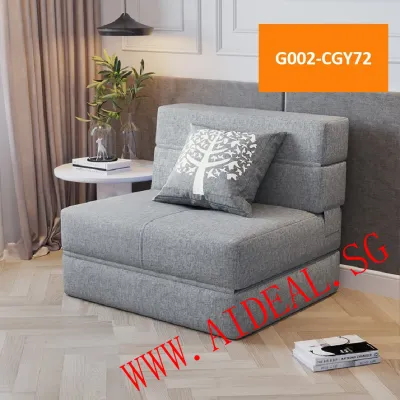
Prices are valid at publication and may change. Please refer to the product page for the latest price.

To prevent your living room from becoming impassable, you must maintain adequate walkway clearance when the bed is fully deployed. Ideally, you should leave at least 60 to 70 centimeters of clear space between the edge of the extended bed and any facing furniture, such as a TV console or wall. If the bed blocks the path to the balcony, kitchen, or bathroom, it creates a daily inconvenience and a safety hazard. Mark the extended dimensions on your floor with masking tape to physically visualize how much room remains for movement.
Beyond the living room itself, the physical delivery path is a frequent bottleneck in Singapore estates. Older HDB blocks and some boutique condominiums feature narrow common corridors, tight stairwell turning radiuses, and passenger lifts with restricted door heights and depths. Standard HDB lifts often have a door width of 80 to 90 centimeters and an internal height of around 2.1 meters. If a sofa bed is delivered as a single, fully assembled unit, it may not fit inside the lift, forcing delivery teams to carry it up the stairs, which incurs manual handling fees or, worse, results in a rejected delivery.
Always check the manufacturer’s official specification sheet for the packaged dimensions of the item. Compare these measurements against your home’s entry points, including the lift door, the main metal gate, and the wooden front door. If your entrance has a digital lock or a door closer that restricts how wide the door can swing, factor these obstructions into your calculations. Choosing a modular sofa bed that is delivered in flat-packed sections or separate modules is often the safest and most practical solution for tight entryways.
Evaluating Leather Types for Singapore's Climate and Daily Use
Upholstery selection directly impacts both the comfort and the lifespan of your sofa bed under Singapore’s hot, humid weather conditions. Leather is a popular choice for its sleek aesthetic and ease of cleaning, but different grades behave very differently over time.
Genuine Leather
Genuine leather, specifically top-grain or full-grain, represents the premium tier of upholstery. As a natural, porous material, genuine leather offers superior breathability. In a non-air-conditioned room, this breathability prevents the sticky, sweaty feeling associated with synthetic covers, making it far more comfortable for sitting and sleeping. Genuine leather is highly durable and develops a natural patina over time. However, it requires a significant financial investment, with prices typically starting above S$2,500, and demands regular maintenance. Singapore’s high humidity can encourage mold growth on untreated leather, while direct sunlight from windows can dry out the hide, leading to cracking. To protect your investment, apply a dedicated leather conditioner every six to twelve months and keep the room well-ventilated.
High-Grade Polyurethane (PU) Leather
For households seeking a balance between budget and maintenance, high-grade PU leather is a highly functional alternative. Unlike genuine leather, PU is non-porous, meaning it does not absorb spills, oils, or sweat, making it incredibly easy to wipe clean. This is highly suitable for homes with young children or pets. However, cheap synthetic leathers are highly susceptible to hydrolysis—a chemical reaction where moisture in the air and human sweat break down the polyurethane compounds over time. This leads to peeling, cracking, and flaking within two to three years. When evaluating PU leather sofa beds, always ask the retailer about the grade of the material and check if the manufacturer’s warranty specifically covers peeling or material degradation.
Bonded and PVC Leather
Bonded leather consists of shredded leather scraps glued together onto a fiber backing, while PVC is a fully synthetic, plastic-based material. These materials are commonly used in budget-friendly sofa beds priced under S$800. While affordable, they offer virtually no breathability, making them hot and uncomfortable to sit on for extended periods. Furthermore, in Singapore’s tropical climate, bonded leather is highly prone to rapid peeling and structural delamination. PVC leather is tougher but tends to stiffen and crack along the flex lines of the cushions. These options are best reserved for spare study rooms or temporary rental setups rather than main living room furniture.
Material Verification Checklist
To ensure you receive the quality you pay for, use the following verification steps before finalizing your purchase:
- Examine the material tags: Look for explicit declarations of '100% genuine top-grain leather' versus 'half-leather' configurations, where contact areas are genuine leather but the back and sides are color-matched PVC.
- Ask about the warranty scope: Confirm whether the warranty covers peeling, cracking, or color fading, and for how many years.
- Request care instructions: Verify if the manufacturer permits the use of standard leather cleaners or if specialized, brand-specific maintenance products are required to keep the warranty valid.
Assessing the Sofa Bed Mechanism and Sleeping Comfort
The internal mechanism of a sofa bed dictates both its daily convenience as a seat and its nighttime comfort as a bed. Since mechanical parts are subject to friction and load-bearing stress, understanding the trade-offs of each design is crucial for making a high-value decision.
The Pull-Out Frame Mechanism
This design houses a folded frame beneath the seat cushions. To convert it, you remove the cushions and pull the frame forward, which unfolds to reveal a dedicated mattress.
- Sleeping Comfort: This mechanism offers the highest sleep quality because it utilizes an independent mattress. There are no seams or uneven cushion densities to disrupt sleep. It is ideal if the bed will be used frequently by adults.
- Spatial and Physical Trade-offs: Pull-out mechanisms are heavy and complex. The frame adds substantial weight, making the sofa difficult to move for cleaning. They also require the greatest amount of forward clearance to deploy, which can squeeze tight condo layouts.
The Click-Clack and Fold-Down Mechanism
A click-clack sofa bed operates by releasing a hinge lock in the backrest, allowing it to fold down flat to align with the seat cushion, creating a unified sleeping platform.
- Spatial and Physical Trade-offs: These designs are compact, lightweight, and mechanically simple. With fewer moving parts, they are highly reliable, easy to operate by a single person, and very affordable.
- Sleeping Comfort: The sleeping surface is identical to the sitting surface, meaning high-use seat areas soften faster than the backrest, leading to uneven support. There is also a prominent center crease. To achieve restful sleep, you will likely need a separate mattress topper to smooth out the surface.
Modular Chaise Lounges with Built-In Storage
In many Singapore apartments, L-shaped modular sofas are highly popular. Some models feature a trundle-style section beneath the main seat that rolls out and rises to align with the adjacent chaise lounge, creating a large sleeping area.
- Spatial and Physical Trade-offs: These units are excellent for family lounging. The chaise portion often lifts up on gas struts to reveal a spacious storage compartment, which is incredibly valuable in small HDB flats for storing bedding.
- Sleeping Comfort: Comfort depends on foam consistency across modules. Because the trundle section is stored underneath and used less frequently, it may feel firmer than the main seat cushions, creating a slight variance in support.
Showroom Testing Guide
Never buy a sofa bed based solely on online photos. When visiting a local showroom, perform these hands-on tests:
- Operate the mechanism yourself: Convert the sofa to a bed and back again at least three times. The action should feel smooth and manageable without excessive physical exertion or creaking.
- Test all sitting and sleeping positions: Lie down on the bed exactly as you would at home. Roll over, lie on your side, and check if you can feel underlying metal bars, wooden slats, or the center crease.
- Check the support foundation: Peer underneath the upholstery. A high-value support system should feature thick wooden slats or a robust steel grid. Avoid units that rely solely on thin fabric webbing or low-gauge zig-zag springs, as these sag rapidly.
Navigating Furniture Brands and Showrooms in Singapore
The retail landscape for furniture in Singapore ranges from industrial estate warehouses to boutique showrooms in central shopping districts. Navigating these options systematically will help you pinpoint where to find the best value for your budget.
Mass-Market and Flat-Pack Retailers (S$300 to S$900)
This segment is dominated by large international flat-pack retailers and online megastores. Sofa beds in this price bracket are almost exclusively upholstered in PVC or standard PU leather, featuring compact click-clack mechanisms or simple slide-out wooden frames. While highly affordable and optimized for tight spaces, their long-term durability is limited. They are ideal for study rooms, playrooms, or temporary rental properties where heavy daily use is not expected.
Mid-Range Local and Regional Brands (S$1,000 to S$2,500)
This tier represents the sweet spot for most Singaporean homeowners. These brands often operate showrooms in industrial hubs like Ubi, Toh Guan, or Sungei Kadut, and suburban malls. Here, you will find high-grade PU leather and ‘half-leather’ configurations (genuine leather on contact areas, matching synthetic leather on the back). The frames are typically constructed from kiln-dried hardwood or reinforced metal, and mechanisms are built for regular use. These brands offer structural warranties and professional delivery and installation.
Premium and Designer Brands (S$2,500 to S$6,000+)
For homeowners prioritizing uncompromising quality, premium brands offer customizable genuine leather sofa beds. These showrooms, often in the Orchard area or design districts, showcase highly engineered mechanisms, premium pocket-sprung mattresses, and top-grain Italian leathers. Built to last fifteen to twenty years, these pieces feature mechanisms that glide effortlessly and frames backed by extensive warranties of ten years or more. If your sofa bed is the primary seat in your living room, this tier offers excellent lifetime value.
Post-Purchase and Delivery Considerations
To avoid unexpected costs and logistical headaches, always clarify these details before making payment:
- Delivery Lead Times: Ready-stock items are typically delivered within three to seven working days, while customized genuine leather or imported designer models can take eight to twelve weeks.
- Assembly and Installation Fees: Complex pull-out frames are heavy and difficult to assemble. Verify if the retail price includes professional on-site assembly or if an additional fee applies.
- Disposal Services: If you need to clear out an old sofa, ask if the retailer provides a disposal service (typically S$50 to S$150). Alternatively, HDB residents can contact their Town Council to arrange bulky item removal.
- Warranty Specifics: Do not rely on a generic '5-year warranty' claim. Ask for a written breakdown covering the internal wooden frame, mechanical folding joints, and leather upholstery separately.
Final Decision Framework: Matching Your Budget and Space
To finalize your decision, match your specific household circumstances, spatial limits, and budget against the following decision pathways:
Choose a budget faux leather click-clack if:
- Your space is highly constrained: You need an ultra-compact piece for a small study or home office where every centimeter counts.
- Your usage is occasional: The bed will only be used a few times a year by short-term visitors, and the sofa is not your primary daily seat.
- Your budget is tight: You want to minimize upfront costs and prefer a lightweight frame that is easy to move or rearrange without professional assistance.
Choose a mid-range pull-out with high-grade PU if:
- You need a daily multi-functional workhorse: The sofa will be used daily for family seating, and the bed will host guests on a regular basis.
- You want easy maintenance: You require a spill-resistant, wipe-clean surface that does not require regular conditioning.
- You seek balanced value: You want a sturdy, comfortable sleeping surface with a proper mattress and a smooth mechanism without paying the premium price of genuine leather.
Choose a premium genuine leather modular or pull-out bed if:
- You prioritize long-term durability and comfort: You want a centerpiece for your main living room that will remain comfortable and aesthetically pleasing for a decade or more.
- You want maximum breathability: You prefer a natural material that stays cool in Singapore's humid climate without requiring constant air conditioning.
- You have a flexible budget: You are willing to invest in premium craftsmanship, customizable configurations, and a comprehensive warranty on the frame and mechanical parts.
Critical Verification Steps Before Checkout
Before entering your credit card details or signing the sales order, perform these three final checks:
- Re-verify the entry clearance: Double-check your lift height, lift depth, corridor width, and front gate dimensions against the packaged dimensions provided by the retailer.
- Confirm the extended footprint: Lay down tape on your living room floor to ensure that when the bed is fully open, you still have at least 60 centimeters of clearance to walk around it.
- Read the fine print on the warranty: Ensure that the mechanical joints—which bear the most stress during conversion—are covered under a dedicated warranty period of at least two years. If you are renting and expect to move frequently, prioritize lighter, modular frames that can be disassembled and reassembled easily.
Community discussion
Share your experience or ask a question. Comments are reviewed before publication.