
Quick Answer: Matching Chair Tiers to Your Home Office Needs
Selecting the ideal leather office chair for your home workspace in Singapore is a highly individualized decision. The right choice depends on your daily usage patterns, budget, and whether your room is consistently air-conditioned. If you work from home full-time (eight or more hours per day) and require precise orthopedic support, investing in a premium ergonomic brand featuring genuine top-grain leather and advanced synchronization mechanisms is highly recommended. These models offer superior durability and breathability, though they require a larger upfront financial commitment.
Conversely, if your daily desk usage is moderate (four hours or fewer) and you prioritize a classic executive aesthetic that complements your home decor, a mid-range mainstream brand utilizing high-quality polyurethane (PU) or split leather is a practical alternative. These models balance modern styling with standard ergonomic adjustments at a more accessible price point. For occasional use or tight budgets, entry-level chairs offer basic comfort but come with clear trade-offs in cushion lifespan and material longevity, particularly in humid environments.
Before making a purchase, you must evaluate your primary environment. If you work in a non-air-conditioned room, the natural heat retention of a leather office chair may lead to discomfort. In such cases, verifying the breathability of the specific leather grade or considering alternative seating materials is crucial, as even high-end leather can feel warm without active climate control.
Products mentioned in this guide
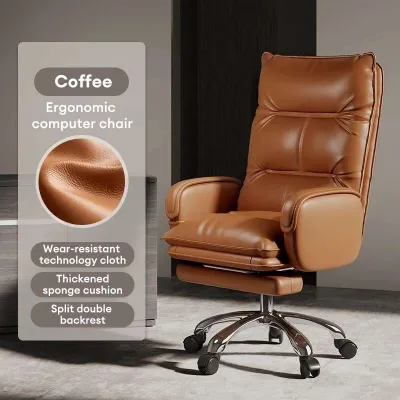
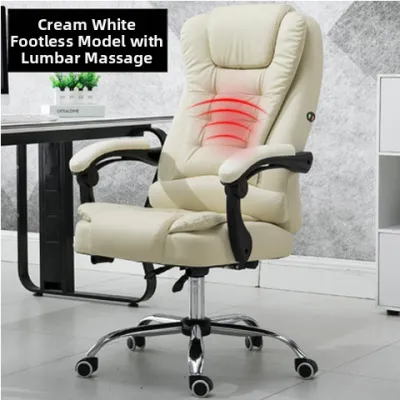
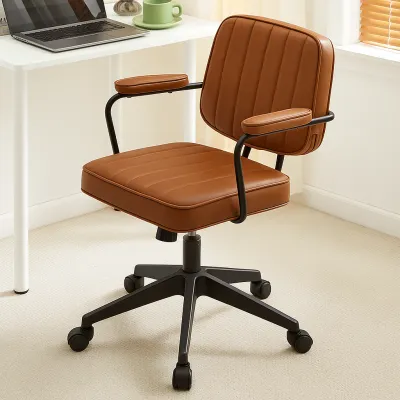
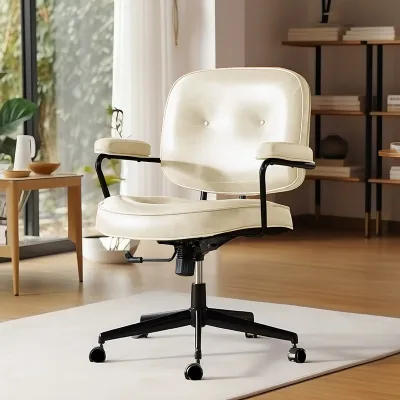
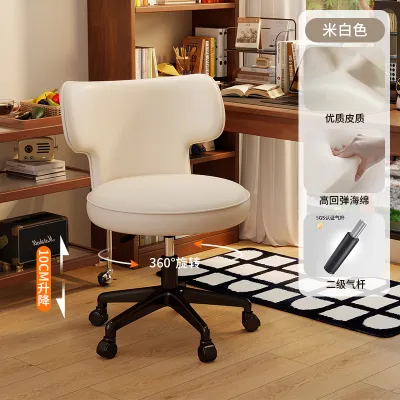
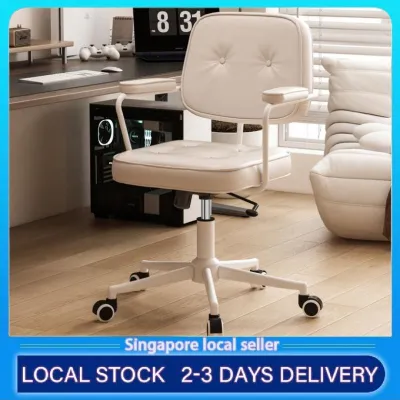
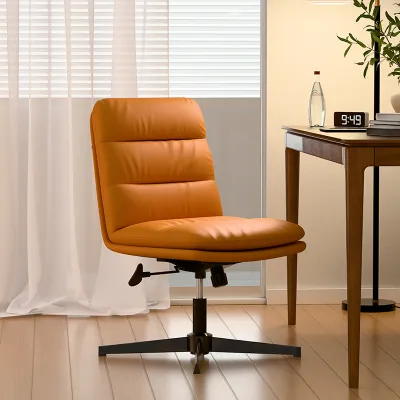
Prices are valid at publication and may change. Please refer to the product page for the latest price.
Assessing Build Quality: Frames, Mechanisms, and Upholstery
Evaluating the structural integrity of a leather office chair requires looking beyond its outward appearance to examine the load-bearing components. The frame and base serve as the foundation of the chair’s stability and longevity. Premium models typically feature bases constructed from polished aluminum or heavy-duty cast steel, which offer exceptional structural strength, resistance to bending, and immunity to high humidity. Mid-range and entry-level chairs often utilize reinforced nylon or plastic bases; while modern reinforced nylon is highly durable, it can exhibit slight flexing under heavier loads. Always locate and verify the manufacturer’s weight capacity label—typically certified under industry standards such as BIFMA—to ensure the frame is rated safely for your specific physical requirements.

The tilt mechanism is the mechanical heart of the chair, dictating how the seat and backrest move in relation to your body. Basic center-tilt mechanisms, common in budget executive chairs, pivot from a central point directly under the seat. When you recline, the front edge of the seat rises, which can lift your feet off the floor and apply pressure to the undersides of your thighs, potentially restricting circulation. In contrast, a synchro-tilt mechanism allows the backrest and seat to tilt at a synchronized ratio (typically 2:1). This design keeps your feet flat on the floor and opens your torso angle as you recline, distributing your body weight more evenly and reducing mechanical strain on the chair’s internal springs and tension bars.
Upholstery quality is the most significant factor influencing both the price and the long-term appearance of a leather office chair. Genuine top-grain leather is derived from the strong outer layer of the hide, making it highly resistant to tearing, cracking, and stretching. It features natural pores that allow a degree of air circulation, and over time, it develops a soft patina. Split leather is created from the lower layers of the hide after the top grain is separated, then coated with a synthetic layer to mimic the appearance of top-grain; while more affordable, it is stiffer and less breathable.
Synthetic alternatives include polyurethane (PU) leather and bonded leather. High-grade PU leather is a completely synthetic material designed to offer a soft, supple texture that is easy to wipe clean and highly resistant to water. However, it lacks the natural breathability of genuine hide. Bonded leather is constructed from shredded leather scraps glued together and rolled onto a backing paper; it is highly susceptible to peeling and cracking under the friction of daily use. To avoid premature wear, always verify the exact material composition on the manufacturer’s specification sheet rather than relying on ambiguous marketing terms like “executive leather feel.”
Evaluating Comfort and Ergonomics for Long Working Hours
Daily comfort during extended working sessions is determined by how well the chair supports your body’s natural alignment. The seat cushion is your primary contact point, and its construction dictates how long you can sit without experiencing pressure points. High-density, cold-cured molded foam is the industry standard for ergonomic seating. This material is manufactured by pouring liquid polyurethane into a closed mold, resulting in a highly dense, consistent foam structure that contours to your body and retains its shape for years. Standard cut foam, often used in budget chairs, is sliced from large blocks and has a lower density; it tends to compress permanently over months of use, causing you to sit directly against the hard seat plate.
Proper spinal alignment requires targeted support for the lumbar region, which carries the natural inward curve of your lower back. Fixed lumbar support, which is built into the shape of the backrest, offers a one-size-fits-all solution that may not align with your height or spinal curvature. Adjustable lumbar support systems allow you to customize both the height and the depth of the support pad. If you tend to shift positions throughout the day, a dynamic, weight-activated lumbar system that automatically adjusts its pressure as you recline can prevent the lower back from flattening, thereby reducing pressure on your spinal discs.
Armrests play a critical role in relieving strain on your neck and shoulders. Basic chairs offer 1D (height only) or fixed armrests, which can force your shoulders into a shrugged or slouching position if they do not align with your desk height. Highly adjustable armrests, ranging from 3D to 4D, allow you to adjust the height, depth (forward/backward), width (inward/outward), and pivot angle. This level of adjustability ensures that your elbows can rest comfortably at a 90-degree angle close to your torso, keeping your wrists neutral while typing.
Whether you need a headrest depends on your work style. Headrests are highly beneficial if you spend significant portions of your day in a reclined posture—such as during virtual meetings, reading, or rest periods—as they support the cervical spine. However, if your work involves active, forward-leaning keyboard tasking, a headrest will rarely contact your head, making it an unnecessary feature that can sometimes push your neck into an awkward forward position.
Managing Leather Upholstery in Singapore's Tropical Climate
Using a leather office chair in Singapore presents unique maintenance challenges due to the year-round tropical climate, where relative humidity levels regularly exceed 80%. Leather is an insulating material that naturally traps body heat. If you work in a room without air-conditioning, sitting on a leather surface for several hours can lead to perspiration, causing the skin to stick to the upholstery and creating a warm, uncomfortable seating experience. In contrast, if your home office is consistently air-conditioned, a leather chair remains comfortably cool, providing a highly pleasant and luxurious tactile feel.
High humidity and ambient moisture accelerate the degradation of both natural and synthetic upholstery. For genuine leather, excessive moisture can encourage mold and mildew growth in the crevices of the chair, particularly if it is left unused in a closed, dark room. For synthetic materials like PU and bonded leather, humidity combined with the salt and oils from human sweat can trigger hydrolysis—a chemical reaction that breaks down the polyurethane chains, leading to the unsightly peeling and cracking common in older synthetic chairs.
To preserve your chair’s upholstery, establish a simple, low-risk cleaning routine. Every week, wipe down the contact surfaces of the chair with a dry or slightly damp microfiber cloth to remove accumulated dust, body oils, and sweat. Avoid using harsh household detergents, multi-surface sprays, or alcohol-based sanitizing wipes, as these chemicals strip away the protective topcoat of both genuine and synthetic leather.
For genuine leather chairs, consult the manufacturer’s care label to determine the recommended conditioning frequency. Applying a specialized, pH-balanced leather conditioner every six to twelve months helps keep the hide supple and prevents it from drying out. Finally, position your workstation away from direct sunlight streaming through windows, as ultraviolet (UV) rays will accelerate the fading, drying, and cracking of both genuine and synthetic leather materials.
What to Expect from Different Brand Tiers and Price Points
Understanding the market landscape helps you align your budget with realistic expectations regarding material quality, ergonomic features, and after-sales support. Brand positioning in the seating industry directly dictates the longevity of the product and the level of customization available to the user.
Premium and Ergonomic Specialist Brands
Premium brands focus heavily on orthopedic health, utilizing advanced engineering and high-grade materials. In this segment, which typically starts around S$1,000, you can expect full-grain or top-grain genuine leather upholstery paired with robust, polished aluminum frames. These chairs feature highly sophisticated synchro-tilt or weight-activated mechanisms that adapt seamlessly to your body movements.
Adjustability is highly comprehensive, often including 4D armrests, adjustable seat depth, and precise lumbar tension controls. Furthermore, premium brands back their products with extensive multi-year warranties—often ranging from 5 to 12 years—covering both mechanical components and structural defects, making them ideal for users seeking a long-term investment for daily, full-time use.
Mid-Range and Mainstream Furniture Brands
Mid-range brands, generally priced between S$400 and S$900, offer a balanced compromise between ergonomic functionality and home aesthetics. These chairs frequently feature high-quality PU leather, split leather, or a “leather match” design where genuine leather is used on direct contact surfaces (the seat and backrest) while matching vinyl is used on the sides and back to manage costs.
Mechanisms in this tier usually include standard synchro-tilt options with multi-position tilt locks. While they may lack the highly specialized micro-adjustments of premium models, they provide reliable support for standard working hours. Warranties typically span 2 to 5 years, providing reasonable peace of mind for hybrid workers and home office users.
Entry-Level and Budget-Friendly Options
Entry-level chairs, available under S$300 on various online marketplaces, prioritize basic utility and immediate affordability. These models are almost exclusively upholstered in standard PU or bonded leather over simple nylon or steel frames. The mechanical features are usually limited to a basic center-tilt or an upright-only locking mechanism, with fixed or simple 1D armrests.
Cushioning in this tier often consists of standard cut foam, which may lose its resiliency within the first year of regular use. Due to the lower-grade synthetic materials, these chairs are highly susceptible to peeling and wear in Singapore’s humid climate. Warranties are short—often limited to 1 year or covering only the gas lift piston—making them best suited for occasional, short-duration seating needs.
Final Decision Framework: Choosing the Right Chair for Your Space
To finalize your selection, match your specific daily routine and home environment to the appropriate chair tier:
- Choose a Premium Ergonomic Chair if: You work from home full-time, prioritize long-term spinal health, operate primarily in an air-conditioned room, and want a comprehensive, multi-year warranty that protects your investment.
- Choose a Mid-Range Mainstream Chair if: You split your time between home and a corporate office, want a stylish executive look that blends with your home decor, and require reliable comfort without needing highly specialized medical-grade adjustments.
- Choose an Entry-Level Chair if: Your desk work is limited to occasional evening tasks or administrative chores, you are working within a strict budget, and you are prepared to replace the chair or upgrade its components after a few years of use.
Before clicking “purchase” or arranging delivery to your HDB flat or condominium, perform these essential logistical checks:
- Measure Spatial Clearance: Compare the finished dimensions of the chair—particularly the maximum width of the five-star wheel base and the height of the backrest—against your home's entry points. Ensure the chair can easily pass through your main entrance, hallway corners, room doors, and the residential lift doors. Large, fully assembled executive chairs can be surprisingly difficult to maneuver through tight HDB corridors.
- Verify Floor Compatibility: Examine the casters supplied with the chair. Standard hard nylon casters are designed for carpeted floors and can scratch or gouge hard flooring surfaces common in Singapore homes, such as parquet, laminate, or luxury vinyl tiles (LVT). If you have hard floors, verify if the manufacturer offers soft polyurethane (PU) or rubberized casters, or purchase a protective floor mat.
- Review Delivery and Warranty Terms: Confirm whether the chair is delivered fully assembled or flat-packed for self-assembly. If self-assembly is required, check if the necessary tools are included. Finally, read the return policy carefully to understand who covers the shipping costs for bulky furniture returns, and register your product warranty online immediately after delivery to secure your coverage.
Frequently Asked Questions (FAQ)
Is genuine leather always better than PU leather for home office chairs?
Genuine leather is not universally superior; the choice depends on your environment and budget. Genuine leather offers unmatched durability, develops a natural patina, and breathes better than synthetic options because of its organic pores. However, it requires regular maintenance and is highly expensive. High-quality PU leather is completely synthetic, making it highly resistant to moisture, easier to wipe clean, and significantly more affordable. For non-air-conditioned rooms with high humidity, high-quality PU leather can sometimes be more practical as it does not absorb moisture or support mold growth as readily as genuine hide, provided it is kept clean of sweat residue.
How do I prevent my leather chair from peeling or cracking?
To prevent peeling and cracking, keep your chair away from direct sunlight, which dries out natural hides and degrades synthetic polymers. In Singapore’s humid climate, wipe down the seat and armrests weekly with a dry microfiber cloth to remove sweat, body oils, and dust. For genuine leather, apply a specialized, pH-balanced leather conditioner every six to twelve months according to the manufacturer’s care instructions. For synthetic PU leather, avoid using alcohol-based cleaners or harsh detergents, as these chemicals strip the protective polyurethane topcoat, accelerating the peeling process.
Community discussion
Share your experience or ask a question. Comments are reviewed before publication.