
When shopping for a leather chaise lounge sofa, comparing brands requires looking beyond aesthetic appeal and showroom lighting. The durability and comfort of a chaise lounge depend on structural choices, upholstery grades, and ergonomic designs that are often hidden beneath the surface. To make an informed investment, you must evaluate how different manufacturers select their materials, assemble their frames, and engineer their seating support.
Evaluating these factors is particularly important for the elongated chaise section, which experiences different physical stresses than a standard upright seat. By understanding the technical specifications of leather finishes, frame joinery, and cushion density, you can identify which brands offer genuine value. This guide provides the analytical tools needed to compare leather chaise lounges and select the ideal model for your home.
Quick Answer: What Defines a High-Quality Leather Chaise Lounge?
Comparing leather sofa brands effectively requires look past marketing terminology to verify three foundational elements: leather grade, frame material, and chaise-specific ergonomics. A high-quality leather chaise lounge sofa relies on top-grain or full-grain leather, a kiln-dried hardwood frame, and a balanced suspension system that prevents the extended seat from sagging over time.
Products mentioned in this guide
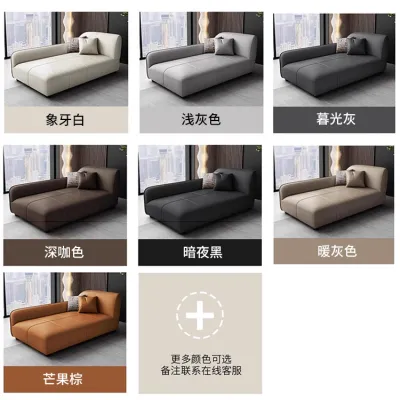
![[CozyNest ]Technology Leather Sofa Single Small Family Living Room Bedroom Double Small Sofa Pure Leather Lazy Sofa Chaise Longue](https://img.lazcdn.com/g/p/6134af5683251ccb3ff74bf02372768f.jpg_webp_400x400q80.jpg_.webp)
![[CozyNest ]Technology Leather Sofa Single Small Family Living Room Bedroom Double Small Sofa Pure Leather Lazy Sofa Chaise Longue](https://img.lazcdn.com/g/p/575524ffc51766e5985c2b563f62d55a.jpg_webp_400x400q80.jpg_.webp)
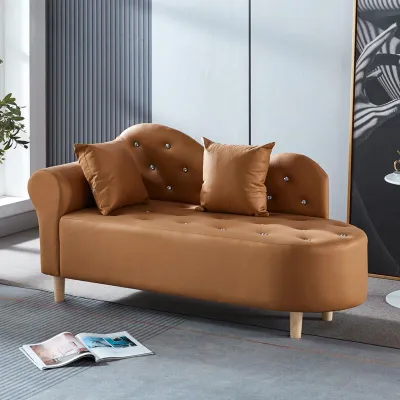
![[Cozy ]Italian Style Light Luxury Living Room Leather Art Chaise Lounge Simple Ho Homestay Bedroom Bed End Stool Lazy Sofa Chaise Lounge](https://img.lazcdn.com/g/p/552ed6bae9200596c1fdecbca5f81448.jpg_webp_400x400q80.jpg_.webp)
Prices are valid at publication and may change. Please refer to the product page for the latest price.
The ideal brand for your purchase depends heavily on your household’s specific priorities, such as long-term material durability, immediate plush comfort, or space-saving configurations tailored for compact urban living. Brands that prioritize premium materials will readily provide detailed specification sheets rather than relying on generic showroom tags.
To protect your investment, always request written material specifications from the retailer. Verifying the exact wood species, leather origin, and foam density ensures you are paying for structural integrity rather than a brand name.
How to Compare Leather Grades and Surface Durability
The upholstery of a leather chaise lounge is its most expensive component and the one subjected to the most direct wear. Because a chaise lounge encourages extended reclining, the leather on the elongated seat experiences continuous friction, body heat, and oil transfer. Understanding the distinctions between leather grades is essential for predicting how the surface will age.

Full-Grain Leather This grade represents the top layer of the hide, keeping the natural grain completely intact. It is the strongest and most breathable option, developing a distinct patina over time. However, full-grain leather is highly sensitive to spills and requires regular conditioning, making it best suited for low-traffic areas.
Top-Grain Leather To create top-grain leather, manufacturers split the hide and gently sand the surface to remove natural imperfections. It is slightly thinner and more pliable than full-grain leather, offering an excellent balance of durability, softness, and resistance to stretching.
Corrected-Grain Leather This leather undergoes extensive buffing to erase scars and blemishes before an artificial grain pattern is embossed onto the surface. While it lacks the natural texture of premium grades, corrected-grain leather is highly uniform and durable.
Bonded Leather Constructed from shredded leather scraps pasted onto a fiber backing with polyurethane, bonded leather is highly prone to peeling and cracking within a few years. It should be avoided for high-use furniture like a chaise lounge.
Beyond the grade of the hide, the chemical finish applied to the leather determines its resistance to daily wear and environmental factors:
- Aniline Finishes: These use soluble dyes without any surface pigment, exposing the natural beauty of the hide. Aniline leather is incredibly soft but highly susceptible to staining, fading from sunlight, and moisture damage.
- Semi-Aniline Finishes: These feature a very thin protective topcoat containing a small amount of pigment. This layer offers mild stain resistance while preserving much of the leather's natural softness and breathability.
- Pigmented Finishes: These utilize a heavy polymer coating containing opaque pigments. This finish provides the highest level of protection against spills, scratches, and fading, making it highly practical for active households.
To verify the quality of the leather in a showroom, examine the back and outer sides of the sofa. Premium brands use matching top-grain leather across the entire piece, whereas budget brands often employ “leather-match” configurations, using synthetic vinyl on non-contact areas. Look closely at the pore structure; natural, high-quality leather displays irregular, unique pore patterns, while heavily corrected leather exhibits a perfectly repeating, artificial texture.
Finally, avoid assuming that the term “genuine leather” guarantees high quality. In the furniture industry, this label is frequently used as a marketing term for lower-grade split leathers that lack the tensile strength required for long-term durability.
What to Check for Frame Construction and Suspension
The internal frame and suspension system form the backbone of any sofa, dictating its weight capacity, stability, and overall lifespan. Because a chaise lounge features an elongated seat that projects outward, the frame must withstand unique leverage forces and uneven weight distribution.
When comparing frame materials, prioritize kiln-dried hardwoods such as birch, maple, oak, or beech. The kiln-drying process is critical because it extracts moisture from the wood cells, preventing the frame from warping, bowing, or splitting when exposed to fluctuating indoor humidity. In contrast, engineered woods like standard plywood, fiberboard, or MDF are prone to sagging and joint failure under the sustained weight of a reclining body.
How those frame pieces are joined is equally important. High-quality manufacturers secure joints using double dowels, corner blocks, and heavy-duty glue. Avoid brands that rely solely on metal staples, nails, or simple wood screws, as these fasteners gradually work themselves loose, leading to structural instability.
The suspension system hidden beneath the cushions determines how well the sofa supports your body and retains its shape:
- Sinuous Springs: These S-shaped steel wires run horizontally across the frame. They provide a firm, resilient feel and are ideal for sleek, low-profile modern designs.
- Elastic Webbing: Interwoven nylon straps offer quiet, uniform support. While high-density, reinforced webbing is durable, lower-grade webbing can stretch out over time, causing the seat to sag.
- Eight-Way Hand-Tied Springs: The traditional gold standard of suspension. Steel coil springs are secured to the frame and tied together manually in eight directions. This system provides exceptional weight distribution and longevity, though it requires a deeper frame design.
For a chaise lounge, the suspension of the extended section is particularly vital. Unlike standard seats where weight is concentrated in a single spot, a chaise must support a body stretched across its entire length. A robust suspension ensures that the transition zone between the main sofa frame and the extended chaise remains level and supportive.
To test frame rigidity in a showroom, perform a simple physical check. Gently lift one front corner of the sofa approximately 15 centimeters off the floor. If the adjacent leg does not rise immediately, or if you hear creaking sounds from the frame, the structure is flexing. This indicates weak joinery or low-density wood that may fail prematurely.
Evaluating Chaise Ergonomics and Reclining Comfort
Comfort is subjective, but ergonomic support is measurable. A chaise lounge is designed for relaxation, meaning the angles, depths, and cushion materials must work together to support your body in a semi-reclined posture without causing physical strain.
Begin by measuring the effective lounging depth, which is the distance from the front face of the back cushion to the outer edge of the chaise. The chaise should be long enough to support your entire leg length. If the chaise is too short, your feet or ankles will hang over the edge, creating uncomfortable pressure points. If it is too long, it can overwhelm your living space.
Pay close attention to the transition area where the seat meets the backrest. The design should not press uncomfortably against the back of your knees, a sensitive area known as the popliteal fossa. A gentle, sloped transition is generally more comfortable than a sharp, 90-degree angle.
Cushion composition plays a decisive role in both immediate comfort and long-term shape retention:
- High-Resilience (HR) Foam: This high-density polyurethane foam quickly regains its shape when compressed. It offers firm, supportive seating and excellent durability. For a chaise lounge, look for a foam density of at least 30 to 35 kilograms per cubic meter.
- Memory Foam: This material contours to your body shape, relieving pressure points. However, it tends to retain body heat, which can make lounging uncomfortable in warmer climates.
- Down and Feather Wraps: These consist of a foam core wrapped in a thick layer of duck or goose feathers. They provide a luxurious, sink-in feel but require regular fluffing to maintain their loft and prevent a deflated appearance.
Evaluate the pitch of the backrest as well. An optimal lounging angle rests between 100 and 110 degrees. A backrest that is too upright forces you into an awkward posture, while one that is too reclined makes it difficult to read or watch television without straining your neck. Look for built-in lumbar support curves, or plan to use supportive throw pillows to maintain proper spinal alignment.
Finally, examine the armrest and edge design of the chaise. An outer edge featuring a low, padded “bumper” or a wide, flat armrest allows you to drape your legs over the side comfortably. Conversely, a high, rigid, or poorly padded armrest restricts your movement and limits the ways you can comfortably recline.
Navigating Space, Delivery, and Climate Factors in Singapore
Purchasing a large piece of furniture like a leather chaise lounge sofa involves practical logistical and environmental considerations, particularly within the context of Singapore’s residential architecture and tropical climate.
Spatial planning is your first priority. In typical Singaporean apartments, such as HDB flats or condominiums, living room floor area must be managed carefully. You must decide between a left-facing or right-facing chaise (determined when looking directly at the sofa). The chaise should be positioned so that it does not obstruct main walkways, block access to balcony doors, or interfere with natural light from windows. Ensure there is at least 60 to 75 centimeters of clearance around the extended seat to maintain a comfortable traffic flow.
Delivery access is another common bottleneck. Because a chaise lounge frame is long and often constructed as a single, rigid piece, it can be difficult to maneuver through tight spaces. Before finalizing your purchase, carefully measure:
- The height, width, and diagonal depth of your building's elevator.
- The clearance of stairwell turns and corridor corners.
- The height and width of your apartment's entrance door.
If your building’s access points are restricted, look for modular leather chaise lounges. These designs allow the chaise section to detach from the main sofa body, making transit and assembly much easier.
Singapore’s climate also presents unique challenges for leather preservation. The combination of high ambient humidity (often exceeding 80%) and regular air-conditioning use creates an unstable environment. Direct exposure to cold air-conditioning drafts can dry out the natural oils in leather, leading to premature stiffness and cracking. Conversely, stagnant, humid air can promote mold growth on the wooden frame or the underside of the leather upholstery.
To protect your sofa, position it away from direct air-conditioning vents and out of direct sunlight. Maintain a stable indoor environment, ideally using a dehumidifier to keep relative humidity between 50% and 60%. Wipe down the leather weekly with a dry, clean microfiber cloth to remove perspiration and body oils, which can slowly degrade the protective finish.
Decision Framework: Matching Leather Chaise Lounges to Your Priorities
To select the right leather chaise lounge, match your household’s daily lifestyle and maintenance habits with the appropriate material specifications.
For Active Households with Children or Pets
- Leather Choice: Pigmented top-grain leather.
- Cushion Choice: High-resilience (HR) foam.
- Why: This combination provides excellent resistance to spills, scratches, and stains, while the firm foam maintains its shape under heavy use and is easy to wipe clean.
For Maximum Luxury and Natural Aesthetics
- Leather Choice: Full-grain or semi-aniline leather.
- Cushion Choice: Down-wrapped foam cores.
- Why: This configuration offers a premium, sink-in feel and develops a beautiful, personalized patina over time. It requires a commitment to regular leather conditioning and cushion fluffing.
For Flexible Lifestyles or Rental Properties
- Sofa Design: Modular leather chaise lounge.
- Why: Modular systems allow you to reconfigure the layout to fit different room shapes and make moving the sofa through tight doorways and lifts far easier.
Regardless of your preferences, treat a retailer’s inability to provide a written specification sheet detailing the leather grade, frame wood species, and foam density as a clear warning sign. Reputable brands maintain transparency regarding their manufacturing standards, ensuring your investment is built to last.
Frequently Asked Questions (FAQ)
Is a leather-match chaise lounge worth buying?
A leather-match chaise lounge features genuine leather on the surfaces that contact your body—such as the seat, backrest, and armrests—while using matching synthetic materials like polyurethane or PVC on the outer sides and back. This design reduces the purchase price significantly. However, because genuine leather and synthetic materials age differently, the real leather will soften and develop a patina over time, while the synthetic portions may stiffen, peel, or discolor, eventually creating a noticeable visual and textural mismatch.
How can I prevent the leather chaise cushion from sagging?
To prevent sagging, ensure the sofa utilizes high-density, high-resilience (HR) foam with a rating of at least 30 kilograms per cubic meter. If the chaise design features loose, double-sided cushions, rotate and flip them every few weeks to distribute wear evenly. Avoid sitting repeatedly on the very front edge of the chaise, as this concentrates weight on the edge of the suspension system. For down-filled cushions, fluff them weekly to redistribute the feathers and restore their loft.
Does the chaise side (left vs. right) affect the sofa's structural quality?
No, the orientation of the chaise (left-arm facing versus right-arm facing) is purely a spatial design option and has no impact on manufacturing quality. Brands construct both orientations using identical frame materials, joinery techniques, and suspension systems. Your choice should be guided entirely by your living room layout, traffic patterns, and the location of doors and windows.
Community discussion
Share your experience or ask a question. Comments are reviewed before publication.