
Finding the right kneeling chair for a Singapore home office requires balancing ergonomic support with structural durability. While traditional office chairs support your weight primarily on your glutes and thighs, a kneeling chair redistributes your weight between your pelvis and shins, encouraging an active, upright posture. To find a model that withstands daily use in our tropical climate and fits comfortably within compact residential spaces, you must look closely at frame construction, cushion resilience, and adjustability features. Evaluating these physical specifications before you buy ensures you invest in a chair that genuinely supports your posture without wearing out prematurely.
What to Check for Build Quality and Ergonomics
When evaluating kneeling chairs from various retailers in Singapore, the frame material serves as the foundation of durability. Heavy-duty steel frames offer the highest structural integrity and are less prone to joint fatigue over years of daily use. If you prefer a wooden aesthetic, look for sustainably sourced solid hardwoods, such as beechwood or birch plywood, which are layered for multi-directional strength. Avoid frames constructed from softwoods or thin-walled metal tubes, as these materials tend to creak, flex, or warp under continuous load. Examine the joint connections closely; high-quality models feature reinforced steel brackets, double-welded seams, or heavy-duty locking bolts rather than simple wood screws.
Cushion construction directly determines how long you can sit comfortably without experiencing shin or pelvic pain. Look for chairs utilizing high-density molded foam, which maintains its shape and supportive elasticity far longer than cheap cut foam. The foam density should ideally be at least 50kg/m³, with a thickness of 5cm to 7cm on both the seat and knee pads to prevent your bones from bottoming out against the hard frame. Upholstery is equally critical in Singapore’s warm, humid climate. Breathable materials like high-tensile mesh or natural linen fabrics allow heat and moisture to dissipate. Avoid low-grade polyurethane (PU) leather, which traps body heat, causes sweating, and is highly prone to peeling and cracking when exposed to humidity.
Products mentioned in this guide
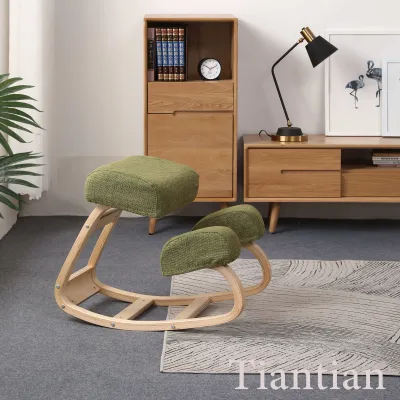
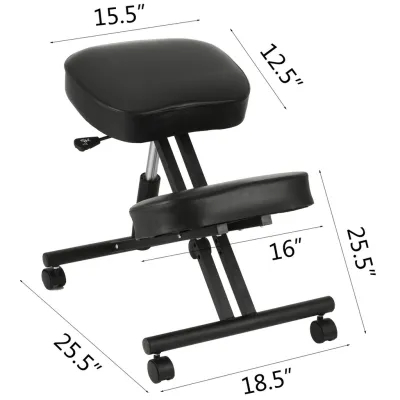
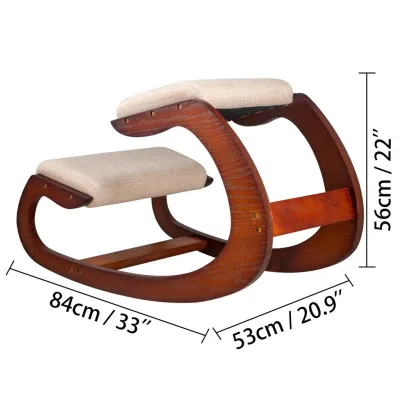
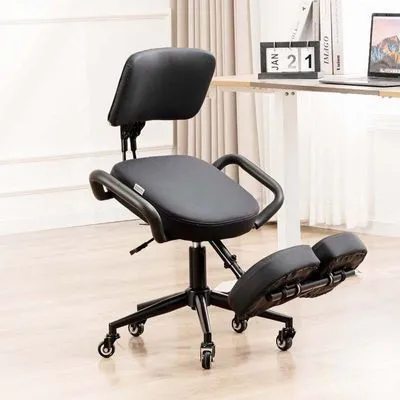
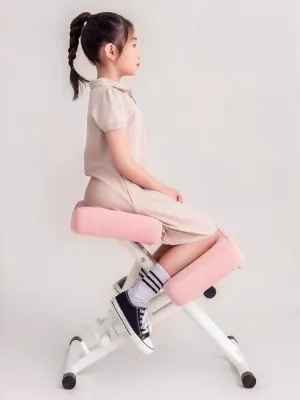
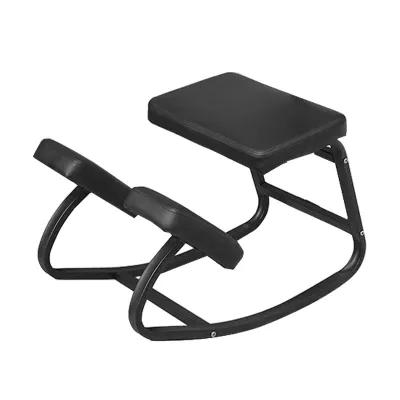
Prices are valid at publication and may change. Please refer to the product page for the latest price.
Adjustment mechanisms and base stability are vital for safety and personalized comfort. If you opt for an adjustable model, look for a pneumatic gas lift certified as Class 3 or Class 4, which ensures smooth height transitions and a secure lock. Manual adjustment systems should feature thick threaded steel rods with robust locking pins rather than plastic dials. The base must be wide enough to prevent tipping when you lean forward to reach for items on your desk. If the chair includes wheels, ensure they are dual-wheel polyurethane (PU) casters that glide smoothly across hard surfaces without scratching. A reliable kneeling chair should state a clear weight capacity, typically ranging from 100kg to 120kg, indicating robust structural testing.
Comparing Common Kneeling Chair Frame Designs
Kneeling chairs generally fall into two primary design categories, each offering distinct functional advantages for your workspace. The X-frame, or cross-base design, is the most common metal-framed option. It utilizes a scissor-like mechanism to adjust the height and distance between the seat and the knee pads, making it highly adaptable to different body sizes and desk heights. X-frame models almost always feature rolling casters, allowing you to glide easily around your home office. This design provides a highly stable, static sitting experience, making it an excellent choice for tasks requiring precise, focused hand movements, such as drawing or typing for extended periods.

In contrast, the bow-frame, or rocking base design, is typically crafted from bent wood and features curved runners instead of wheels. This structure encourages active sitting by allowing gentle, continuous rocking motions throughout the day. This subtle movement engages your core muscles, stimulates blood circulation, and helps keep your spinal discs hydrated by preventing static muscle fatigue. However, bow-frame chairs usually have a fixed height and angle, meaning you must rely entirely on your desk’s height adjustability to achieve an ergonomic alignment. They also require slightly more physical effort to sit down on and stand up from compared to wheeled models.
Beyond the frame shape, pay close attention to the adjustability of the knee pads. Models with adjustable knee pad angles allow you to customize the slope of the shin rests, which helps distribute your body weight evenly across your shins rather than concentrating pressure directly on your kneecaps. Some modern hybrid designs also feature optional backrests. While traditional kneeling chairs are backless to promote self-supported posture, a backrest can be a helpful addition if you plan to use the chair for full eight-hour workdays, providing a supportive surface to lean against during short rest breaks or virtual meetings.
Sizing, Space, and Assembly Checks for Your Home Office
Before finalizing your purchase, you must ensure the kneeling chair physically fits both your body and your specific home office layout. Because kneeling chairs position your hips at a wider, forward-tilted angle, they naturally raise your overall sitting height by several centimeters compared to standard office chairs. Measure your desk’s underside clearance carefully. You will need at least 60cm to 70cm of depth under the desk, and a minimum of 10cm of clearance between the top of your knees and the bottom of your desk frame or keyboard tray to prevent painful bumps. This is especially important in compact Singapore HDB study rooms where desks are often built-in or tucked into tight corners.
Your physical dimensions must also align with the chair’s specifications. If you are taller than 180cm or shorter than 150cm, standard fixed-frame kneeling chairs may force your legs into an uncomfortable, overly acute angle. Look for models that specify a recommended user height range and check that the distance between the seat and knee pads can accommodate your inseam length. Additionally, consider your flooring material. If your home office has parquet, vinyl, or polished marble flooring, rolling casters must be made of soft polyurethane to prevent scratching. For wooden rocking frames, you should apply thick, heavy-duty felt strips along the bottom of the curved runners to protect the floor and dampen any rocking noise.
Finally, evaluate the logistics of delivery and assembly. Many kneeling chairs sold online arrive flat-packed to save on shipping costs. Check whether the retailer provides the necessary assembly tools, such as a high-quality hex key, and clear, step-by-step instructions. If you prefer to avoid assembly hassle, look for local Singapore distributors that offer pre-assembled delivery services, even if it incurs a small additional fee. Ensure the packaged box dimensions can easily clear your home’s main doorway, hallway turns, and lift access, particularly if you live in a high-rise apartment complex with standard-sized passenger lifts.
How to Choose the Right Kneeling Chair for Your Needs
Selecting the ideal kneeling chair depends heavily on your daily work habits, physical comfort preferences, and existing office furniture. To make an informed decision, you can use the following practical guidelines:
- Choose an adjustable X-frame with casters if you work at a standard, fixed-height desk, need to move frequently between different areas of your workspace, and require precise height adjustments to align your elbows perfectly with your keyboard. This setup is highly practical for multi-user households where different family members share the same workstation.
- Choose a bow-frame with glides if you use a height-adjustable standing desk, prefer active movement to prevent lower back stiffness, and want to actively engage your core muscles throughout the day. This design is best suited for single-user setups on hard, flat flooring where the chair's fixed dimensions match your body perfectly.
Regardless of the design you choose, always verify the manufacturer’s warranty terms and return policies before making a financial commitment. Because transitioning to a kneeling chair requires a physical adjustment period, purchasing from a brand that offers a local warranty of at least one to three years on the frame and pneumatic components is highly recommended. If possible, look for retailers or online marketplaces that offer a flexible return policy or a trial period of 7 to 14 days. This allows you to test the chair in your actual home office environment and ensure it is a comfortable, long-term fit for your posture needs.
Frequently Asked Questions (FAQ)
How long does it take to adjust to a kneeling chair?
Transitioning to a kneeling chair typically requires a gradual adjustment period of one to three weeks. Because this seating position engages different muscle groups in your core and lower back while placing new pressure on your shins, your body needs time to adapt. Start by using the kneeling chair for short intervals of 20 to 30 minutes per session, alternating back to your standard ergonomic office chair for the remainder of the day. Gradually increase your kneeling time as your core strength improves. If you experience temporary shin tenderness or mild lower back fatigue, this is normal; however, if you feel sharp joint pain in your knees or hips, pause usage immediately and adjust the seat height or pad angles.
Can a kneeling chair replace a standard ergonomic office chair entirely?
A kneeling chair is most effective when used as a complementary seating option rather than a complete, full-time replacement for a standard ergonomic office chair. Sitting in any single static position for eight hours a day—even an ergonomically optimized one—can lead to muscle fatigue and restricted circulation. The healthiest approach to home office ergonomics is postural rotation. By alternating between a kneeling chair, a standard supportive office chair, and a standing desk setup throughout your workday, you keep your muscles active and reduce repetitive strain. When using your kneeling chair, remember to adjust your monitor height so that the top of the screen remains at eye level, compensating for your slightly elevated sitting position.

Community discussion
Share your experience or ask a question. Comments are reviewed before publication.