
Finding the right Kingswood TV cabinet for your Singapore home depends entirely on matching the console’s physical footprint with the specific dimensions of your living room. In Singapore’s diverse housing landscape, which ranges from compact build-to-order (BTO) Housing & Development Board (HDB) flats to spacious executive condominiums and private apartments, a one-size-fits-all approach to media furniture simply does not work. To achieve a balanced aesthetic that maximizes floor space and storage, you must coordinate the cabinet’s width, depth, and mounting style with your room’s layout and the size of your television screen. By selecting a Kingswood furniture piece that aligns with your specific floor plan, you can avoid a cramped entryway, clear up walking paths, and establish a functional focal point in your home.
Choosing the right console is not merely a matter of aesthetic preference; it is a spatial puzzle where every centimeter counts. A cabinet that is too wide can block structural pathways or cover essential wall outlets, while one that is too small can look swallowed by a large wall. The ideal setup creates a seamless integration of media storage, cable management, and physical accessibility. Whether you are looking to install a floating console to free up floor space in a cozy three-room flat or a sprawling floor-standing unit to anchor a five-room resale flat, understanding your home’s unique layout constraints is the essential first step to making a successful purchase.
Measuring Your Singapore Living Room for a TV Cabinet
Before browsing any furniture catalog, you must take precise measurements of your living room’s physical layout to establish a baseline. Start by measuring the dedicated wall width where the TV cabinet will sit, using a metal measuring tape for accuracy. Measure from corner to corner, and subtract at least 10 to 20 centimeters on each side to prevent the furniture from looking wedged into the space. Next, measure the depth of the room from the TV wall to the edge of your sofa or seating area. This depth determines how far your TV cabinet can protrude into the room without disrupting the natural flow of traffic. You should aim for a minimum walking clearance of 60 to 75 centimeters between the front edge of the TV cabinet and any coffee tables or sofa edges.
Products mentioned in this guide
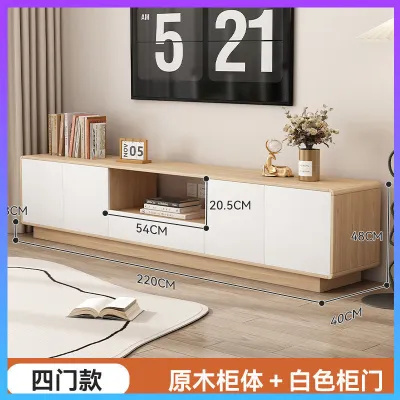
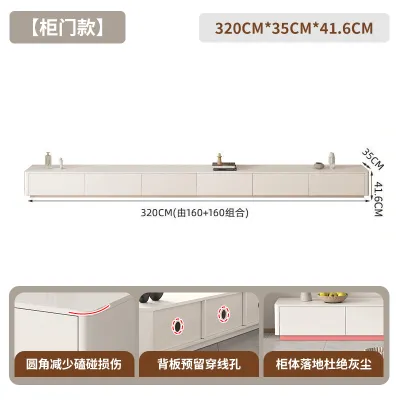
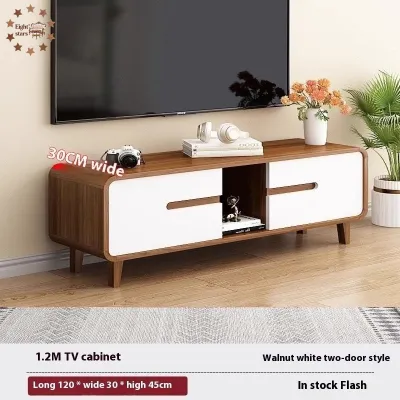
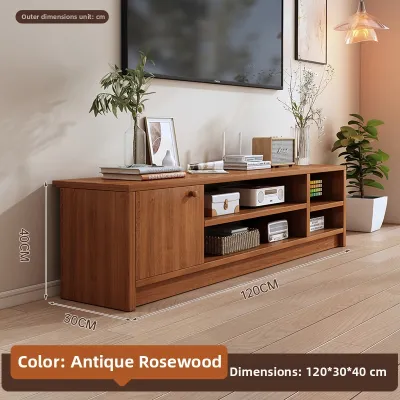
Prices are valid at publication and may change. Please refer to the product page for the latest price.
Singapore’s residential properties feature highly standardized layouts, but the available space varies significantly depending on the age and type of your home. A typical newly completed 3-room or 4-room HDB BTO flat often features a living area with a usable TV wall width of approximately 2.4 to 3.2 meters. Resale HDB flats, particularly those built in the 1980s or 1990s, frequently offer much wider living rooms, sometimes exceeding 4 meters of uninterrupted wall space. Private condominiums, on the other hand, often prioritize open-concept living but may feature narrower layouts or irregular wall configurations that require highly compact or custom-fitted furniture solutions.
In addition to basic length and depth, you must map out the structural constraints unique to your specific unit. Many Singapore homes feature prominent structural columns, built-in household shelters (bomb shelters) with heavy steel doors, or low-hanging air-conditioning ledges that project into the living space. Mark the exact locations of these features, along with the positions of your electrical sockets, fiber termination points, and cable TV outlets. If a console is too tall or lacks a recessed back, it may block access to these power sources, forcing you to run unsightly extension cords across the room or cut custom holes into the back panel of your new furniture.
Matching Kingswood Furniture TV Cabinets to Your Room Size
Achieving visual harmony in your living room requires balancing the proportions of your television screen with the width of your TV cabinet. Interior designers frequently recommend the “two-thirds rule” to maintain this balance. According to this guideline, your TV cabinet should be at least one-third wider than the total width of your television screen. For example, a standard 55-inch television has an actual physical width of approximately 122 centimeters; to balance this visually, your TV console should be at least 160 to 180 centimeters wide. This extra width prevents the television from looking top-heavy and leaves sufficient space on either side for decorative items, small speakers, or smart home hubs.

Depth is another critical dimension that directly impacts the usability of narrow Singapore living rooms. Standard TV consoles generally range from 35 to 50 centimeters in depth. In a narrow BTO living room where the distance from the TV wall to the sofa is less than 3 meters, selecting a cabinet with a slim depth of 35 to 40 centimeters is crucial for maintaining open walkways. A deeper console of 45 to 50 centimeters may accommodate older, larger media receivers, but it can severely restrict movement and make the room feel cramped. Always prioritize physical clearance over maximum storage volume when dealing with tight spatial limits.
When navigating the Kingswood furniture catalog, you can streamline your search by categorizing models based on their structural footprints. For homes with restricted floor space, look for low-profile, floating, or wall-mounted designs that keep the floor area clear and create an illusion of spaciousness. For larger homes with expansive walls, look for wider floor-standing consoles or modular systems that combine horizontal storage with vertical shelving. By filtering your options by dimensions first, you can narrow down the selection to models that fit your physical space before diving into aesthetic details like wood tones and handle designs.
Space-Saving Picks for 3-Room and 4-Room HDBs
For compact 3-room and 4-room HDB layouts, maximizing floor visibility is the most effective way to make a small living area feel larger. Wall-mounted or floating TV consoles are highly effective in these spaces because they leave the floor underneath completely clear. This lack of physical contact with the floor allows light to pass underneath the unit, creating an airy, spacious feel. Additionally, floating consoles make cleaning much easier, allowing robotic vacuums or mops to glide underneath without hitting furniture legs or trapping dust in hard-to-reach corners.
If a wall-mounted unit is not feasible, look for low-depth, floor-standing consoles that feature slender legs rather than a solid plinth base. Consoles raised on thin metal or wooden legs offer a similar visual lightness to floating units while avoiding the need for heavy wall mounting. When choosing these slim-profile models, check that the internal depth of the drawers or shelves is still sufficient to hold your essential devices. A minimum internal depth of 30 centimeters is usually required to house modern game consoles, media streaming boxes, and internet routers comfortably without forcing you to bend or strain the connecting cables.
Before purchasing a floating TV cabinet, you must verify the structural composition of your living room wall and understand its weight limits. HDB walls are typically made of solid concrete or precast panels, which are highly stable and capable of supporting heavy floating furniture when installed with the correct masonry wall plugs. However, some newer flats or renovated homes may feature drywall partitions or plasterboard false walls designed to conceal wiring. Drywall cannot support the weight of a cantilevered floating console and a heavy television without internal timber or metal stud reinforcement. Always check your home’s original floor plans or consult a qualified contractor to confirm your wall type before committing to a wall-mounted installation.
Wide and Modular Options for 5-Room HDBs and Condos
Larger living rooms, such as those found in 5-room HDB flats, multi-generation apartments, and executive condominiums, present a different design challenge: filling a wide wall without creating a cluttered or disjointed look. In these spacious environments, a small, isolated TV console can look lost and disproportionate, failing to anchor the room’s design. To solve this, look for wide, low-profile consoles that span 2.0 to 2.4 meters in length. These longer units provide a substantial horizontal anchor that balances the visual weight of large-format televisions, such as 65-inch, 75-inch, or even larger screens.
For homeowners who require a mix of storage and display space, modular ranges offer an excellent way to customize a layout. Modular systems allow you to pair a long central TV console with matching side cabinets, vertical bookcases, or overhead floating shelves. This approach lets you build a cohesive entertainment center that matches your storage needs precisely. You can use closed cabinets to hide clutter while utilizing open shelving to display books, indoor plants, or decorative items, breaking up the solid mass of the furniture and adding visual interest to the room.
When arranging a larger living room, you must balance the visual weight of your TV cabinet with the surrounding furniture. A massive, dark-wood entertainment unit can easily overwhelm a room if it is paired with a small, delicate sofa. Conversely, a massive L-shaped sectional sofa requires a substantial, wide TV console to maintain compositional balance. Ensure that the wood tones, metal finishes, and design details of your TV cabinet coordinate with your coffee table, sideboards, and side tables. This coordination creates a unified design language that makes the entire living space feel intentional and well-planned.
Evaluating Storage, Finishes, and Cable Management
A TV cabinet must be highly functional to handle the daily demands of a modern household. When evaluating different models, carefully consider the balance between open shelving and closed storage. Open shelves are ideal for housing devices that require direct line-of-sight for remote controls, as well as units that generate heat and require constant airflow, such as gaming consoles and amplifiers. Closed drawers and cabinets, on the other hand, are perfect for concealing unsightly clutter, such as spare cables, instruction manuals, game controllers, and smart home bridges. A combination of both storage types usually offers the best balance of accessibility and neatness.
Effective cable management is another essential feature that separates a high-quality TV console from a basic storage box. Look for cabinets that feature integrated cable management systems, such as pre-drilled rear cutouts, grommets, or hidden channels running along the back of the unit. These features allow you to route power cords and HDMI cables directly from your devices to the wall sockets without having them drape over the top or sides of the console. Some advanced models also include recessed back panels, which provide extra clearance for bulky power adapters and plugs, allowing the cabinet to sit flush against the wall.
The choice of surface finishes and materials directly impacts the durability and maintenance of your TV cabinet. Kingswood furniture utilizes a variety of finishes, including natural wood veneers, engineered wood laminates, and lacquered surfaces. While natural wood veneers offer a warm, organic texture, they require careful maintenance to prevent water rings or scratches. High-pressure laminates and engineered wood finishes are highly practical alternatives, offering excellent resistance to daily wear and tear. When evaluating materials, check the manufacturer’s care instructions to ensure the finish can withstand the high humidity levels typical of Singapore’s tropical climate.
To keep your TV cabinet looking its best, always follow the specific care instructions provided on the product label. In Singapore’s humid climate, dust can easily combine with moisture to form a stubborn layer of grime on furniture surfaces. Regular dusting with a dry, lint-free microfiber cloth is usually sufficient for daily maintenance. Avoid using harsh chemical cleaners, abrasive scrubbing pads, or excessive water, which can penetrate the seams of veneered or laminated panels and cause swelling or peeling over time. If a spill occurs, wipe it up immediately with a damp cloth and dry the area thoroughly with a clean towel to protect the integrity of the finish.
Quick Fit Matrix: Room Size vs. Cabinet Dimensions
To help you narrow down your search, the following matrix outlines the recommended TV cabinet dimensions based on typical Singapore residential layouts and common television sizes. Use these numbers as a general spatial guide to begin planning your living room layout.
| Living Room Type | Typical Wall Width | Recommended TV Size | Ideal Cabinet Width | Maximum Cabinet Depth |
|---|---|---|---|---|
| 3-Room HDB / Compact Condo | 2.0m – 2.5m | 43" – 50" | 1.2m – 1.5m | 35cm – 40cm |
| 4-Room HDB / Standard Condo | 2.6m – 3.2m | 55" – 65" | 1.6m – 1.8m | 40cm – 45cm |
| 5-Room HDB / Executive Condo | 3.3m – 4.0m | 65" – 75" | 2.0m – 2.2m | 45cm – 50cm |
| Resale Flat / Large Private Apartment | 4.0m+ | 75"+ | 2.4m+ | 50cm |
Disclaimer: The dimensions provided in this table are general spatial recommendations intended to help you visualize proportions. You must verify the exact finished dimensions, load capacities, and mounting requirements of your chosen Kingswood product specifications directly from the retailer or manufacturer’s product label before making a final purchase.
Pre-Purchase Checks: Delivery, Clearance, and Power Points
Before finalizing your purchase of a TV cabinet, you must conduct several logistical and spatial checks to ensure a smooth delivery and installation process. Start by measuring the access route from the delivery truck to your living room. This includes measuring the height and width of your apartment building’s lift doors, the interior dimensions of the lift cabin, the width of common corridors, and the clearance of your front entryway. Many wide, fully assembled floor-standing consoles cannot fit around tight corridor corners or into older HDB lifts, which may require manual transport up stairwells or result in delivery failures.
Next, verify the precise layout of your wall outlets in relation to the height and structure of the cabinet. Take note of where your power sockets, cable television points, and fiber termination points are located on the wall. If you are purchasing a floor-standing cabinet with a solid back panel, ensure that the cabinet’s height does not align directly with these sockets, which would prevent you from plugging in your devices or push the cabinet away from the wall. If the cabinet will cover the outlets, check if the model features a recessed back or pre-cut access ports that allow you to reach the plugs easily.
Finally, confirm the assembly and installation requirements of your chosen model. Some cabinets are delivered flat-packed and require self-assembly, while others come fully assembled or include professional installation services. If you are purchasing a floating or wall-mounted console, confirm whether the purchase price includes professional wall drilling and mounting. You must also check your building’s management rules regarding structural drilling. While HDB flat owners generally do not need a permit for minor wall drilling, private condominium managements often require prior approval and may restrict drilling on specific shared or structural walls.
Frequently Asked Questions (FAQ)
Do I need to reinforce my HDB wall for a floating TV cabinet?
Whether you need to reinforce your wall depends entirely on the construction material of the wall and the weight of the cabinet and television. Solid concrete walls, which make up the structural shell of most HDB flats, do not require reinforcement and can easily support a floating console when installed with heavy-duty masonry anchors. However, if you plan to mount the cabinet on a drywall partition or a hollow plasterboard wall installed during a previous renovation, you must verify that the wall contains internal timber or metal studs to support the load. If you are unsure about your wall’s load-bearing capacity, stop and consult a qualified structural contractor or professional installer before proceeding with the installation.
How do I hide the router and set-top box without blocking the remote signal?
To keep your electronics hidden while maintaining a strong remote control connection, look for TV cabinets that feature open shelving, slatted wooden doors, or glass panels. These designs allow infrared (IR) signals from your remote controls to pass through to the receiver without obstruction. If your chosen cabinet features solid wooden doors that completely block remote signals, you can install an inexpensive IR repeater or extender kit. This system uses a small, discreet receiver placed on top of the cabinet to capture your remote’s signal and transmit it via thin wires to an emitter placed inside the closed cabinet, allowing you to control your devices while keeping them completely out of sight.
Community discussion
Share your experience or ask a question. Comments are reviewed before publication.