
Transitioning your child from a crib to their first proper bed is a major milestone, but it also introduces a new set of safety considerations. While parents often focus on aesthetic appeal, color schemes, or integrated storage solutions, the physical design, structural integrity, and material composition of the frame are what truly protect a child. A poorly designed or incorrectly assembled frame can pose serious risks, including falls, structural collapse, limb entrapment, and exposure to toxic chemical off-gassing.
In Singapore, where high-rise apartment living and humid tropical conditions shape our domestic spaces, evaluating these safety aspects requires a localized approach. Understanding which safety standards to look for, how to perform physical inspections, and how to safely position furniture within your home will help you create a secure sleeping environment. This guide outlines the essential certifications, physical safety checks, and installation practices you must verify before making a purchase.
Navigating Safety Regulations for Children's Beds in Singapore
When shopping for children’s furniture in Singapore, it is important to understand how local safety regulations operate. Enterprise Singapore, the national agency overseeing product safety, strictly regulates infant cots and cradles under specific consumer protection schemes. However, youth beds, toddler transition beds, and bunk beds for older children do not fall under a mandatory, localized registration scheme. This means there is no unique, Singapore-specific safety stamp or mandatory national certification label for standard kids’ beds.
Products mentioned in this guide
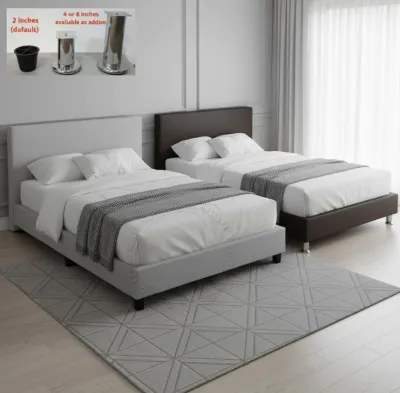

Prices are valid at publication and may change. Please refer to the product page for the latest price.
Instead, the local market relies on voluntary compliance with established international safety standards. Reputable furniture manufacturers and retailers design and test their products against rigorous global frameworks to prove their structural integrity. When evaluating a bed, you should not search for a non-existent local safety mark; instead, ask the retailer to provide documentation showing compliance with recognized European, American, or Australian standards.
Because compliance is largely self-regulated for older children’s furniture, purchasing from established, transparent retailers is critical. High-quality brands will readily share their testing certificates, laboratory reports, and material safety data sheets. If a seller cannot or will not provide proof of third-party safety testing, it is best to look elsewhere, as uncertified frames may use substandard materials or joinery that cannot withstand the active daily use of a growing child.
Key International Safety Standards to Look For on Product Labels
To ensure a kids’ bed is structurally sound and safe, you must check the product specifications for specific international standard codes. These codes indicate that a prototype of the bed has undergone rigorous mechanical testing to simulate years of heavy use, impact, and environmental stress.

Standards for Toddler and Standard Single Beds
For low-profile beds and toddler transition beds, look for standards that address frame stability, mattress support strength, and guardrail integrity. The most common and reliable standards include:
- ASTM F1821 (United States): This standard specifically covers toddler beds intended for children between 15 months of age and those weighing up to 22.7 kg. It mandates rigorous testing to ensure the mattress support cannot easily dislodge, the guardrails can withstand lateral pressure, and there are no hazardous gaps that could trap a child's head or torso.
- EN 1725 (Europe): While originally designed to test the strength and durability of adult beds, this standard is frequently applied to high-quality single beds for older children. It involves cyclic load testing, where heavy machinery applies repeated downward and lateral force to the frame, slats, and joints to ensure they will not fracture or deform under sudden impacts, such as a child jumping on the mattress.
Standards for Bunk Beds and Loft Beds
Elevated sleeping surfaces carry a much higher risk of fall injuries, making strict standard compliance non-negotiable. If you are purchasing a bunk bed or a loft bed, look for these specific certifications:
- BS EN 747 (United Kingdom and Europe): This is one of the most stringent standards globally for bunk beds and high beds. It specifies precise requirements for the strength of the frame, the height of the guardrails, the spacing of the ladder rungs, and the security of the fastening points. It requires that the bed remain completely stable under dynamic loads and that all components are securely locked in place.
- ASTM F1427 (United States): This standard establishes safety requirements for bunk beds, focusing heavily on preventing entrapment hazards and fall risks. It mandates continuous guardrails on all sides of the upper bunk, sets strict limits on allowable gap dimensions, and requires prominent safety labeling regarding mattress thickness and age limits.
- AS/NZS 4220 (Australia and New Zealand): Often found on high-quality imported furniture in Singapore, this standard is highly regarded for its strict focus on structural stability, ladder safety, and the elimination of protrusion hazards that could catch on a child's clothing.
Physical Safety Features to Inspect Before Purchasing
While certifications offer peace of mind, you should always perform a physical inspection of the bed frame in the showroom or carefully verify the technical drawings and dimensions online. Translating abstract standards into concrete physical checks ensures you catch potential hazards before the bed enters your home.
Guardrails and Fall Prevention For any elevated bed, including toddler beds with partial rails and the top bunk of a bunk bed, guardrails are your primary defense against falls. On a bunk bed, the guardrails must extend continuously around all four sides, with the only permissible opening being the entrance for the ladder. The top of the guardrail must sit at least 160 mm above the top surface of the mattress. To ensure this safety margin is maintained, you must check the manufacturer’s specified maximum mattress thickness. If you install a mattress that is too thick, you will compromise the effective height of the guardrail, making it easy for a sleeping child to roll over the top.
Slat and Spacing Gaps Entrapment is a major hazard for young children, who can easily slide their bodies through small openings only to have their head or neck caught. To prevent this, you must measure or verify the gaps between the bed slats, the vertical bars of the guardrails, and the rungs of the ladder. Under international safety guidelines, these gaps must be strictly controlled. Gaps must either be smaller than 75 mm (to prevent a child’s limbs or head from entering) or larger than 230 mm (allowing the child’s entire body to pass through safely without trapping the head). Avoid any design with decorative cutouts, scrollwork, or V-shaped gaps in the headboard or footboard, as these are notorious for catching fingers, limbs, and clothing.
Structural Stability and Entrapment Hazards When visiting a furniture showroom, perform a physical stability test. Apply firm lateral pressure to the top of the bed frame and shake it. A safe kids’ bed should feel solid and exhibit minimal sway or wobble. Inspect the joinery underneath the frame; high-quality beds use heavy-duty steel barrel nuts and bolts that pull the wooden components tightly together, rather than simple wood screws that can strip and loosen over time. Run your hands along all surfaces to check for sharp edges, rough sanding, splinters, or protruding hardware. All bolts should be recessed or covered with smooth plastic caps so they cannot snag clothing or scratch skin.
Mattress Fit In Singapore, mattress sizes are standardized but differ slightly from European or American dimensions. A standard Singapore Single mattress measures 91 cm by 191 cm, while a standard Super Single measures 107 cm by 191 cm. If you purchase an imported European bed frame designed for a 90 cm by 200 cm mattress, using a local Singapore Single mattress will leave a 9 cm gap at the foot of the bed. This gap is a severe entrapment hazard where a child’s leg or foot can slip through and get wedged. Always measure the interior dimensions of the bed frame’s mattress base and ensure your chosen mattress fits snugly against all four sides, leaving a gap of no more than 20 mm around the perimeter.
Evaluating Material Toxicity and Chemical Safety
Children spend up to half of their day in close contact with their bed, making chemical safety and indoor air quality just as important as structural stability. Many mass-produced furniture items utilize cheap materials and finishes that release volatile organic compounds (VOCs) and other harmful chemicals into the air.
Do not rely on vague marketing terms like “eco-friendly,” “natural,” or “non-toxic” without demanding proof. Many manufacturers use these labels as greenwashing tactics. Instead, look for independent, third-party chemical certifications that verify the safety of the materials used in both the frame and the mattress.
For wooden frames, particularly those made from engineered wood like medium-density fiberboard (MDF) or plywood, verify the formaldehyde emission rating. Singapore’s high humidity and warm temperatures can accelerate the off-gassing of formaldehyde from cheap urea-formaldehyde adhesives. Look for frames certified as E0 or E1 (European standards for low formaldehyde emissions) or those meeting the California Air Resources Board (CARB) Phase 2 standards. For solid wood frames, verify that the protective lacquers, varnishes, or paints are water-based and certified lead-free, complying with standards such as EN 71-3 (the European safety standard for toy finishes, which restricts the migration of heavy metals).
When choosing a mattress, look for reputable certifications such as CertiPUR-US or OEKO-TEX Standard 100. A CertiPUR-US certification guarantees that the polyurethane foam inside the mattress is made without ozone depleters, PBDE flame retardants, mercury, lead, or other heavy metals, and has extremely low VOC emissions. An OEKO-TEX Standard 100 certification ensures that the textile cover of the mattress has been tested for harmful levels of toxic chemicals, pesticides, and allergenic dyes, making it safe for direct contact with sensitive young skin.
Ensuring Safe Assembly, Placement, and Long-Term Stability
Even a bed certified to the highest international standards can become a hazard if it is assembled incorrectly, placed in a dangerous location, or neglected over time. Safety is an ongoing process that continues long after the delivery truck leaves.
Assembly and Anchoring
Always prioritize the manufacturer’s assembly instructions and use the exact hardware provided. Never substitute missing bolts with random screws from a hardware store. If the bed is an elevated loft or bunk bed, anchoring it to the wall is a vital step to prevent tip-over accidents, especially if children attempt to climb the outer frame.
In Singapore, residential walls are typically constructed of solid concrete or structural brick, particularly in Housing & Development Board (HDB) flats. Standard plastic drywall plugs will not provide sufficient holding power for heavy furniture. You must use a masonry drill bit to create pilot holes and insert high-quality nylon expansion plugs or metal sleeve anchors to secure the safety brackets firmly into the concrete wall.
Room Placement Boundaries
When planning the layout of your child’s bedroom, observe strict placement boundaries to eliminate environmental hazards:
- Keep away from windows: Never place a child's bed, especially an elevated one, directly underneath or adjacent to a window, even if the window is fitted with safety grilles. Children can use the bed frame as a climbing platform to reach window latches.
- Avoid cords and wires: Ensure the bed is positioned far from window blind cords, curtain tie-backs, wall-mounted light cords, or electrical outlets. These pose severe strangulation and electrical hazards.
- Maintain ceiling fan clearance: Ceiling fans are highly common in Singaporean bedrooms to combat the tropical heat. If you are installing a bunk or loft bed, you must ensure that the top of the mattress sits at least 1 meter below the lowest point of the ceiling fan. Furthermore, the bed must be positioned completely outside the rotation radius of the fan blades to prevent catastrophic impact injuries if a child sits up or stands on the top bunk.
Ongoing Maintenance
Singapore’s high relative humidity causes natural timber frames to expand and contract slightly throughout the year. This natural movement, combined with the vibrations from a child climbing and moving on the bed, will gradually loosen the joint bolts over time.
Establish a routine maintenance check every six months. Use a hex key or screwdriver to inspect and tighten all structural bolts, corner brackets, and ladder attachments. Check the wooden slats to ensure they remain securely anchored to the support rails and have not warped or cracked. If you notice any structural play, wobbling, or damaged components, restrict access to the bed immediately and contact the manufacturer for replacement parts or professional repair.
Frequently Asked Questions (FAQ)
At what age is it safe to transition a child to a bunk bed?
According to international safety guidelines, the top bunk of a bunk bed or a loft bed is strictly unsafe for children under the age of six. Children younger than six often lack the physical coordination, balance, and spatial awareness required to safely navigate ladders and elevated platforms, particularly when waking up groggy in the middle of the night. Even if your child is six or older, you should assess their individual maturity level, tendency to sleepwalk, and ability to understand and follow safety rules—such as not playing or jumping on the top bunk—before allowing them to sleep on an elevated surface.
How can I verify the safety of a second-hand or hand-me-down kids' bed?
While accepting a second-hand bed can be highly cost-effective, you must perform a rigorous safety audit before allowing your child to use it. First, verify that the bed has not been subject to any manufacturer safety recalls by searching the brand and model name online. Inspect the frame thoroughly for missing hardware, structural fatigue, hairline cracks in the wood, or bent metal brackets.
Ensure that the original assembly instructions are available online so you can verify that every safety component, including the guardrails and ladder, is present and correctly installed. Finally, measure all gaps and slat spacing yourself to ensure they comply with modern safety limits, and avoid older vintage beds that may have been painted with lead-based finishes before modern chemical regulations were established.
Community discussion
Share your experience or ask a question. Comments are reviewed before publication.