
Selecting a kids’ bed frame in Singapore requires looking beyond aesthetics and space-saving designs. Because children use their beds not just for sleeping but also for play, the structural integrity of the mattress frame is paramount to preventing accidents. Ensuring a safe sleeping environment involves verifying international safety certifications, checking physical design features, and ensuring a precise fit between the frame and the mattress.
In Singapore, while general consumer goods are regulated to ensure they do not pose safety hazards, children’s furniture often relies on voluntary compliance with rigorous international standards. Parents must take an active role in inspecting the physical build, verifying documentation, and executing proper assembly. By understanding what to look for, you can secure a bed that supports your child’s growth safely and reliably.
Understanding Baseline Safety Requirements for Kids' Furniture
When shopping for children’s furniture in Singapore, it is important to understand how safety standards are structured. Enterprise Singapore oversees general consumer product safety, but there is no single mandatory local registration mark specifically for children’s bed frames. Instead, reputable manufacturers design their products to comply with established international safety benchmarks, which serve as the gold standard for voluntary compliance.
Products mentioned in this guide
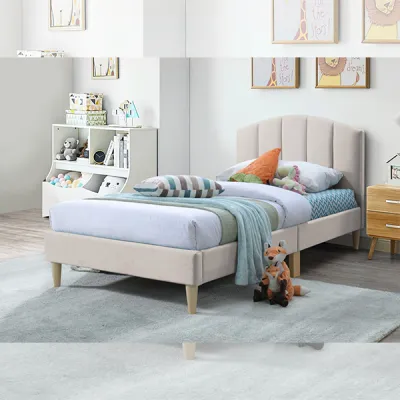
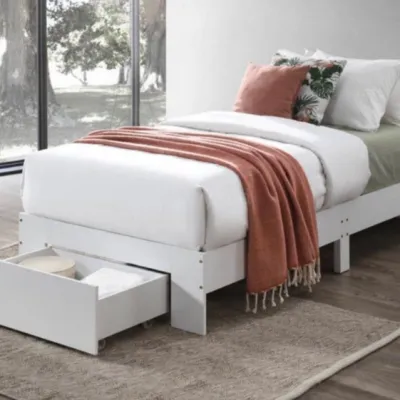
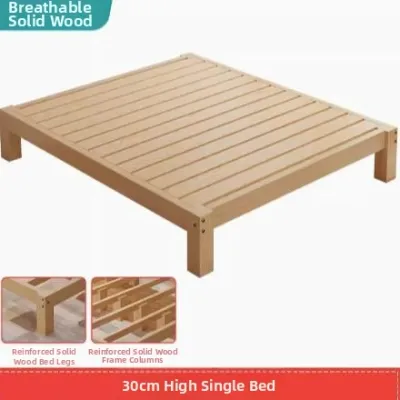
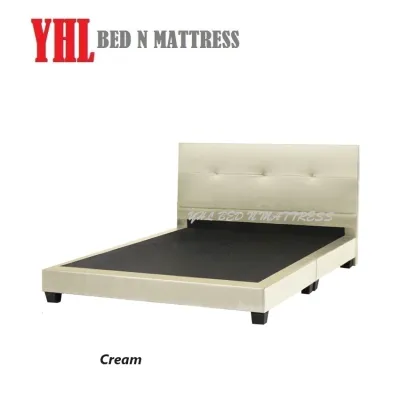
![[FREE INSTALLATION] KENZZO: E1 Grade Wooden super single pull out bed frame /Mattress/bed frame/chest of drawers](https://img.lazcdn.com/g/p/849c835efb8f068738e480a118de1619.jpg_400x400q80.jpg_.webp)

Prices are valid at publication and may change. Please refer to the product page for the latest price.
The most widely recognized benchmarks include European Standards (such as EN 747 for bunk beds and high beds) and American Standards (such as ASTM F1427). These standards dictate rigorous testing protocols for structural strength, stability, and material safety. When a mattress frame carries these certifications, it indicates that the design has undergone mechanical testing to withstand typical childhood use and abuse.
Failing to meet these standards can expose children to serious physical hazards. Common risks associated with poorly designed bed frames include entrapment of the head, limbs, or torso in gaps, tip-over accidents from unstable frames, cuts from sharp edges, and structural collapse under dynamic weight. Children frequently jump or play on their beds, making structural resilience a critical safety factor rather than a luxury.
A child’s age, weight, and developmental stage should dictate the specific structural requirements of the bed. For toddlers transitioning from a cot, low-to-the-ground frames with integrated side barriers are ideal to prevent falls. Older children may transition to loft or bunk beds, but these elevated structures require much stricter safety parameters, including robust guardrails and secure ladders, to accommodate increased physical activity and height.
Essential Physical Safety Features to Inspect Before Purchase
Before finalizing any purchase, a physical inspection of the mattress frame is essential, whether you are visiting a showroom in Singapore or evaluating the product upon home delivery. The first critical feature to examine is the guardrail system, especially for elevated beds. Guardrails must be structurally rigid, securely attached to the frame, and run continuously along the sides with minimal gaps to prevent a child from rolling out or getting caught.

The spacing between guardrail slats, as well as any openings in the headboard or footboard, must be carefully measured. Gaps should be narrow enough to prevent a child’s head or torso from passing through, yet wide enough that limbs cannot become wedged. A general rule of thumb is to ensure that gaps are either very small (less than 60 millimeters) or completely closed, minimizing any risk of entrapment.
Surface finishes require close scrutiny to protect your child from physical and chemical hazards. Run your hands along the entire frame to check for splinters, rough patches, sharp corners, or exposed hardware like protruding screws and bolts. Additionally, inquire about the finishes used on the wood or metal; they should be certified non-toxic, lead-free, and low in volatile organic compounds (VOCs) to ensure safe indoor air quality in air-conditioned Singapore bedrooms.
The base support system of the mattress frame is the foundation of its structural integrity. Inspect the slats to ensure they are made of durable, high-quality material and are spaced closely enough to support the mattress evenly. Wide gaps between slats can cause the mattress to sag, creating uneven sleeping surfaces and potential entrapment zones, while also compromising the overall stability of the bed under sudden impacts.
How to Verify Safety Certifications and Compliance Documents
Verifying safety claims requires looking beyond marketing labels and asking retailers for concrete compliance documentation. When considering a mattress frame, ask the retailer to provide third-party test reports or certificates of compliance. These documents should clearly state that the product has been tested by an accredited laboratory against recognized standards like EN or ASTM.
A legitimate test report will detail the specific tests conducted, including load-bearing capacity, impact resistance, and chemical analysis of the finishes. If a retailer is unable or unwilling to provide these documents, or if the certificates appear vague and lack official laboratory stamps, it is a significant red flag. Transparency is a key indicator of a manufacturer’s commitment to safety.
In addition to test reports, carefully review the product labels, user manuals, and warning tags attached to the bed frame. These materials should provide explicit instructions regarding age restrictions, maximum weight limits, and specific assembly requirements. For instance, bunk beds should clearly state that the upper bunk is not suitable for children under a certain age, helping you make an informed decision based on your child’s current development.
If you encounter a retailer that cannot verify the safety standards of their children’s furniture, it is best to look elsewhere. Prioritize brands that offer clear, accessible safety documentation and a robust return policy. A reliable return policy ensures that if the bed frame arrives with visible defects, structural instability, or does not match the safety specifications promised, you can return or exchange it without hassle.
Mattress and Frame Fit: Eliminating Dangerous Entrapment Gaps
A safe sleeping environment depends heavily on the compatibility between the mattress and the mattress frame. Gaps between the mattress and the frame pose a severe risk of suffocation or limb entrapment, particularly for younger children. To eliminate this hazard, you must ensure a snug, secure fit where the mattress sits firmly within the frame without shifting.
When shopping in Singapore, be aware that mattress and frame dimensions can vary depending on their country of origin. A standard Singapore Single mattress (typically 91 cm by 190 cm) may not fit perfectly into a frame designed for European or American mattress standards, which often have slightly different dimensions. Always measure the internal dimensions of the bed frame and compare them directly with the physical measurements of the mattress you plan to use.
The maximum allowable gap between the mattress edge and the frame sides should be minimal—ideally no more than a finger’s width or about 20 to 30 millimeters. If you can easily slide your hand or arm into the gap between the mattress and the frame, the combination is unsafe. This gap can trap a child’s foot, leg, or head, especially if they roll over during sleep or play.
Using mismatched, oversized, or undersized mattresses on a designated frame introduces unnecessary risks. An oversized mattress may overhang or sit too high, reducing the effective height of the guardrails and increasing the risk of falls. Conversely, an undersized mattress leaves dangerous gaps and allows the mattress to slide around, destabilizing the entire sleeping surface and compromising your child’s safety.
Secure Assembly and Ongoing Structural Maintenance
The safety of a kids’ bed frame is only as good as its assembly and ongoing maintenance. When assembling the bed, follow the manufacturer’s instructions strictly, step by step. Use only the provided hardware and recommended tools; substituting screws, bolts, or brackets with generic hardware can compromise the structural integrity of the joints and lead to premature failure.
For elevated beds, such as loft beds or bunk beds, anchoring the frame to the wall is a critical safety step that should never be skipped. Many manufacturers provide wall-anchoring kits specifically designed to prevent tip-overs if a child climbs on the frame. Ensure the anchor is secured into a solid wall structure, taking into account the typical concrete or masonry walls found in Singapore homes.
Over time, regular use, humidity, and children’s active play can cause hardware to loosen and materials to wear. Establish a schedule to perform periodic safety checks on the bed frame, ideally every few months. Tighten any loose screws or bolts, inspect wooden or metal slats for cracks or bending, and verify that the guardrails remain completely stable and secure.
Pay close attention to the joints and connection points of the mattress frame. In Singapore’s humid climate, wooden frames can expand and contract, which may gradually loosen joints or cause wood to warp. If you notice any squeaking, wobbling, or visible wear during your checks, address the issue immediately by tightening connections or contacting the manufacturer for replacement parts to maintain a safe sleeping environment.
Frequently Asked Questions (FAQ)
Are bunk beds safe for young children?
Bunk beds can be safe, but they are generally not recommended for children under six years of age on the top bunk. Younger children often lack the physical coordination and developmental readiness to safely navigate ladders and elevated heights, increasing the risk of falls. When using bunk beds, ensure the top bunk has continuous guardrails on all sides, a securely attached ladder with wide steps, and ample clearance from ceiling fans or light fixtures in your child’s bedroom.
What should I do if the bed frame wobbles after assembly?
If the bed frame wobbles or feels unstable after assembly, stop using it immediately to prevent any risk of collapse. Re-check the assembly manual to ensure all parts were installed correctly, all screws and bolts are fully tightened, and no components are missing. Verify that the floor surface is level; uneven flooring can cause instability, which can often be resolved by adjusting leveling feet or relocating the bed. If the frame remains unstable after careful reassembly, contact the manufacturer or a qualified professional for assistance before allowing your child to use it.
Community discussion
Share your experience or ask a question. Comments are reviewed before publication.