
Deciding on the right bed for your child involves balancing comfort, budget, and above all, physical safety. Kenzzo bedframes, which are widely available across online marketplaces in Singapore, have become a popular option for families seeking budget-friendly home furniture. However, because many models in their catalog are designed primarily for general adult use rather than specifically engineered for children, they do not automatically carry specialized pediatric safety certifications. To determine if a specific Kenzzo bedframe is safe for your child, you must look beyond the affordable price tag and actively verify its structural design, material composition, and installation requirements against established children’s furniture safety standards.
Evaluating a bedframe for a child’s bedroom requires a shift in perspective from adult furniture shopping. Children interact with their beds dynamically—they climb, jump, lean against headboards, and sometimes test the limits of the structure during play. A frame that is perfectly adequate for a guest room might pose hidden risks in a toddler’s room if it features sharp edges, wide slat gaps, or lacks proper wall-anchoring capabilities. By understanding what safety standards to look for, how to verify manufacturer claims, and how to execute a thorough physical inspection upon delivery, you can confidently decide whether a particular model fits safely into your home.
Understanding Children's Bed Safety Standards in Singapore
When assessing any children’s furniture in Singapore, parents should familiarize themselves with international safety standards, as local retail regulations often reference these frameworks. For infant cots and travel cots, the European standard EN 716 is the benchmark, while ASTM F1821 serves as the prominent standard for toddler beds in the United States. For standard single or domestic beds that older children transition into, BS EN 1725 outlines the mechanical safety and strength requirements. These standards are not merely bureaucratic checklists; they dictate the exact physical dimensions and stress tolerances required to prevent serious injuries.
Products mentioned in this guide
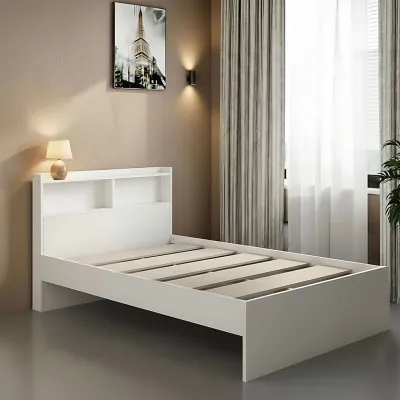


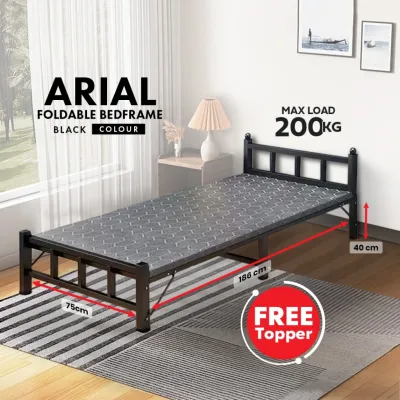
![[FREE INSTALLATION] KENZZO: E1 Grade Special Edition Wooden super single bed frame with headboard /super single](https://img.lazcdn.com/g/p/edc84cfe7013a09062b55fa8d7fde27d.jpg_400x400q80.jpg_.webp)
Prices are valid at publication and may change. Please refer to the product page for the latest price.
One of the most critical safety metrics defined by these standards is slat spacing. To eliminate the risk of head, neck, or limb entrapment, the gap between individual wooden or metal slats should ideally be between 5 cm and 7.5 cm. If the slats are spaced too far apart, a young child’s leg or arm can easily slip through, leading to painful wedging or fractures. Furthermore, the distance between the mattress edge and the inner frame must be minimal to prevent a child’s body from sliding into a peripheral gap, which poses a severe suffocation hazard.
Guardrail height is another dimension governed strictly by pediatric safety guidelines. For any bed featuring guardrails—whether integrated or added as an aftermarket accessory—the top of the rail must sit at least 16 cm to 20 cm above the top surface of the mattress. This measurement must account for the actual thickness of your mattress, not just the empty frame. If you pair a thick, plush mattress with a shallow frame, the effective height of the guardrail decreases, rendering it useless at preventing a child from rolling out of bed during sleep.
It is also vital to distinguish between the safety requirements of different bed types. True toddler beds are built exceptionally low to the ground to minimize fall impact and feature integrated, non-removable guardrails. Single beds with aftermarket clamp-on rails offer more longevity but introduce secondary risks, such as the rail slipping or detaching if not anchored correctly. Bunk beds and loft beds represent the highest risk category, requiring robust guardrails on all four sides of the elevated platform, secure ladder attachments, and strict adherence to age limits.
How to Verify Kenzzo Safety Certifications Before Buying
Because Kenzzo operates primarily in the budget-friendly furniture space, their product listings on e-commerce platforms may not always display detailed safety certifications upfront. To verify the safety of a specific model, start by examining the product tags, assembly manuals, or official brand specifications. If you are shopping online, look closely at the material listings and construction details provided by the seller. Do not hesitate to contact the customer service representative directly to ask for clarification on structural testing and material origins.

When contacting a retailer or brand, ask specific questions rather than asking general questions about safety. Inquire whether the bedframe has undergone structural testing under standards like BS EN 1725. Additionally, ask about the chemical safety of the materials used. In Singapore, indoor air quality is a major consideration, and furniture made from engineered wood (such as MDF or particleboard) can emit formaldehyde. You should ask the seller if the engineered wood meets low-emission standards, such as the European E1 or E0 classification, which limits harmful chemical off-gassing in your child’s bedroom.
Parents should remain highly skeptical of vague marketing terms that lack regulatory backing. Phrases like “100% child-safe,” “non-toxic paint,” or “eco-friendly materials” are frequently used as promotional buzzwords. A genuine safety claim will always be accompanied by a specific testing standard or certification number, such as EN 71-3 (which regulates the migration of heavy metals in toy and furniture coatings) or a GREENGUARD Gold certification. If a retailer cannot provide documented proof or a specific standard compliance number upon request, you should assume the product has not undergone independent safety testing.
Additionally, pay close attention to the country of origin and the manufacturing guidelines followed by the brand. Many budget-friendly frames imported into Singapore are produced in regional factories that prioritize rapid assembly over rigorous child-safety testing. If a brand cannot provide clear documentation regarding their material sourcing or manufacturing standards, it is wiser to opt for a model constructed from solid, unfinished wood or one from a manufacturer that openly publishes their compliance certificates.
Essential Physical Safety Checks for the Bedframe
If you decide to purchase a Kenzzo bedframe, performing a hands-on physical inspection upon delivery or assembly is non-negotiable. Begin by checking for entrapment hazards around the sleeping surface. Assemble the bed completely and place your chosen mattress inside the frame. Measure any gaps between the mattress sides and the headboard, footboard, or side rails; these gaps should never exceed 3 cm. Next, measure the spacing between the support slats beneath the mattress to ensure they conform to the recommended 5 cm to 7.5 cm limit, and verify that the slats are screwed securely into the side ledges so they cannot slide or bunch together.
Run your hands thoroughly across every accessible surface of the frame to identify potential impact or snag hazards. Check for sharp, un-sanded wooden edges, splintered laminates, or rough metal welds that could scratch sensitive skin. Inspect the joints and underside of the frame for protruding screws, staples, or bolts that could snag clothing or hair. If the bedframe features decorative cutouts or patterns in the headboard or footboard, ensure that these openings are either smaller than 5 cm or larger than 23 cm to prevent a child’s fingers, hands, or head from becoming trapped.
Assess the overall stability and tipping risks of the assembled frame. Gently shake the headboard and side rails from side to side; a safe bedframe should feel solid, with no noticeable swaying, shifting, or loud creaking at the joints. Budget-friendly frames that utilize lightweight materials or thin plastic legs often have a high center of gravity, especially when paired with a heavy mattress. Ensure that the legs are robust, sit completely flush against the floor, and are constructed from solid timber or reinforced steel rather than flimsy, hollow plastic.
Finally, ensure a perfect mattress fit by comparing the frame’s inner dimensions with standard Singapore mattress sizes. A standard Singapore Single mattress measures 91 cm by 190 cm, while a Super Single measures 107 cm by 190 cm. If the Kenzzo frame you purchased was manufactured to international dimensions (such as European or American sizes), a standard local mattress may leave dangerous gaps at the head or foot of the bed. Always measure the inner recess of the frame before purchasing a mattress to guarantee a snug, seamless fit.
Safe Room Placement and Anti-Tip Precautions
Even the most structurally sound bedframe can become hazardous if it is positioned poorly within a room or left unsecured. Anti-tip precautions are essential, particularly if your child’s bedframe features an integrated bookcase, high headboard, or under-bed storage drawers that encourage climbing. To prevent catastrophic tipping accidents, you should anchor the headboard or the main frame directly to the wall using heavy-duty furniture straps or L-brackets.
Executing this anchoring process correctly depends entirely on the wall construction of your Singapore home. In typical Housing & Development Board (HDB) flats, bedroom walls are usually constructed from solid concrete or precast lightweight concrete. Securing furniture to these walls requires a rotary hammer drill, masonry drill bits, plastic wall plugs (anchors), and robust steel screws. Conversely, if you live in a condominium or landed property with drywall partition walls, you must locate the vertical metal or wooden studs using a stud finder and drive your screws directly into them, or utilize specialized heavy-duty toggle bolts to ensure a secure hold.
Carefully plan the clearance zones around the bed to eliminate environmental hazards. Position the bed well away from windows, even if you have window grilles installed, to prevent any temptation for climbing. Keep the bed far out of reach from pull-cords for roller blinds, curtains, or electrical cords, which present immediate strangulation risks. In Singapore’s tropical climate, ceiling fans are a staple in most bedrooms; you must verify that no part of the bed—especially if you are using an elevated frame or a toddler bed with a high canopy—falls within the sweep radius of the fan blades.
Consider the flooring material surrounding the bed to mitigate the impact of accidental falls. Singapore bedrooms commonly feature hard parquet, luxury vinyl tiles, or homogenous ceramic tiling. Placing a plush, non-slip rug or a high-density EVA foam playmat alongside the bed can significantly cushion a fall. Ensure that any rug you place in the room features a high-quality rubberized backing, as a loose rug on a polished floor can easily slip when a child steps out of bed, causing a secondary fall hazard.
Weight Limits and When to Transition to a Larger Bed
Every bedframe is engineered to support a specific maximum weight limit, and exceeding this limit compromises the structural integrity of the entire unit. When calculating the load on a child’s bed, remember to calculate the cumulative weight of the child, the mattress, heavy bedding, and any parent who sits on the edge of the bed for nighttime reading. Budget-friendly frames may have lower weight thresholds, so it is crucial to locate the manufacturer’s specified weight limit and adhere to it strictly.
Monitor your child’s physical growth and behavioral patterns to determine when it is time to transition to a larger, more robust sleeping arrangement. If your child’s head is within 5 cm of the top of the headboard when lying down, or if their feet touch the footboard, they have physically outgrown the bed. Behaviorally, if your child is an active sleeper who frequently bumps against the sides, or if they have begun attempting to climb over the guardrails of a toddler bed, transitioning to a standard single bed closer to the floor is the safest course of action.
Regularly inspect the bedframe for signs of structural fatigue, which indicates that the frame needs immediate repair or replacement. Watch for persistent creaking or grooving sounds when weight is applied, which often points to loose joints or stripping screw threads. Inspect the central support beam and the individual slats for bowing, hairline cracks, or warping caused by Singapore’s high humidity levels. If you notice any structural sagging, loose brackets that cannot be tightened, or splitting wood, discontinue use immediately to prevent a sudden and dangerous collapse.
Frequently Asked Questions (FAQ)
Do Kenzzo bedframes include anti-tip wall anchors?
Whether anti-tip wall anchors are included depends entirely on the specific Kenzzo model and the retailer you purchase from. Many budget-friendly, flat-packed bedframes do not come packaged with wall-anchoring hardware as a standard inclusion. Before finalizing your purchase, review the product’s listed parts inventory. If the package does not explicitly include safety straps or L-brackets, you must purchase universal furniture anti-tip straps separately from a local hardware store to secure the bed safely to your wall.
What is the recommended mattress thickness for a bed with guardrails?
To ensure that guardrails prevent accidental falls effectively, the top of the guardrail must stand at least 16 cm to 20 cm above the top surface of the mattress. For most standard children’s beds, this means you should select a low-profile mattress with a thickness of 10 cm to 15 cm (4 to 6 inches). Using a thick adult mattress on a child’s bed with guardrails will significantly reduce the protective barrier height, making it easy for a sleeping child to roll right over the rail.
Are bunk beds or loft beds safe for young toddlers?
Bunk beds and elevated loft beds are strictly not recommended for children under six years of age. Toddlers lack the coordination, spatial awareness, and physical strength required to navigate ladders safely, presenting a severe risk of falls. Additionally, the elevated height increases the severity of any accidental fall. For toddlers and young children, stick to low-profile single beds or dedicated toddler beds positioned close to the ground.
Community discussion
Share your experience or ask a question. Comments are reviewed before publication.