
Transitioning a child to an elevated sleeping arrangement is a major milestone for many growing families. In space-conscious homes, a double decker bed is a highly practical solution to maximize floor space, leaving more room for play, study, and storage. However, elevating a sleeping surface introduces distinct safety considerations that go beyond simple bedroom aesthetics.
Determining the right time to allow your child to sleep on the top bunk requires balancing chronological age with physical and behavioral readiness. While age guidelines provide a helpful starting point, children develop at different rates. Assessing your child’s coordination, spatial awareness, and ability to follow safety rules is essential to ensuring a safe and comfortable night’s sleep.
The Baseline Age Guideline and Manufacturer Rules
Consumer safety organizations and pediatric health experts globally agree on a clear baseline: the top bunk of a double decker bed is not safe for children under the age of six. This standard is established because younger children lack the physical coordination, balance, and spatial judgment required to climb up and down an elevated ladder safely, particularly when waking up disoriented in the middle of the night.
Products mentioned in this guide

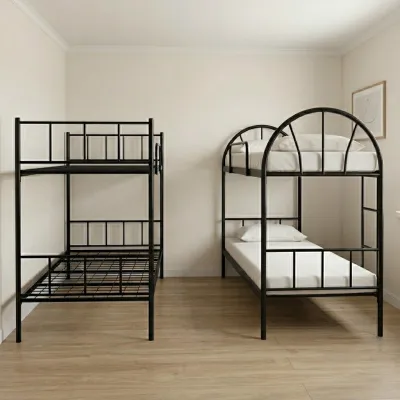




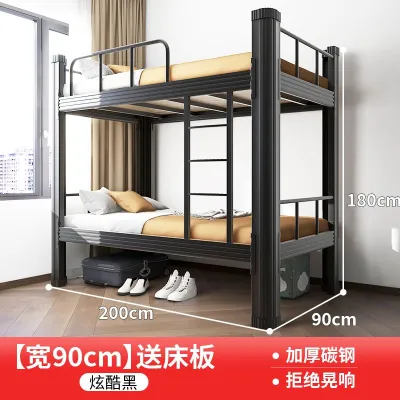
Prices are valid at publication and may change. Please refer to the product page for the latest price.
While the six-year-old threshold is a widely accepted industry standard, it remains a general baseline rather than a universal guarantee of safety. Every child develops at their own pace, and chronological age does not automatically equate to physical or behavioral readiness. A child who is technically six but prone to nighttime restlessness or impulsive behavior may still face significant risks on an elevated platform.
Before purchasing or assembling a double decker bed, you must thoroughly inspect the manufacturer’s warning labels and safety instructions affixed to the frame. These product-specific guidelines outline critical parameters, including strict age limits, maximum weight capacities, and specific mattress thickness requirements. Because engineering designs and structural capacities vary significantly between models, the manufacturer’s explicit directives must always override general advice.
Assessing Maturity: Is Your Child Truly Ready?
Evaluating whether your child is ready for the top bunk involves looking closely at their daily habits, physical abilities, and cognitive development. Moving a child upstairs before they are developmentally prepared increases the likelihood of accidental falls and injuries.

Cognitive and Physical Milestones
To sleep safely on the top bunk, a child must possess the cognitive capacity to understand and consistently follow safety rules. They need to recognize that the ladder is the only safe route up and down, and that the upper bed is strictly a place for sleeping rather than a play platform. If a child views the top bunk as a jungle gym or struggles to grasp the consequences of rough play, they are not yet ready for an elevated bed.
Physical coordination is equally critical. Your child must be able to climb the ladder confidently, maintaining a secure grip and stable footing. This physical task becomes significantly more challenging at night or during early morning hours when the room is dark and the child is groggy. Observe how your child navigates playground equipment or household stairs; they should demonstrate deliberate, controlled movements and a strong sense of balance before you allow them to sleep on the top bunk.
Behavioral Signs and Risk Factors
Certain behavioral patterns are clear indicators that a child should remain on the bottom bunk, regardless of their chronological age. If your child has a history of sleepwalking, experiencing night terrors, or waking up frequently in a state of confusion, an elevated bed poses an immediate safety hazard. These conditions can lead to sudden, uncoordinated movements that bypass guardrails and result in serious falls.
Other behavioral red flags include frequent tossing and turning during sleep, a tendency to play roughly on furniture, or a general reluctance to follow household rules. A child who routinely ignores instructions or tests boundaries is highly likely to ignore safety rules regarding the top bunk. If these behaviors are present, keeping your child on the bottom bunk or utilizing a standard single bed is the safest course of action.
Critical Safety Features to Verify on Your Double Decker Bed
Before allowing any child to use a double decker bed, you must conduct a detailed inspection of the furniture’s physical structure. Ensuring the bed meets standard safety specifications is paramount to preventing structural failures and physical entrapment.
Guardrails
Guardrails are the primary defense against nighttime falls and must be installed on all sides of the top bunk, even if the bed is positioned directly against a wall. Standard safety guidelines require that the top of the guardrail sits at least 13 to 15 centimeters (approximately 5 inches) above the top surface of the mattress. Inspect the guardrails to ensure there are no wide gaps between the rails themselves, or between the lowest rail and the bed frame; these gaps should not exceed 9 centimeters to prevent a child’s head or limbs from becoming trapped.
Ladder Stability
An unstable or poorly designed ladder is a major source of bunk bed injuries. The ladder must be securely fastened to the bed frame with heavy-duty brackets or screws so that it cannot wobble, slip, or detach during use. Look for a ladder with wide, flat, slip-resistant steps rather than narrow, rounded rungs, which can easily cause a foot to slip. Ensure the ladder’s placement does not obstruct bedroom walkways, closet doors, or entryways, allowing for clear and safe passage at all times.
Mattress Fit
The mattress used on the top bunk must fit the bed frame precisely, leaving no dangerous gaps along the sides or ends where a child could slide through and become entrapped. Always refer to the manufacturer’s specifications for the maximum allowable mattress thickness. Buying a mattress that is too thick reduces the effective height of the guardrails, rendering them ineffective at preventing falls. Ensure the mattress is supported by a sturdy foundation of wooden slats or a metal grid that is securely locked into the frame.
Delivery and Installation Checks
When planning your purchase, verify the finished dimensions of the bed frame against the available space in your bedroom, taking into account doorway and lift access during delivery. A bulky double decker bed frame can be challenging to maneuver through tight corridors or standard apartment lifts. During assembly, ensure the bed is placed on a flat, level floor to maintain stability. If the manufacturer recommends anchoring the bed frame to the wall for added tip-over prevention, follow these instructions precisely using appropriate wall-mounting hardware.
Creating a Safe Bedroom Environment and Sleep Rules
Safety does not stop with the bed frame itself; the surrounding bedroom environment and daily household habits play an equally important role in preventing accidents.
Room Layout
Position the double decker bed well away from ceiling fans, low-hanging light fixtures, air conditioning units, and window blind cords. In warm climates where ceiling fans are frequently used to cool bedrooms, ensuring adequate clearance is a vital safety step; a child sitting up quickly on the top bunk must not be within reach of moving fan blades. Additionally, install a reliable nightlight or a motion-sensor light near the ladder to ensure the child can clearly see each step if they need to get up during the night.
House Rules
Establishing clear, non-negotiable rules for using the double decker bed is essential for long-term safety. Teach your children that only one person is allowed on the top bunk at any given time, and that the bed is strictly a zone for sleeping and quiet reading. Prohibit jumping, wrestling, or hanging from the guardrails and ladder. Ensure your children understand that they must always use the ladder to climb down, rather than jumping off the top bunk onto the floor.
Regular Maintenance
Over time, the daily physical movement of climbing and shifting weight can cause the joints of a bed frame to loosen. Establish a routine to inspect the structural integrity of the bed every few months. Check all bolts, screws, brackets, and joints, tightening them as necessary to eliminate any wobbling. In humid environments, wooden frames can experience minor expansion and contraction, making regular checks for wood splitting, joint separation, or loose hardware particularly important.
When to Wait or Consider Alternatives
If your child is under the age of six, exhibits behavioral red flags, or feels anxious about sleeping in an elevated position, it is best to delay the transition. Forcing a hesitant child onto the top bunk can lead to anxiety and sleep disruption, while ignoring physical readiness poses unnecessary physical risks.
Additionally, examine your bedroom’s physical dimensions. Standard apartment ceiling heights may not provide sufficient clearance for a tall double decker bed. If a child cannot sit up comfortably on the top mattress without risking hitting their head on the ceiling, the space is not suitable for an elevated bed.
Fortunately, there are excellent alternative sleeping arrangements that maximize space without elevating your child. A trundle bed, which features a secondary mattress that slides smoothly underneath a standard single bed frame, is an ideal option for siblings sharing a room or for accommodating occasional sleepovers. Other options include low-loft beds, which offer limited elevation and built-in storage underneath, or placing two standard single beds side-by-side if floor space permits.
Frequently Asked Questions (FAQ)
Can a 5-year-old sleep on the top bunk if they are very mature?
No, standard safety regulations and manufacturer warnings strictly advise against allowing any child under the age of six to sleep on the top bunk. Even if a five-year-old demonstrates advanced behavioral maturity, their physical coordination, balance, and motor reflexes are still developing. The risk of accidental falls, slips on the ladder, or physical entrapment remains significantly higher for children under six, making it essential to adhere strictly to the age safety standard.
How much space is needed between the top bunk and the ceiling?
To ensure your child can sit up comfortably in bed without bumping their head, you should maintain a minimum clearance of 75 to 90 centimeters between the top of the mattress and the ceiling. Before purchasing a double decker bed, measure your bedroom’s ceiling height carefully and compare it to the bed’s height specifications, keeping in mind the thickness of the mattress you plan to use.
Are double decker beds safe for adults?
Double decker beds can be safe for adults, but safety depends entirely on the manufacturer’s specified weight capacity and the structural design of the frame. Many standard double decker beds designed for children have lower weight limits and lighter frames that cannot safely support an adult’s weight. Always verify the manufacturer’s weight limit label and ensure the frame is constructed from heavy-duty, robust materials before allowing an adult to use the bed.
Community discussion
Share your experience or ask a question. Comments are reviewed before publication.