
Deciding whether to invest in an extendable dining table comes down to balancing your daily living comfort with your occasional hosting needs. For many homeowners, the appeal of a table that expands on demand is undeniable, but it is not always the most practical choice for every household. If your dining area is tight and you only host large groups once or twice a year, a fixed table paired with creative seating might serve you far better. Conversely, if you regularly entertain but need to keep your floor area clear for daily traffic, an extendable model can resolve your spatial dilemma.
Assess Your Daily Space Constraints and Traffic Flow
Before looking at design styles, you must evaluate the physical footprint of the table in its standard, unextended state. In many modern Singapore homes, such as HDB flats and condominiums, dining areas are integrated into open-plan living rooms or situated directly along primary walkways. A table that fits comfortably on paper can easily become an obstacle if it blocks the natural flow of movement through your home.
To ensure comfortable daily traffic, measure the available floor space with at least 80 to 90 centimeters of clearance between the table edge and the nearest wall, cabinet, or kitchen island. This clearance allows family members to pull out chairs and sit down without blocking the passage of others walking by. If your dining zone is a high-traffic corridor leading to bedrooms or the kitchen, a table that is too wide in its daily state will quickly become a source of daily frustration.
Products mentioned in this guide
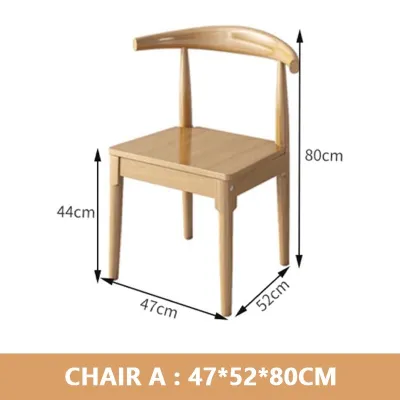
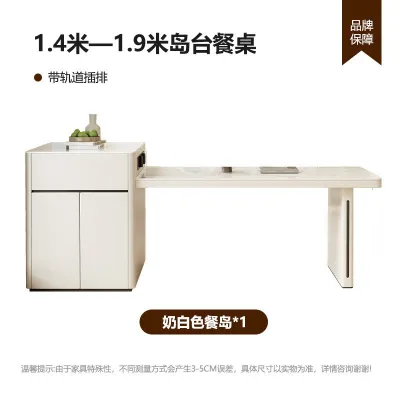
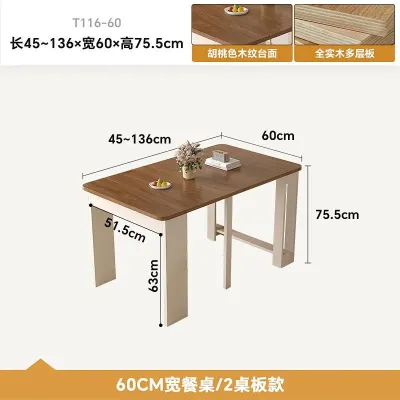
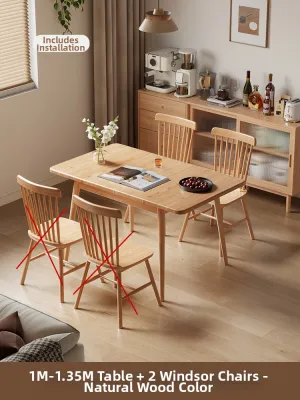
9 Lazada user ratings
A few days ago I got home, and a professional installed it for me. It's super convenient to use; just pull it and it extends in two seconds.…Read full reviewShow less
A few days ago I got home, and a professional installed it for me. It's super convenient to use; just pull it and it extends in two seconds. The style matches my home perfectly, and my wife loves it!
The table is here, and it's super convenient with its foldable and expandable design. There's no smell, and the wood quality feels great. It…Read full reviewShow less
The table is here, and it's super convenient with its foldable and expandable design. There's no smell, and the wood quality feels great. It's perfect for my cozy little home.
I've been using it for two days, and the quality is really good. The wood grain is very fine, and it's real oak. It also saves space when I …Read full reviewShow less
I've been using it for two days, and the quality is really good. The wood grain is very fine, and it's real oak. It also saves space when I fold it up against the wall.
I set it up over the weekend, and the quality is really nice. It's super convenient to adjust, definitely worth it!
I've been using it for a while now, and I recently moved and realized it's super friendly for small spaces!
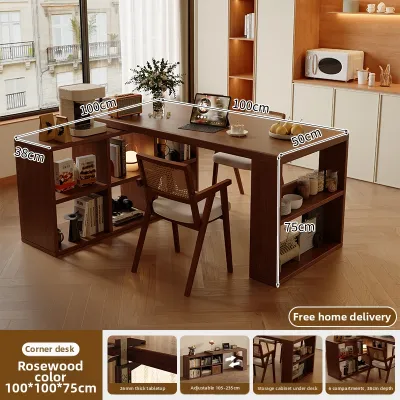
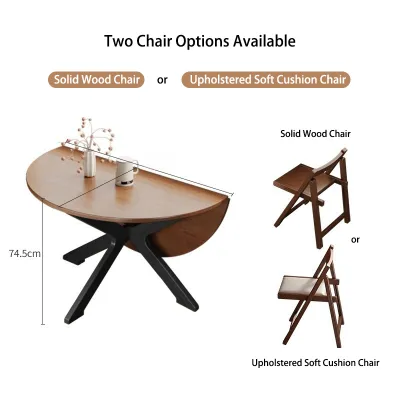
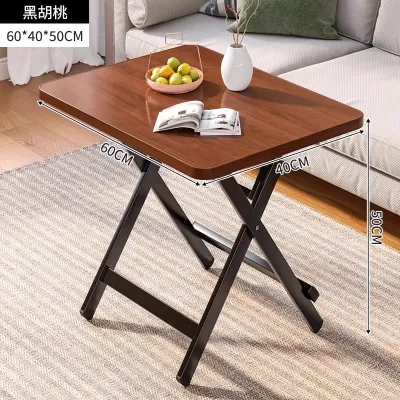
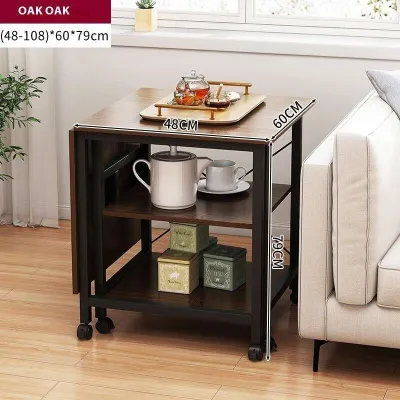
12 Lazada user ratings
It's good, convenient, and practical. It looks quite sturdy and stable, with a beautiful appearance. The desktop material is also sturdy, an…Read full reviewShow less
It's good, convenient, and practical. It looks quite sturdy and stable, with a beautiful appearance. The desktop material is also sturdy, and the legs are thick. Overall, it's okay. The craftsmanship is decent, and the installation is also very convenient and fast
There are also wheels that can be easily moved. Folding it up when not in use and opening it directly when needed is very convenient. The qu…Read full reviewShow less
There are also wheels that can be easily moved. Folding it up when not in use and opening it directly when needed is very convenient. The quality is quite good and the load-bearing capacity is very good. It is worth the price recommendation
It is sturdy and stable to use, not shaking at all, and has a beautiful appearance. The desktop material is also sturdy, and the legs with w…Read full reviewShow less
It is sturdy and stable to use, not shaking at all, and has a beautiful appearance. The desktop material is also sturdy, and the legs with wheels can move. Overall, I am very satisfied.
The quality of the table is really good, and it is installed firmly. Very suitable for small apartments, smooth sliding and universal wheels…Read full reviewShow less
The quality of the table is really good, and it is installed firmly. Very suitable for small apartments, smooth sliding and universal wheels are good. I quite like it
I like the design of this table, it is small and practical, with fine workmanship and a good service attitude from the shop owner.
Prices are valid at publication and may change. Please refer to the product page for the latest price.
Additionally, consider the physical constraints of delivering and installing the furniture. High-rise living requires navigating passenger lifts, tight corridors, and standard doorways. A massive, heavy extendable table with complex internal metal tracks can be exceptionally difficult to maneuver during delivery. Verifying these access dimensions beforehand is just as crucial as measuring the dining room itself to avoid delivery-day complications.
Evaluate Your Household Size and Hosting Frequency
The next step is to conduct an honest assessment of your household’s daily seating requirements versus your actual hosting habits. It is easy to fall into the trap of buying furniture for the lifestyle you aspire to have rather than the one you live daily. If your immediate household consists of two to four people, a compact fixed table is often more than adequate for daily meals, homework sessions, and remote work.

Consider how often you actually host larger groups that require extra seating. If you regularly welcome extended family or friends for weekly dinners, the convenience of an extendable mechanism is well worth the investment. However, if your hosting is limited to major festive seasons like Chinese New Year or occasional birthday gatherings, sacrificing daily legroom or paying a premium for a complex mechanism may not be the most practical choice.
You must also weigh the financial and physical effort involved in operating an extendable table. High-quality extendable tables carry a price premium due to their specialized hardware and engineering. If you only use the extension feature once or twice a year, that extra cost might be better spent on other home improvements. Furthermore, some tables require manual storage of heavy extension leaves in a separate closet, which adds physical effort and requires dedicated storage space in an already compact home.
Weigh Extendable Tables Against Fixed and Alternative Layouts
When comparing extendable tables to fixed alternatives, structural simplicity is a major factor to consider. Fixed dining tables have no moving parts, which inherently makes them highly stable, durable, and easier to maintain over decades of use. They are also generally more budget-friendly, allowing you to allocate your budget toward premium materials like solid wood, sintered stone, or high-pressure laminates without paying for complex mechanical components.
If you decide against an extendable table, several alternative space-saving layouts can accommodate occasional guests. For instance, a fixed four-seater table can be positioned adjacent to a kitchen island, allowing you to use the island counter as overflow seating during gatherings. You can also opt for lightweight, stackable dining chairs or nesting stools that can be easily stored in a utility closet or balcony area and brought out only when needed.
A fixed table is typically the better choice if your dining space is exceptionally narrow, as extendable tables often require a wider clearance that simply does not exist in compact layouts. If your household rarely hosts more than two guests at a time, a standard fixed table paired with a bench that slides completely underneath when not in use offers a streamlined, space-saving solution that keeps your dining area looking neat and spacious.
Practical Space and Mechanism Checks Before Purchasing
If you decide that an extendable dining table is the right fit for your lifestyle, performing a few practical checks before finalizing your purchase will help you avoid buyer’s remorse. Start by using painter’s tape to map out the table’s maximum extended dimensions directly on your dining room floor. Leave the tape in place for a few days to physically experience how much space the fully expanded table will consume and to ensure it does not completely block access to nearby doors or cabinets.
When visiting a showroom, do not hesitate to personally test the extension mechanism multiple times. Whether the table uses a butterfly leaf, a drop-leaf, or pull-out metal tracks, the mechanism should operate smoothly without sticking or requiring excessive physical strength. Ensure that you can comfortably manage the transition by yourself, as you may not always have assistance when preparing the home for guests.
Finally, inspect the design of the table legs and base to ensure they are compatible with your flooring and seating layout. Some extendable tables feature legs that remain stationary in the center while the top expands, which can restrict legroom for guests sitting near the ends. Others have legs that slide outward to the corners, providing maximum legroom but requiring careful sliding across your floors. Ensure the feet are equipped with high-quality protective pads to prevent scratching delicate parquet, vinyl, or polished marble surfaces during expansion.
Frequently Asked Questions (FAQ)
Are extendable dining tables less stable than fixed tables?
The stability of an extendable dining table depends entirely on the quality of its joinery and the engineering of its extension tracks rather than the mere presence of moving parts. High-quality models utilize robust metal runners and secure locking latches that keep the tabletop perfectly level and rigid when extended. To verify stability, perform a physical shake test in the showroom by applying moderate downward pressure on the extended ends to check for sagging, wobbling, or loose seams.
How much extra space do I need when the table is fully extended?
When calculating the space required for a fully extended table, you must account for more than just the physical dimensions of the tabletop. You need to add at least 90 centimeters of clearance on all sides of the extended table to accommodate the depth of pulled-out dining chairs and to allow sufficient space for people to walk behind seated guests. Using the painter’s tape mapping method on your floor is the most reliable way to visualize this total spatial requirement in your actual dining room.

Community discussion
Share your experience or ask a question. Comments are reviewed before publication.