
Deciding whether an Interdesk chair is the right choice for your home office in Singapore depends on how closely its specific configurations align with your physical proportions, daily sitting hours, and budget. While the brand offers accessible seating options tailored for modern workspaces, buyers must carefully verify the exact adjustability mechanisms and structural materials against their personal comfort requirements. This evaluation provides a structured comparison of general Interdesk features against standard ergonomic benchmarks, helping you determine if these chairs can support your remote work routine effectively.
Key Ergonomic Requirements for Your Home Office Setup
To establish a baseline for any office chair purchase, you must first identify your non-negotiable physical and spatial needs. Ergonomics is not a one-size-fits-all solution; it requires matching the chair’s physical dimensions to your body’s unique proportions. For instance, the lumbar support must align precisely with the natural curve of your lower spine. If you are taller or shorter than average, you will need to check if the chair’s lumbar pad can be adjusted vertically to prevent lower back strain during long typing sessions.
Seat depth and armrest adjustability are equally critical factors to evaluate before committing to a purchase. A proper seat depth allows you to sit fully back against the lumbar support while leaving a small gap (roughly two to three fingers wide) between the front edge of the seat cushion and the back of your knees. This gap prevents the seat from cutting off circulation in your legs. Additionally, armrests should adjust in height, width, and angle so your shoulders remain relaxed and your elbows rest at a comfortable 90-degree angle, level with your keyboard.
Products mentioned in this guide
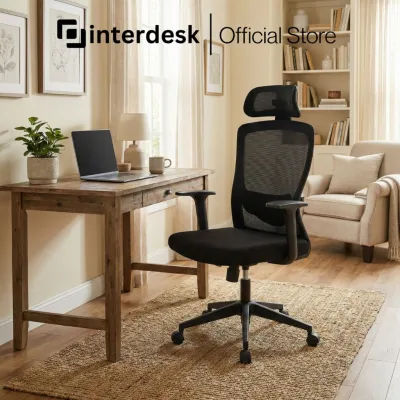
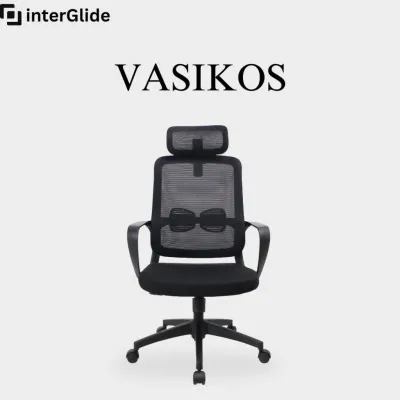
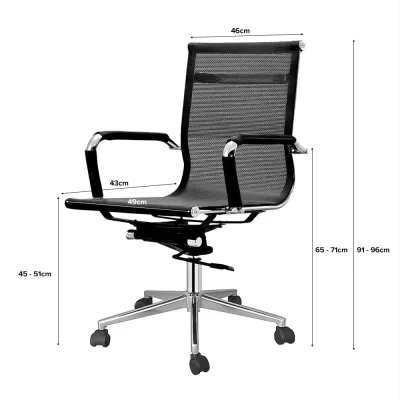
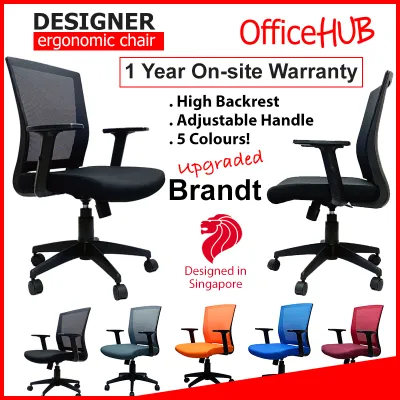
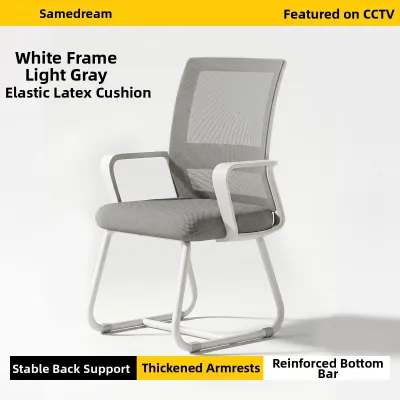
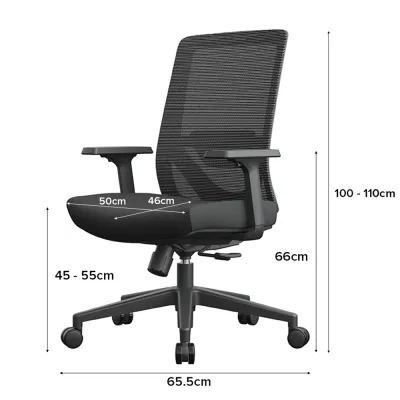
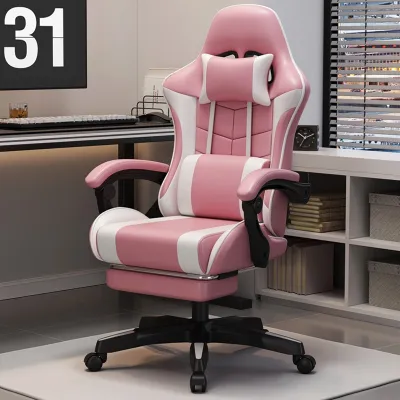
Prices are valid at publication and may change. Please refer to the product page for the latest price.
Beyond personal physical dimensions, the spatial constraints of Singaporean homes—such as compact HDB flats or condominium study corners—demand careful measurement. You must measure the available floor space where the chair will glide, ensuring there is sufficient clearance to push the chair back when standing up. It is also essential to measure the clearance under your desk, taking into account any low-hanging drawers or keyboard trays that might block the chair’s armrests from sliding underneath when not in use.
Finally, the type of flooring in your home office dictates the kind of casters your chair should have. Hardwood parquet, vinyl luxury tiles, and ceramic tiles all react differently to rolling pressure. Standard hard nylon casters can easily scratch delicate parquet or wear down vinyl finishes over time. If your home office features these materials, you should look for soft polyurethane or rubberized casters, or plan to use a protective floor mat to preserve your flooring and ensure smooth, quiet mobility.
Comparing Interdesk Features Against Standard Ergonomic Benchmarks
When evaluating an Interdesk chair, comparing its mechanical features against standard ergonomic benchmarks is essential for determining its suitability for full-time remote work. A primary point of comparison is the tilt mechanism. Basic office chairs often use a simple upright tilt or a center-tilt mechanism, which lifts your feet off the floor when you recline. For extended workdays, ergonomic standards favor a synchro-tilt mechanism. This system reclines the backrest at a 2:1 ratio relative to the seat pan, keeping your feet flat on the floor and maintaining proper spinal alignment as you shift postures.

Another critical benchmark is the seat cushion material, which directly impacts comfort and temperature regulation. In Singapore’s warm and humid tropical climate, heat dissipation is a major consideration for home office furniture. High-density molded foam cushions offer excellent support and pressure distribution, but they can trap body heat if they lack breathable fabric covers. Conversely, full mesh seats and backrests provide maximum airflow, keeping you cool throughout the day. However, you must verify that the mesh tension is firm enough to prevent you from bottoming out against the underlying frame over months of use.
To help you compare these specifications systematically, you can use a structured evaluation framework when looking at Interdesk models alongside other options in similar price tiers. Focus your comparison on adjustable features, weight capacities, and tension controls:
| Ergonomic Feature | Standard Benchmark | Interdesk Specification Check | Alternative Brand Check |
|---|---|---|---|
| Tilt Mechanism | Synchro-tilt with multi-position lock | Verify if model has synchro-tilt or basic tilt | Compare tilt lock options |
| Lumbar Support | Height and depth adjustable | Check for adjustable lumbar pad or fixed frame | Verify adjustment range |
| Armrests | 3D or 4D adjustability (height, angle, depth) | Check if armrests are fixed, 1D, or multi-directional | Compare armrest material and adjustability |
| Seat Material | Breathable mesh or high-density molded foam | Check mesh weave density or foam thickness | Verify breathability and care instructions |
| Tension Control | Adjustable recline tension based on body weight | Verify presence of a tension knob or automatic tension | Check ease of adjustment |
By mapping out these specifications, you can see exactly where a particular Interdesk model meets standard ergonomic expectations and where it might fall short. For example, if a model only offers fixed armrests or a basic tilt lock, it may be better suited for casual, short-duration tasks rather than a demanding eight-hour workday.
Verifying Build Quality, Materials, and Warranty Terms
A chair’s ergonomic features are only as good as its underlying build quality. To ensure your investment lasts, you must independently assess the physical construction materials of the Interdesk chair you are considering. Start by examining the base of the chair, which bears the entire weight load. Bases made of reinforced nylon or fiberglass-filled composite are lightweight and durable, but heavy-duty aluminum alloy bases offer superior stability and resistance to bending under high stress.
Equally important is the gas lift cylinder, which regulates the chair’s height adjustment and absorbs the impact when you sit down. Look for chairs equipped with a Class 3 or Class 4 gas lift. These classes are certified to handle higher weight capacities and undergo rigorous testing to ensure long-term safety and smooth operation. You can typically find this information in the product specifications or by checking the certification markings stamped directly onto the metal cylinder of the gas lift.
Before finalizing your purchase, it is highly recommended to read the manufacturer’s care instructions and warranty documentation thoroughly. A comprehensive warranty is a strong indicator of a manufacturer’s confidence in their product’s durability. Pay close attention to what the warranty covers; some brands offer long coverage periods for the steel frame but much shorter terms for the mesh, fabric, foam, and gas lift. Understanding what constitutes normal wear and tear versus a manufacturing defect will prevent unexpected out-of-pocket expenses later.
Additionally, always check the user manual or product label for specific weight limits and assembly requirements. Improper assembly is a common cause of premature wear, squeaking joints, and even structural failure. Following the step-by-step instructions carefully, tightening all bolts to the specified torque, and periodically checking them for tightness will help maintain the chair’s structural integrity and ensure you do not accidentally void the warranty.
Decision Framework: When to Choose Interdesk or Look Elsewhere
To make a confident final decision, you can use a condition-based framework to determine if an Interdesk chair fits your specific lifestyle and workspace. An Interdesk model is often a practical and highly suitable choice if you are setting up a budget-conscious home office, work moderate hours (such as three to five hours a day), or have a compact workspace that requires a streamlined chair design. In these scenarios, the brand’s balance of essential ergonomic adjustments and accessible pricing provides excellent value without overcomplicating your setup.
On the other hand, you should consider looking elsewhere or investing in premium ergonomic alternatives if your daily routine involves extended sitting sessions exceeding eight hours, or if you have pre-existing chronic back, neck, or shoulder issues. Specialized medical-grade ergonomic chairs often feature highly advanced, dynamic posture-tracking systems and micro-adjustments that are necessary for therapeutic support. If your physical health demands this level of precise customization, prioritizing specialized brands is a safer long-term decision.
Before adding any chair to your cart on an online marketplace or retailer’s website, run through this final verification checklist to ensure a seamless purchase:
- Seat Height Range: Does the minimum and maximum seat height allow your feet to rest flat on the floor while your desk is at elbow height?
- Armrest Clearance: Will the armrests slide under your desk when the chair is adjusted to your working height?
- Caster Compatibility: Are the wheels suitable for your specific flooring type (parquet, vinyl, or tile) without causing scratches?
- Warranty Coverage: Have you verified the exact duration of the warranty for the frame, gas lift, and mesh/fabric components?
- Assembly and Delivery: Are you comfortable assembling the chair yourself, and have you verified if there are any lift-access or doorway limitations in your apartment building that might affect delivery?
Frequently Asked Questions (FAQ)
Are Interdesk chairs suitable for long hours of remote work?
Whether an Interdesk chair is suitable for long hours of remote work depends heavily on the specific model’s adjustability features. For full-time shifts, you should look for models that feature a synchro-tilt mechanism, adjustable lumbar support, and multi-directional armrests. These features allow you to change positions throughout the day and maintain proper posture, reducing physical fatigue. If a model lacks these advanced adjustments, it is better suited for shorter, part-time study or casual browsing sessions.
How do I check if an Interdesk chair will fit my desk height?
To verify compatibility, first measure the distance from the floor to the underside of your desk. Next, check the chair’s product specifications for its seat height range and the maximum height of its armrests. Ensure that the seat height allows your elbows to align with the desktop at a 90-degree angle while your feet remain flat on the floor. You must also confirm that the armrests can clear the bottom edge of your desk, including any under-desk drawers, so you can push the chair in fully when it is not in use.

Community discussion
Share your experience or ask a question. Comments are reviewed before publication.