
Identifying a genuine, well-crafted mother of pearl coffee table requires a blend of visual scrutiny, tactile testing, and an understanding of traditional artisanal techniques. Because authentic nacre—the organic-inorganic composite material harvested from the inner lining of select mollusk shells—demands meticulous hand-carving and placement, true pieces carry a distinct premium. In contrast, mass-produced imitations rely on printed plastics, synthetic resins, or crushed shell composites to mimic this lustrous effect. By learning how to evaluate the depth of iridescence, the variation in tile patterns, and the precision of the inlay joints, you can confidently distinguish an authentic heirloom piece from a low-quality replica.
Understanding Mother of Pearl and Common Imitations
Genuine mother of pearl, also known as nacre, is an organic-inorganic composite material produced by certain mollusks as an inner shell layer. It is composed of microscopic platelets of calcium carbonate aligned in precise, parallel layers. When light hits these layers, it diffracts and interferes, creating the characteristic multi-colored luster and shifting iridescence that synthetic materials struggle to replicate. Because each shell grows under unique environmental conditions, no two pieces of genuine nacre are identical in thickness, base color, or reflective quality.
Manufacturers of low-cost furniture frequently employ several methods to imitate this premium material. The most common imitation is a printed plastic or paper film applied over a medium-density fibreboard (MDF) base and sealed under a thick layer of clear polyester resin. Another common substitute is crushed-shell composite powder, where real shell waste is ground up, mixed with synthetic binders, and poured into molds. While this composite contains actual shell material, the grinding process destroys the natural crystalline structure of the nacre, resulting in a flat, uniform appearance that lacks true depth.
Products mentioned in this guide
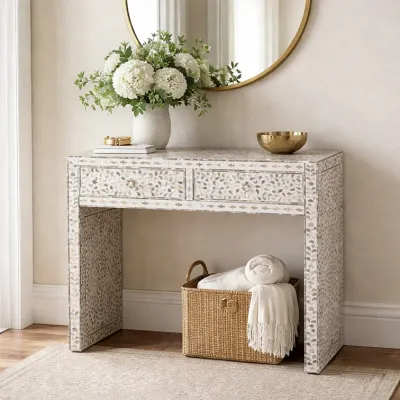
Prices are valid at publication and may change. Please refer to the product page for the latest price.
Understanding the base material and surface treatment of a table is critical for determining its true value and long-term durability. A genuine hand-inlaid table relies on a stable, high-quality substrate to prevent warping, which could otherwise cause the delicate shell tiles to crack or detach. Knowing what materials lie beneath the surface helps you assess whether the table is built to withstand environmental changes or if it is prone to rapid degradation.
Visual and Tactile Checks for Authenticity
The most reliable way to verify the authenticity of a mother of pearl table is to observe how it interacts with light. Genuine shell tiles display a deep, three-dimensional iridescence that shifts dynamically as you change your viewing angle. You should see subtle flashes of pink, green, blue, and silver reflecting from deep within the material. Imitation tables, particularly those using printed films or resin pours, exhibit flat, static reflections that remain unchanged regardless of where you stand.

Next, examine the uniqueness of the individual tiles making up the mosaic pattern. Because natural shells are harvested in small, irregular pieces, artisans must hand-cut and arrange them to form the table’s design. This manual process guarantees that every tile has slight variations in shape, grain direction, and color saturation. If you notice perfectly repeating motifs, identical swirl patterns, or flawless symmetry across the tabletop, the surface is almost certainly a machine-printed replica.
Tactile feedback provides another immediate clue during an in-person inspection. Natural shell is a mineral-based composite that conducts heat efficiently, meaning it will feel cool to the touch when you first place your hand on it. It takes several seconds of direct contact to absorb your body heat. Synthetic resins and plastics, on the other hand, act as insulators; they feel relatively warm or neutral from the very first touch and are noticeably lighter in weight.
Finally, consider the weight and acoustic properties of the piece. Authentic mother of pearl tables are structurally dense because they require a solid, heavy substrate—such as seasoned hardwood—to support the intricate inlay work. If you tap the surface gently with your knuckle, a genuine inlay over a solid base will produce a solid, high-pitched, and dense sound. A hollow, dull, or distinctly plasticky sound suggests a lightweight synthetic shell or a low-grade hollow core.
Inspecting Craftsmanship and Inlay Quality
Once you have verified that the material is genuine, you must evaluate the quality of the craftsmanship. Begin by running your hand flat across the tabletop to check for surface flushness. A well-crafted table undergoes hours of meticulous hand-sanding and polishing to ensure that the shell tiles and the surrounding filler are perfectly level. The surface should feel smooth and continuous, without any sharp tile corners, protruding edges, or noticeable depressions that could catch on fabrics or collect dust.
The quality of the seams and grouting between the individual shell pieces is another hallmark of premium craftsmanship. In high-end furniture, the gaps between the tiles are kept to an absolute minimum, and the filler material is carefully color-matched to the shell or the background design. Inspect the joints closely for signs of rushed work, such as wide, uneven gaps, visible air bubbles trapped in the resin, or adhesive overflowing onto the face of the shell tiles.
Pay close attention to the table’s edges, corners, and the transition to the underside. The inlay work should wrap cleanly around the edges or terminate in a neatly polished, flush border. Poorly constructed tables often show rough, unpolished edges, exposed backing material, or visible layers of adhesive where the shell tiles meet the frame. These exposed areas are highly vulnerable to moisture penetration and physical chipping.
The structural stability of the underlying frame is just as important as the beauty of the inlay. Because mother of pearl tables are heavy, the legs and joints must be robustly constructed to prevent wobbling or flexing. Check that the table sits flat on the floor and verify that the joints are reinforced with quality joinery rather than simple staples or hot glue. A stable base ensures that the delicate shell layer is not subjected to structural twisting, which can cause the inlay to crack over time.
Red Flags in Product Listings and Descriptions
When shopping online, you can often spot imitations or low-quality pieces simply by analyzing the language used in the product description. Be highly cautious of vague material claims that use qualifying words. Terms like “mother of pearl style,” “pearlescent finish,” “shell-effect,” or “faux nacre” are common industry workarounds used to mimic the search terms of genuine products without committing to authentic materials. Look for explicit, unambiguous statements such as “100% genuine mother of pearl hand-inlaid.”
Analyze the product photography carefully, looking for a lack of macro detail shots. Genuine sellers who employ skilled artisans are proud of the intricate details and will showcase close-up photos highlighting the natural texture and slight irregularities of the shell. If a listing only features highly styled lifestyle photos with soft lighting, heavy filters, or stock renders where the exact same shell pattern appears on multiple different listings, the product is likely a mass-produced imitation.
Pricing and inventory levels are also major indicators of authenticity. Hand-crafting a genuine mother of pearl coffee table requires dozens of hours of highly skilled labor, making it impossible to produce at a low cost. If an online marketplace offers a large coffee table at an incredibly low price, or claims to have massive, ready-to-ship inventory of identical units, it is a clear sign of machine-pressed synthetic manufacturing rather than authentic hand-inlay work.
Steps to Take Before Finalizing Your Purchase
Before committing to a purchase, protect your investment by requesting unedited, close-up photos or a short video of the specific unit you will receive, taken under natural daylight. This allows you to verify the genuine iridescence of the shell and inspect the quality of the joints before the item is packaged and shipped. It also helps confirm that the seller has physical possession of the item and is not simply drop-shipping a mass-produced alternative.
Next, verify the finished dimensions of the table and ensure it will fit comfortably within your living room layout. Because these tables are heavy and typically delivered fully assembled to protect the inlay, you must confirm that you have adequate clearance through your doorways, hallways, and lift doors. Measuring your access points beforehand prevents the frustration of a delivery that cannot physically enter your home.
Finally, ask the seller for explicit care instructions and review their return policy. Genuine shell is highly sensitive to acidic cleaners, harsh chemicals, and extreme humidity fluctuations, so a reputable seller should be able to provide detailed maintenance guidelines. Ensure that the return policy explicitly covers material authenticity disputes and “item not as described” claims, giving you a clear path to a refund if the table does not meet the verified standards of genuine craftsmanship.
Frequently Asked Questions (FAQ)
Does genuine mother of pearl change color or yellow over time?
The natural shell material itself is highly stable and does not yellow or fade over time. However, the protective topcoats, lacquers, or resins applied over the inlay to create a smooth, flat surface can discolor or yellow when exposed to prolonged, direct ultraviolet (UV) light. To preserve the pristine look of your table, position it away from direct sunlight and avoid placing it directly under windows that receive intense afternoon sun.
Can I repair a chipped or missing piece of mother of pearl inlay myself?
Attempting a DIY repair with standard household glues, epoxy, or wood fillers is highly discouraged. Matching the exact color, iridescence, and thickness of a missing shell tile requires specialized tools and materials. Furthermore, sanding the repaired area flush without damaging the surrounding delicate inlay requires professional expertise. If your table suffers damage, contact the original manufacturer or consult a professional furniture restorer who specializes in bone and shell inlay.
Community discussion
Share your experience or ask a question. Comments are reviewed before publication.