
Finding the perfect balance between functionality and floor space is a common challenge when furnishing a compact Singapore Housing & Development Board (HDB) flat. The living room serves as a multi-functional hub for relaxation, entertainment, and sometimes dining or remote work. Selecting a rubberwood table as your central coffee table offers an excellent blend of durability, warm aesthetics, and sustainability. However, bringing a solid wood piece into a smaller layout requires careful spatial planning and style curation. To maximize your living area without making it feel cramped, you must select a table that respects both physical clearance zones and the visual limits of the room.
How to Measure Your HDB Living Room and Sofa
Before browsing online marketplaces or visiting local furniture showrooms, you must establish the exact spatial boundaries of your living room. Start by measuring the available floor space between the front edge of your sofa and the opposite wall or TV console. In many modern BTO (Build-To-Order) flats, this distance can be surprisingly tight, often ranging between 2.0 and 2.8 meters. Write down this total depth measurement, as it dictates how much physical space can be safely occupied by furniture without blocking the primary path of travel.
Next, turn your attention to your sofa, which serves as the primary anchor for your coffee table sizing. Measure the sofa’s total length from outer armrest to outer armrest, as well as the depth of the seat cushions. Additionally, measure the seat height from the floor to the top of the crown of the seat cushion. These three dimensions establish the maximum and minimum footprint boundaries for your new table, ensuring the final setup looks intentional rather than mismatched.
Products mentioned in this guide
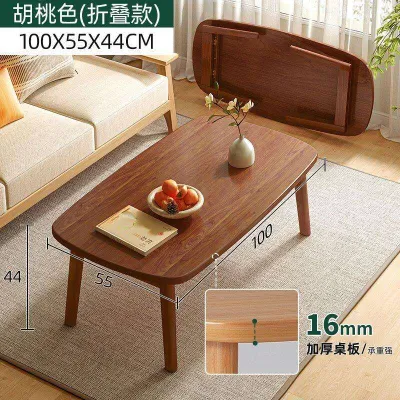
![[3S FURNITURE] Modern Rustic Simple Solid Rubber Wood Foldable Coffee Table * FREE DELIVERY * (1Yr Local Warranty)](https://img.lazcdn.com/g/p/204cfe405828c8ecbaeacf2b4c69c93d.jpg_400x400q80.jpg_.webp)
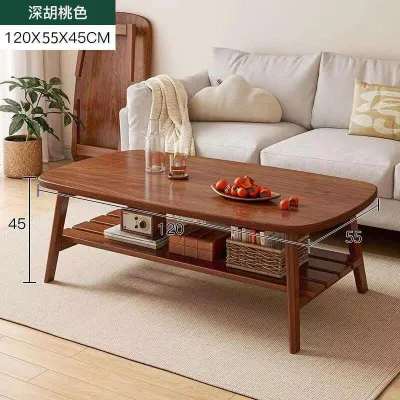
![[3S FURNITURE] Modern Rustic Simple Solid Rubber Wood Foldable Coffee Table with Storage Panel * FREE DELIVERY *](https://img.lazcdn.com/g/p/63e8aa4a6743093f0d281c796b72676d.png_400x400q80.png_.webp)
![[3S FURNITURE] Modern Stylish 15MM Thickness Solid Plywood with Rubber Wood Legs and Separate shelf Coffee Table * FREE DELIVERY * (1Yr Local Warranty)](https://img.lazcdn.com/g/p/3deae1478c6b596a81864099c7f052d6.png_400x400q80.png_.webp)
Prices are valid at publication and may change. Please refer to the product page for the latest price.
Finally, map out the essential clearance zones that allow for comfortable movement and natural seating ergonomics. To sit comfortably without knocking your knees against the table edge, you need a minimum clearance of 30 centimeters between the sofa and the table, with 40 to 45 centimeters being the ideal range for most adults. Furthermore, ensure there is a clear walkway of at least 60 to 75 centimeters between the other sides of the coffee table and any opposing furniture, such as a TV console or sideboard, to allow household members to pass through without turning sideways.
Proportional Guidelines for Your Rubberwood Table
To maintain visual balance, your coffee table should never look like an afterthought or, conversely, dominate the entire seating arrangement. A reliable rule of thumb is to select a rubberwood table with a length that is roughly one-half to two-thirds the total length of your sofa. For example, if you have a standard three-seater sofa measuring 180 centimeters in length, your ideal coffee table length should fall between 90 and 120 centimeters. Anything longer will crowd the seating area, while anything shorter may feel visually lost and be difficult for people sitting on the ends of the sofa to reach.

Height is another critical dimension that directly affects both ergonomic comfort and visual harmony. Ideally, the top surface of your rubberwood table should sit level with your sofa’s seat cushions, or be up to 5 centimeters lower. A table that is too high disrupts the sightline across the room and makes reaching for a cup of coffee awkward, while a table that is too low requires excessive bending. Keeping the table surface slightly below the seat height preserves an open, low-profile aesthetic that aligns perfectly with modern interior design styles.
For the width or depth of the table, compact HDB layouts typically demand a narrower profile. A standard rectangular coffee table often has a depth of 60 to 70 centimeters, but for tighter spaces, look for slim or streamlined designs with a depth of 45 to 55 centimeters. This narrower footprint preserves precious floor real estate, ensuring that the critical clearance zones between the table, the sofa, and the television console remain fully intact.
Because rubberwood is a dense, solid hardwood, it is naturally heavier than synthetic fiberboard or hollow-core alternatives. If you anticipate needing to move your table frequently—such as to vacuum the living room rug, clear space for home workouts, or let young children play on the floor—pay close attention to the product’s total weight specification. Opting for a slightly smaller size or a design with a more open frame can help ensure the piece remains manageable to slide or lift without risking scratches to your flooring.
Design and Style Choices to Enhance Spatial Flow
The visual weight of a piece of furniture can influence the perceived size of a room just as much as its physical dimensions. When selecting a rubberwood table for a compact living area, pay close attention to the leg profile. Heavy block bases, solid pedestal designs, or thick plinths block light and close off the floor space, making the room feel smaller. Instead, prioritize tables with tapered, slender, or elevated legs. Raising the body of the table off the ground allows light to pass underneath, creating an airy, spacious illusion that tricks the eye into seeing more floor area.
The shape of your coffee table also plays a major role in how smoothly traffic flows through your living room. While rectangular tables offer a classic look and maximum surface area, their sharp corners can be a hazard in tight quarters, leading to painful bumps for both adults and young children. Round or oval rubberwood tables eliminate these sharp edges, allowing family members to navigate around the seating area with ease. Additionally, the curved lines of a round table soften the rigid, boxy architecture typical of standard HDB flats, adding a touch of organic warmth to the layout.
The finish and color of the wood further dictate its visual impact. Dark, heavy stains absorb light and can make a small room feel enclosed. For compact homes, consider lighter, natural rubberwood stains, clear matte finishes, or warm honey tones. These lighter hues reflect natural light coming from your balcony or windows, helping to brighten the space. Lighter rubberwood tones also integrate seamlessly into minimalist, Scandinavian, or Japandi design schemes, which are highly favored in Singapore for their ability to foster calm, clutter-free environments.
Functional Features for Compact Floor Plans
In a compact home, every piece of furniture must work twice as hard to justify the space it occupies. Choosing a rubberwood table with smart, built-in storage is an excellent way to maintain a tidy living room without adding extra storage units. Look for designs that feature a lower open shelf or shallow, integrated drawers. These compartments are perfect for stashing remote controls, coasters, reading materials, and small electronics, keeping the main tabletop free of clutter and maintaining a clean, organized appearance.
If your living room layout needs to adapt to different scenarios, nesting or modular rubberwood tables offer exceptional versatility. A nesting set typically consists of two or three tables of graduating sizes that slide completely underneath one another when not in use. When you are hosting guests or need extra surface area for snacks and drinks, you can easily pull the smaller tables out and arrange them around the room. Once your guests leave, they slide back into a single footprint, instantly reclaiming your floor space.
Additionally, ensure the table’s construction is robust enough to handle multi-functional use. Many HDB residents use their coffee tables as temporary work-from-home desks or casual dining spots. Because rubberwood is a durable hardwood, it provides a highly stable surface for these activities. Before purchasing, verify the manufacturer’s load capacity and stability ratings to ensure the table can safely support the weight of laptops, books, or heavy serving dishes without tipping or flexing.
Common Sizing, Placement, and Delivery Mistakes
One of the most common mistakes homeowners make is neglecting to account for realistic walkway clearances. It is easy to fall in love with a beautiful, large showroom display, only to realize upon delivery that the table blocks the path to the kitchen or balcony, forcing everyone to awkwardly squeeze past. Always map out your measurements on the floor using masking tape or newspaper before finalizing your purchase to physically visualize how the table will sit in your actual space.
Another frequent error is choosing a design that is visually overwhelming for the scale of the room. A dark, bulky, solid-sided coffee table can make even a moderately sized living room feel cramped and dark. Always balance the solid nature of hardwood with open design elements, such as glass inserts, open shelving, or slender frames, to keep the overall aesthetic light and inviting.
Finally, do not forget the logistics of getting the furniture into your home. Solid wood tables are often delivered fully assembled to maintain their structural integrity, which means they cannot be easily flat-packed or disassembled. Always measure your HDB lift doors, the interior dimensions of the lift cabin, your corridor width, and your main front door frame. Failing to verify these entry points can lead to a frustrating delivery day where a gorgeous, high-quality table must be returned simply because it cannot fit through the door or lift.
Frequently Asked Questions (FAQ)
Does rubberwood require special care in Singapore's humid climate?
As a natural solid hardwood, rubberwood is sensitive to extreme shifts in moisture and temperature. In Singapore’s tropical, high-humidity environment, general care involves keeping the wood away from direct, harsh sunlight coming through large living room windows, as prolonged exposure can cause the finish to fade or the wood to warp. Ensure your living room maintains consistent indoor ventilation, and use coasters under cold drinks to prevent condensation from pooling on the surface. Always check the manufacturer’s specific care instructions, recommended cleaning products, and warranty conditions regarding moisture exposure and indoor climate control to ensure your table remains in optimal condition for years to come.
Community discussion
Share your experience or ask a question. Comments are reviewed before publication.