
Quick Answer: Sizing Your Sintered Stone TV Cabinet
To choose the right size sintered stone TV cabinet, select a unit that is at least 20 to 30 centimeters wider than your television screen. This ensures a balanced visual proportion and prevents the setup from looking top-heavy. For comfortable traffic flow, maintain a minimum of 60 centimeters of walking clearance in front of the console. Because sintered stone is exceptionally heavy, always verify the manufacturer’s specifications for weight limits, floor load capacity, and delivery access before making a purchase.
Step 1: Measure Your Available Wall and Floor Space
Before browsing designs, you must establish the physical boundaries of your living room. Start by using a metal measuring tape to find the total length of the wall where the cabinet will stand. Note the exact locations of wall sockets, cable ports, light switches, and any architectural features like pillars or low windows. In many Singapore apartments, power outlets are positioned close to the floor, meaning your cabinet must either feature an open back or have pre-drilled cable cutouts that align with these ports.

Next, measure the floor space extending outward into the room. A standard TV console typically has a depth of 35 to 50 centimeters. To maintain comfortable traffic flow, ensure there is at least 60 to 90 centimeters of clear walkway space between the front edge of the cabinet and other furniture, such as your coffee table or sofa. If your living room is compact, a shallower cabinet depth will help keep the space open and accessible.
Products mentioned in this guide
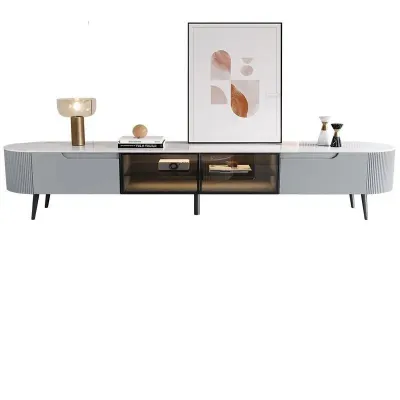
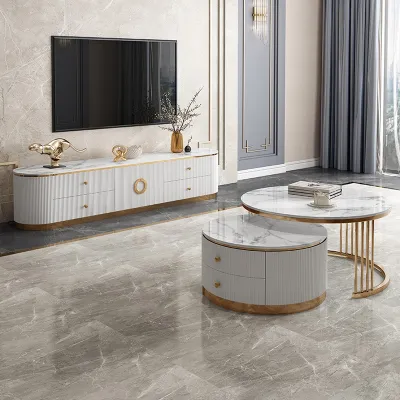
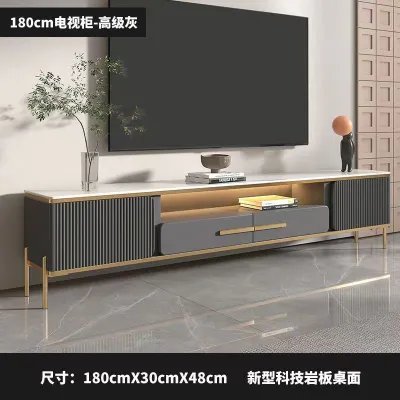

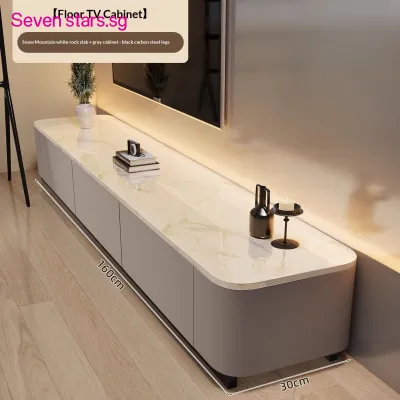
Prices are valid at publication and may change. Please refer to the product page for the latest price.
Finally, do not overlook the logistics of getting the furniture into your home. Sintered stone is a dense, heavy material that is often delivered as a single, fully assembled unit or in large, rigid slabs. Measure the height and width of your apartment’s entryway, the dimensions of the common corridor, and the interior size of the elevator. If the delivery team cannot fit the cabinet into the lift, you may face complicated manual carrying charges or be forced to return the item.
Step 2: Match the Cabinet Width to Your TV Screen Size
A common design mistake is pairing a large television with a narrow cabinet, which creates an unstable, top-heavy look. To achieve a balanced aesthetic, your TV cabinet should always be wider than the television itself. A reliable guideline is to ensure the cabinet extends at least 10 to 15 centimeters beyond the outer edges of the TV screen on both sides.
For example, a standard 55-inch television is approximately 122 centimeters wide. To support this screen size visually, look for a sintered stone cabinet that is at least 150 centimeters wide. If you have a 65-inch television, which measures about 145 centimeters in width, a cabinet of 180 centimeters or longer will provide the necessary visual balance. This extra width also leaves room for decorative items or small speakers on either side of the screen.
If you plan to place the television directly on the cabinet rather than mounting it on the wall, you must also measure the TV’s stand. Many modern televisions feature wide-set feet rather than a central pedestal. Ensure the cabinet’s top surface is wide and deep enough to accommodate these feet securely, with a safe margin of space around the edges to prevent accidental tipping.
Sintered stone carries a significant visual weight because of its natural, stone-like patterns and textures. A cabinet that is too small can make the premium stone top look cluttered and insignificant. Choosing a wider cabinet allows the beauty of the sintered stone slab to stand out, turning the entertainment area into a sophisticated focal point for the room.
Step 3: Determine the Ideal Height for Comfortable Viewing
Achieving the correct cabinet height is essential for comfortable, strain-free viewing. Ideally, the center of your television screen should align with your eye level when you are seated on your sofa. For most standard sofas, seated eye level is between 95 and 110 centimeters from the floor.
To calculate your ideal cabinet height, measure the height of your sofa seat, add your seated torso height to find your eye level, and then subtract half of your television’s height. If you plan to wall-mount your TV, you have more flexibility with the cabinet height, but the console itself should still sit at a height that complements the overall wall composition—typically between 40 and 55 centimeters from the ground.
When calculating these heights, remember to account for the thickness of the sintered stone top. Sintered stone slabs used for furniture tops are often laminated onto a supporting board, resulting in a total top thickness of 12 millimeters to over 20 millimeters. Ensure this thickness, along with the height of the legs or base plinth, is factored into your final measurements.
Additionally, consider the storage requirements for your media accessories. If you use a soundbar, check if it will sit on top of the cabinet or inside an open shelf. Ensure there is enough vertical clearance so the soundbar does not block the bottom of the TV screen or the remote control sensor. Any enclosed compartments must also have sufficient height and ventilation to prevent gaming consoles, routers, and media players from overheating.
Step 4: Check Depth, Clearance, and Structural Requirements
The depth of your TV cabinet affects both its functionality and how much space it occupies in the room. Most sintered stone cabinets feature a depth of 40 to 45 centimeters. This depth is generally sufficient to support wide TV stands while leaving enough room behind your electronic devices for cable routing and power adapters.
Because sintered stone is exceptionally dense and heavy, you must verify the structural integrity of the cabinet and your flooring. Ensure the cabinet’s internal frame—whether constructed from solid wood, reinforced plywood, or metal—is engineered to support the weight of the stone slab plus your television and media equipment. Check the manufacturer’s specifications to confirm the maximum load capacity of the unit.
Floor leveling is another critical factor. Sintered stone is a rigid material with very little flexibility. If the cabinet is placed on an uneven floor, the uneven distribution of weight can put stress on the joints or even cause the stone slab to crack over time. Look for cabinets equipped with adjustable leveling feet to compensate for minor floor variations. Always follow the manufacturer’s instructions for anti-tip anchoring to secure the heavy unit safely against the wall.
Common Sizing Mistakes to Avoid
One frequent error is ignoring the visual bulk of the sintered stone edges. Many designs feature mitered edges that make the stone slab appear much thicker than it actually is. While this creates a luxurious, solid-block appearance, it also adds visual weight that can make a cabinet look larger and more imposing, potentially overwhelming a smaller living room.
Another common oversight is failing to account for skirting boards along the base of your walls. If the cabinet legs or back panel do not have a cutout to accommodate the skirting, the entire unit will be pushed several centimeters away from the wall. This creates an awkward gap where dust and cables can fall, while also reducing the available walking space in front of the console.
Finally, do not underestimate the weight of the material when it comes to installation and positioning. Sintered stone furniture cannot be easily slid or adjusted once placed. Attempting to move a heavy cabinet without professional assistance can scratch your flooring, damage the cabinet’s joints, or cause the stone top to chip. Plan the exact placement beforehand and rely on professional installers to handle the heavy lifting.
Frequently Asked Questions (FAQ)
Can I place a sintered stone TV cabinet on a raised floor or carpet?
Placing a heavy sintered stone cabinet on a soft carpet or an uneven raised floor is not recommended without careful preparation. The substantial weight of the stone requires a completely flat, stable surface to distribute the load evenly. On soft carpeting, the cabinet legs can sink unevenly, causing the unit to tilt and putting structural stress on the frame and the stone slab. Check the manufacturer’s instructions to see if the cabinet includes adjustable leveling feet or if it requires a solid subfloor. If you have raised timber decking or laminate flooring, consult a flooring specialist to ensure the subfloor can support the concentrated weight.
Does the sintered stone top need to overhang the cabinet base?
Whether the sintered stone top extends past the cabinet base is a design preference, but it has practical implications. A flush top offers a clean, compact, and modern look that works well in tight spaces. An overhanging top can create a floating effect and add visual interest, but you must check the manufacturer’s specifications for safe overhang limits. Sintered stone is highly durable, but unsupported edges can chip or crack if subjected to heavy downward pressure or accidental impacts. Ensure any overhang does not protrude into high-traffic walking paths where family members might bump into the sharp corners.
Community discussion
Share your experience or ask a question. Comments are reviewed before publication.