
Setting up a modular shelving system is one of the most effective ways to transform a cluttered room into a structured sanctuary for your literary collection. Unlike fixed bookcases, modular systems adapt to your specific room dimensions and evolve alongside your library. By custom-configuring individual components, you can design a highly functional books organizer that maximizes vertical space, accommodates volumes of varying sizes, and complements your interior design. Achieving a stable, safe, and visually appealing setup requires systematic planning, precise assembly, and strategic weight distribution.
Plan Your Space and Book Storage Needs
Before purchasing any modular components, you must thoroughly evaluate your physical space and the characteristics of your book collection. Begin by measuring the floor width and the total wall height where the shelving will stand. In compact urban apartments, such as those common in Singapore, you must account for structural details that affect placement. Measure the depth and height of skirting boards, which can prevent the shelving unit from flushing flat against the wall. Identify the locations of wall power outlets, light switches, and air conditioning trunking or conduits to ensure your shelving does not block access or interfere with cooling lines.
Additionally, verify the delivery and assembly logistics. Check the clearance dimensions of your building’s lift, corridors, and apartment doorways to ensure the packaged uprights and long shelf boards can be safely transported to your unit.
Products mentioned in this guide
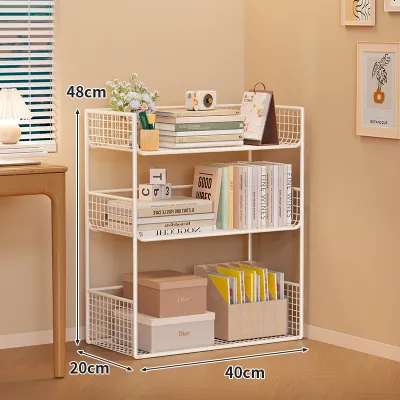
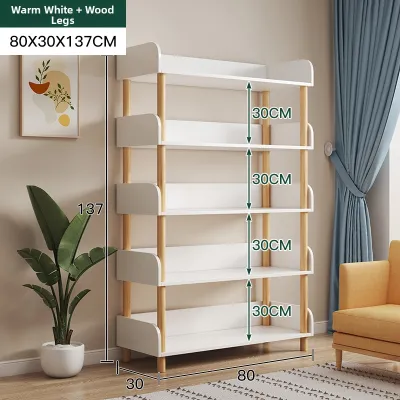
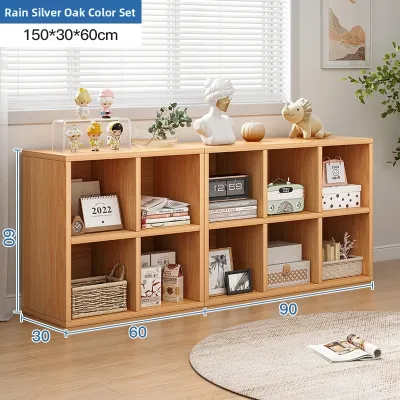
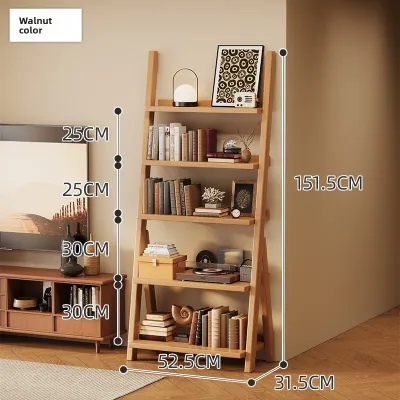

Prices are valid at publication and may change. Please refer to the product page for the latest price.
The next step is analyzing your book collection to estimate the physical load and spatial requirements. Group your books by height and depth. Standard paperbacks typically require a shelf depth of 15 to 20 centimeters, while large hardcovers, art books, and academic textbooks need 30 centimeters or more. To estimate the weight capacity your shelving must support, weigh a small stack of your heaviest books using a scale, then multiply that average by the total linear meters of shelving you plan to install. A typical shelf of dense hardcovers can easily weigh 20 to 30 kilograms per linear meter. Ensure the modular system you select specifies a safe load capacity that exceeds your estimated weight.
Finally, plan the footprint of the unit within the room. Ensure there is at least 90 centimeters of clear walkway space in front of the shelves to allow you to stand, bend, and browse comfortably. Avoid placing tall units where they block natural light from windows or obstruct the airflow paths of your air conditioning units, as poor ventilation in humid climates can encourage mold growth on paper surfaces.
Gather Tools and Modular Components
A successful DIY modular shelving installation relies on having the correct components and assembly tools organized before you begin. A standard modular books organizer system typically consists of several core parts:

- Base plates or adjustable feet: These form the foundation of the unit, transferring the weight to the floor.
- Vertical uprights: The structural pillars that run vertically and feature pre-drilled slots or holes for shelf placement.
- Shelf pins, brackets, or clips: Small hardware pieces that insert into the uprights to support the shelf boards.
- Shelf boards: The horizontal surfaces made of wood, engineered wood, or steel.
- Cross-braces or tension rods: Diagonal metal rods attached to the back of the frame to prevent lateral swaying.
For the assembly process, gather essential household tools. You will need a high-quality measuring tape to double-check spacing, a spirit level (at least 60 centimeters long) to verify plumb and level lines, and a sturdy step ladder to safely reach upper sections. A rubber mallet is highly recommended for gently tapping components, joints, and shelf boards into place without chipping powder-coated metal finishes or scratching wood laminates. If your system requires wall anchoring, prepare a drill, a masonry or drywall drill bit (depending on your wall material), and a screwdriver.
Assemble the Base and Vertical Supports
The stability of your entire book collection depends on a perfectly level and plumb foundation. Begin assembly by preparing the base plates or adjustable leveling feet. Screw the feet into the bottom of the vertical uprights. If your floor has minor slopes—which is common in both older and newer residential properties—adjustable feet are crucial because they allow you to compensate for uneven surfaces.
With the help of a second person if the components are heavy, stand the first set of vertical uprights upright. Place your spirit level against the side of the upright to check for vertical plumb (perfectly straight up and down), and across the horizontal base connectors to check for levelness. Adjust the leveling feet incrementally until the bubble on the spirit level sits precisely in the center of the indicator lines. An unlevel frame can cause shelf pins to slip, shelves to sag, and the entire unit to become unstable under load.
If your design involves a wide, multi-bay books organizer spanning a large portion of your wall, you will likely share vertical uprights between adjacent bays. Connect these shared uprights using the manufacturer’s specified joiners or cross-members. Ensure all base connections are fully tightened before proceeding upward. If the system utilizes a rear cross-brace, install it now. The diagonal tension provided by a cross-brace is vital; it prevents the uprights from shifting laterally under the heavy shear force exerted by hundreds of books. Never skip installing the cross-brace if the manufacturer includes one in the assembly instructions.
Configure Shelves to Build a Custom Books Organizer
Once the structural frame is secure, you can customize the internal layout to fit your specific book collection. Refer to the measurements you took during the planning phase to determine the spacing between shelves. Insert the shelf pins or clips into the vertical uprights at your desired heights.
- The Clearance Rule: Always leave a vertical gap of 3 to 5 centimeters between the top of your tallest book on a shelf and the underside of the shelf above it. This gap ensures you can easily tilt and pull books out without scraping the spines or rubbing against the upper shelf.
- Placing the Boards: Carefully lower the shelf boards onto the pins or clips. Apply firm downward pressure with your hands, or tap gently with a rubber mallet, to ensure the boards are fully seated and locked into the hardware. If a shelf board is not completely seated, it can slide or tip when loaded, causing books to fall.
To maximize the utility of your books organizer, integrate specialized modular accessories. Snap-on metal bookends can be attached directly to the shelves or slotted into the uprights to keep softcover novels upright and prevent them from sliding off the ends of open-frame shelving. If you have small items, stationery, or reading accessories, consider sliding in modular drawer inserts. Vertical divider panels are also highly useful for categorizing different genres, separating research materials, or keeping distinct collections organized on a single long shelf.
Arrange Books Safely and Efficiently
Loading your shelves requires a strategic approach that balances visual order with physical safety. The primary rule of shelving physics is to keep the center of gravity as low as possible.
- Heavy items on the bottom: Place your heaviest, densest volumes—such as oversized art books, encyclopedias, heavy binders, and thick hardcovers—on the lowest shelves. This stabilizes the entire modular unit by anchoring it firmly to the ground.
- Lighter items on top: Reserve the middle and upper shelves for standard paperbacks, poetry volumes, and lighter decorative items.
- Preventing shelf bowing: To prevent the shelf boards from bowing or sagging over time, distribute the weight evenly across each shelf. Avoid grouping all heavy books in the center of a single shelf; instead, spread them out or place them closer to the vertical uprights where the structural support is strongest. If you notice a shelf beginning to sag, check the manufacturer's load limits. You may need to reduce the weight, flip the shelf board over (if supported by the design), or add a center support bracket.
For oversized or fragile volumes that exceed the standard shelf depth, avoid letting them overhang the edge where they can be easily bumped. Instead, stack them horizontally or lay them flat. Stacking books horizontally up to three or four high is an excellent way to support the text block of heavy volumes, preventing the binding from pulling away from the cover over time. Additionally, leave about 10% of empty space on each shelf. This not only creates a clean, visually breathing layout but also accommodates future book purchases without requiring a complete reorganization of your system.
Secure the Unit and Perform Safety Checks
No tall shelving installation is complete without proper anchoring to prevent tipping hazards. This step is a mandatory safety requirement, particularly in households with young children, pets, or high foot traffic where accidental bumps can occur. Always check the applied product’s label and the treated item’s manufacturer instructions before installation.
- Wall Anchoring: Use the anti-tip kits or L-brackets supplied by the manufacturer to secure the top of the vertical uprights to the wall. Before drilling, check the wall type. For solid concrete or brick walls common in Singapore apartments, use a masonry drill bit and high-quality wall plugs (anchors). For drywall partition walls, locate the wooden or metal studs using a stud finder and screw directly into them, or use heavy-duty toggle bolts. Never rely on standard plastic wall plugs in hollow drywall to hold a heavy book organizer.
- Post-Assembly Safety Check: Once anchored, perform a rigorous safety check. Gently shake the unit from side to side and front to back to verify there is no wobble. Check that every shelf pin is fully engaged in its slot and that all structural screws are tightened to the manufacturer's specifications.
- Ongoing Maintenance: Over time, the weight of books and environmental factors like indoor humidity can cause structural shifts. In highly humid climates, raw or poorly sealed wood and low-grade engineered boards (like untreated particleboard) can absorb moisture, leading to structural weakening and sagging. Regularly inspect your modular shelving for any signs of material degradation, loose joints, or bowing shelf boards. Tighten any hardware that has loosened over time, and adjust your book distribution if you observe any changes in the levelness of the shelves. If instructions conflict, the item is unidentified, or the use is not covered, stop and consult the manufacturer or a qualified professional.
Community discussion
Share your experience or ask a question. Comments are reviewed before publication.